Exploring minimalist design offers endless possibilities. This guide delves into Japandi, Scandinavian, and Wabi-Sabi styles, helping you identify their core philosophies and aesthetic differences. Discover which unique approach best resonates with your lifestyle and vision for a truly serene home.
1. Understanding the Core Principles of Minimalist Design
Understanding minimalist design means looking beyond merely reducing possessions. It is a philosophy that prioritizes intentionality in every choice, focusing on quality rather than mere quantity.
The core principles of this design invite us to simplify our spaces. The goal is to create a clutter-free environment, allowing the mind to feel calm and focused.
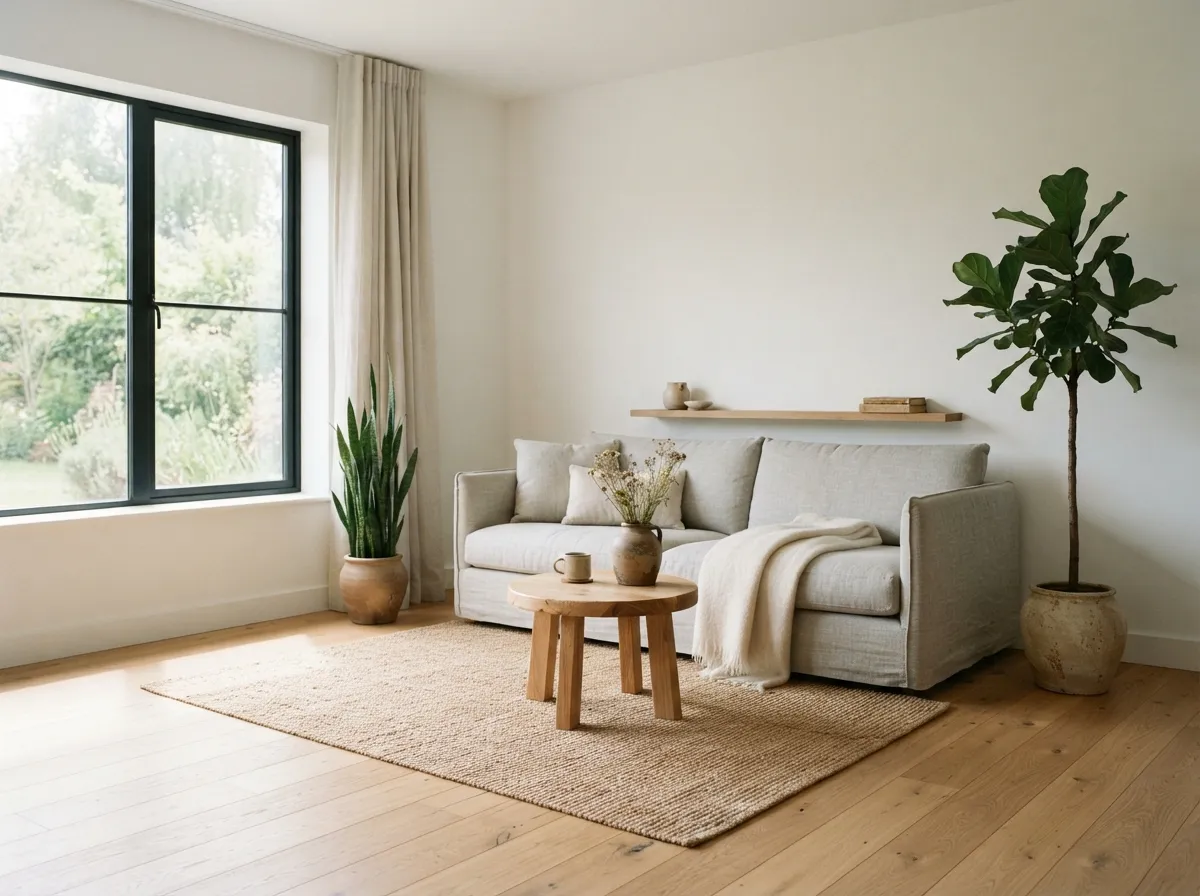
Looking at a bright room with clean white walls and light wooden floors, we can feel how every element is placed with purpose. A few pots of green plants and a clean gray linen sofa add a touch of life without disturbing the tranquility.
This is not about lack, but about having enough of what truly matters and is meaningful in our daily lives.
2. Beyond Clutter: The Philosophy Behind a Serene Home
More than just getting rid of things, the philosophy behind a serene home centers on mental and emotional well-being. It is about creating spaces that support inner peace and relaxation.
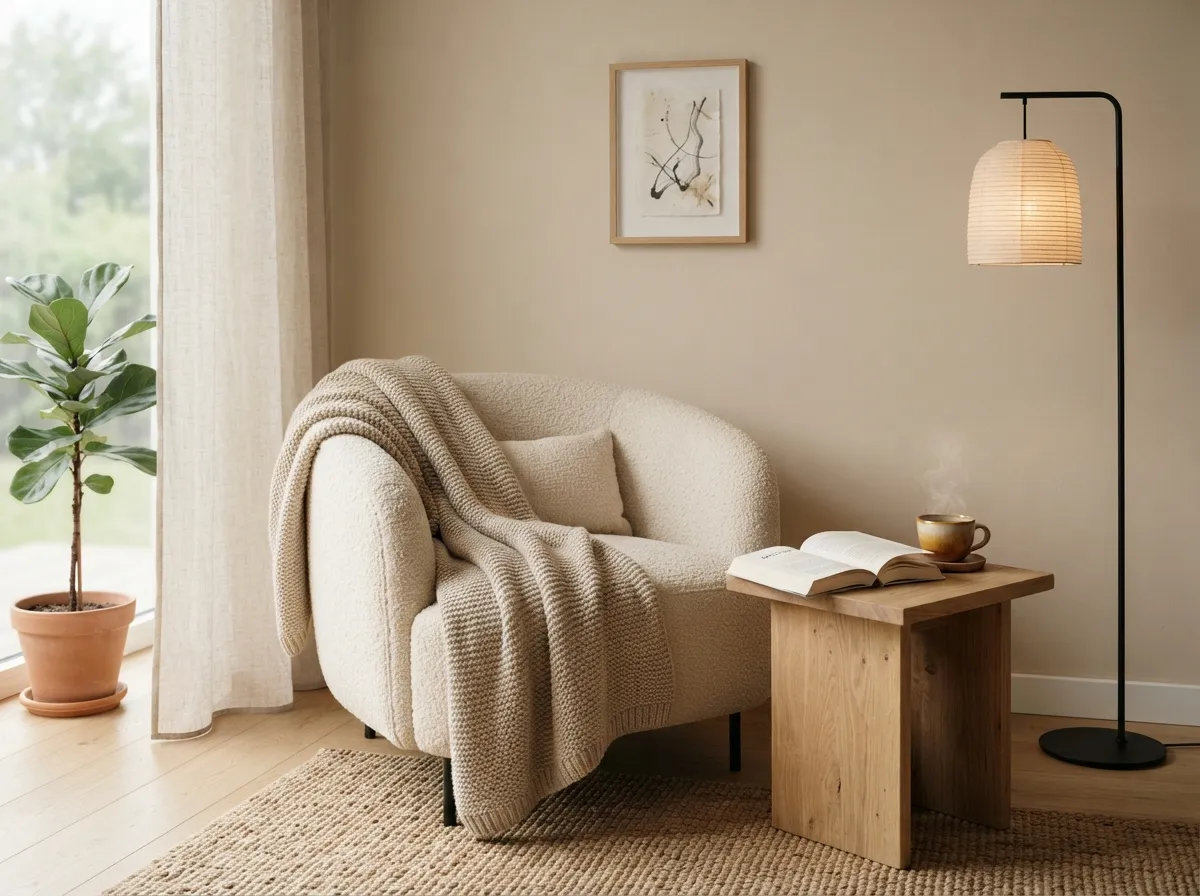
When we look at a space intentionally designed for tranquility, such as a cozy reading corner with soft light, we feel how simplicity can relieve stress. Every element is chosen to contribute to an atmosphere of relaxation.
A plush cream-colored armchair with a knitted throw pillow, accompanied by a natural wood side table holding a book and a ceramic mug, demonstrates this essence. Warm lighting from a minimalist floor lamp adds visual comfort.
Building a peaceful home means valuing time for reflection and finding beauty in undisturbed simplicity.
3. Defining Japandi: Where East Meets West in Simplicity
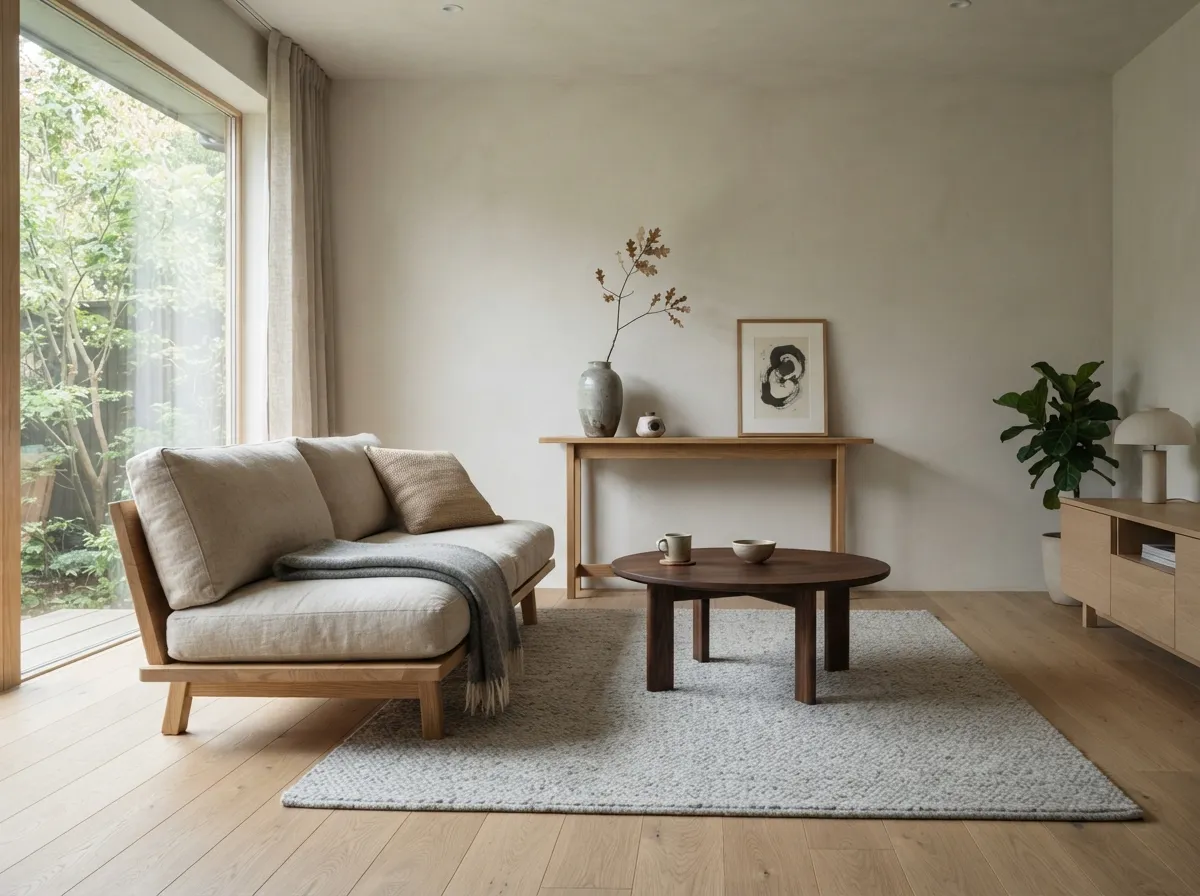
Japandi is a harmonious and timeless blend, uniting Scandinavian functional aesthetics with the Japanese wabi-sabi beauty that appreciates imperfection. This style celebrates simplicity, natural materials, and craftsmanship.
In a Japandi-style living room, we see a balance between clean lines and organic forms. A low sofa with an elegant light wood frame, paired with a round coffee table of dark wood, reflects this synergy.
Natural textures such as linen on the cushions and a soft wool rug add visual depth without adding clutter. A gray ceramic vase with a single dried stem is placed as a calm decorative touch.
This is a style that invites tranquility and comfort, where every element has a purpose and honors the beauty of nature.
4. Japandi Color Palettes: Muted Tones and Earthy Hues
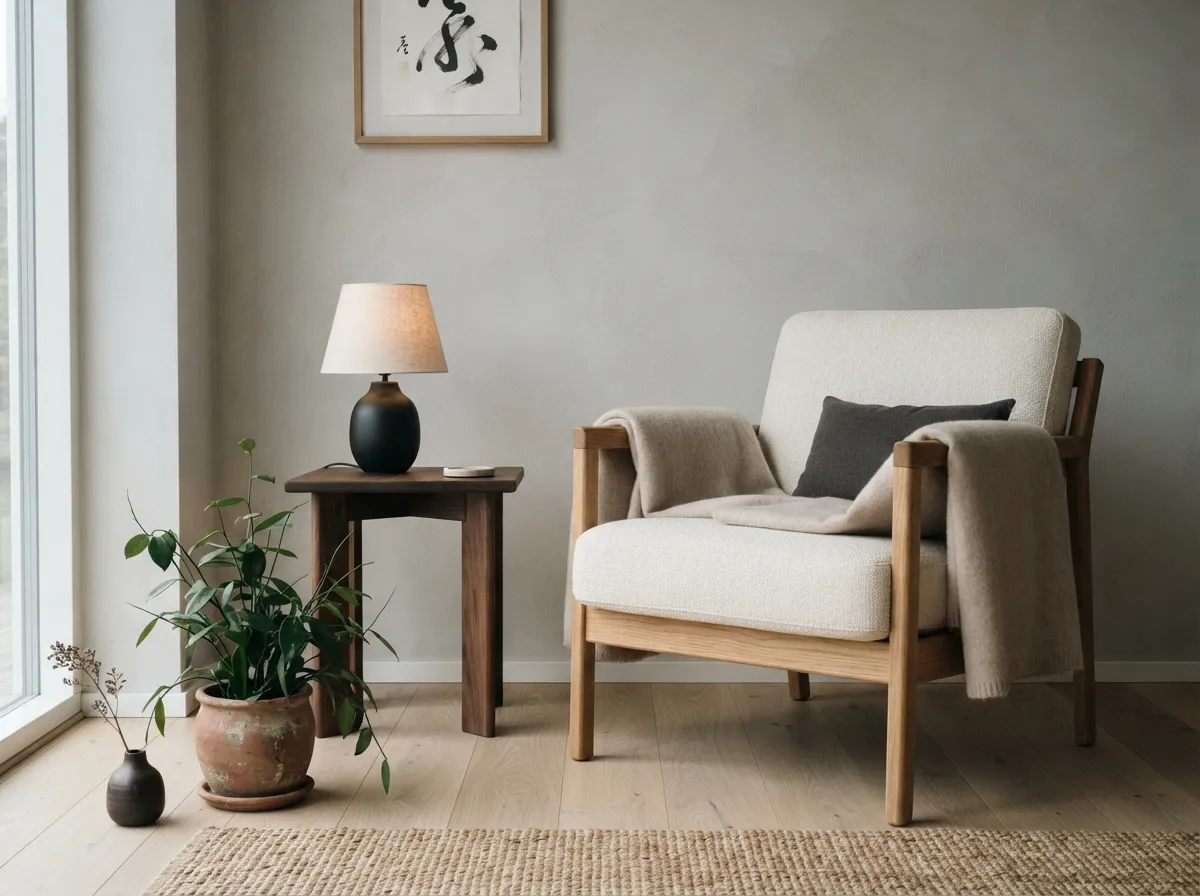
The Japandi color palette is deeply rooted in tranquility and naturalness, dominated by soft neutral tones and earthy colors. These colors create a peaceful and cohesive atmosphere that is profoundly calming.
Rooms often feature light gray or warm white walls, serving as the perfect backdrop for other design elements. A cream-colored linen sofa feels seamlessly integrated into this environment, radiating comfort.
Dark natural wood accents, such as a coffee table, add depth and grounding warmth. A table lamp with a black ceramic base and a white fabric shade provides a subtle, appealing contrast.
Touches of muted green from small potted plants further strengthen the connection to nature, creating a balanced and soothing space.
5. Essential Japandi Furniture: Clean Lines and Functional Beauty
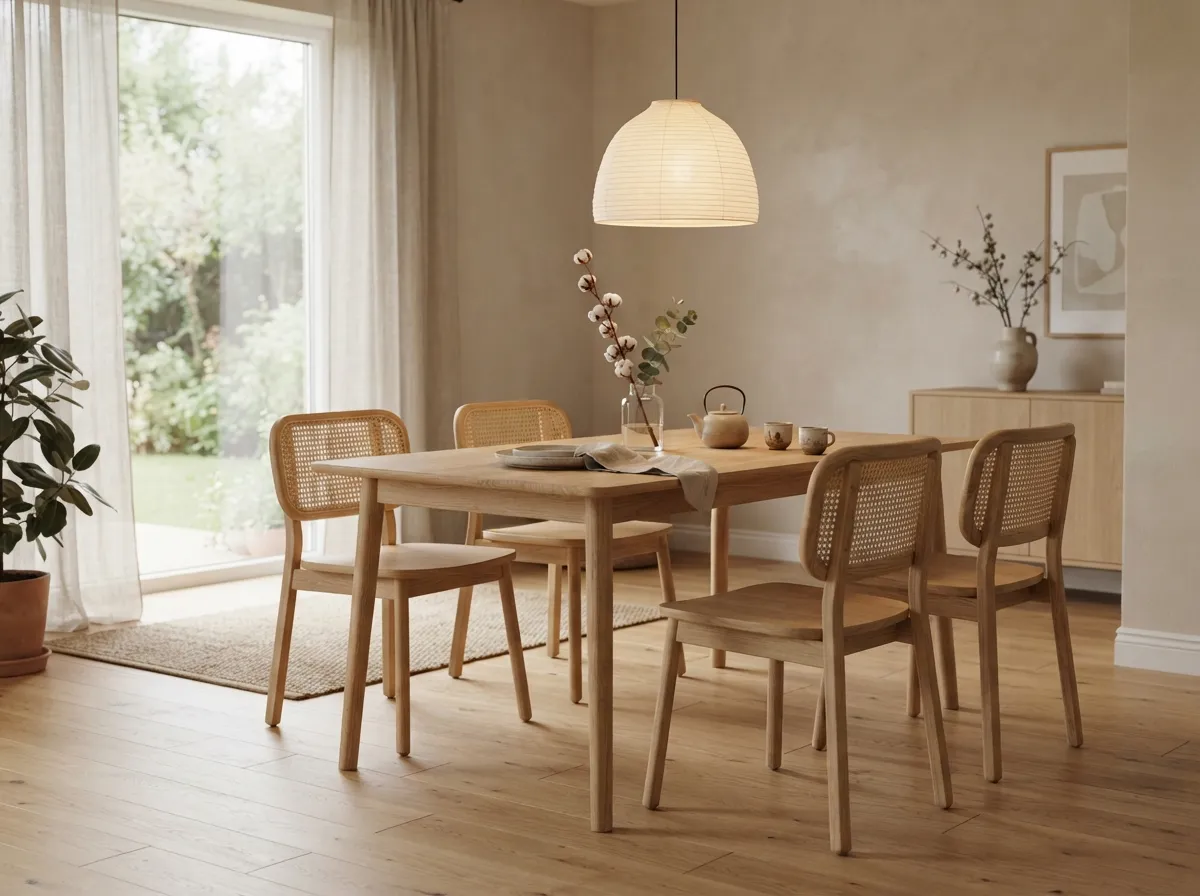
Japandi furniture is the embodiment of functional beauty and timeless clean lines. Every piece is designed with simplicity, comfort, and natural materials in mind.
In the dining area, a light wood dining table with slender legs and matching chairs, accented with rattan weaving on the backrests, demonstrates this essence. The focus is on uncomplicated forms and sturdy construction.
Material choices such as light oak, bamboo, and rattan stand out prominently, bringing organic texture and warmth. Low-profile designs are often seen, creating a sense of more spaciousness and inviting relaxation.
This furniture is not only aesthetic but also highly practical, supporting a minimalist lifestyle that prioritizes tranquility and efficiency in every corner of the home.
6. Material Choices for Japandi Interiors: Wood, Rattan, and Stone
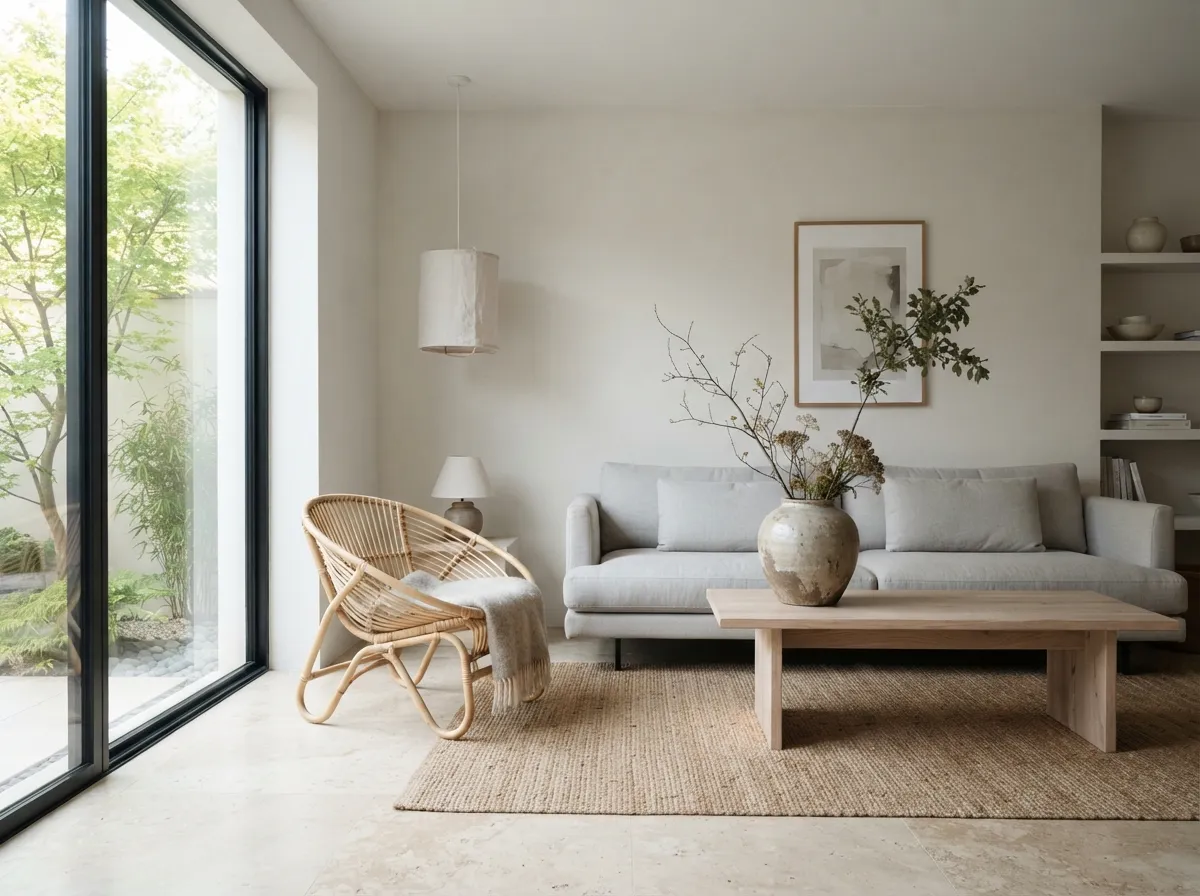
Japandi celebrates material authenticity, emphasizing the use of natural elements that bring tranquility. Wood, especially light-colored varieties like maple or ash, becomes the primary foundation.
The presence of rattan lends a unique textural touch and visual lightness to the interior. This material is often found on chairs or decorative elements, adding a natural dimension.
Stone, such as marble or granite with delicate veining, is used wisely to impart a sense of solidity and elegance. The balance between soft and hard materials creates a calming visual harmony.
The neutral color palette dominating the walls and floors further highlights the natural grain beauty of wooden and rattan furniture. This creates a space that feels organic and connected to nature.
7. Textiles in Japandi Style: Natural Fibers and Subtle Textures
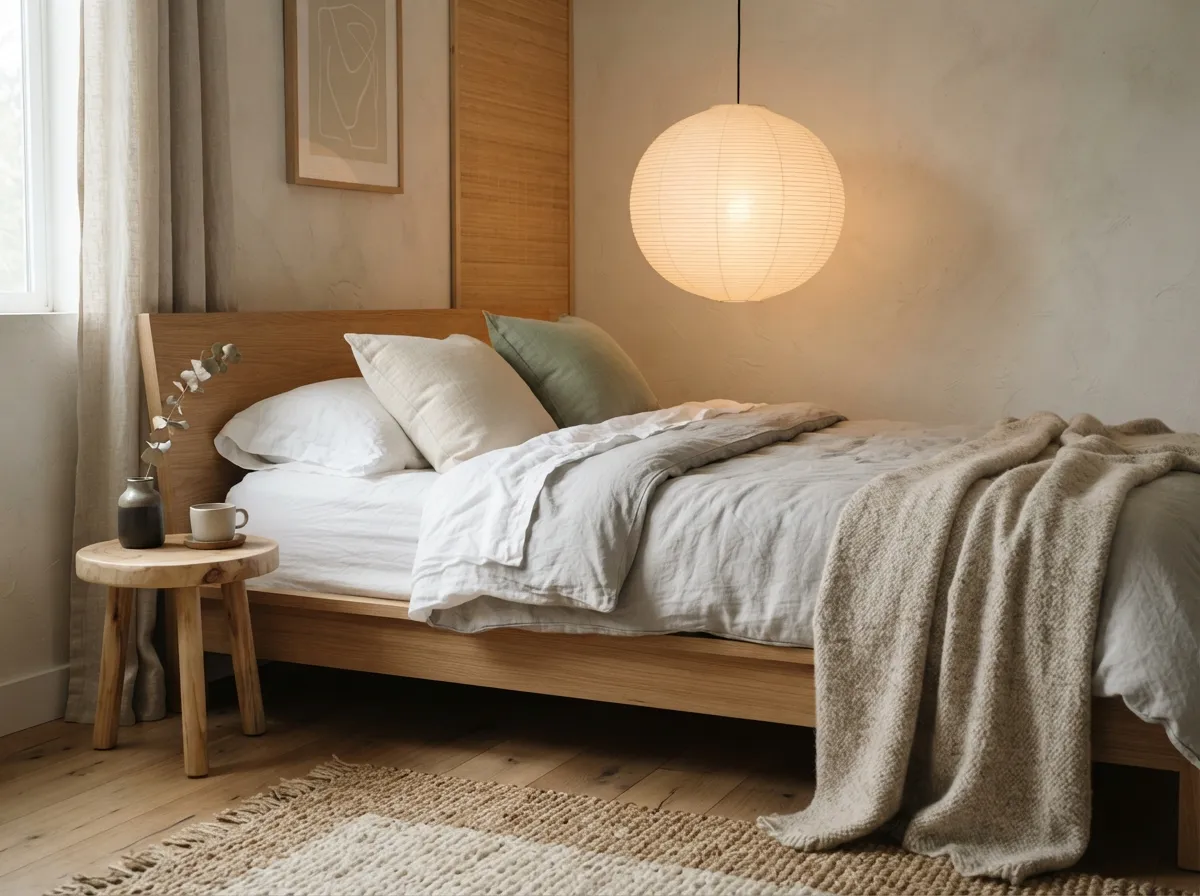
In Japandi design, textile choices focus on natural fibers that provide warmth and comfort. Linen, cotton, and wool dominate, chosen for their soft textures and breathability.
Sofa cushions are often wrapped in light gray or cream linen, providing a calming visual touch. A thin knitted wool throw is neatly draped over the armchair, inviting relaxation.
Simplicity of pattern is key; minimalist motifs or even plain designs are preferred. This ensures that textiles complement, rather than dominate, the overall aesthetic of the room.
Subtle yet tangible textures create depth without visual clutter. Every touch of fabric provides an honest and grounding experience.
8. Lighting for a Japandi Atmosphere: Soft, Ambient Glow
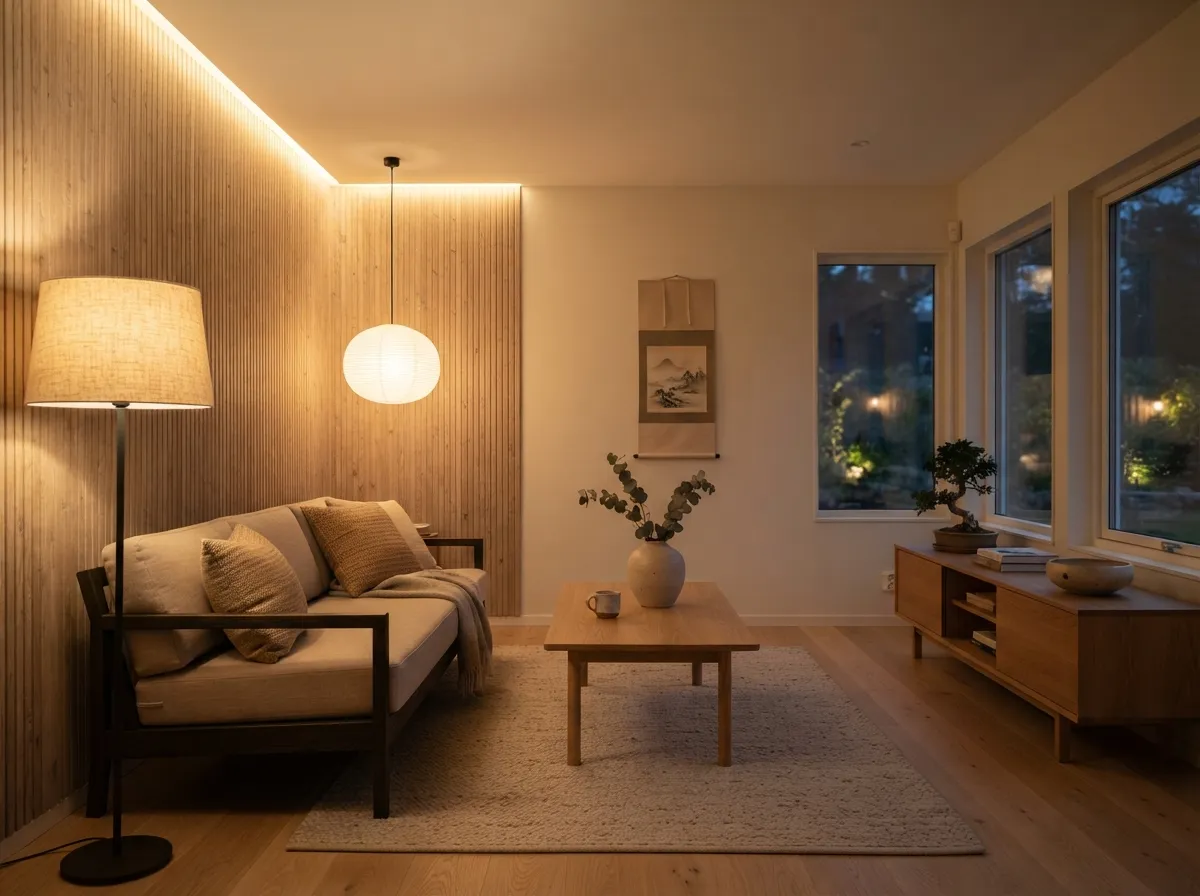
Lighting in Japandi style is designed to create a calm and relaxing atmosphere. The focus is on soft, diffused, and indirect light, avoiding sources that are too bright or glaring.
Floor lamps with linen or rice paper shades are common choices, emitting warm light that spreads evenly throughout the room. Minimalist pendant lights with organic shapes are also frequently seen.
Lighting placement is highly strategic, often layered to create depth. Accent light highlighting wall textures or wooden furniture adds subtle visual intrigue.
Warm yellow or soft white light colors are highly favored, reinforcing a cozy and inviting impression. This helps create an atmosphere ideal for reflection and tranquility.
9. Decor Accents in Japandi: Thoughtful and Intentional Pieces
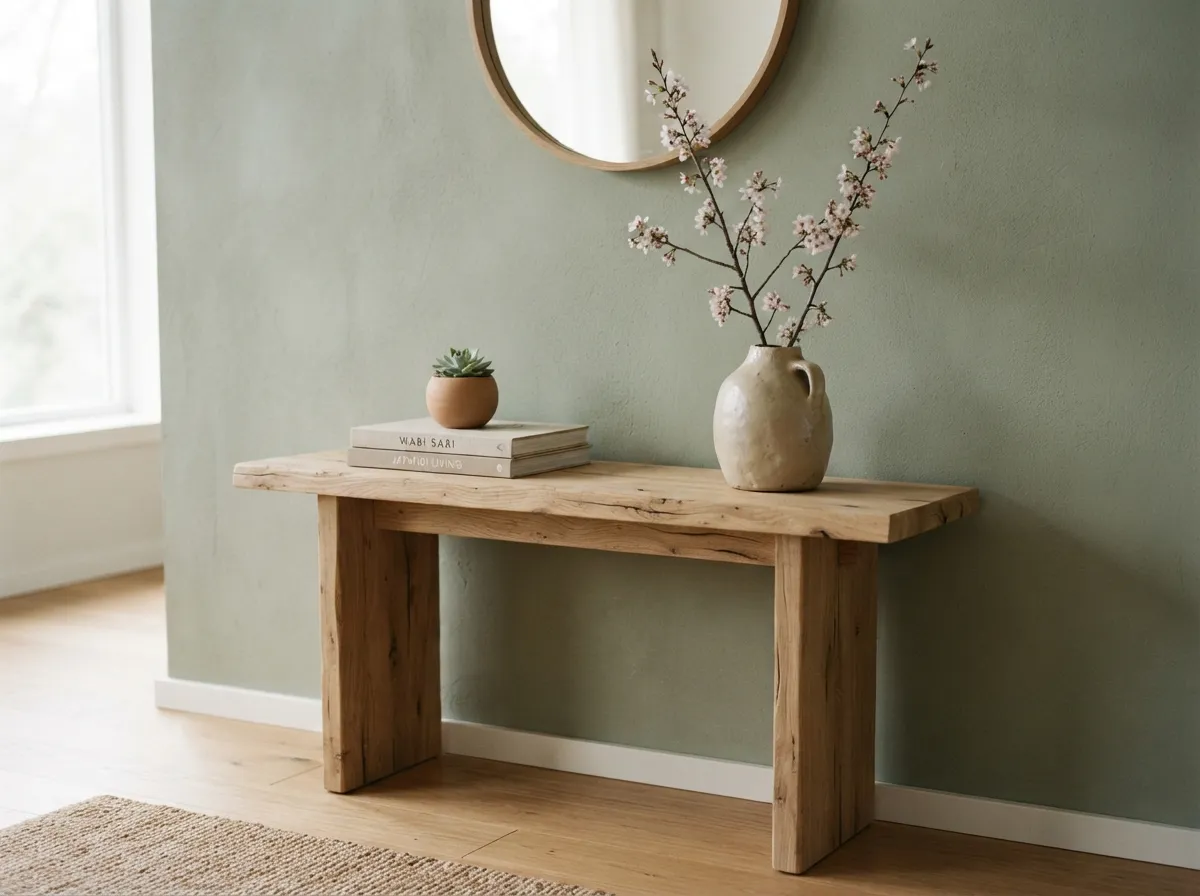
Decorative accents in Japandi style are chosen with great care and purpose. Every item has its place, avoiding clutter and emphasizing quality over quantity.
Handmade ceramics with imperfect glazes or minimalist patterns are often the choice. Simple vases holding one or two green stems add a touch of life.
Plain-covered books or storage boxes made of light wood can also serve as accents. These objects are not only aesthetic but also functional, reflecting Japandi’s practical values.
The placement of accents always leaves plenty of empty space around them. This allows each object to ‘breathe’ and draws attention to its own intrinsic beauty.
10. Exploring Scandinavian Design: Hygge, Light, and Practicality
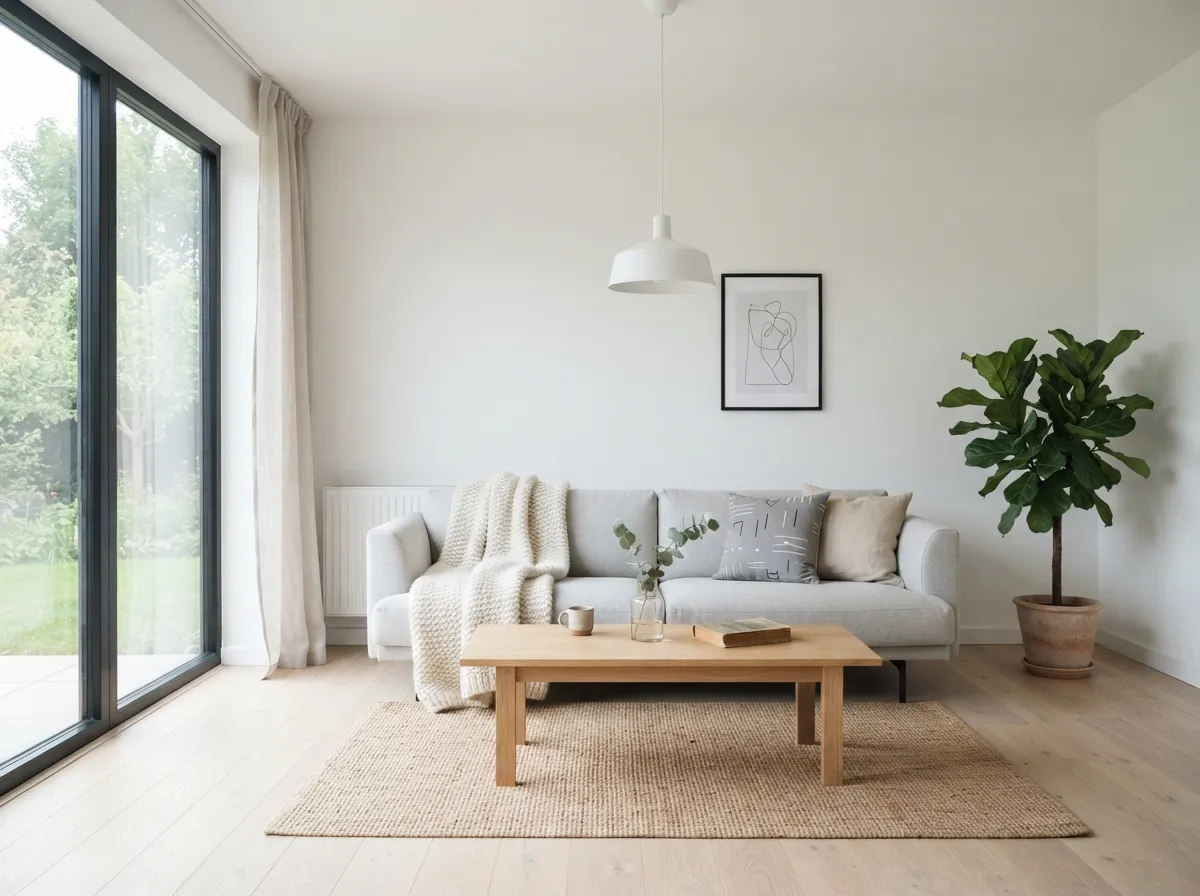
Turning to Scandinavian design, we find a philosophy centered on hygge—the concept of comfort, warmth, and contentment. This style strongly emphasizes creating an inviting and functional home atmosphere.
Natural light is a crucial element, maximized through large windows and minimalist curtains. Rooms are often painted in bright white or light gray to reflect as much light as possible.
Scandinavian furniture is known for its clean design, simple lines, and practicality. Every piece is designed to serve a specific purpose, without excessive ornamentation.
Materials such as light-colored birch or pine wood, along with cozy cotton and wool textiles, are characteristic. All of these contribute to a bright, airy, and highly comfortable aesthetic.
11. Scandinavian Color Schemes: Bright Whites and Soft Neutrals
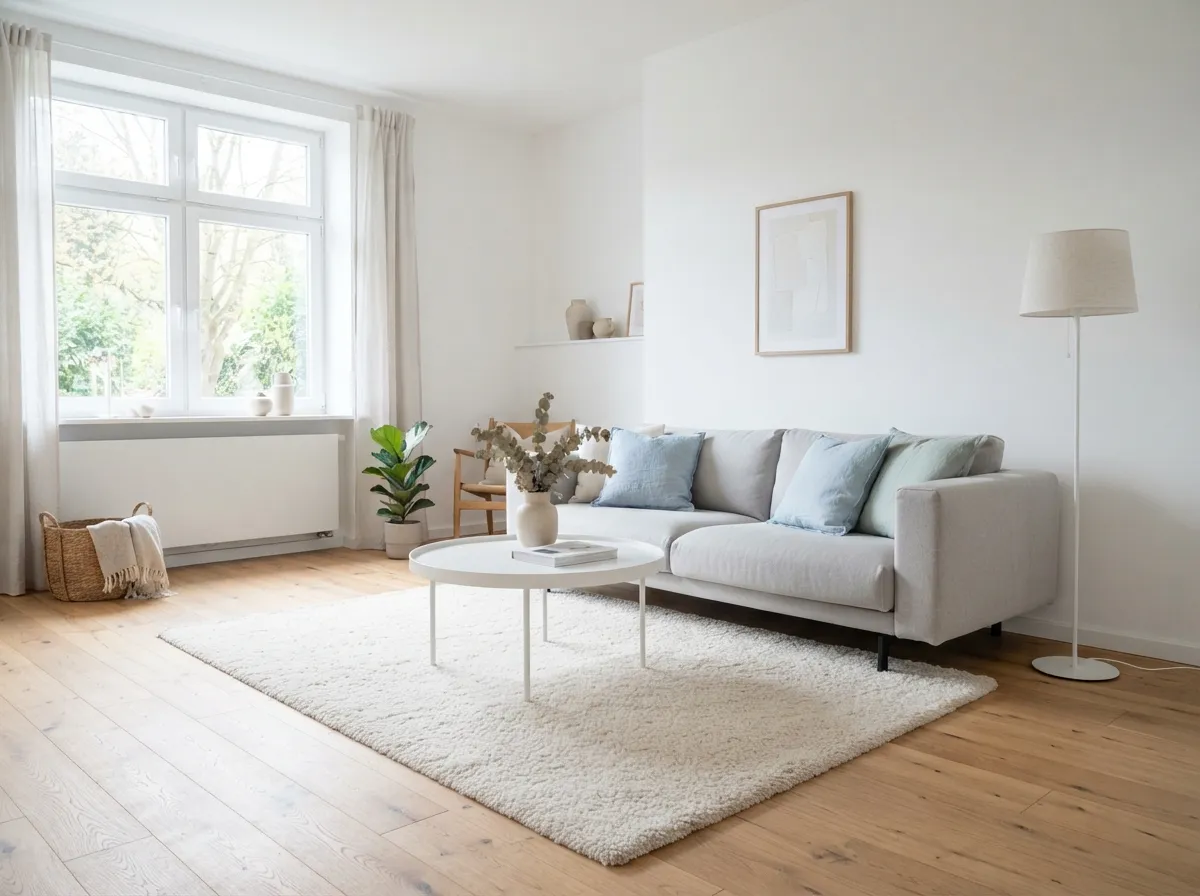
Color is the primary foundation in creating the captivating essence of Scandinavian style.
The color palette is dominated by bright whites, soft grays, and warm creams, which instantly open up the space and make it feel airy.
These neutral colors serve as the perfect canvas, reflecting natural light and creating a calm atmosphere.
A few touches of calming pastel colors, such as light blue or mint green seen on some sofa cushions, add depth without disturbing the overall simplicity.
12. Iconic Scandinavian Furniture: Ergonomics and Simplicity
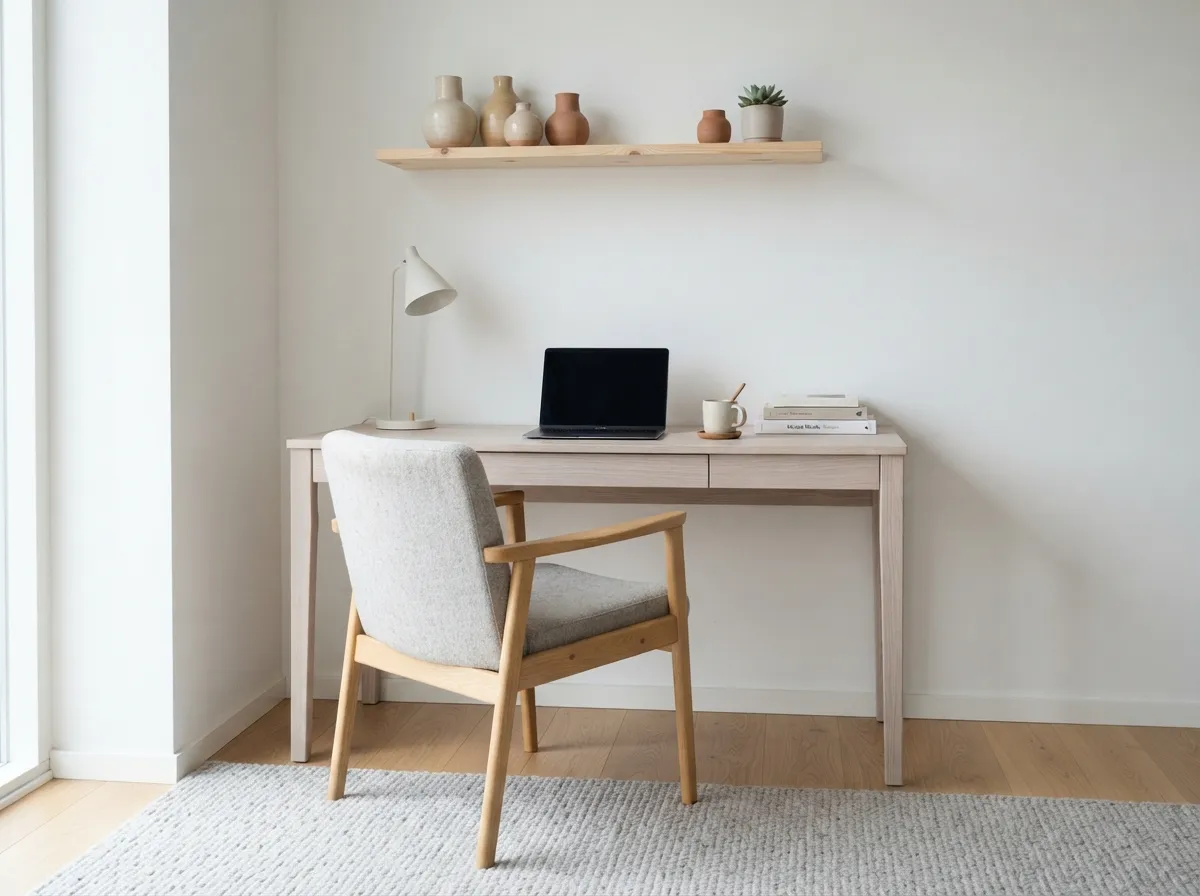
Scandinavian furniture is known for its clean, functional, and highly ergonomic design, prioritizing user comfort.
Every piece is designed with purpose, often featuring sleek lines and timeless organic forms.
An armchair with a natural birch wood frame and light gray cushioning looks perfectly matched with a minimalist round side table of light pine wood.
The simplicity of this design ensures that the furniture is not only beautiful to look at but also highly practical in everyday use.
13. Natural Materials in Scandinavian Homes: Birch, Pine, and Wool
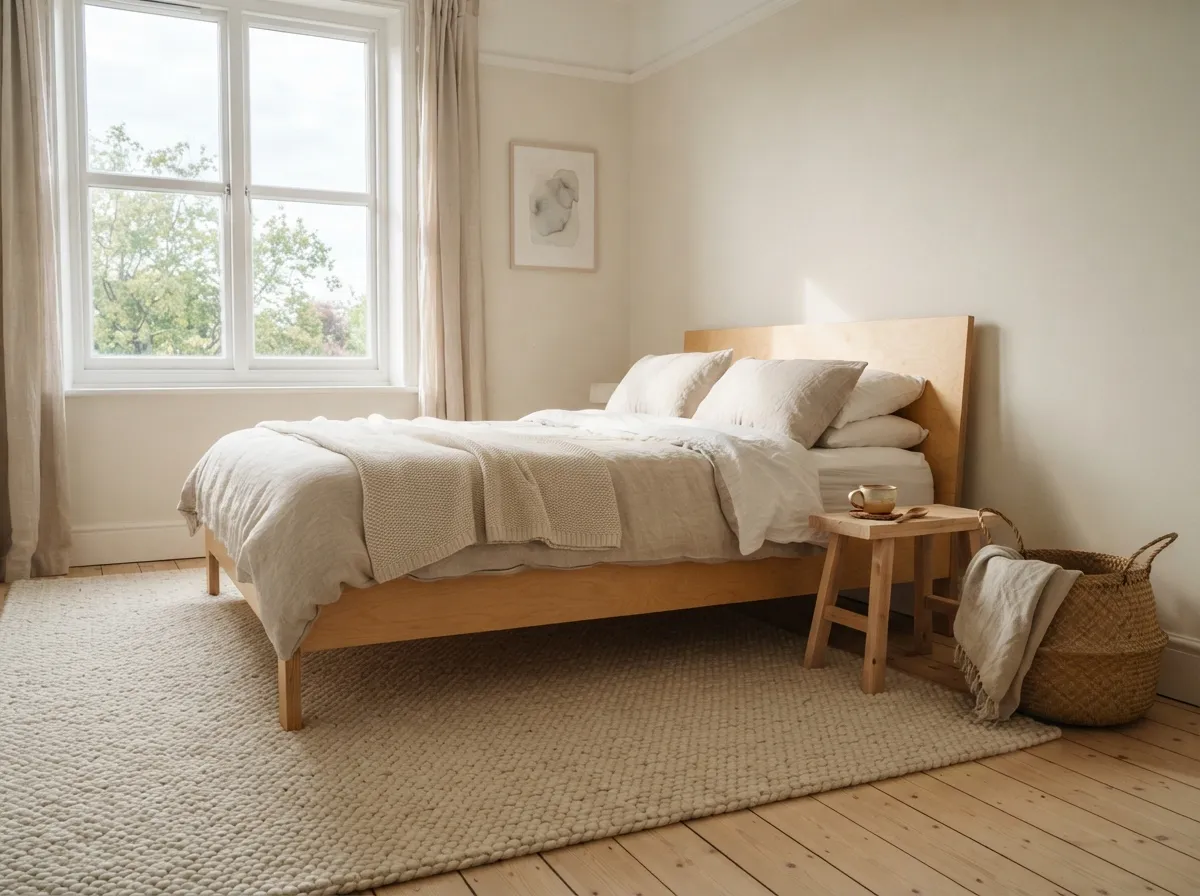
The use of natural materials is an inseparable hallmark of Scandinavian design, bringing texture and warmth into the interior.
Woods such as birch, pine, and oak are often used for flooring, furniture, and wall accents, creating a strong connection with nature.
A thick, soft wool rug under the coffee table provides a cozy touch of luxury underfoot.
Through these materials, rooms not only look beautiful but also feel authentic and grounded.
14. Creating Warmth with Scandinavian Textiles: Layers and Comfort
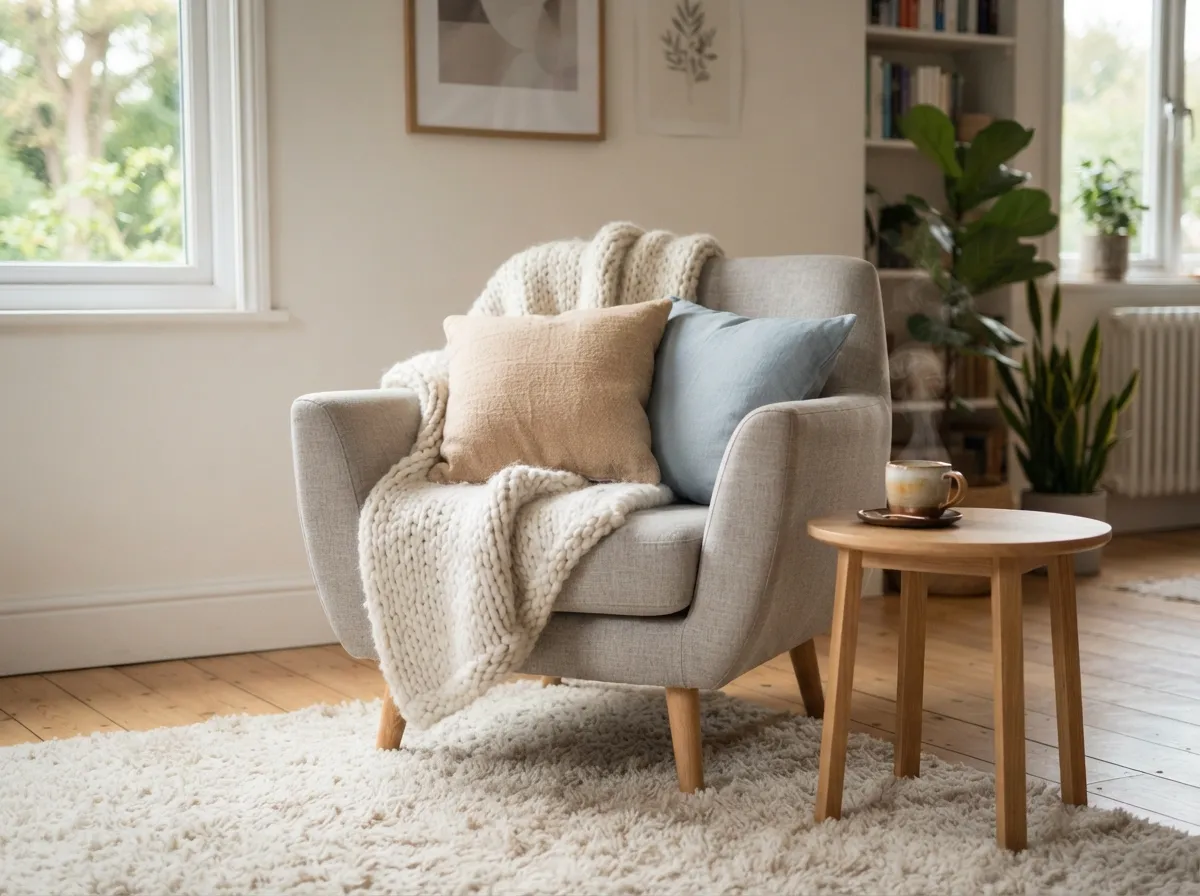
Textiles play a vital role in bringing warmth and the iconic ‘hygge’ atmosphere into Scandinavian homes, inviting relaxation and comfort.
A chunky knitted throw of pure wool draped over the sofa, together with several textured cotton cushions, creates layers of softness that invite you to relax.
A plush rug on the floor adds a pleasant visual and tactile touch, reducing the cold impression of hard surfaces.
Every textile choice contributes to a friendly and cozy atmosphere, perfect for cold weather.
15. Maximizing Natural Light in Scandinavian Spaces
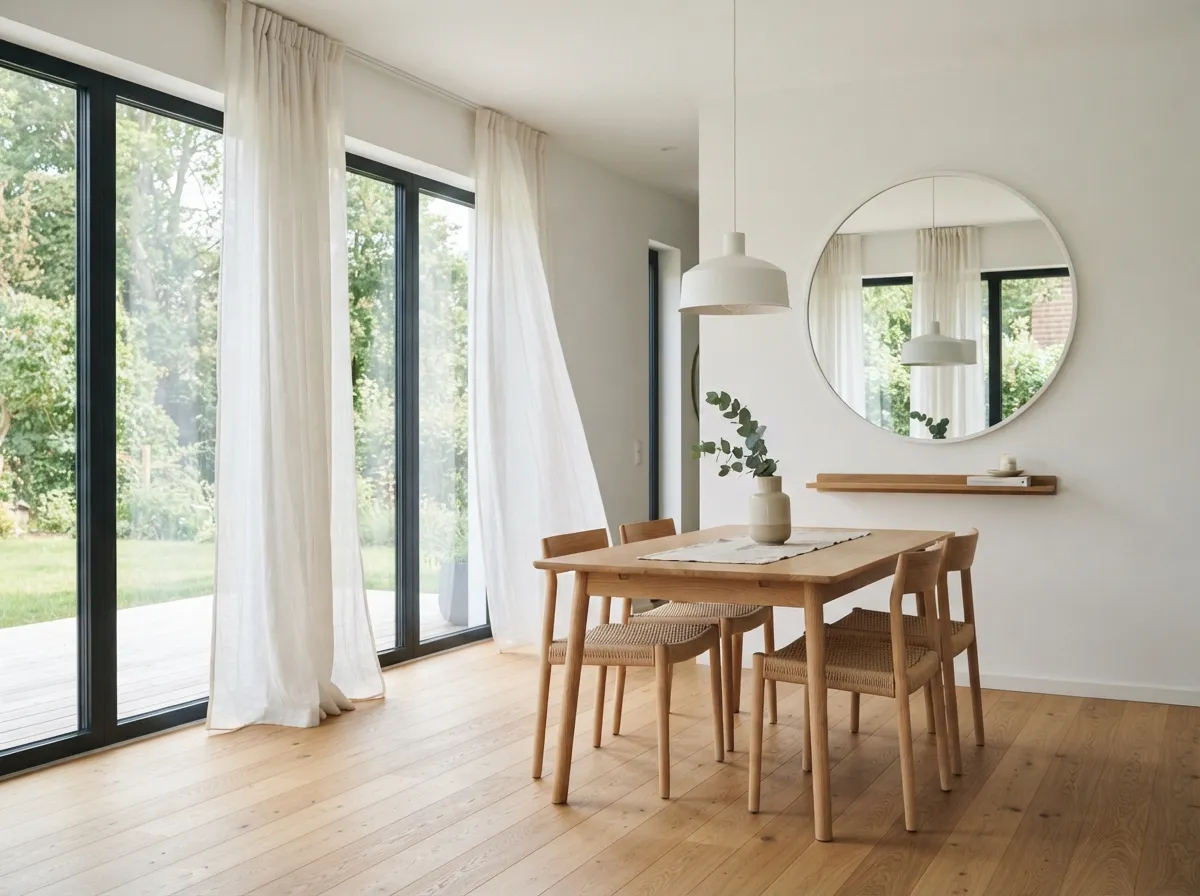
Given the long winters in Nordic countries, maximizing natural light is an essential Scandinavian design principle.
Large windows are often left uncovered or use only thin, sheer curtains, like the white linen drapes seen hanging, allowing light to enter fully.
The reflection of light from clean white walls and reflective surfaces, such as a thin-framed round mirror above the console, further brightens the room.
An open layout design also supports the spread of light throughout the area, creating an impression of bright and airy space all day long.
16. Decorative Elements for Scandinavian Charm: Less is More
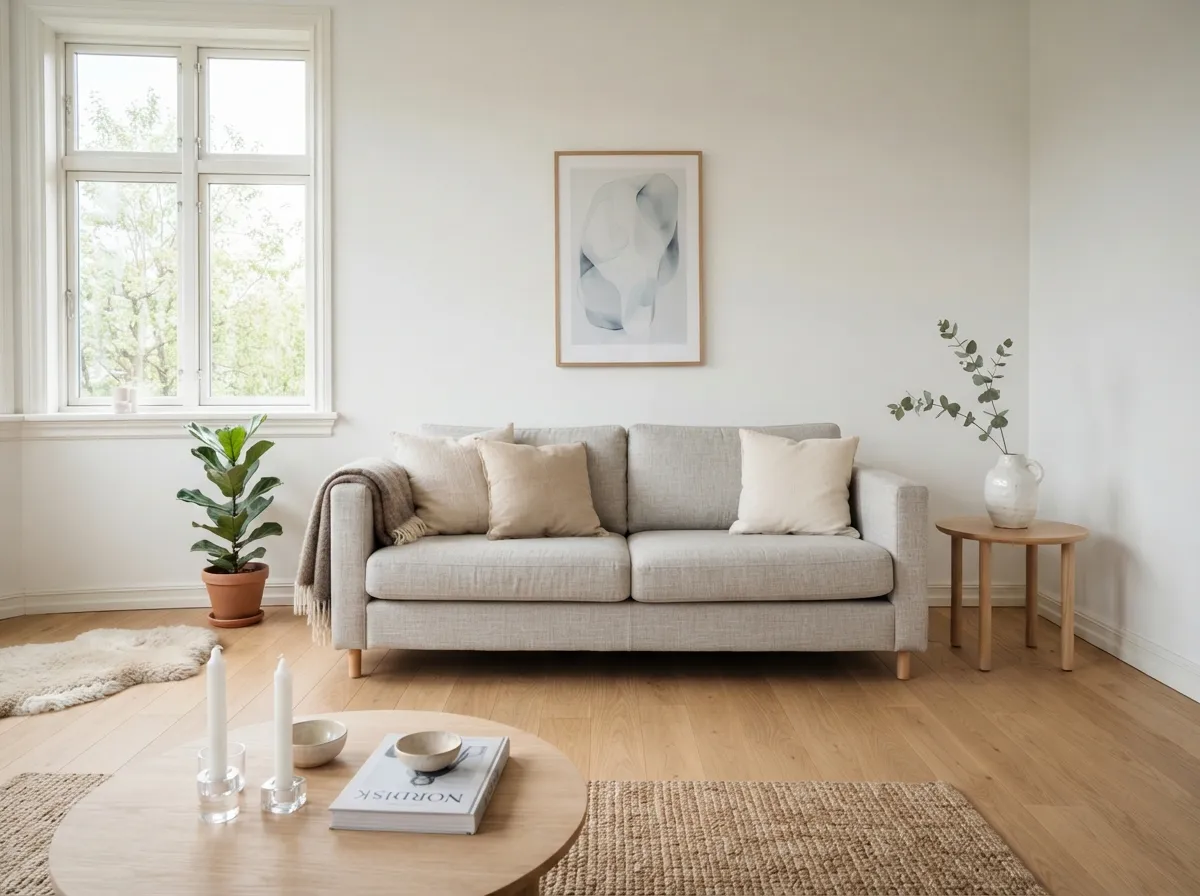
For Scandinavian-style decoration, the main philosophy is “less is more,” where every element is carefully chosen for functionality and aesthetics.
The room remains bright and airy, with neutral colors and natural textures dominating. Consider a linen-upholstered sofa with simple cushions, creating an inviting atmosphere.
Clean white walls serve as the perfect backdrop for minimalist abstract art with soft colors. A white ceramic vase holding a single green branch or a small potted plant adds natural freshness.
Soft lighting from candles in simple holders or table lamps with natural fabric shades enhances the warmth and coziness of the room.
17. Embracing Wabi-Sabi: The Beauty of Imperfection and Authenticity
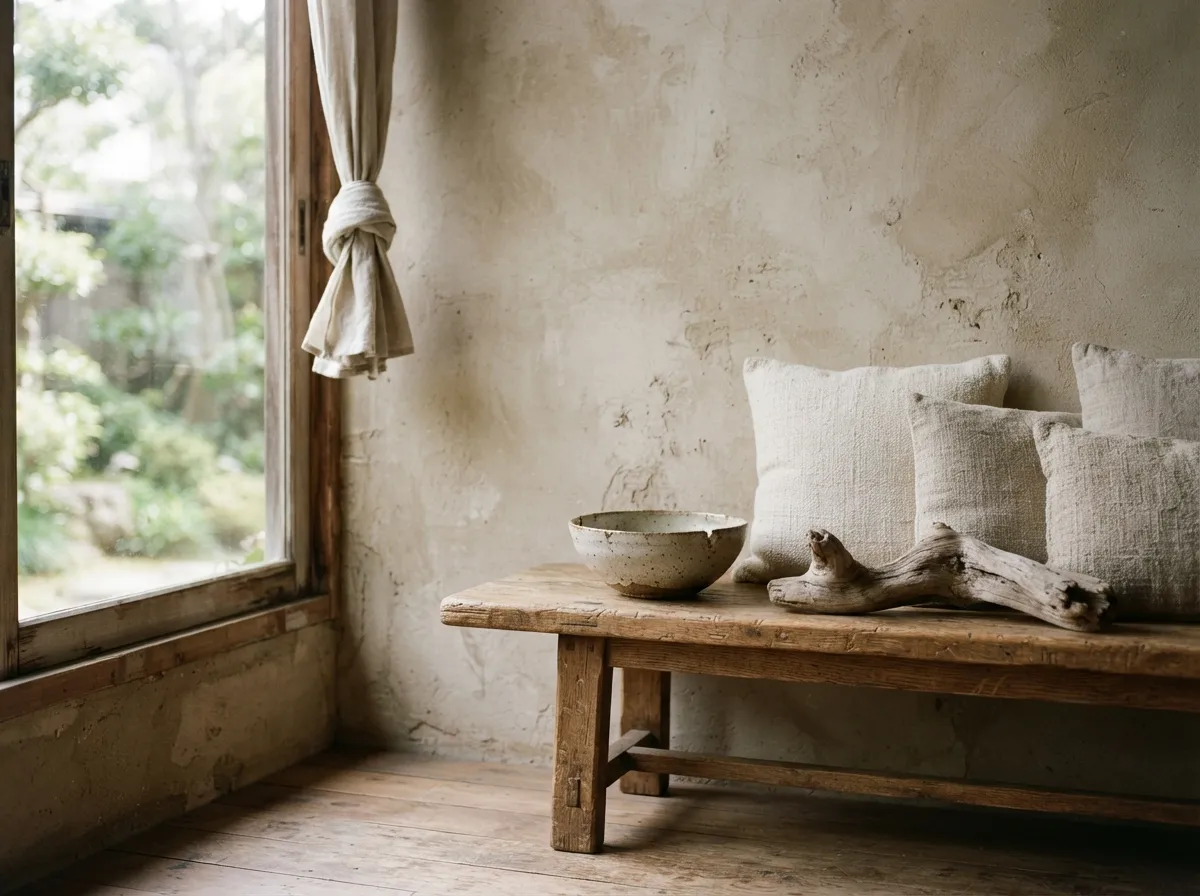
Wabi-Sabi is a philosophy that teaches us to appreciate beauty in imperfection, transience, and authenticity. It is about seeing charm in weathered objects and materials that tell a story.
Rather than pursuing perfection, this style celebrates the signs of time and use. Roughly textured walls in earthy colors or pale cream give character and depth to the room.
A simple wooden bench or neutral-colored floor cushions offer humble seating. Notice how handmade ceramic items, with their irregular shapes, become focal points.
Soft natural lighting highlights textures and shadows, emphasizing the uniqueness of each object, such as a piece of aged wood displayed as a decorative element.
18. Wabi-Sabi Color Palette: Organic, Weathered, and Earth-Inspired
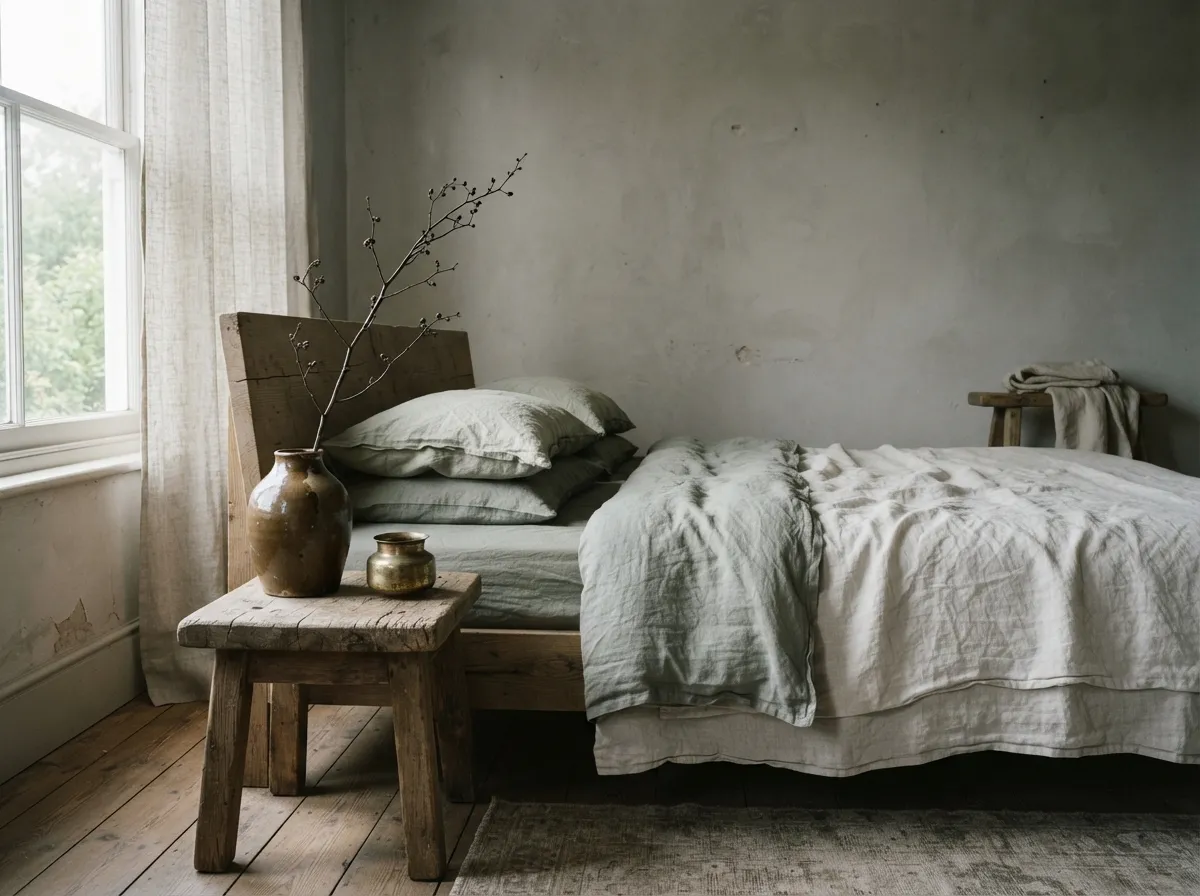
The Wabi-Sabi color palette is inherently inspired by nature, featuring organic, weathered, and humble tones. These colors create a calming and grounding atmosphere in every corner of the home.
Imagine walls painted in soft gray or warm tawny cream, resembling the colors of clay or natural stone. Bed linen fabrics in faded white, moss green, or rust red add textural depth.
Unpolished wooden furniture, with its natural grain clearly visible, complements this color scheme. Ceramic items appear in varied clay and brown tones, each with its own unique character.
Touches of aged metal accents, such as oxidized brass, provide a subtle contrast, emphasizing the beauty of materials weathered by time.
19. Furniture Selection for Wabi-Sabi: Raw, Patinated, and Handcrafted
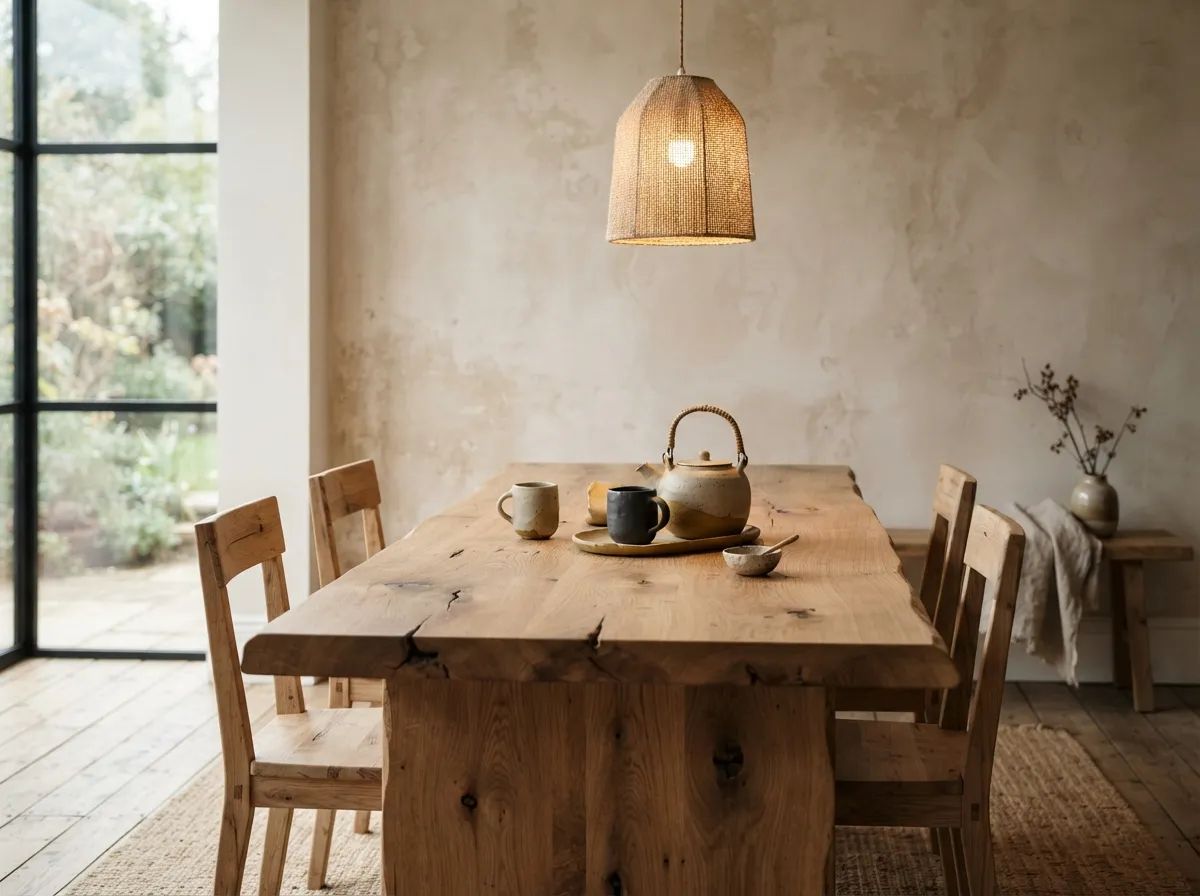
Furniture selection in Wabi-Sabi style centers on pieces that are raw, patinated, and handcrafted. Every piece of furniture is a testament to time and the artisan’s hands that created it.
A solid wood dining table with a rough natural edge and prominent wood grain is a prime choice, showing the slight imperfections that make it unique. Simple handmade wooden chairs with natural finishes complete this set.
Functionality is prioritized over excessive ornamentation. A ceramic tea set or an imperfectly shaped vase on the table is not merely decoration but also an object with a history.
Softly textured walls as a backdrop further reinforce this aesthetic, while warm lighting from a minimalist pendant lamp with a natural-material shade adds warmth to the space.
20. Wabi-Sabi Materials: Rustic Wood, Clay, and Aged Metal
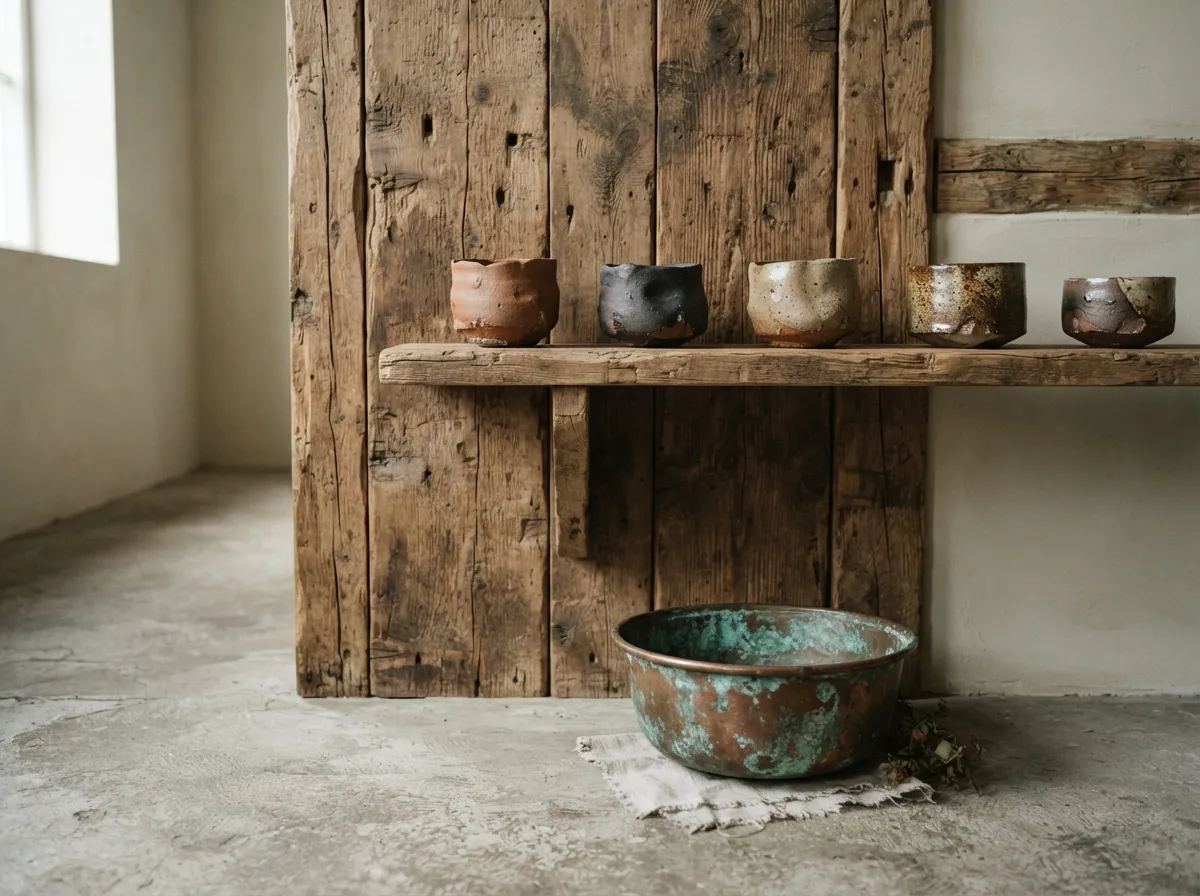
In Wabi-Sabi style, materials play a crucial role in creating an authentic and grounded atmosphere. Rustic wood, clay, and aged metal are the main pillars of this aesthetic.
Walls can feature rough reclaimed wood panels, highlighting the character and history of each plank. The natural texture on these walls becomes an attractive focal point.
A collection of hand-fired clay pottery, in various shapes and sizes, is placed on simple shelves. Every pot and vase bears the traces of its making process.
Aged metal accents, such as an oxidized copper bowl or a rusted iron sculpture, add visual depth and a soft industrial nuance. Natural stone flooring or brushed concrete completes this material composition, where natural light highlights every unique texture.
21. Textural Richness in Wabi-Sabi: Imperfect Finishes and Patina
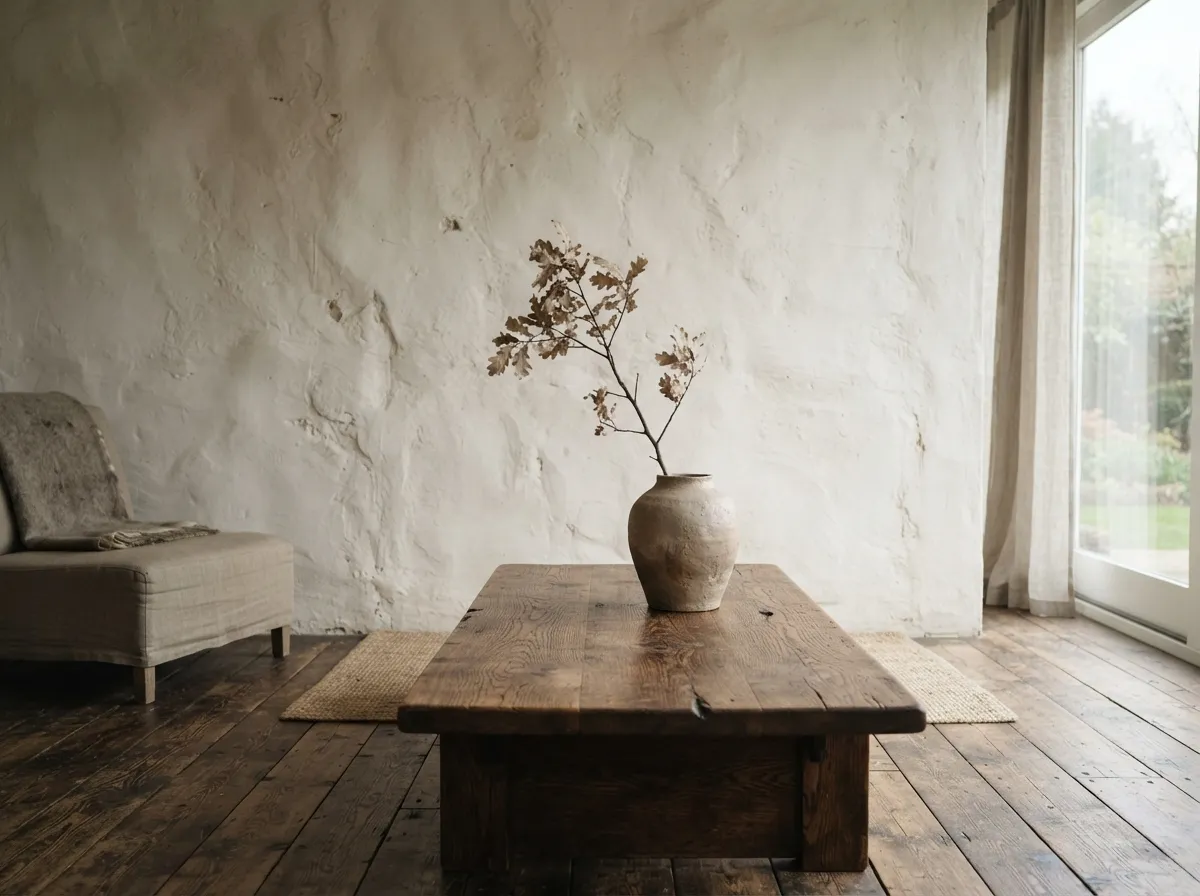
In Wabi-Sabi, surfaces are not merely backdrops but stories unfolding. We celebrate the raw, the unrefined, and the beauty found in natural wear and tear.
Consider a wall finished with rough, hand-troweled plaster, or a floor made of aged, reclaimed wood. These elements inherently possess a unique character, bearing the marks of time and human touch.
Unglazed ceramics and organic linens further contribute to this tactile landscape, inviting interaction and contemplation. Each natural imperfection, like the subtle crack in a handcrafted bowl or the uneven grain of a wooden beam, adds profound depth to the space.
22. Lighting in Wabi-Sabi Spaces: Celebrating Shadows and Softness
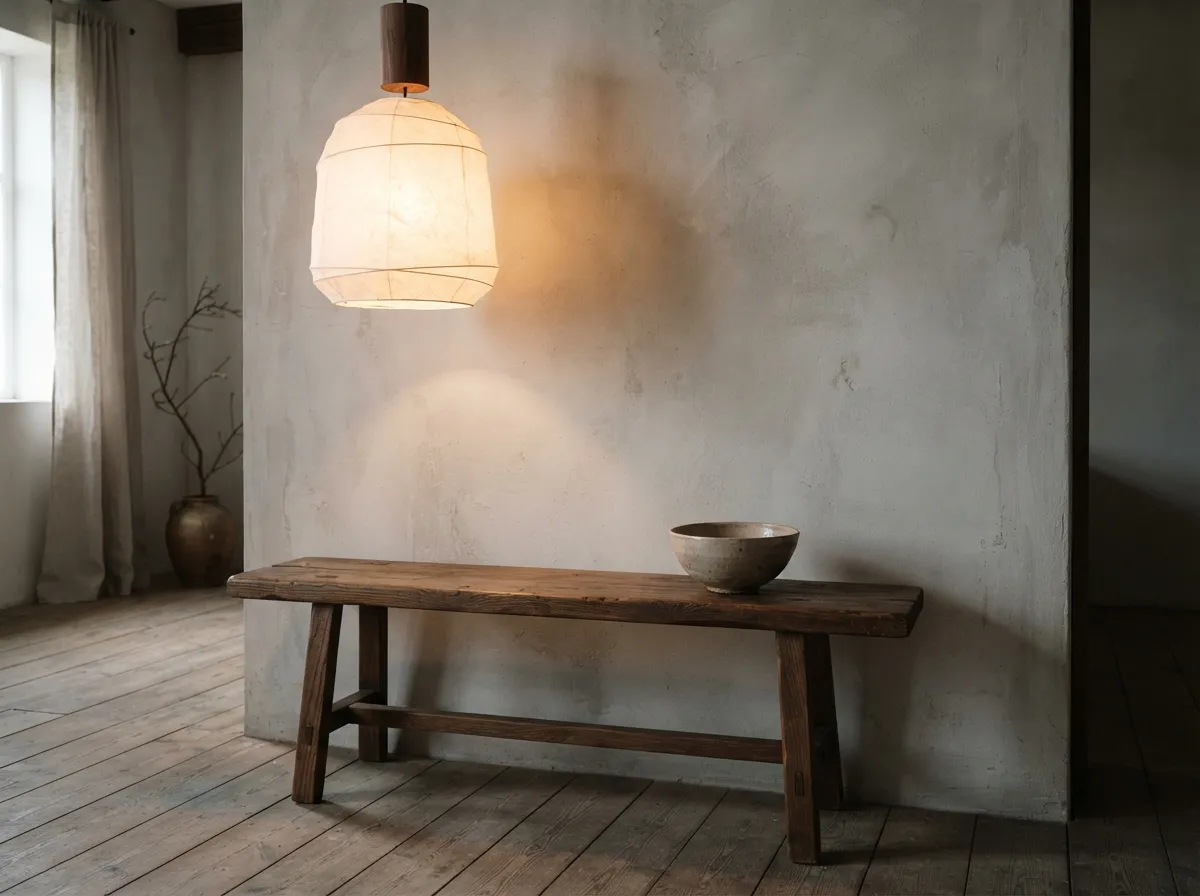
Lighting in a Wabi-Sabi interior is a deliberate art of subtlety, moving away from bright, uniform illumination. The goal is to cultivate a serene atmosphere where light gently interacts with surfaces.
Think of soft, indirect sources such as a rice paper lantern casting a diffused glow or a ceramic table lamp strategically placed to create pockets of warmth. These choices allow for natural shadows to emerge.
Shadows are not merely an absence of light; they are integral to the aesthetic, adding depth, mystery, and a sense of tranquility. They highlight the texture of a plaster wall and the raw beauty of a simple wooden bench, drawing attention to the quiet details.
23. Decorating with Wabi-Sabi Principles: Found Objects and Natural Forms
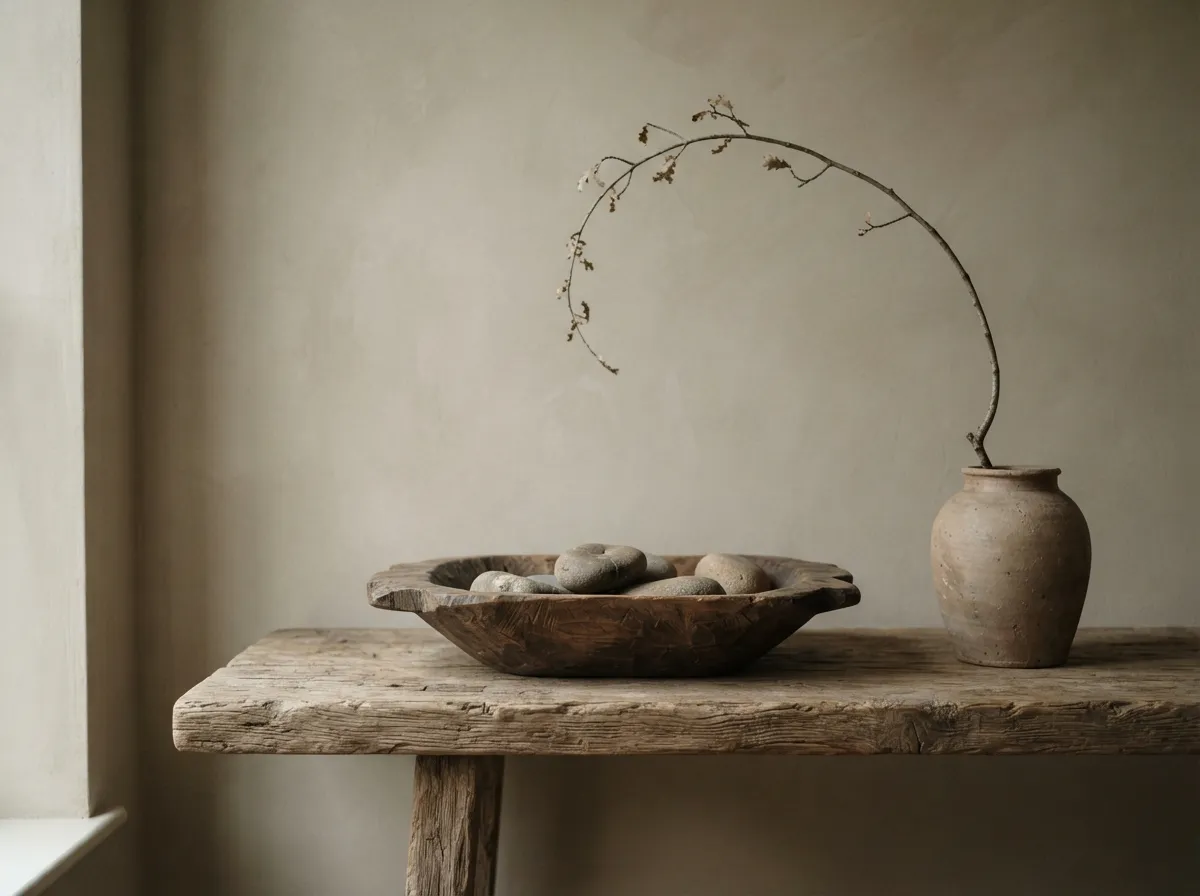
Decorating in Wabi-Sabi isn’t about accumulating items, but about curating meaningful objects that tell a story. This approach celebrates the beauty in simplicity and the inherent character of natural forms.
A focus is placed on found objects – perhaps a piece of driftwood collected from a beach or smooth river stones. These items, along with handmade pottery and hand-carved wooden bowls, carry a history and unique appeal.
Arrangements are intentionally minimalist, allowing each individual piece to be admired for its unique imperfections and organic shape. The display on a rustic console table, for example, is sparse yet impactful, highlighting the raw beauty of each element.
24. Key Differences: Japandi’s Balance vs. Scandinavian’s Comfort vs. Wabi-Sabi’s Imperfection
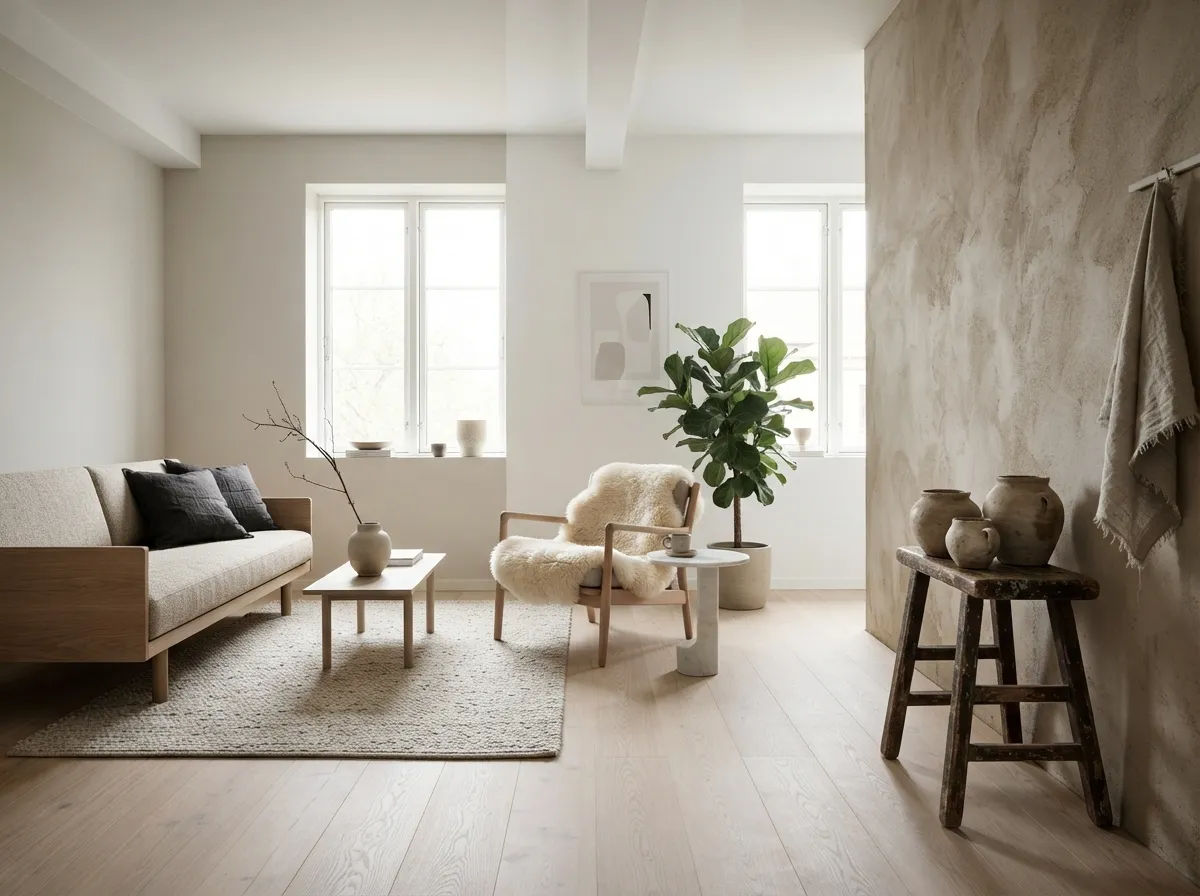
Understanding the nuances between these styles clarifies their distinct appeals. Japandi masterfully blends Japanese aesthetics with Scandinavian functionality, resulting in functional elegance and a balanced, serene environment.
Scandinavian design prioritizes bright, airy spaces, often using light woods and cozy textiles to evoke a sense of hygge and comfort. Its practicality and inviting warmth are signature characteristics.
Wabi-Sabi, conversely, finds beauty in the imperfect, the aged, and the raw. It embraces natural decay and asymmetry, valuing authenticity over flawless polish.
A textured plaster wall and irregular pottery are hallmarks of this style, celebrating their unique imperfections.
25. Personalizing Your Style: How to Blend Elements Thoughtfully
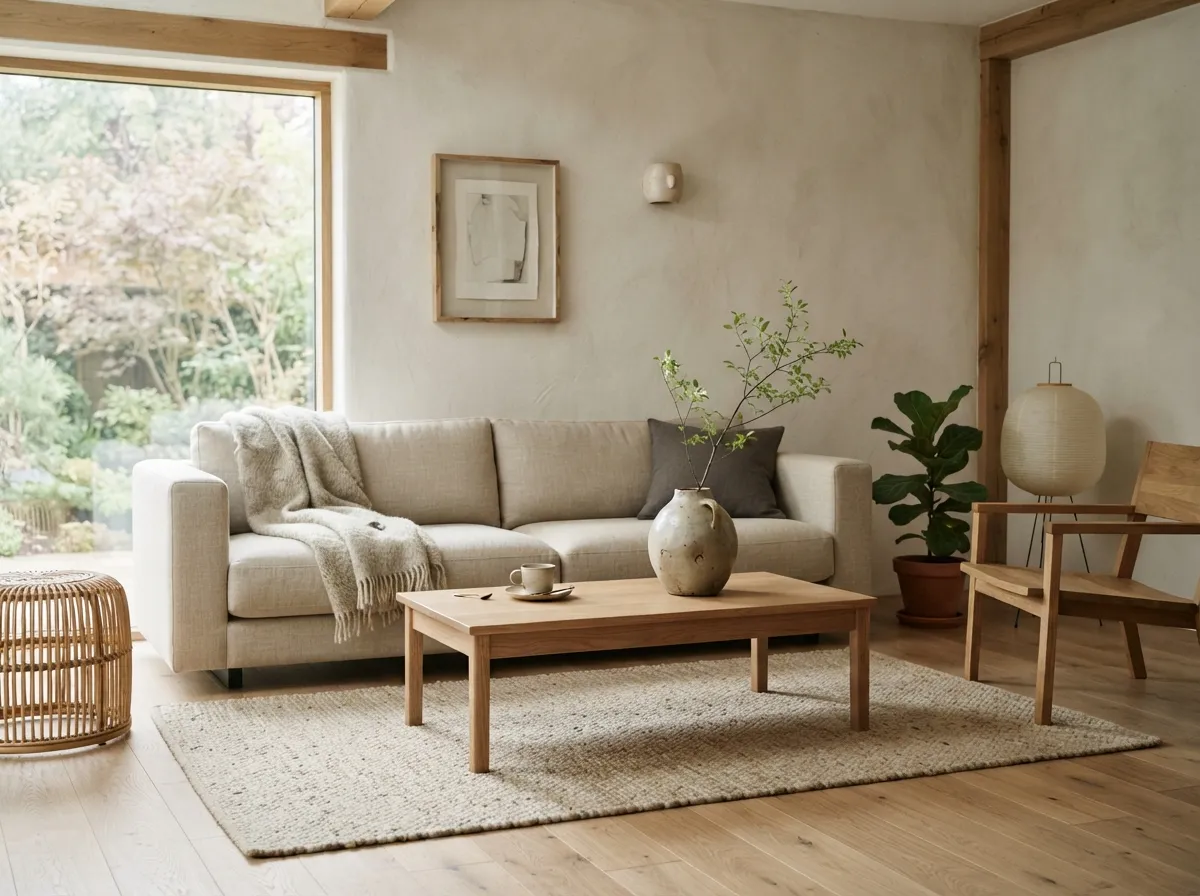
Rather than strictly adhering to one style, consider blending elements to create a truly personal interior. Begin by establishing a dominant aesthetic that resonates most deeply with you.
Then, introduce thoughtful accents from other styles to enrich the space. For instance, a clean-lined Scandinavian sofa could be paired with a low, elegant Japandi coffee table.
Adding a textured ceramic vase with a Wabi-Sabi sensibility to this arrangement creates a harmonious fusion. The key is to listen to your personal preferences, ensuring the blended elements contribute to a comfortable and genuinely inviting atmosphere.
26. Assessing Your Lifestyle: Which Aesthetic Best Suits Your Daily Rhythm?
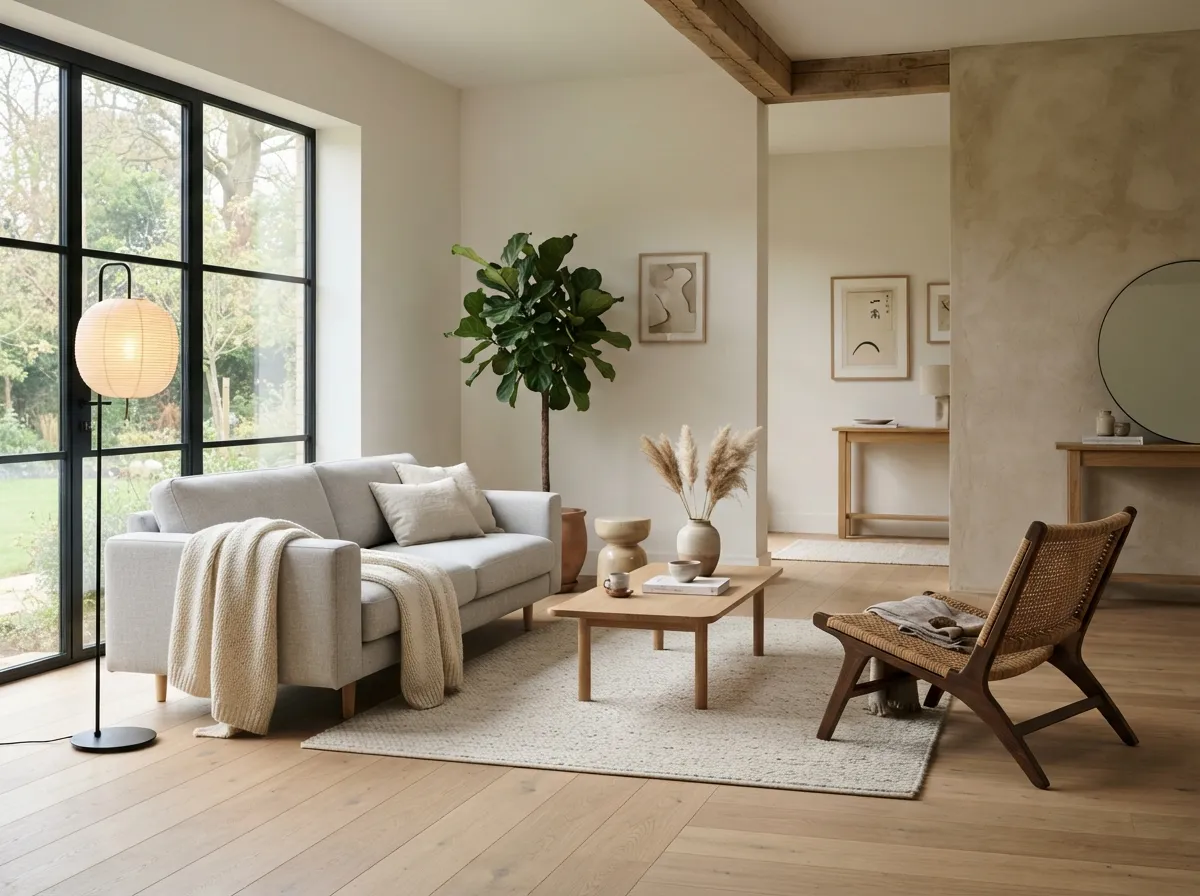
Choosing the right minimalist style is not just about visual aesthetics but also about how the space supports your daily routine. Consider whether you need a deeply calm and meditative atmosphere or prefer a touch of inviting warmth.
The Wabi-Sabi style, with its earthy color palette and rough textures, suits those seeking peace. On the other hand, Scandinavian offers comfort with light gray upholstered furniture and warm lighting from minimalist floor lamps.
If you value a balance of functionality and tranquility, Japandi is the best choice. This space features a woven rattan lounge chair with a solid wood coffee table, creating perfect harmony.
Choose the style that truly aligns with the way you live.
27. Budget-Friendly Approaches to Minimalist Styling
Creating a minimalist aesthetic doesn’t have to drain your wallet. The key lies in smart choices focused on essence, not luxury.
Start by decluttering and keep only items that are functional and meaningful.
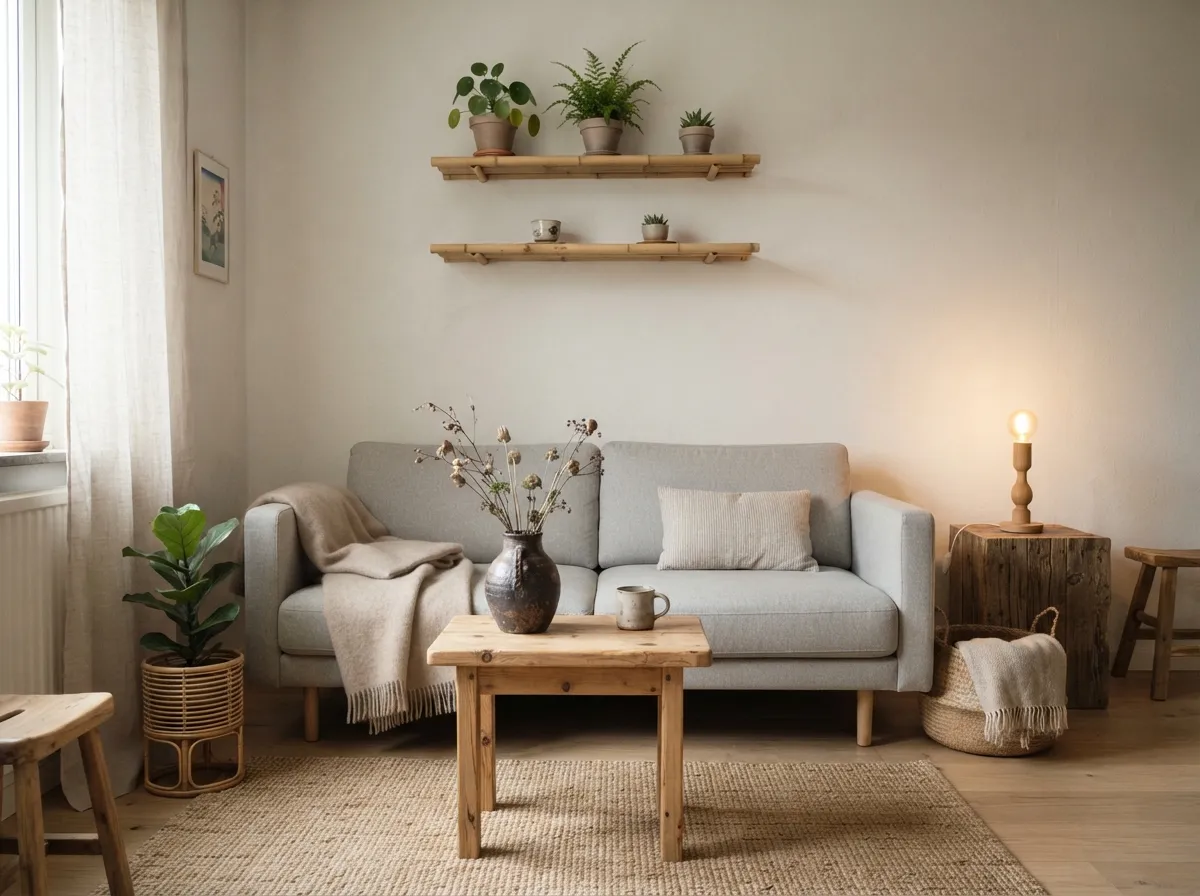
Prioritize multifunctional furniture, such as a side table that also serves as storage, or a simple repainted wall shelf. Choose affordable natural materials like pine wood or bamboo for accents, as seen in the hanging wall shelf displaying a few small potted plants.
Personal touches through DIY projects, such as a handmade ceramic vase on the coffee table, can add character. Use efficient lighting, for example a table lamp with a warm LED bulb, to create atmosphere without much decoration.
Simplicity is the key to a style that is economical yet elegant.
28. Integrating Natural Elements for Any Minimalist Home
Bringing natural elements into the home is a strong common thread among all minimalist styles. This not only adds organic beauty but also creates a calming connection with the outside world.
Think about authentic materials and textures.
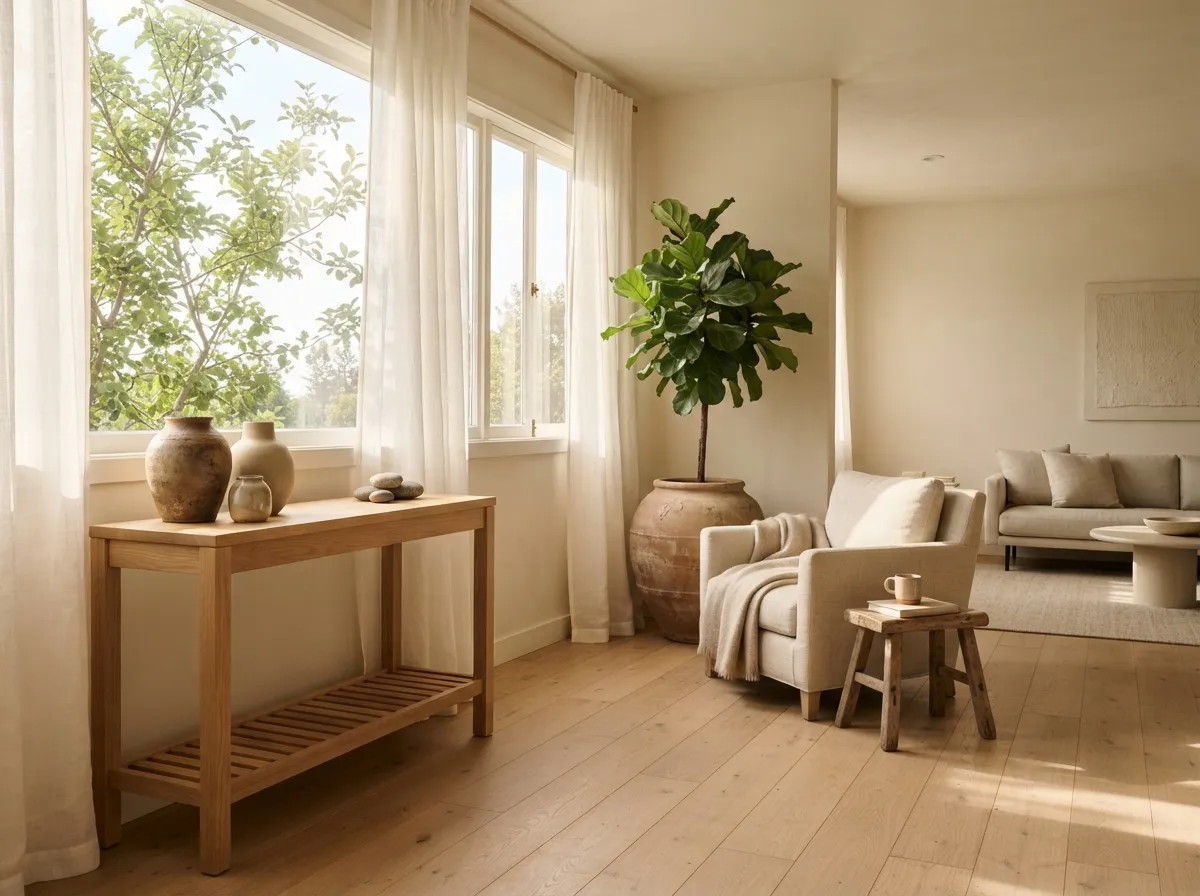
Walls in soft cream colors and light oak wood floors provide the perfect foundation, refracting natural light beautifully. Add a touch of Japandi with minimalist solid wood furniture and rough-textured ceramic accents.
Elements such as broad-leafed green plants in terracotta pots and small river stones as decoration on the coffee table create calming focal points. With the integration of natural elements, you create a space that feels alive and breathing.
29. Cultivating a Mindful Home: Living with Purposeful Design
Creating a minimalist home is about more than just aesthetics; it is a practice for cultivating a more mindful life. Every design choice should have a purpose, supporting your well-being and reducing mental clutter.
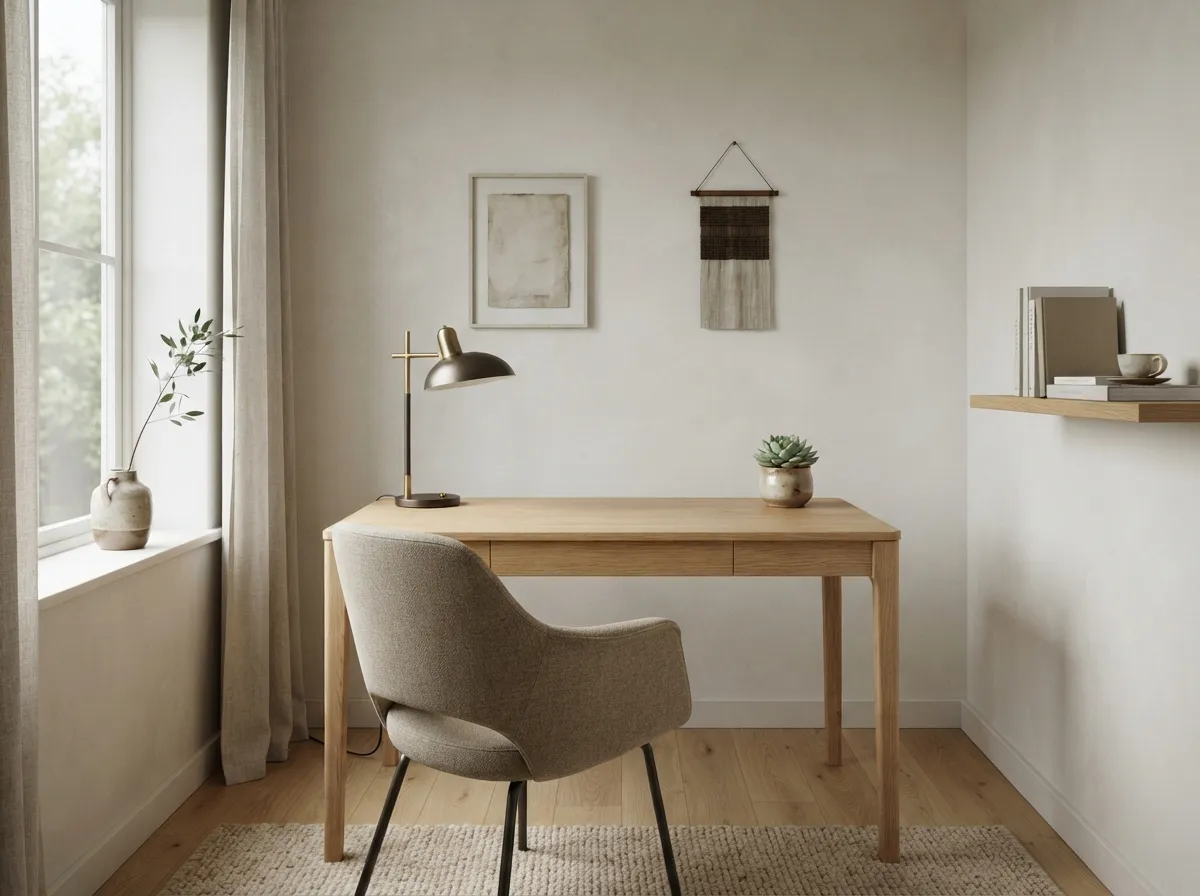
Choose objects that carry clear meaning or functionality. A space focused on balance and simplicity, with a neutral color palette and essential furniture, will help you find tranquility.
For example, a minimalist wooden desk with a single warm reading lamp.
By letting go of the unnecessary, you make room for the things that truly matter. This is an invitation to live more intentionally, where every corner of the home supports your purpose and peace of mind.
Your home becomes a reflection of a meaningful life.
Ultimately, selecting your ideal minimalist style hinges on personal resonance. Whether drawn to Japandi’s balanced harmony, Scandinavian’s cozy functionality, or Wabi-Sabi’s embrace of imperfection, infuse your home with authenticity. Let your chosen aesthetic reflect comfort, peace, and natural beauty.