Creating a functional yet serene minimalist home office for two can be a delightful challenge. Discover practical and stylish ideas to design a shared workspace that fosters productivity and harmony. These tips ensure both partners thrive in a beautifully organized environment, optimizing space and focus.
1. Define Clear Individual Workspace Zones
Creating distinct zones is fundamental for shared home offices. This approach helps maintain individual focus and prevents professional overlap, even within the same room.
Subtly delineate each person’s area without the need for physical walls. This can be achieved through clever furniture placement or strategic use of light.
Perhaps two desks are oriented differently, or a low, open shelf acts as a gentle separator. Such clear divisions promote personal productivity and peace.
2. Embrace Vertical Storage Solutions
Maximizing vertical space is a smart strategy for any minimalist shared office. Wall-mounted shelves or tall, slender bookcases keep surfaces clear and organized.
This approach frees up valuable desk space, which is crucial when two people are working side-by-side. Consider open shelving units above each workstation for easy access to frequently used items.
A well-designed vertical storage system helps maintain a clean, uncluttered aesthetic while providing ample room for essentials. It contributes significantly to a streamlined, functional environment.
3. Opt for an Extended Dual Worksurface
A long, continuous desk surface offers a cohesive and practical solution for couples. This single, expansive workspace promotes a sense of unity while providing generous room for each individual.
Selecting a durable material like light natural wood enhances both functionality and visual appeal. Pairing this extended surface with individual mobile pedestals or discreet drawers underneath allows for personalized storage.
This setup avoids visual fragmentation and ensures each person has ample, uninterrupted space to work comfortably. The continuous line creates an elegant, uncluttered look.
4. Integrate Seamless Built-In Storage
For the ultimate minimalist look, built-in storage solutions are unparalleled. Custom cabinetry designed to blend with the walls offers discreet organization.
This approach eliminates visual clutter, as items are hidden behind flush panels. Consider matte white or light grey finishes for these units to maintain a calm and airy feel.
Built-ins maximize every inch of space, providing ample storage without encroaching on the room’s footprint. The result is a clean, architectural aesthetic that supports focused work.
5. Curate a Calming, Neutral Color Palette
A neutral color palette fosters a peaceful and productive work environment. Soft whites, light greys, and warm beiges create a serene backdrop that minimizes distractions.
Incorporating natural wood tones for desks and shelving adds organic warmth. This approach allows subtle textures, like a woven rug or linen curtains, to add interest without overwhelming the senses.
A cohesive, muted color scheme contributes significantly to a harmonious shared workspace. It promotes a feeling of calm, aiding concentration for both individuals.
6. Maximize Natural Light Exposure
Natural light is a powerful tool for boosting productivity and overall well-being in any workspace. Position your shared desks to take full advantage of large windows or glass doors.
This strategic placement ensures both partners benefit from the invigorating glow of sunlight. It helps reduce eye strain and can elevate your mood throughout the workday.
Consider using sheer white curtains or blinds to filter harsh glare while still allowing ample light to penetrate the room. Light-colored walls, such as soft whites or gentle grays, will further reflect and amplify the available light.
This thoughtful approach creates an open, airy atmosphere that feels expansive, even in a compact area. It contributes significantly to a refreshing and focused work environment.
7. Provide Dedicated Task Lighting for Each
Even with ample natural light, dedicated task lighting is crucial for each individual in a shared office space. This ensures focused illumination precisely where it’s needed for detailed work.
Select sleek, adjustable desk lamps that complement your minimalist aesthetic. Placing one on each desk allows both partners to customize their lighting intensity and direction.
This personalized approach prevents shadows and reduces eye fatigue during extended work sessions. It helps maintain individual comfort and concentration without disturbing the other person.
Opt for lamps with warm white light to create a cozy yet productive ambiance. This strategic lighting solution enhances functionality and supports a comfortable shared workspace.
8. Choose Ergonomic, Space-Saving Chairs
Comfort and good posture are paramount, especially when sharing a home office that might be smaller. Investing in ergonomic, space-saving chairs is a smart choice for both partners.
Look for chairs with a streamlined design, perhaps armless or with slender profiles, that can tuck neatly under desks. This maintains a clean line and maximizes precious floor space.
These chairs should offer essential adjustable features like height and lumbar support to cater to individual needs. They ensure that each person can maintain a healthy and comfortable working position.
Selecting chairs in neutral tones like light gray or white helps them blend seamlessly into a minimalist decor. This choice supports both functionality and the overall aesthetic of your shared workspace.
9. Implement Smart Cable Management
A clean, clutter-free workspace is a cornerstone of minimalist design, and effective cable management is essential for achieving this. Visible wires can quickly disrupt a serene environment.
Utilize solutions such as cable trays mounted beneath desks, desk grommets for routing wires, and simple cable ties. These tools keep electronics organized and out of sight.
This attention to detail creates a visually calm space, reducing distractions for both partners. It allows you to focus purely on your work without visual noise.
A well-managed cable system not only looks tidier but also makes cleaning easier and safer. It significantly enhances the functionality and aesthetic appeal of your shared home office.
10. Select Multifunctional Furniture Pieces
In a shared minimalist home office, every piece of furniture should earn its place by serving multiple purposes. This approach maximizes utility without overwhelming the space.
Consider desks with integrated shelving or drawers that provide immediate storage for supplies, keeping surfaces clear. This built-in functionality reduces the need for additional storage units.
A sleek storage ottoman, for instance, can provide extra seating when needed and also discreetly hide office essentials. It’s a versatile addition that supports both comfort and organization.
Choosing items with clean lines and a simple aesthetic ensures they blend seamlessly into your minimalist design. This thoughtful selection helps maintain an uncluttered and efficient shared workspace.
11. Maintain Pristine, Clutter-Free Desktops
A truly minimalist shared workspace thrives on clear surfaces. Keeping desktops pristine ensures a calm and focused environment for both partners, reducing visual noise that can hinder concentration.
Carefully curate the items allowed on each desk. Opt for only essential tools and a few decorative pieces that serve a purpose or bring joy without adding bulk.
Integrated cable management solutions are key to maintaining this tidy aesthetic. Hidden wires contribute significantly to the overall sense of order and cleanliness.
This dedication to neatness elevates the entire shared office experience.
12. Assign Private Storage Drawers or Cabinets
Even in a shared office, personal space is paramount for productivity. Assigning dedicated storage drawers or cabinets to each individual helps maintain boundaries and prevents clutter from spilling onto shared surfaces.
This approach allows each partner to organize their personal documents and supplies according to their own system. Sleek, built-in drawer units beneath the desk or tall, slender cabinets beside each workstation are excellent choices.
Opt for units with a clean, handle-less design to maintain the minimalist aesthetic. These private storage solutions contribute significantly to a harmonious and functional shared environment.
13. Consider Wall-Mounted Floating Desks
Wall-mounted floating desks are an ingenious solution for couples sharing a workspace, especially in smaller rooms. Their design creates an open and airy feel, making the room appear larger and less cluttered.
These desks are directly affixed to the wall, eliminating chunky legs and maximizing floor space. Choose sturdy materials like solid wood or high-quality laminates in a clean, understated finish.
A light wood or pure white surface can enhance the spaciousness. This contemporary choice not only looks modern but also offers stable and functional individual workstations.
14. Introduce Subtle Indoor Greenery
Bringing elements of nature into your minimalist home office can significantly enhance well-being and air quality. Subtle indoor greenery adds a touch of life and freshness without disrupting the clean aesthetic.
Choose low-maintenance plants such as snake plants, ZZ plants, or small Pothos. Place them in simple, unadorned ceramic or terracotta pots that complement the room’s color scheme.
A small plant on each desk or a larger, elegant floor plant in a corner can provide a refreshing visual break. This natural touch fosters a more inviting and calming work environment for both partners.
15. Coordinate Desk Accessories for Unity
Achieving a cohesive look in a shared minimalist office involves coordinating desk accessories. This doesn’t mean everything has to be identical, but rather that items should complement each other in style, material, or color palette.
Opt for accessories like pen holders, mouse pads, and desk organizers that share a similar finish, such as matte black, brushed metal, or natural wood. This visual harmony creates a sense of unity across the shared workspace.
By selecting pieces with a consistent aesthetic, you establish a polished and thoughtfully designed environment that feels shared and balanced.
16. Establish a Cohesive Design Aesthetic
Establishing a cohesive design aesthetic is fundamental in a shared minimalist home office. This involves selecting a unified color palette and consistent material choices that resonate with both partners.
Consider a serene blend of light wood and soft grays. Integrating matching furniture pieces, like ergonomic chairs and sleek desks, creates a harmonious flow.
This visual consistency helps to expand the perceived space. A unified look promotes focus and reduces visual clutter.
Even small decorative elements should align with the overall theme. Subtle wall art or desk accessories sharing a similar style make the workspace feel larger and more intentionally designed.
This ensures a seamless and professional environment for both.
17. Install Dimmable Overhead Lighting
Dimmable overhead lighting is a practical consideration for a shared minimalist home office. It offers unparalleled flexibility, allowing each partner to adjust the brightness to their specific task or time of day.
Recessed fixtures provide a clean, uncluttered look. This adaptability is key for minimizing eye strain and maximizing comfort, whether you are reading detailed documents or working on a computer.
A softer, warmer glow can also create a more relaxed atmosphere. This customization helps both individuals.
The ability to control light intensity helps in transitioning from focused work to more casual activities within the same space. It supports different moods and functions seamlessly.
This thoughtful illumination enhances productivity and well-being effectively.
18. Employ Sound-Absorbing Elements
In a shared home office, employing sound-absorbing elements is crucial for maintaining focus and privacy. Soft furnishings, like a thick area rug and heavy curtains, naturally dampen ambient noise.
This creates a quieter, more conducive work environment. Consider subtle acoustic panels on walls or beneath desks.
These unobtrusive additions significantly reduce echo and minimize distractions from phone calls or typing sounds. They blend seamlessly into a minimalist aesthetic.
Additionally, introducing large plants can also help absorb sound while adding natural beauty. Strategically placed elements contribute to a calmer atmosphere, allowing both partners to concentrate better.
This thoughtful approach enhances productivity for everyone.
19. Personalize with Minimalist Art or Photos
Personalizing your shared workspace with minimalist art or photos adds character without introducing clutter. Choose pieces that resonate with both individuals and complement the overall design aesthetic.
Simple framed abstract line art works well. A few carefully selected black and white photographs in sleek, light wood frames can bring warmth and a sense of identity.
These elements should be intentionally placed, rather than scattered, maintaining visual order. This creates a sense of belonging.
The goal is to infuse personality subtly, ensuring the space remains calm and focused. These personal touches should enhance the room’s atmosphere, not detract from its minimalist principles.
They offer a refreshing visual break and inspiration.
20. Schedule Regular Digital Decluttering
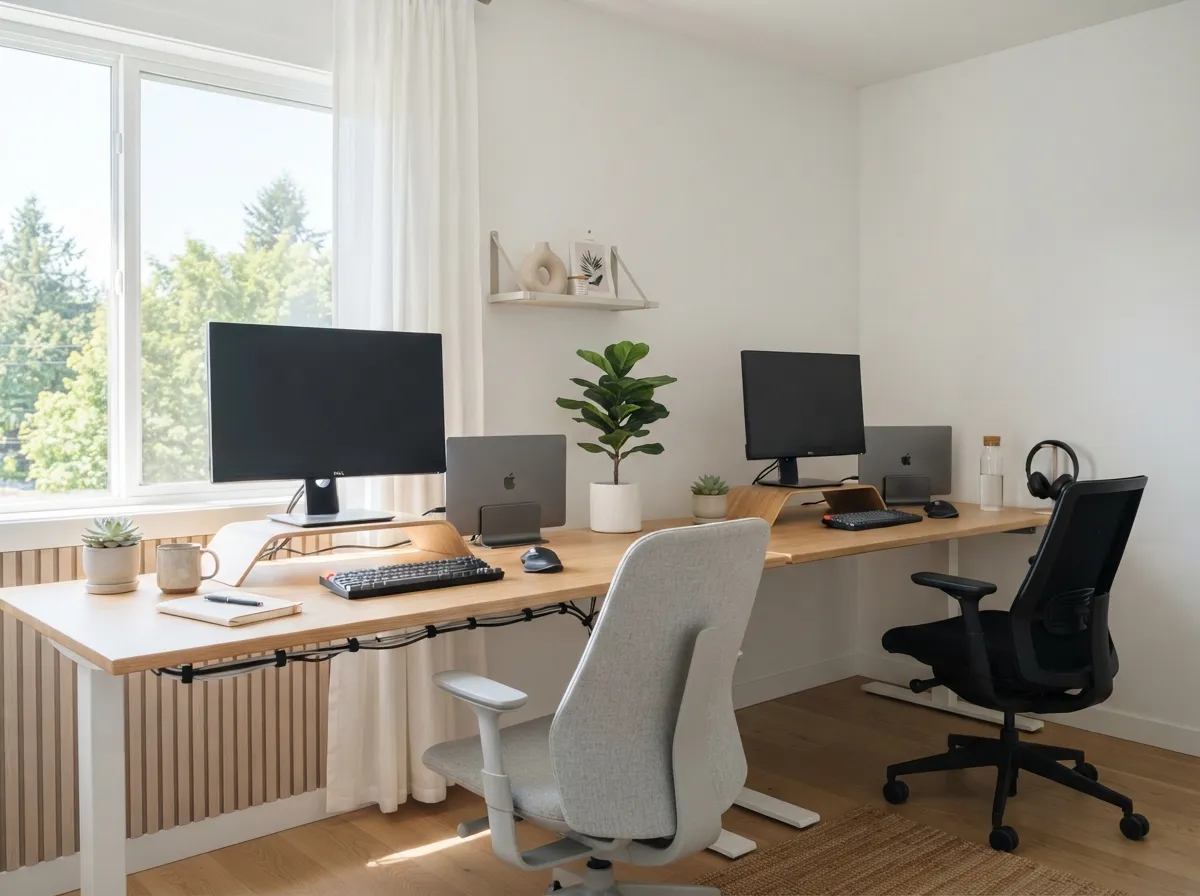
Scheduling regular digital decluttering is as vital as physical organization in a shared home office. A clean desktop, organized folders, and streamlined cloud storage prevent digital chaos.
This ensures both partners can easily find what they need. Designate specific times each week or month to tidy up files and archive old documents.
This practice not only saves time but also reduces mental strain. An organized digital space effectively mirrors a peaceful physical one.
This consistent effort contributes significantly to a more efficient and less stressful work environment. It ensures shared drives remain manageable and promotes clearer communication between partners.
A clutter-free digital presence supports focused work.
21. Choose Durable, Low-Maintenance Materials
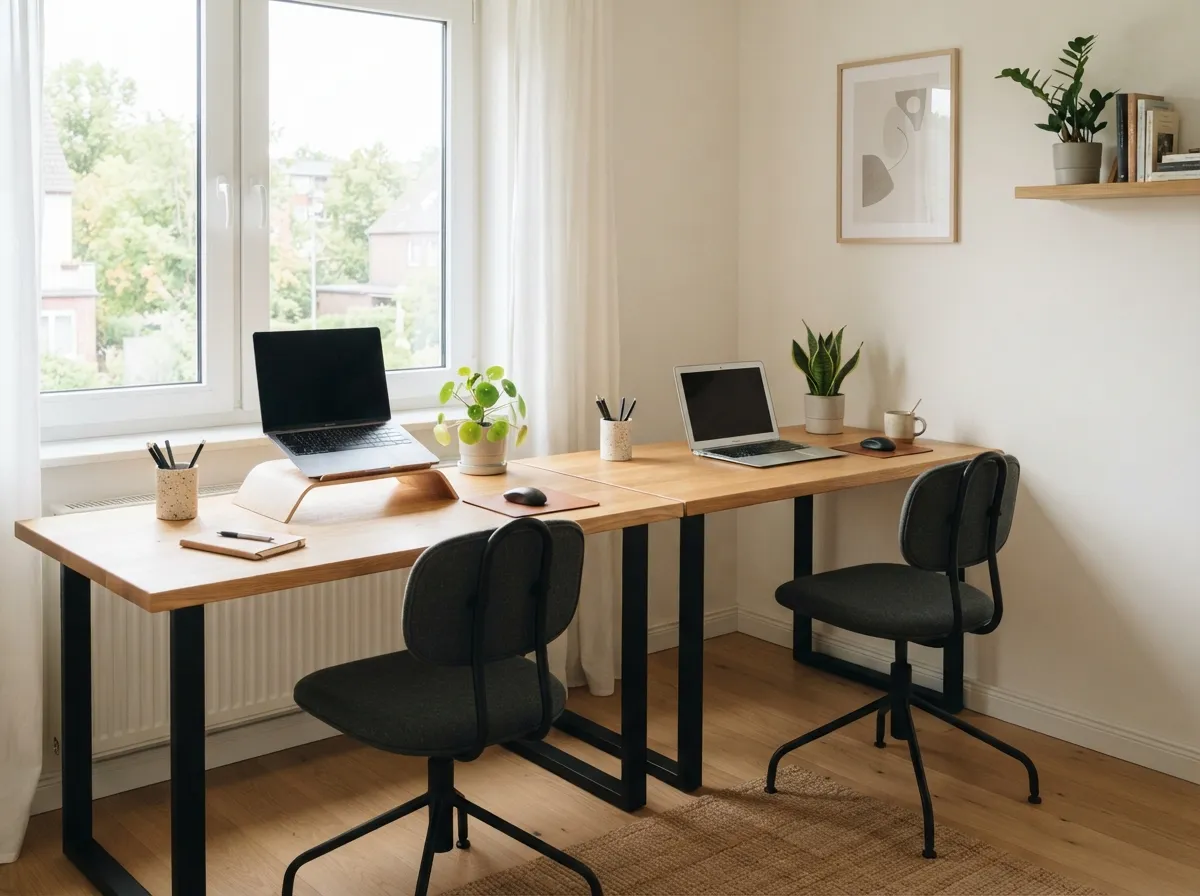
When designing a shared minimalist home office, selecting the right materials is crucial. Opting for durable and low-maintenance options ensures your workspace remains functional and attractive for years to come.
This approach reduces the need for frequent repairs or replacements, aligning perfectly with a minimalist philosophy of thoughtful consumption.
Consider sturdy surfaces like solid wood, high-quality laminate, or even sleek metal for desks and shelving. These materials not only withstand daily wear and tear but are also easy to wipe clean, helping to maintain a pristine environment.
Focus on finishes that resist fingerprints and minor scratches. A desk with a smooth, light-toned wood surface, for instance, offers both resilience and a bright, inviting aesthetic.
Incorporating elements like matte black metal chair frames or lamp bases further enhances durability while contributing to a modern, uncluttered look.
Such material choices contribute significantly to a peaceful and productive atmosphere. They provide a foundational strength that supports a calm and focused work environment for both partners.
22. Incorporate a Shared Planning Board
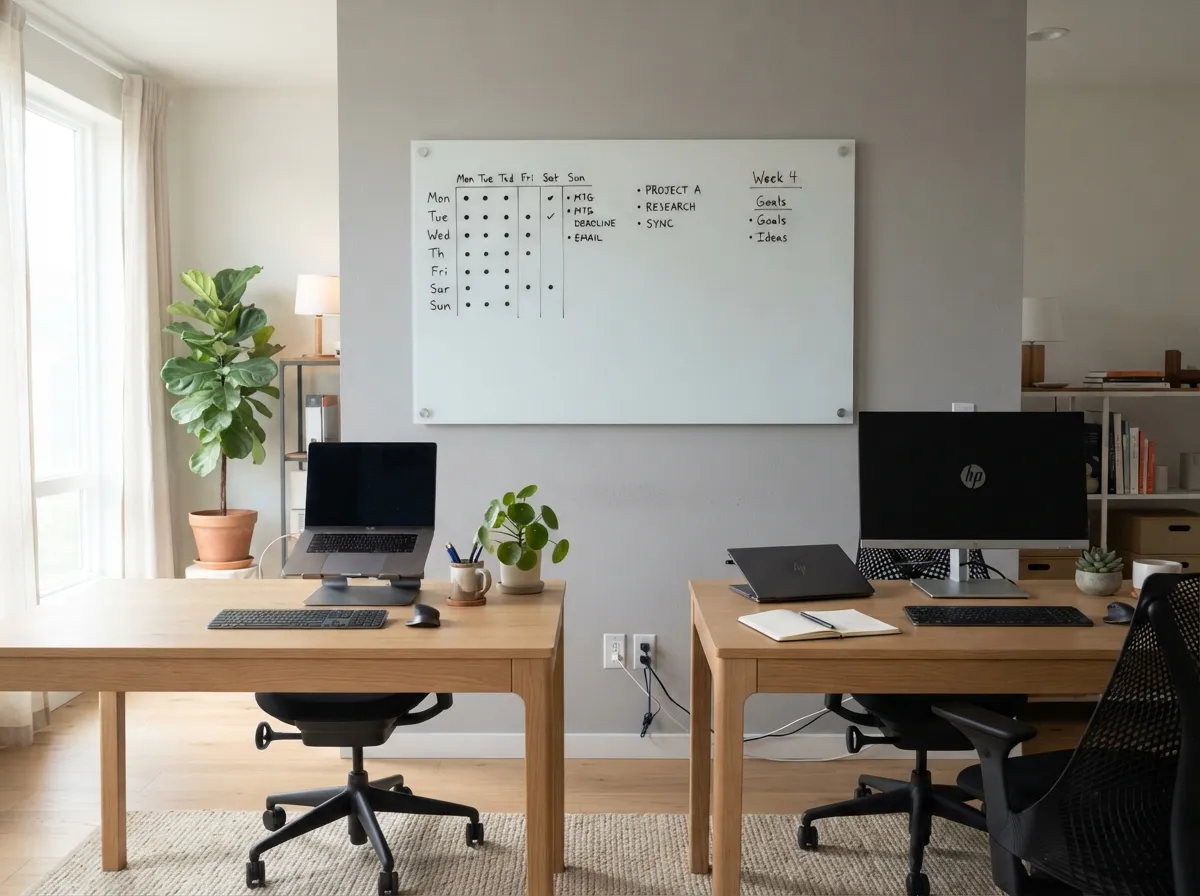
In a shared minimalist office, clear communication and organization are paramount. A shared planning board serves as an excellent tool for couples to coordinate tasks, deadlines, and important notes without adding visual clutter to individual workspaces.
This centralized system keeps vital information accessible to both partners.
Choose a board that integrates seamlessly into your minimalist design. A sleek, frameless magnetic whiteboard or a cork board with clean lines can be mounted on a wall without overpowering the aesthetic.
Position it in a common area where both individuals can easily see and update it.
This communal planning space helps to keep individual desk surfaces clear of paper and sticky notes. It promotes a more organized approach to shared projects and personal schedules, fostering a sense of teamwork.
Using a shared board maintains a tidy environment, where ideas and tasks are consolidated in one visible, yet contained, location. This small addition significantly enhances productivity while preserving the serene feel of the office.
23. Designate a Nearby Relaxation Nook
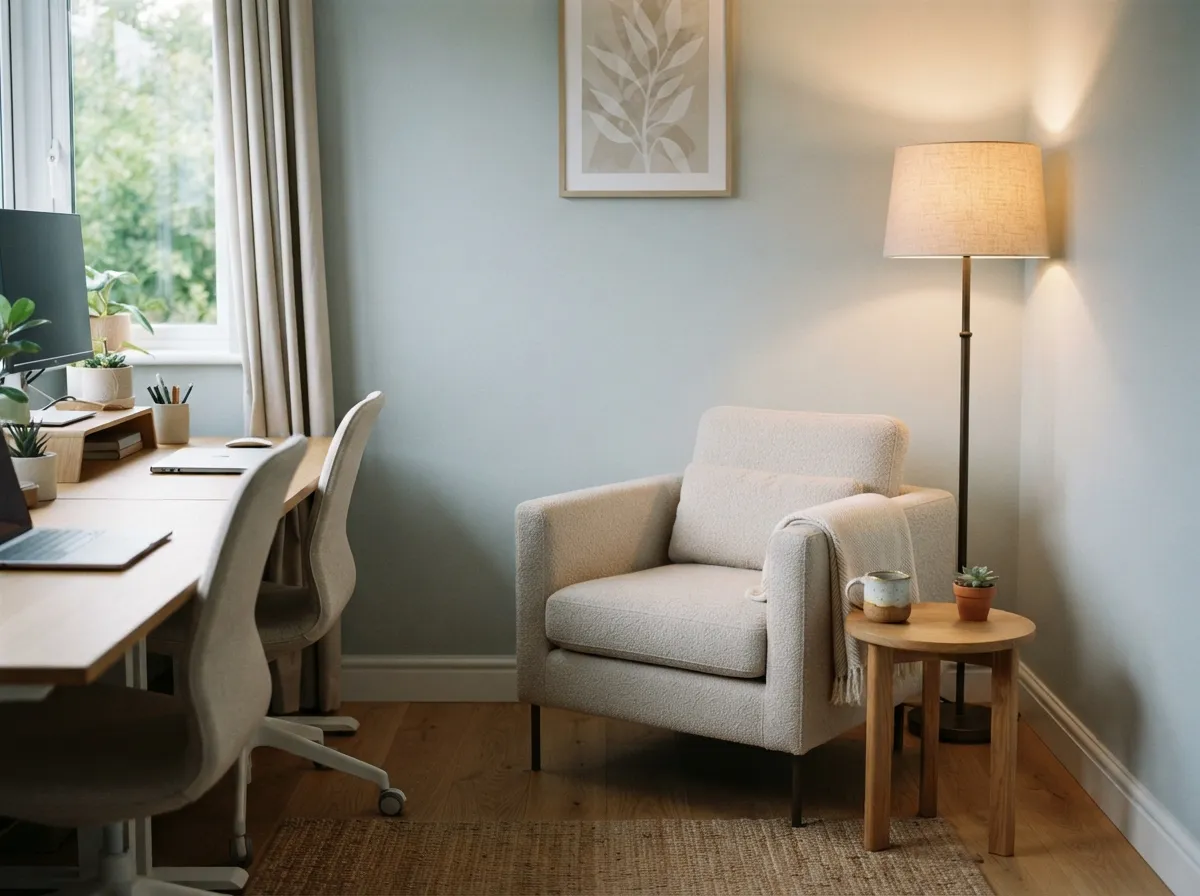
Even in the most productive home office, taking short breaks is essential for mental well-being and sustained focus. Designating a small, nearby relaxation nook allows both partners to step away from their desks without fully leaving the work environment.
This separate space helps to reset the mind and body.
This nook doesn’t need to be elaborate; its simplicity is key to a minimalist approach. A comfortable, uncluttered armchair in a neutral tone, paired with a small, round wooden side table and a warm-toned floor lamp, creates an inviting spot.
Place it slightly away from the main work desks to create a sense of separation.
This area encourages mindful pauses, whether for reading a book, sipping tea, or simply resting your eyes. It prevents the main workspace from becoming a ‘living room,’ helping to maintain boundaries.
Such a space contributes to a balanced work-life dynamic within the home office. It offers a gentle respite, ensuring both individuals can recharge and return to their tasks refreshed.
24. Maintain a Consistent Material Palette
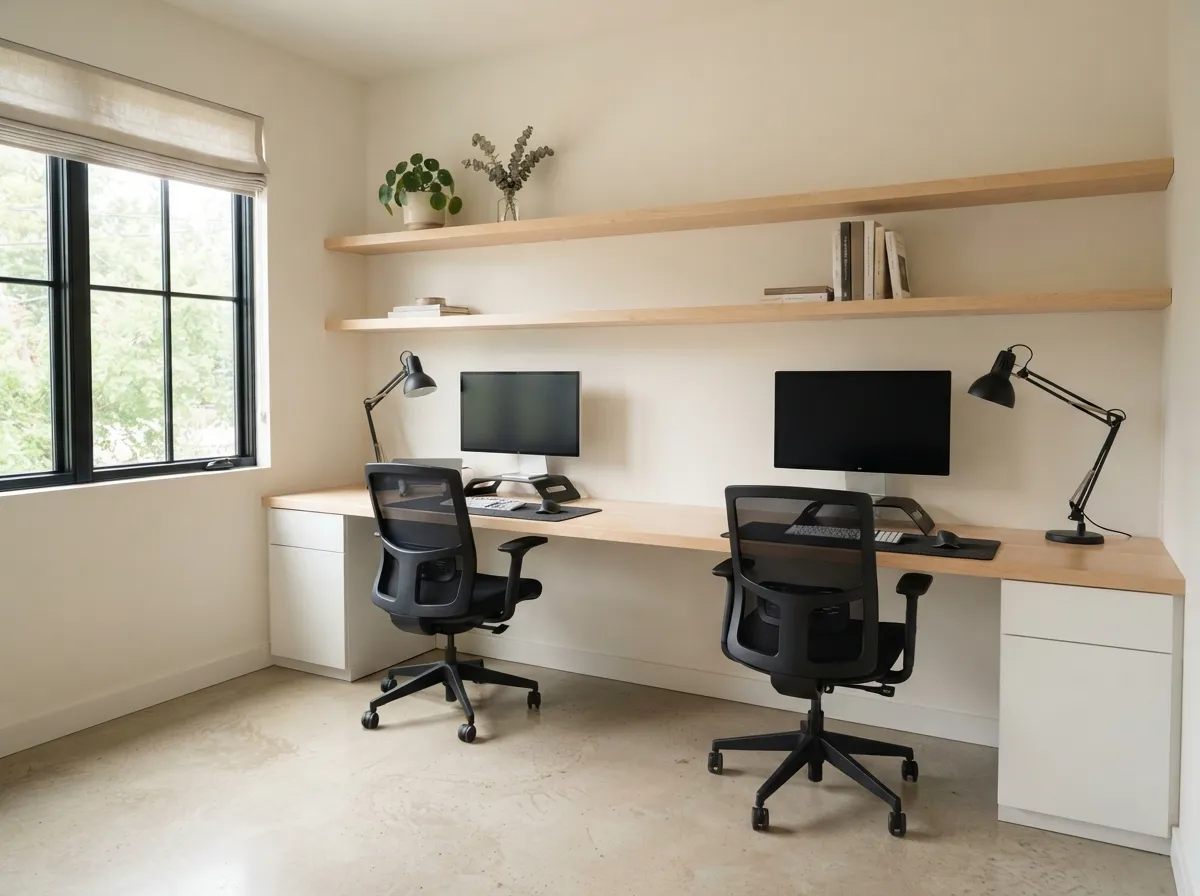
Achieving a truly minimalist aesthetic in a shared home office relies heavily on a consistent material palette. By sticking to a limited selection of materials and finishes, you create a cohesive and visually calm environment.
This consistency reduces visual noise, allowing for greater concentration and a more harmonious atmosphere.
Choose two or three primary materials that complement each other. For example, combining light maple wood for desks and shelving, crisp white surfaces for storage, and matte black metal for chair frames and lighting fixtures creates a sophisticated yet understated look.
This approach applies to all major furniture pieces and accessories.
This thoughtful selection ensures that every element feels intentionally placed and contributes to the overall sense of order. The lack of jarring contrasts or disparate textures helps maintain a feeling of serenity.
A unified material palette enhances the clean lines and open feel characteristic of minimalist design. It fosters a peaceful and productive space where both partners can work without distractions, promoting a sense of shared calm.
25. Utilize Mobile Under-Desk Storage Carts
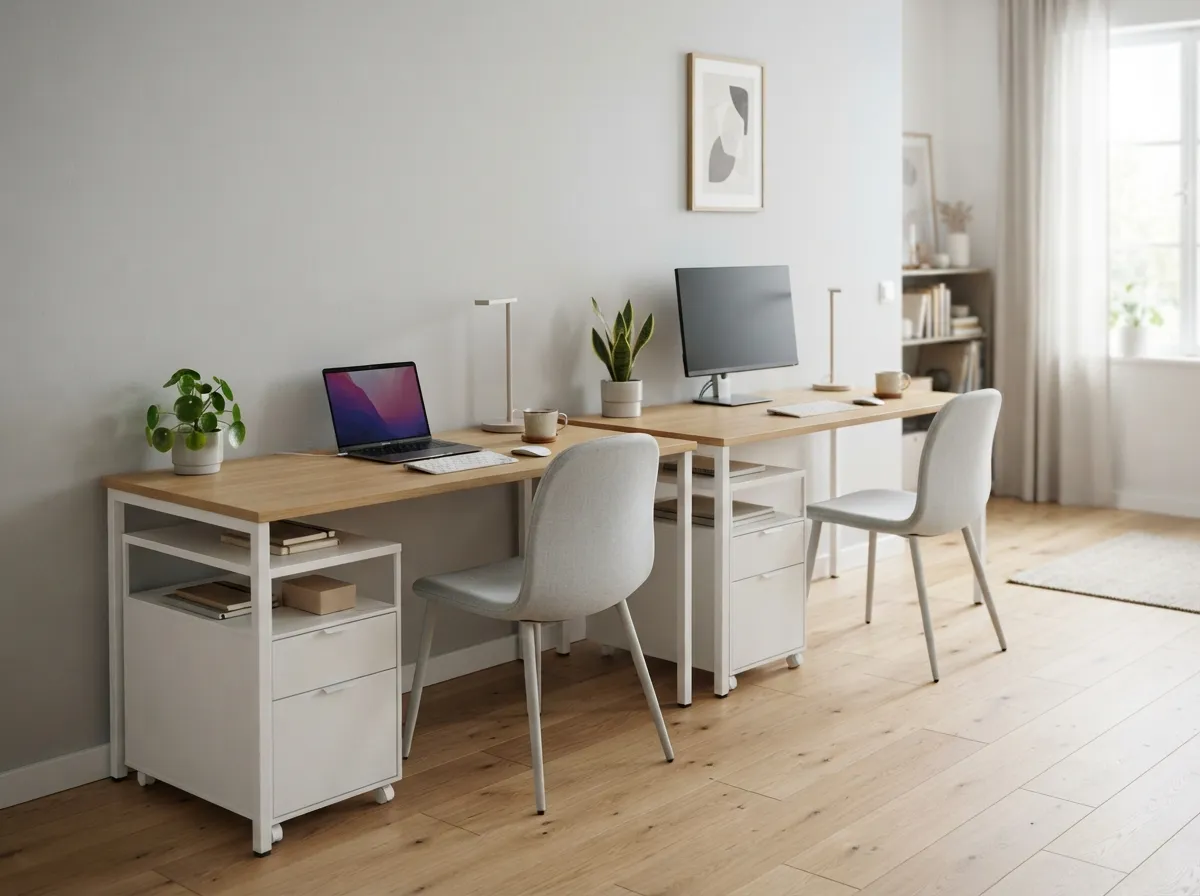
Maximizing space and maintaining a clutter-free environment are key in a minimalist shared home office. Mobile under-desk storage carts offer an exceptionally versatile solution for keeping essentials organized and within reach without occupying valuable desk surface area.
Their mobility adds a layer of flexibility to your workspace.
These carts can house files, stationery, and personal items, allowing each partner to have their designated storage that can be moved as needed. Look for sleek designs made from durable materials like white metal or light wood, equipped with smooth-gliding casters.
They should fit neatly under the desks, disappearing from view when not actively being used.
This type of storage provides easy access to supplies while ensuring that the main work surfaces remain clear for computers and active tasks. It’s an effective way to manage individual belongings in a communal space.
By tucking away items in these mobile units, you preserve the clean lines and open feel of your minimalist office. It contributes to an adaptable and tidy workspace, essential for productive collaborative work.
26. Optimize Layout for Individual Workflows
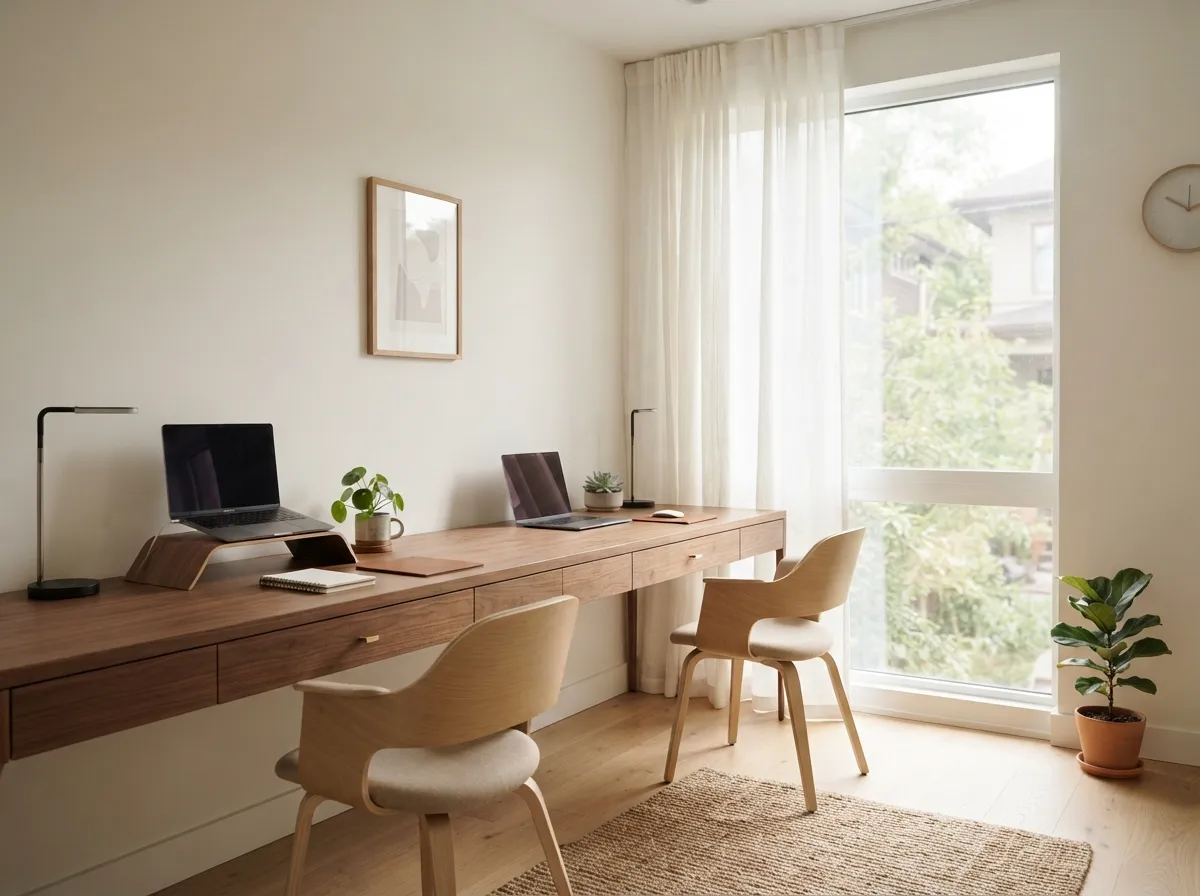
Designing a shared minimalist home office means creating space for two distinct workflows. This requires careful consideration of individual needs and habits.
A long, narrow desk can be highly effective, allowing each person their own dedicated zone. This physical separation helps maintain focus and minimizes distractions.
Consider built-in or modular storage units positioned strategically. They should support each individual’s requirements without cluttering the shared surface.
The use of warm wood tones for furniture helps unify the space. Natural light from a nearby window further enhances comfort and productivity for both users.
27. Ensure Ample Ventilation and Fresh Air
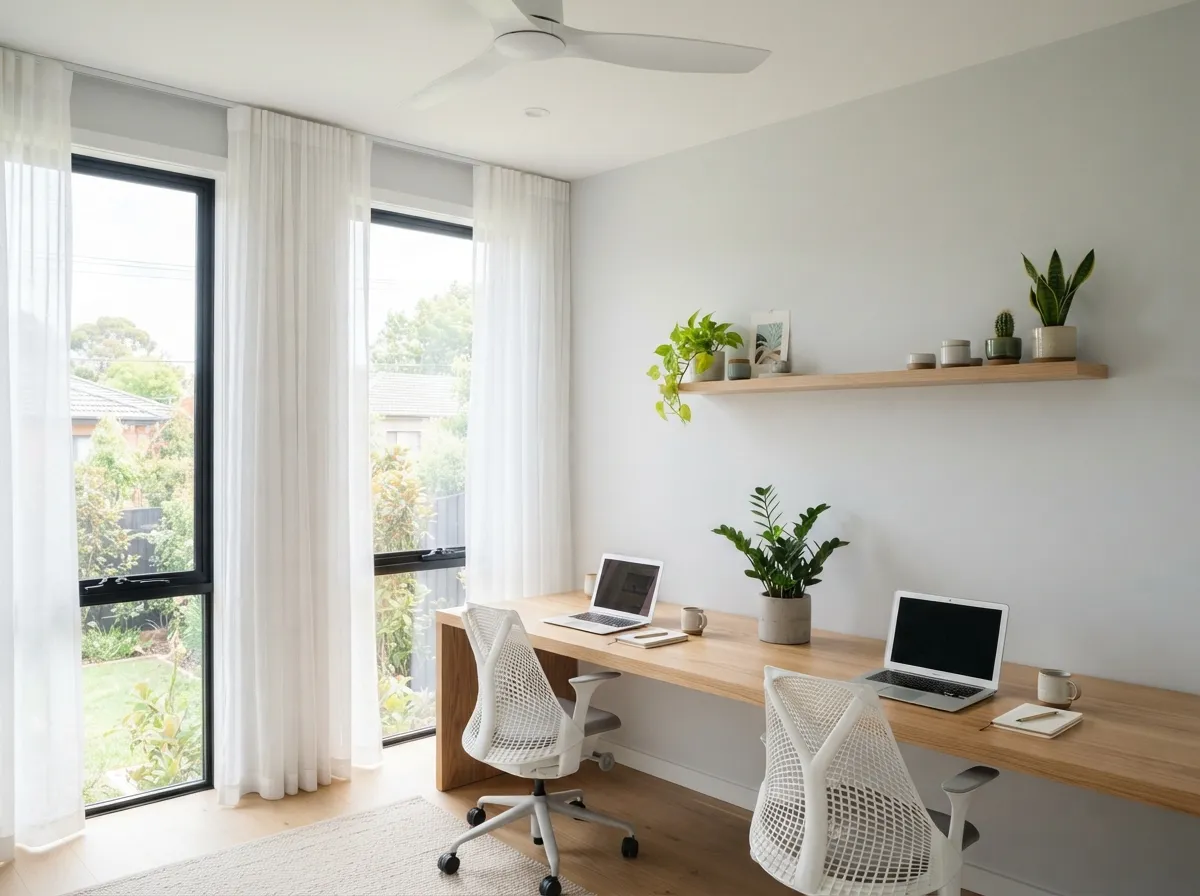
A comfortable shared home office environment thrives on good air quality and proper ventilation. This is crucial for sustained focus and well-being throughout the day.
Prioritize spaces with large windows that can be easily opened. This allows for a continuous flow of fresh air, reducing stuffiness and improving concentration.
Incorporate elements like sheer curtains to diffuse harsh light while still allowing air movement. A minimalist ceiling fan can also aid circulation without adding visual clutter.
Light-colored walls and a few strategically placed green plants contribute to an airy feel. These simple additions make the workspace feel more invigorating.
Designing a shared minimalist home office is about balance, smart storage, and personal touches. By integrating these ideas, couples can create a productive, harmonious, and clutter-free environment that supports both individual focus and collaborative work, making the most of their shared space.