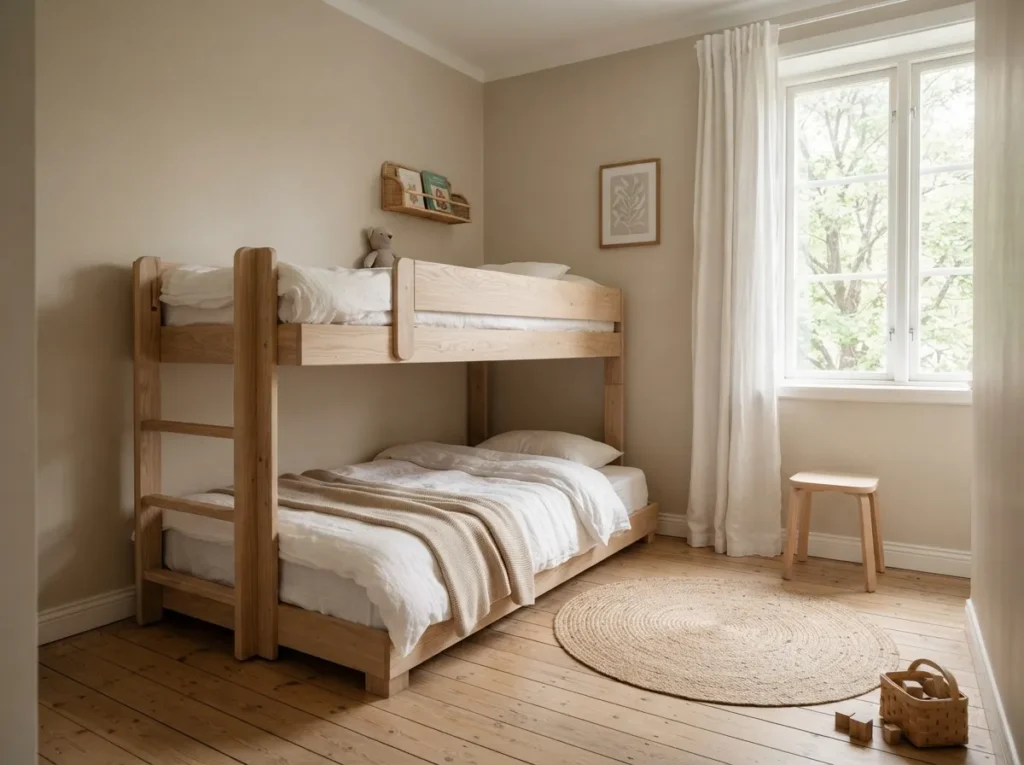
Sharing a small space does not mean sacrificing style or peace. These 20 minimalist kids’ room ideas for small shared bedrooms focus on functional, clutter-free solutions that maximize floor space, creating a calm, organized environment where your children can sleep, play, and grow together.
1. Low-Profile Wooden Bunk Beds
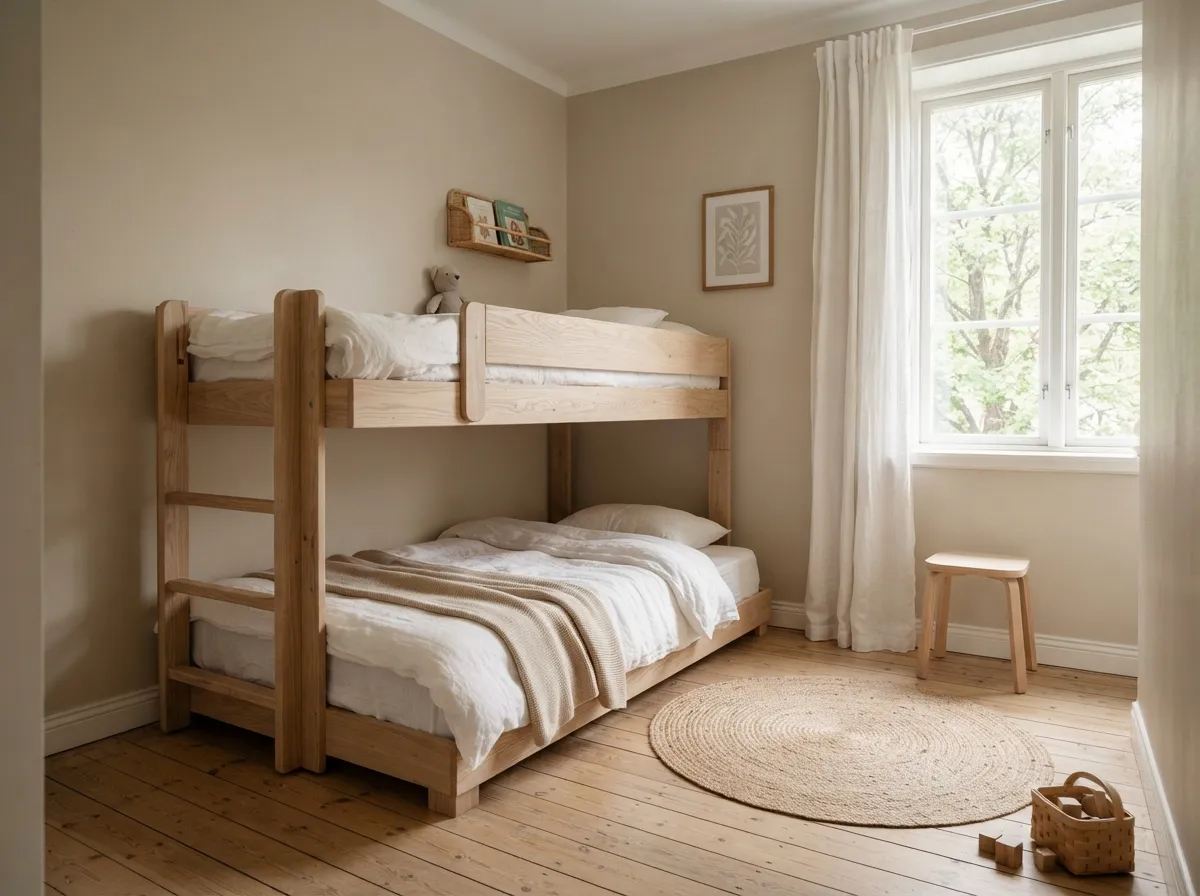
Low-profile bunk beds are a smart choice for rooms with low ceilings. By keeping the bottom bunk close to the floor, you create a safer sleeping environment for younger children.
The light oak wood adds warmth to the space without feeling heavy. It maintains an open, airy feel that is essential for small shared areas.
This design leaves more overhead clearance for the top bunk. It allows both kids to sit up comfortably in bed.
2. Under-Bed Rolling Storage Drawers
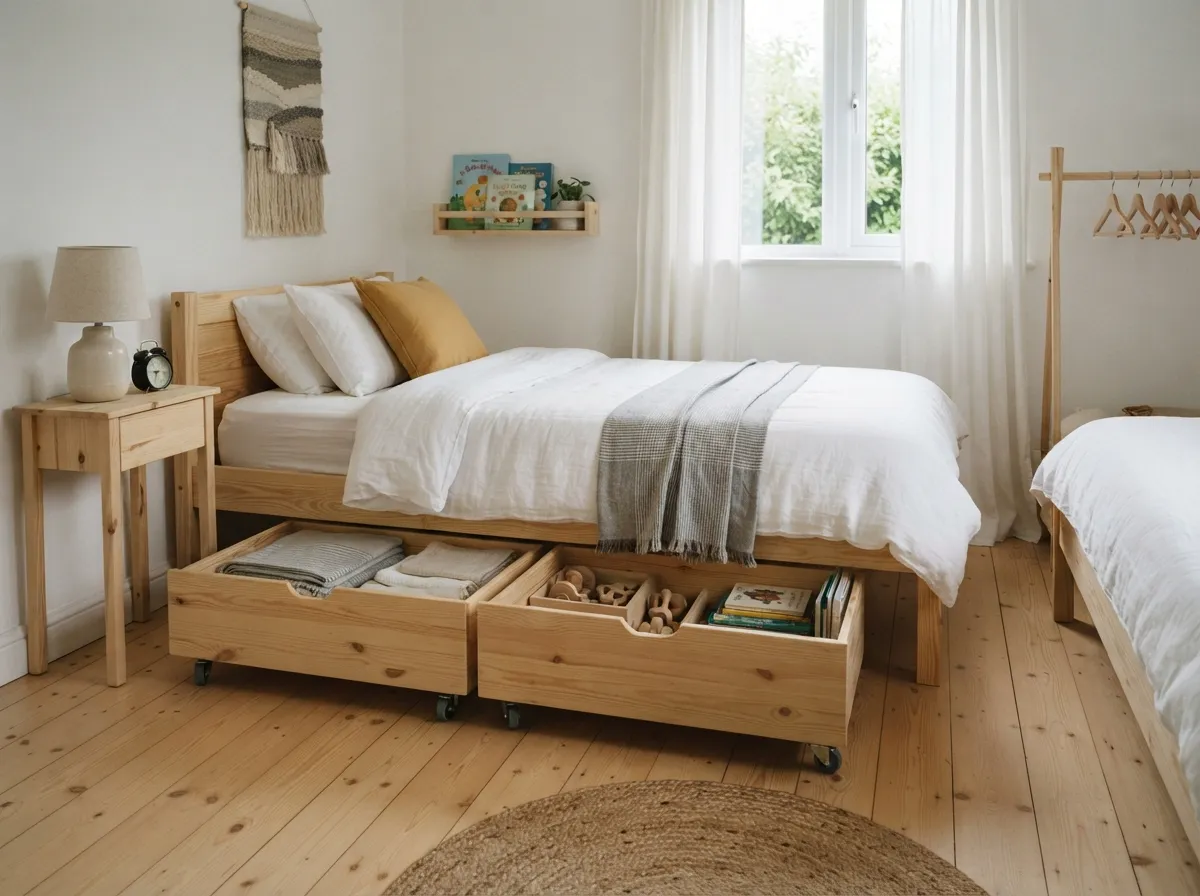
Utilizing the empty area beneath the bed is key in a compact bedroom. Rolling wooden drawers slide out easily to provide instant access to toys and seasonal clothes.
These low-profile storage bins keep clutter off the floor. They help teach children how to organize their own belongings.
Choosing drawers that match the bed frame creates a cohesive look. This seamless integration keeps the room looking tidy and spacious.
3. Monochromatic Color Palettes for Visual Space
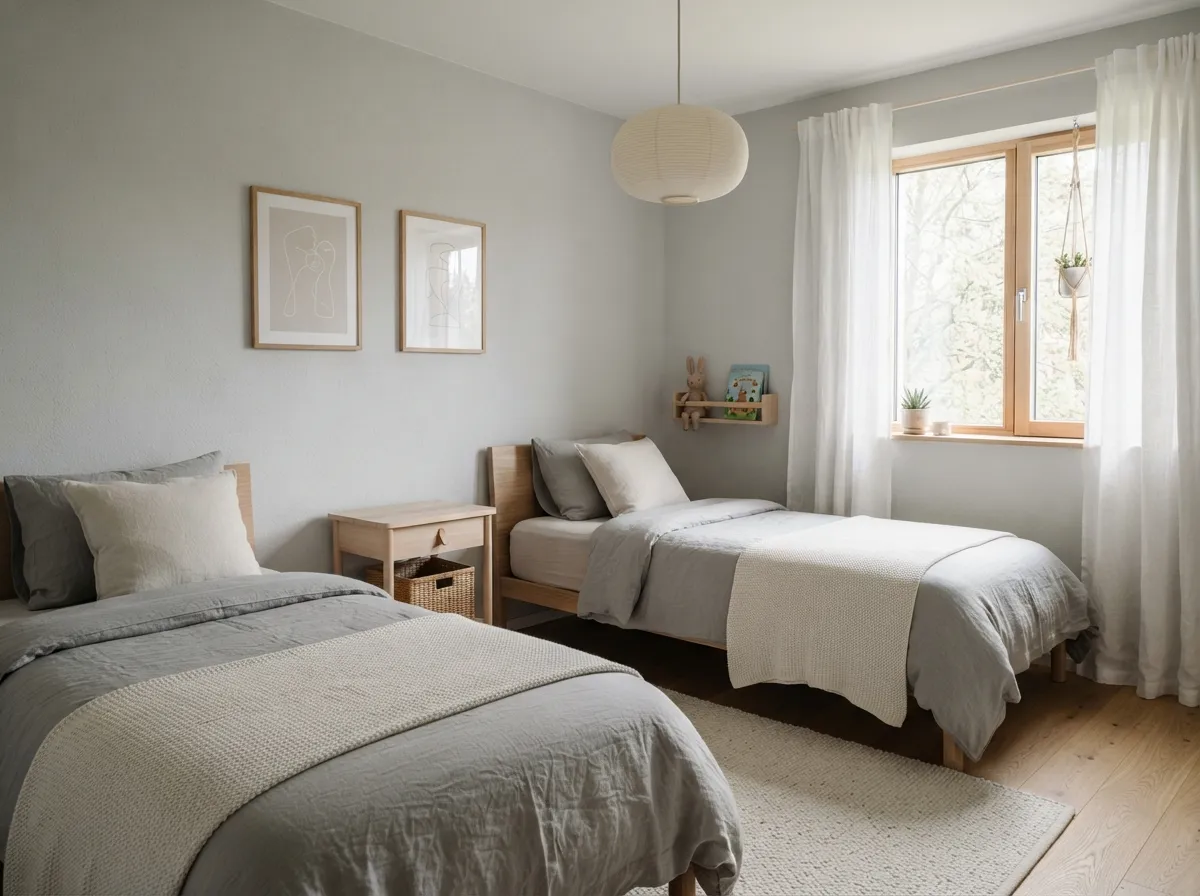
A monochromatic color scheme can make a small shared room feel much larger. Using soft shades of grey, cream, and beige helps reflect natural light.
This subtle palette minimizes visual noise. It creates a calm and peaceful environment that is perfect for resting and studying.
You can add depth by layering different textures instead of bright colors. Soft knit blankets and woven rugs bring warmth without cluttering the eyes.
4. Wall-Mounted Drop-Down Desks
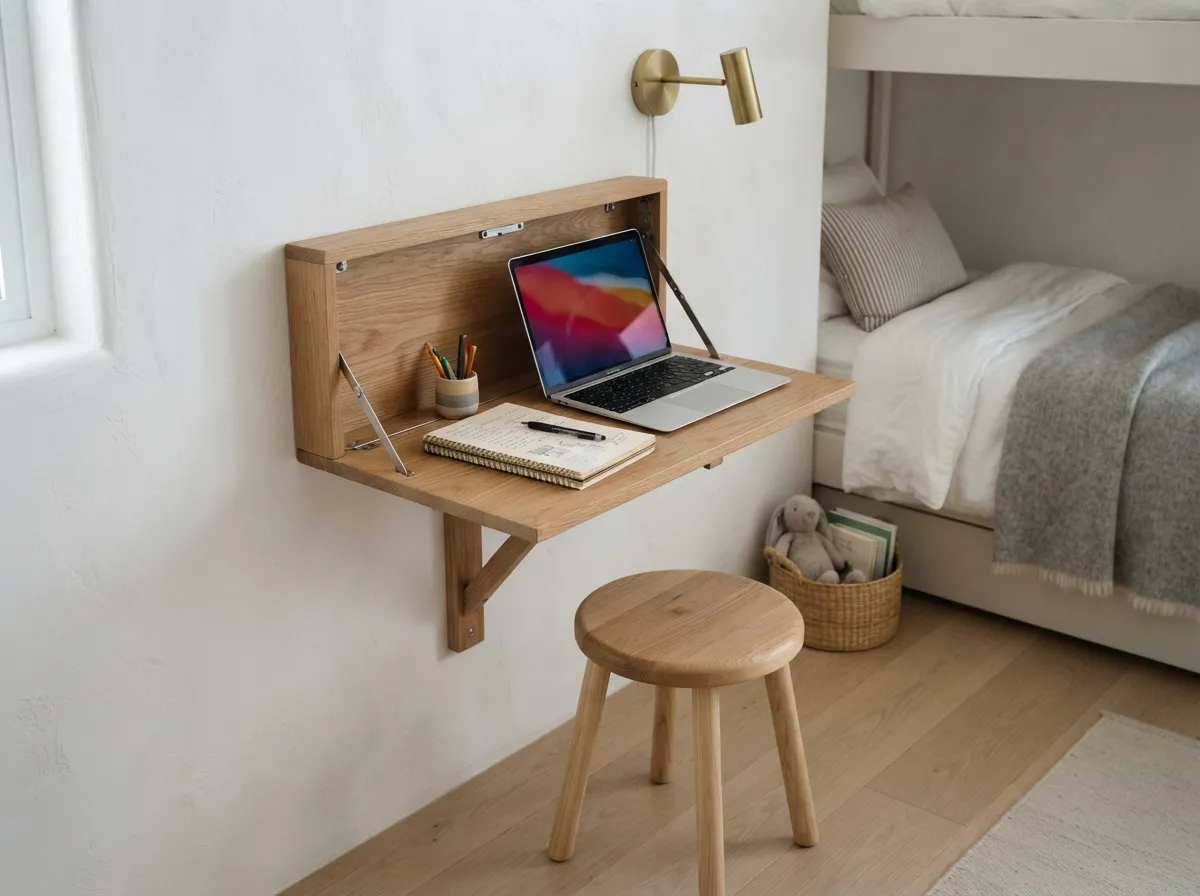
Shared rooms often struggle to fit multiple study spaces. A wall-mounted drop-down desk offers a practical solution that folds away when not in use.
This smart fixture frees up valuable floor space for playtime. When lowered, it provides a sturdy surface for homework or creative crafts.
The minimalist design blends seamlessly into the wall. It keeps the room looking neat and functional throughout the day.
5. Vertical Book Ledges to Save Floor Area
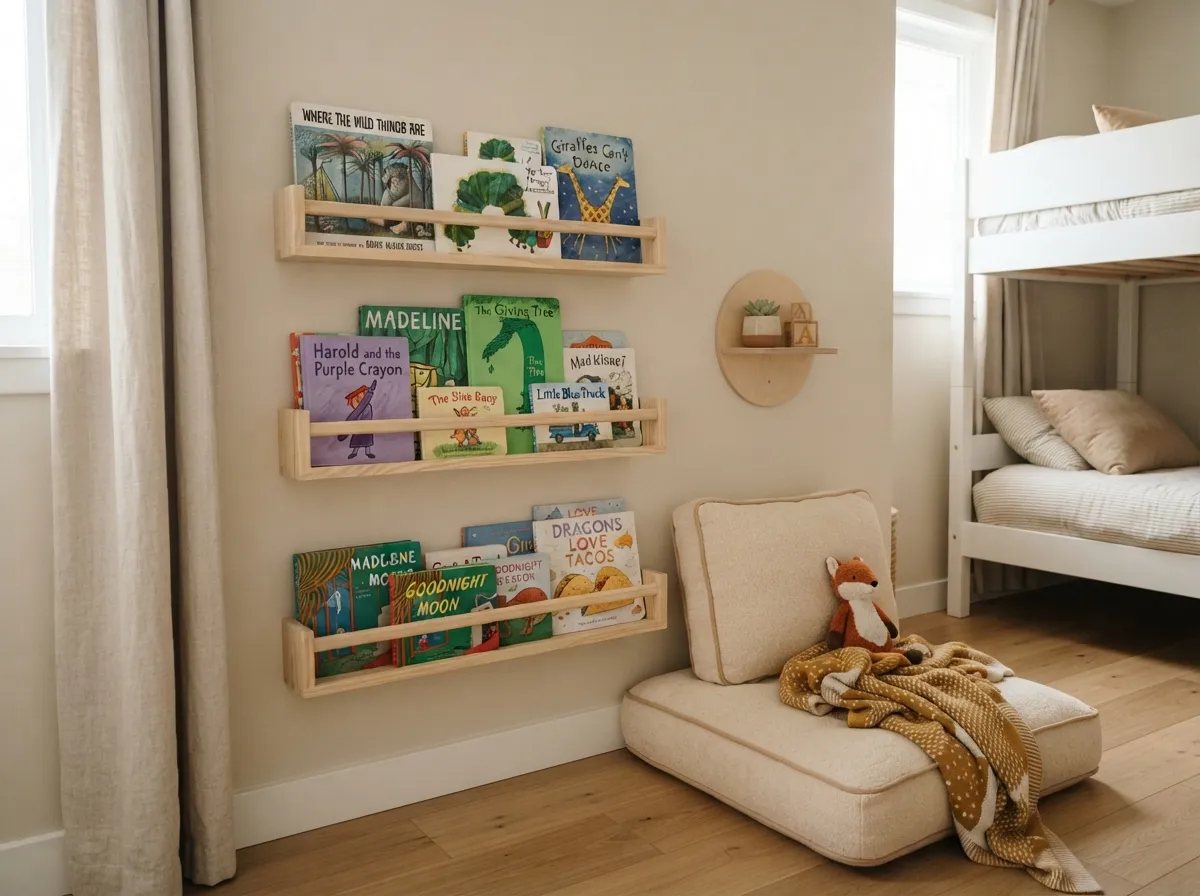
Traditional bookcases can take up too much floor space in a small bedroom. Vertical book ledges utilize unused wall space to store favorite stories.
By displaying books with their covers facing out, you create a colorful wall display. This setup makes it easy for kids to find their favorite titles.
Keeping the ledges slim ensures they do not block walking paths. It is an excellent way to encourage reading while keeping the floor clear.
6. Minimalist Floor Cushions Instead of Chairs
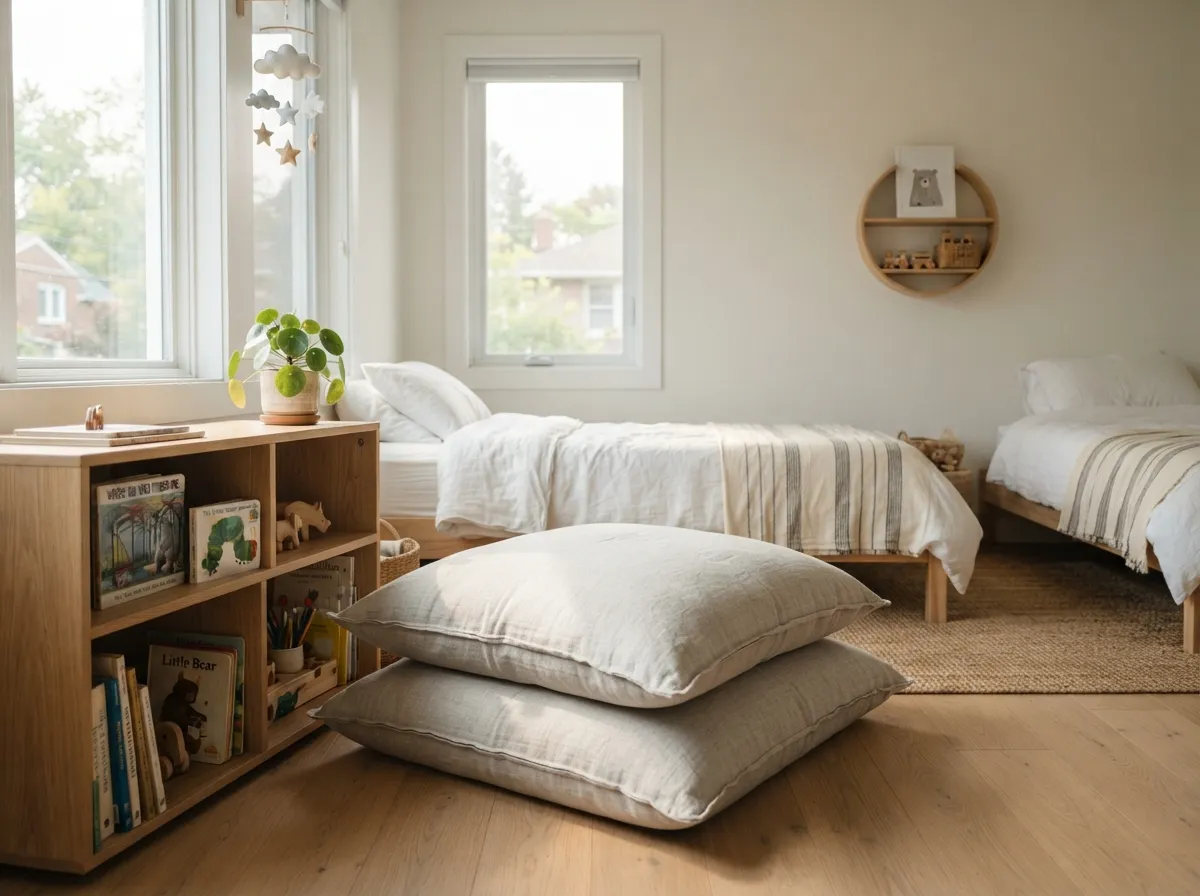
Heavy desk chairs can easily clutter a compact shared bedroom and restrict movement. Replacing them with soft floor cushions keeps the floor area open and flexible.
These soft seating options are incredibly easy to stack in a corner when playtime begins. They offer a comfortable spot for reading or studying without taking up permanent floor space.
Opt for durable, washable linen covers in soft neutral tones like slate grey or oatmeal. This simple switch maintains a clean visual flow while keeping the layout highly functional.
7. Shared Central Dresser as a Room Divider
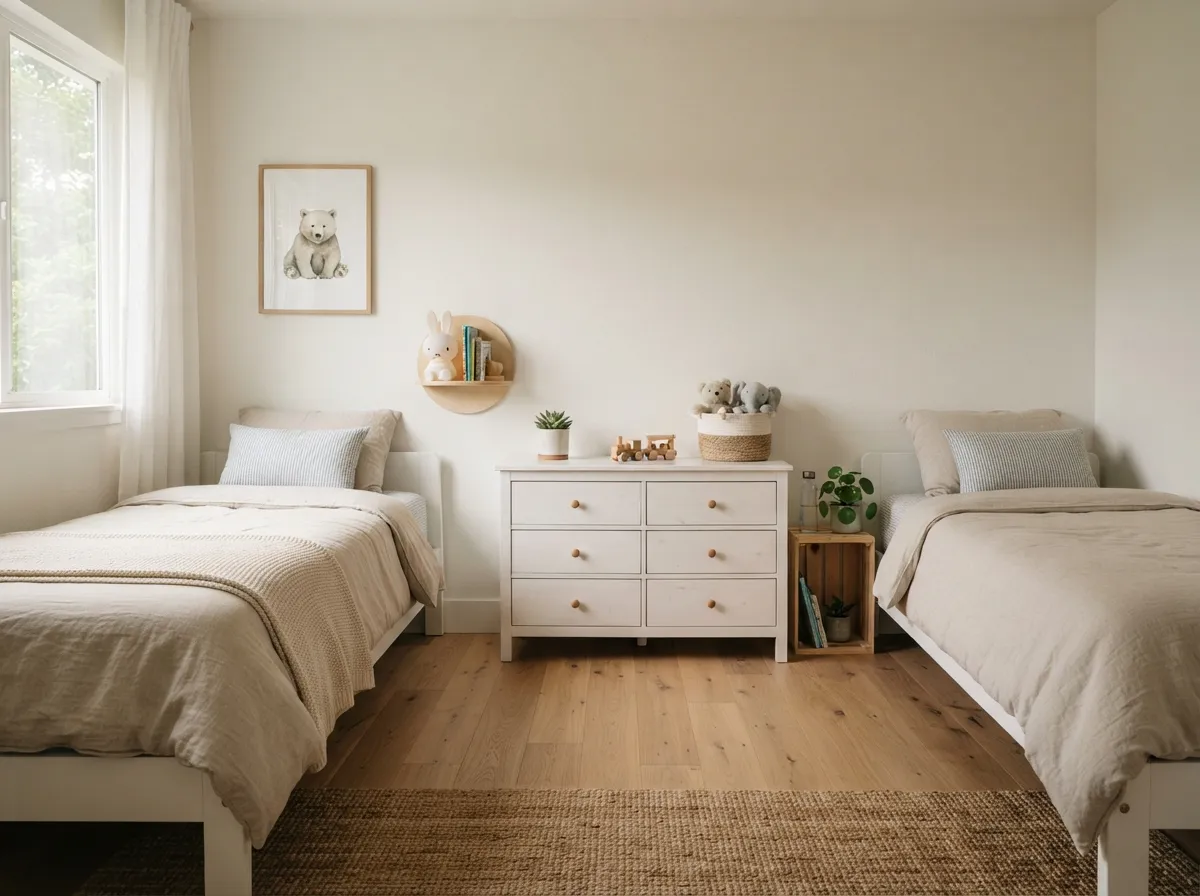
Creating personal boundaries in a shared space can be a challenge. A low, double-sided wooden dresser placed right in the center of the room offers a smart solution.
This setup physically divides the room into two distinct zones without blocking precious natural light. Each child gets their own dedicated storage drawers on their respective side.
Keeping the height of the dresser low ensures the room still feels airy and connected. It serves as both a practical organizer and a subtle boundary maker.
8. Wooden Pegboard Organizers for Flexible Storage
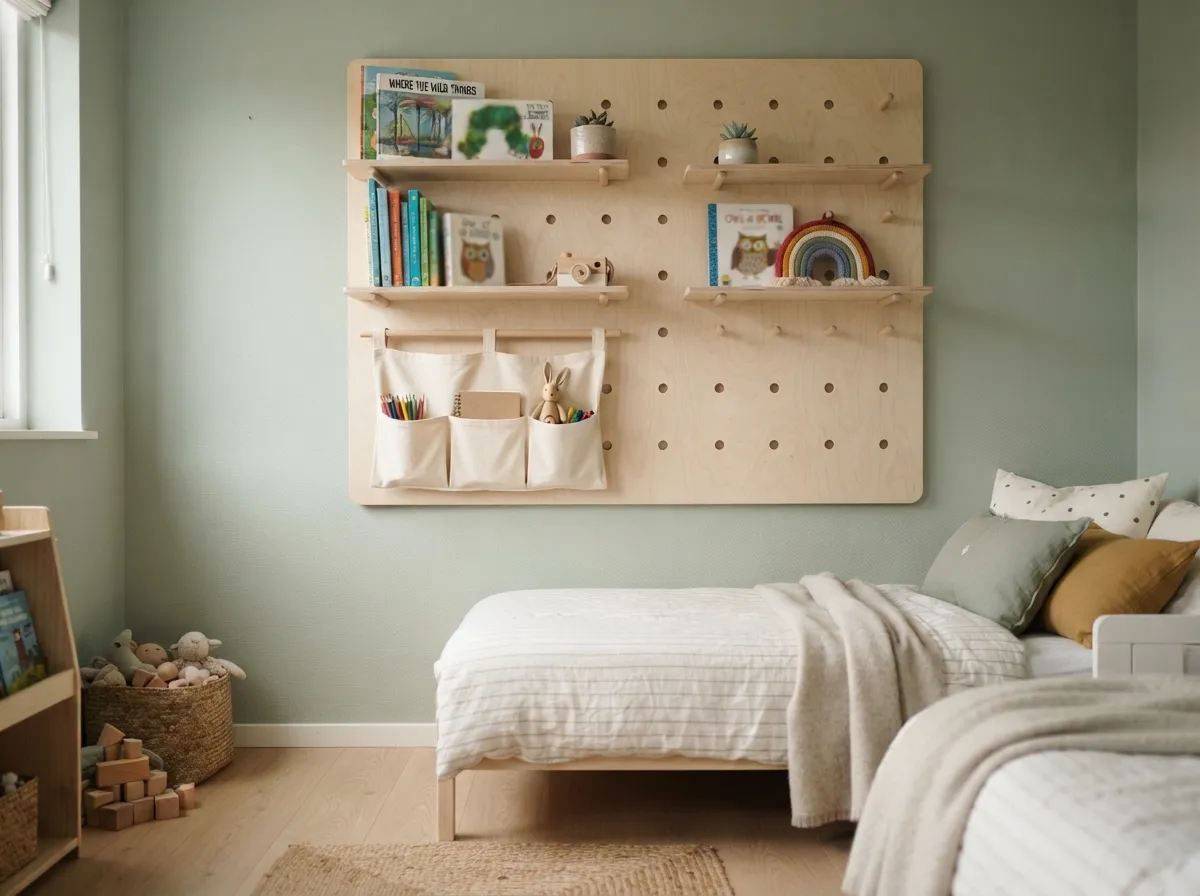
Wall space is often underutilized in compact bedrooms. Installing a large wooden pegboard allows you to move storage off the floor and onto the walls.
The beauty of this system lies in its complete adaptability. You can easily reposition shelves, pegs, and small canvas pockets as your children grow and their needs change.
It keeps daily essentials, like school bags and art supplies, organized and within arm’s reach. This simple addition brings neatness and structure to the shared environment.
9. Corner Wardrobes to Maximize Dead Space
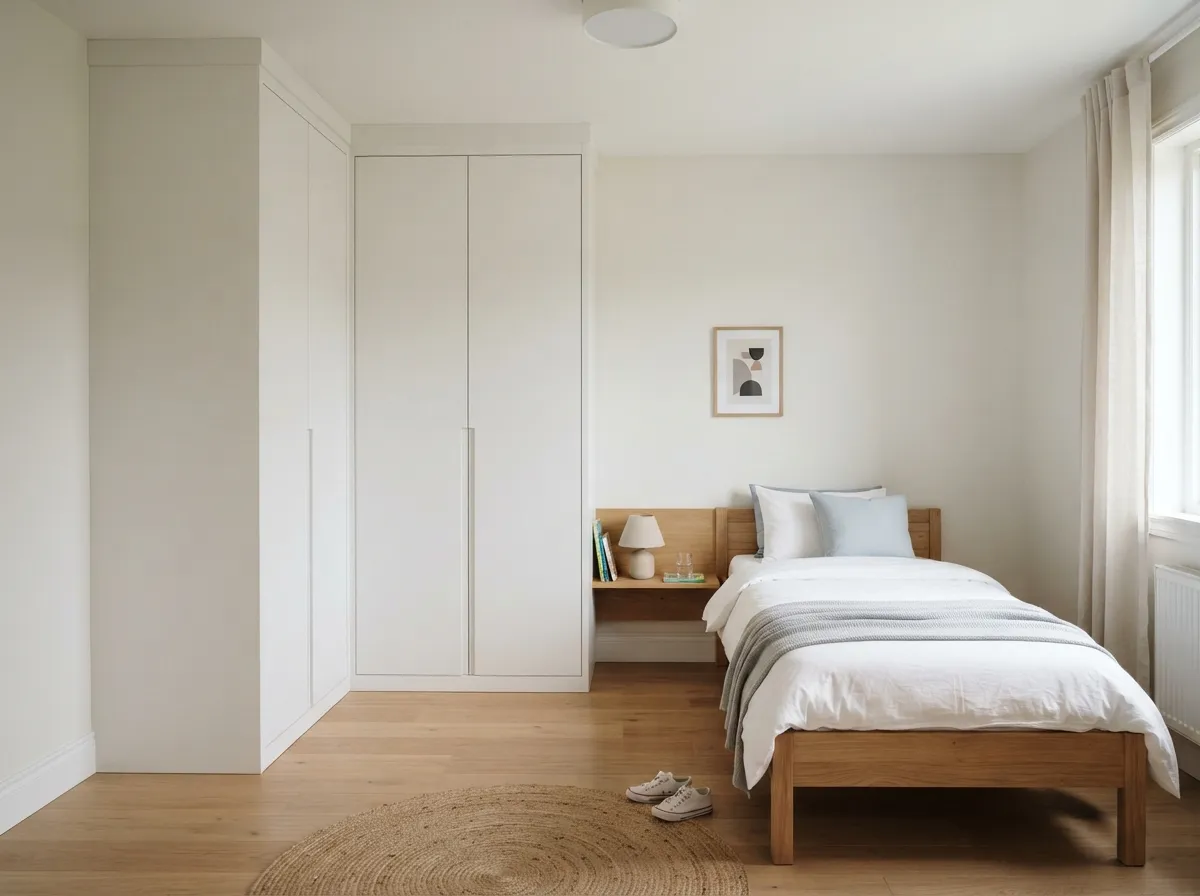
Room corners are frequently left empty and unused, which wastes valuable square footage. A custom L-shaped corner wardrobe fits snugly into these tricky angles to maximize storage.
This clever design provides ample hanging space and deep shelving for clothes and toys. It utilizes the vertical height of the room while keeping the central floor area open.
Choosing light colors and flush wooden handles helps the large cabinet blend seamlessly into the walls. It is a highly efficient way to keep clutter hidden from sight.
10. Symmetrical Layouts for Balanced Living
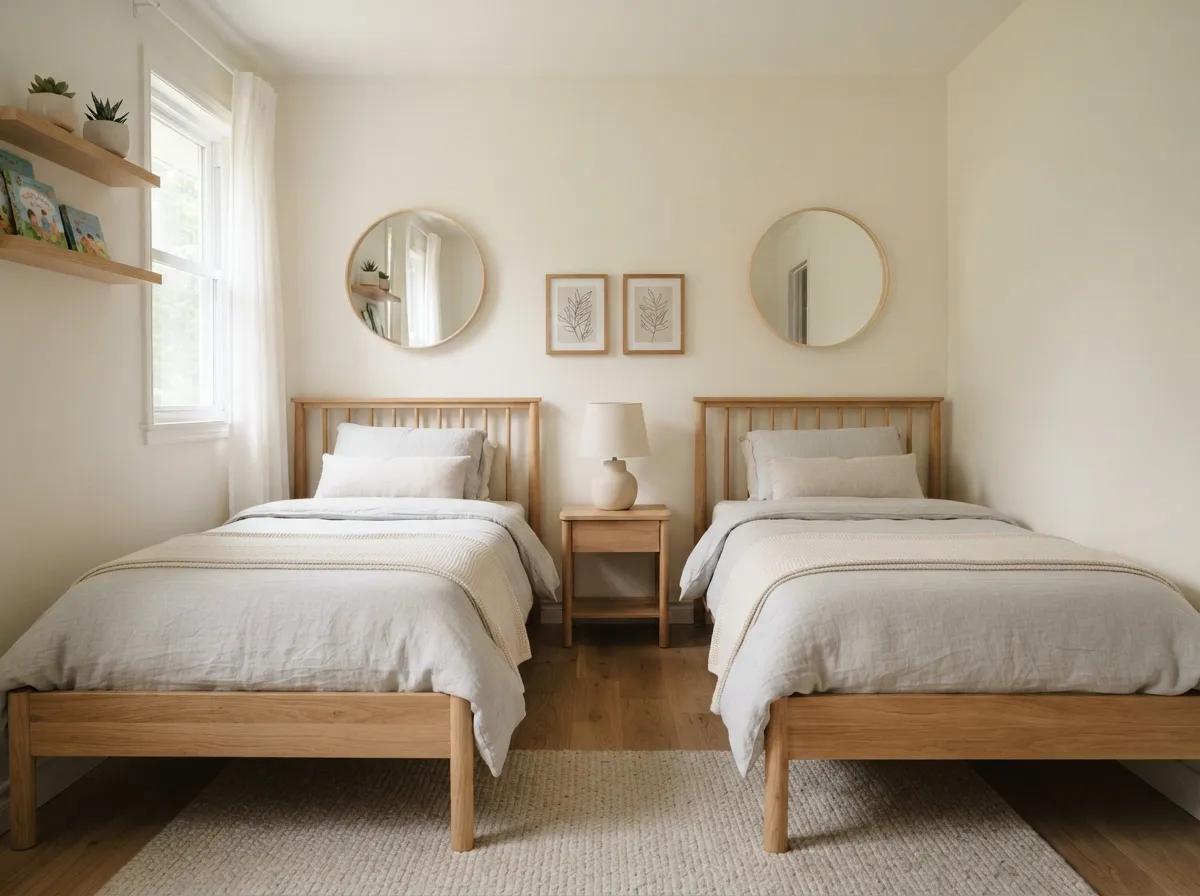
Visual clutter can make a small room feel chaotic and cramped. Implementing a symmetrical layout brings an immediate sense of order and balance to a shared space.
Placing two identical twin beds side-by-side with a shared nightstand in the middle creates a harmonious mirror image. This equal division of space helps prevent arguments over who gets the better side.
Matching bedding and identical wall frames complete the cohesive look. The resulting design feels calm, organized, and perfectly structured for peaceful daily living.
11. Floating Shelves for Nightstands
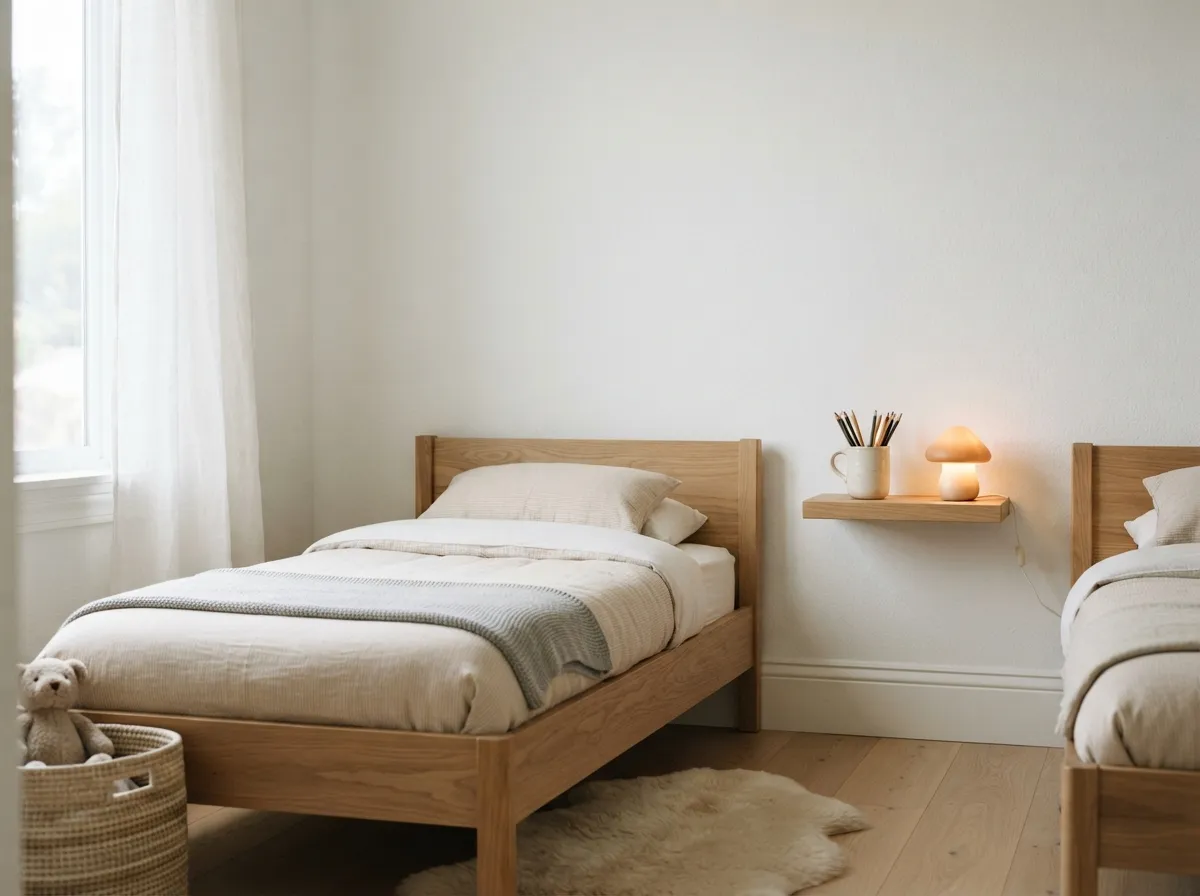
Traditional bedside tables can crowd a tight shared bedroom. Floating shelves offer a brilliant, space-saving alternative that keeps floor areas completely clear.
These simple wooden ledges mount directly to the wall beside each bed. They provide just enough room for a nightlight, a favorite book, or a cup of water.
By lifting these items off the ground, you create an open and airy feel. This simple change helps the entire room feel much larger and more organized.
12. Under-the-Bed Cozy Reading Nooks
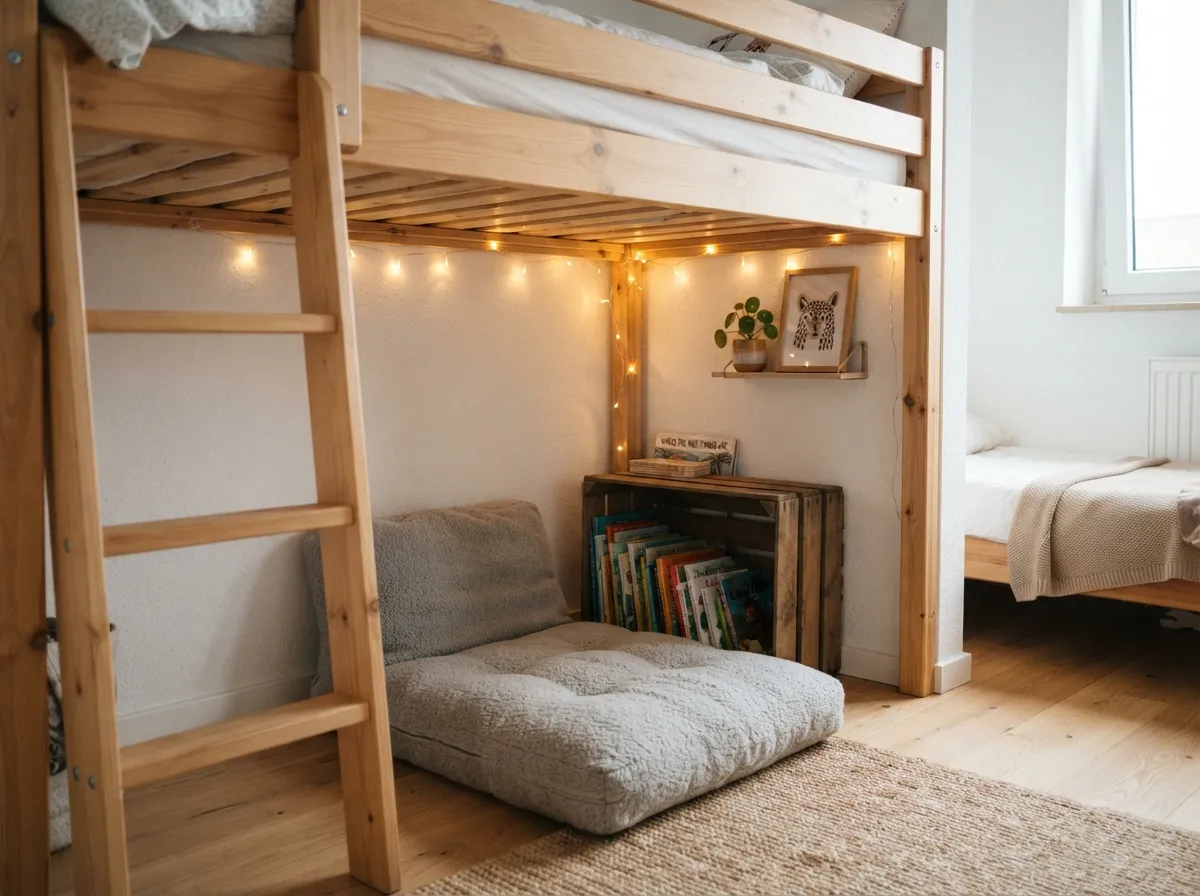
Loft beds open up valuable square footage underneath for extra activities. You can easily turn this quiet lower area into a dedicated reading corner.
Lay down a soft floor cushion and add a compact wooden bin to store their favorite storybooks. This utilizes often wasted vertical space beautifully.
String some warm lights overhead to make the spot feel warm and inviting. It gives each child a special zone to unwind without taking up extra floor space.
13. Neutral Canopy Curtains for Private Zones
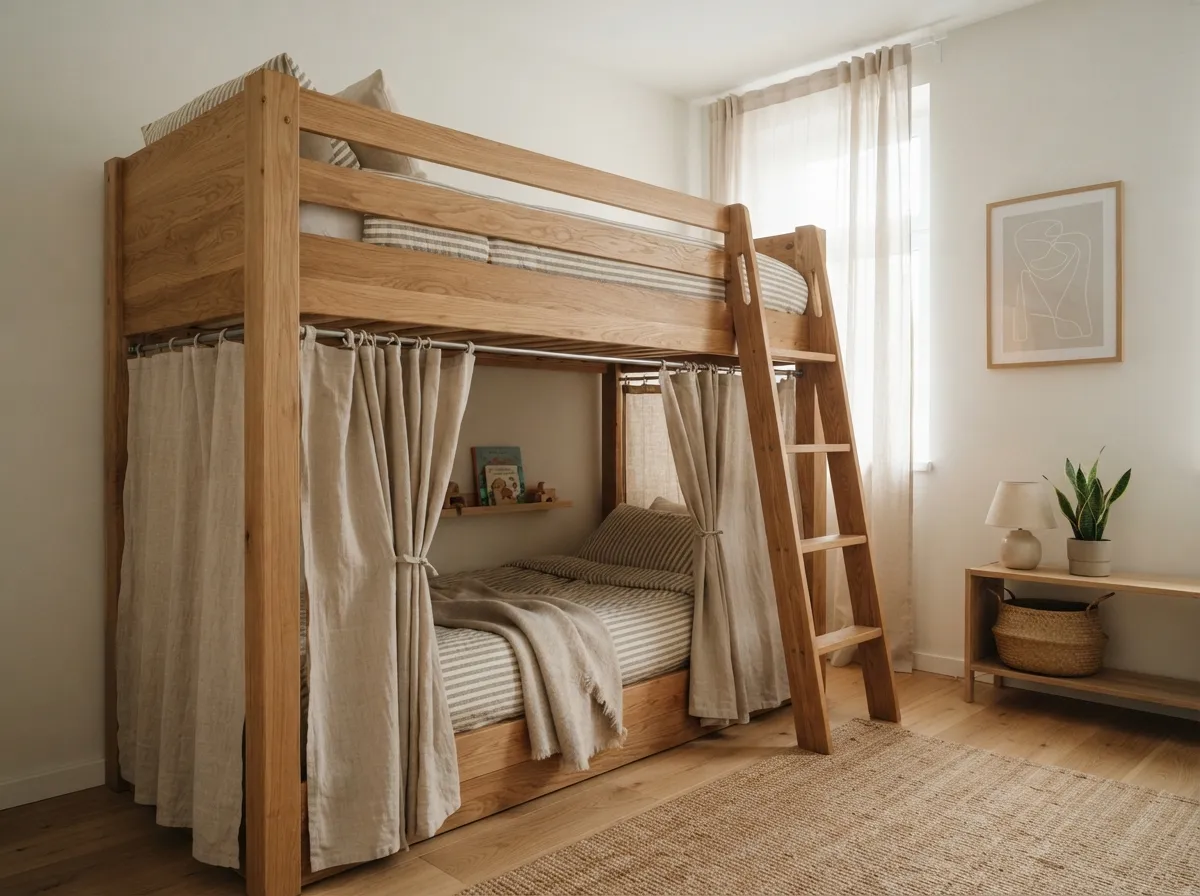
Shared bedrooms require clever ways to give each child a sense of personal space. Neutral canopy curtains are an easy and lightweight solution for this need.
You can hang soft linen curtains directly from a bunk bed frame or ceiling track. This allows kids to block out light and enjoy quiet moments alone.
Choosing muted, light tones keeps the room looking bright and cohesive. The fabric adds a soft texture while maintaining a clean, uncluttered visual aesthetic.
14. Multi-Functional Trundle Beds
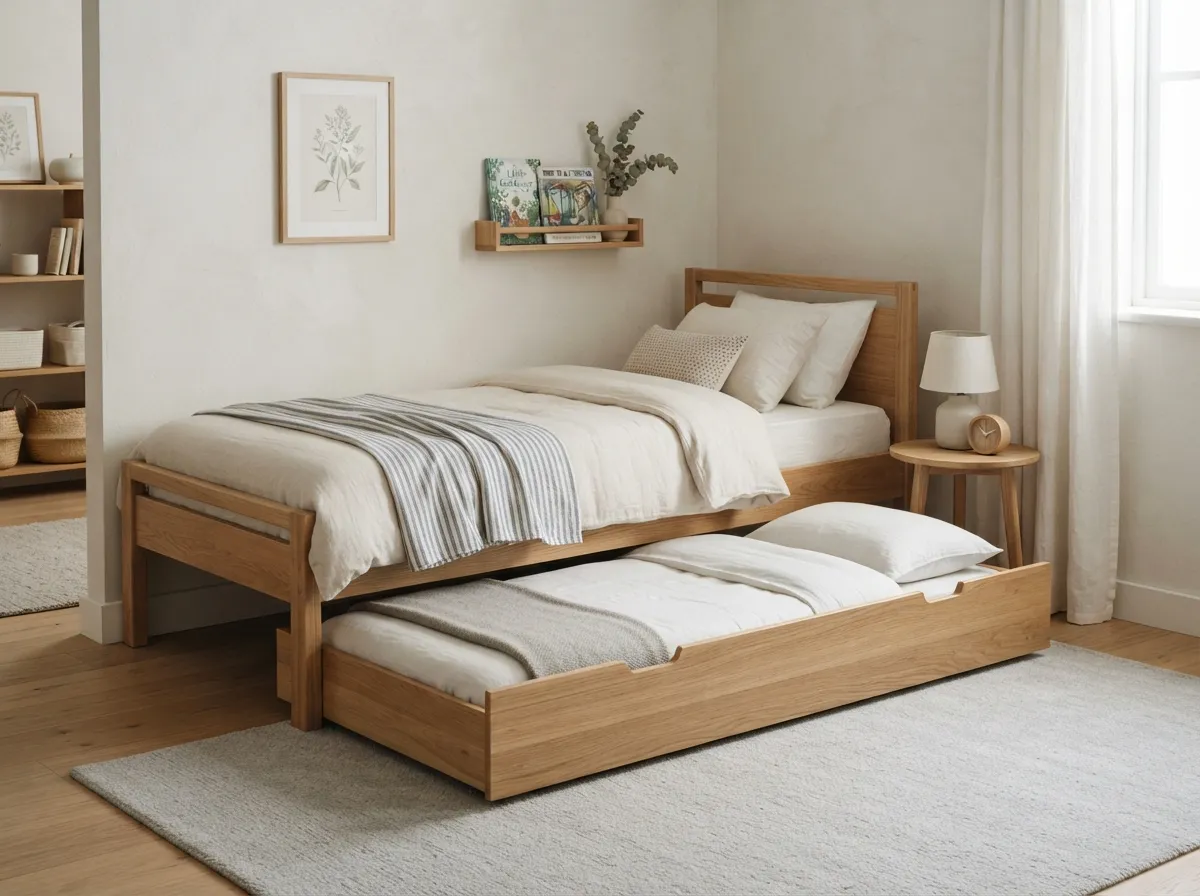
When floor space is limited, a trundle bed offers an excellent sleeping arrangement. This smart design tucks a second mattress completely out of sight during the day.
Kids can enjoy plenty of open play space when the lower bed is rolled away. At night, simply glide the trundle out for a comfortable sleep setup.
It is a perfect solution for siblings sharing a small room or for hosting weekend sleepovers. The clean wooden frame keeps the bedroom looking orderly and spacious.
15. Hanging Fabric Organizers for Wardrobes
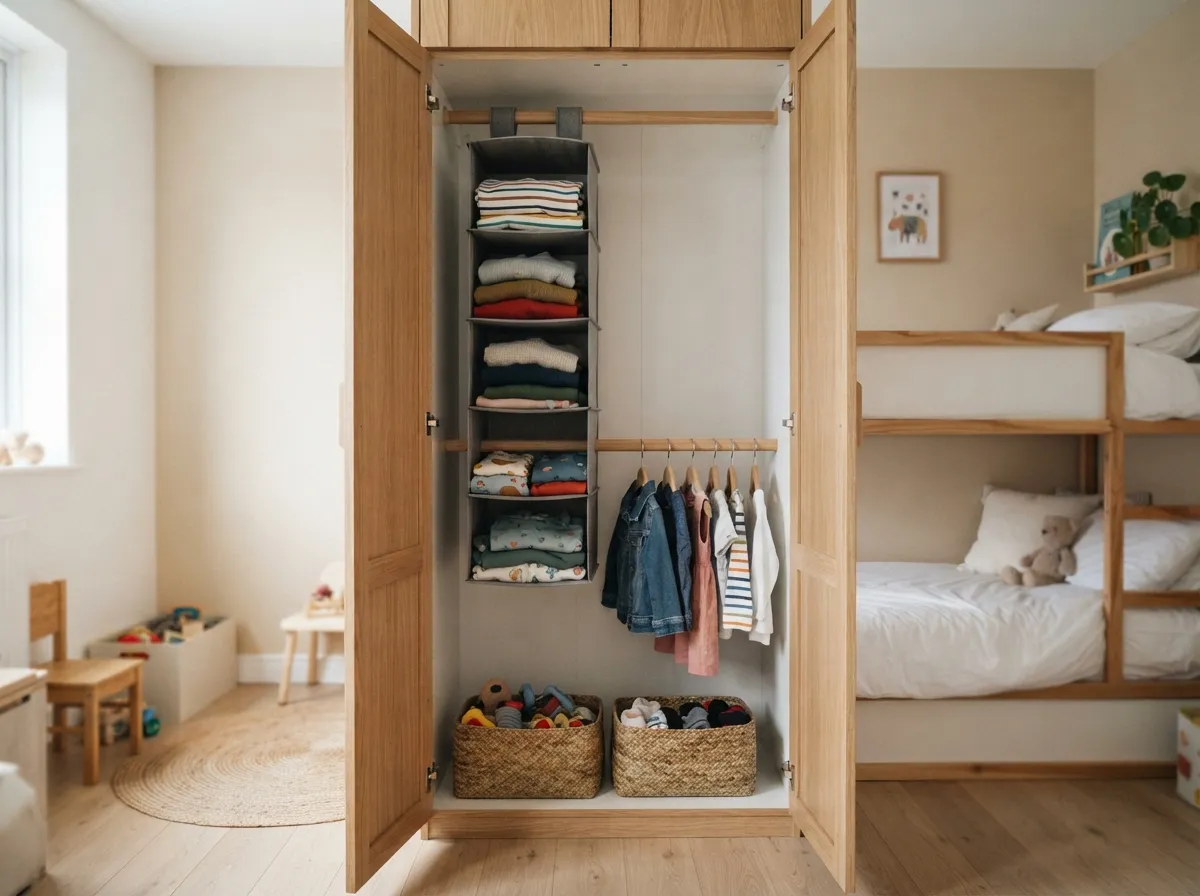
Keeping a shared wardrobe organized can be a daily challenge for parents. Hanging fabric organizers offer an easy way to divide storage space without heavy furniture.
These soft shelving units hang directly from the closet clothing rod. They feature vertical compartments perfect for organizing daily outfits, shoes, or small toys.
By labeling each section, you can help kids manage their own belongings independently. It maximizes closet efficiency while keeping the main room clean and peaceful.
16. Minimalist Hook Rails for Daily Outfits
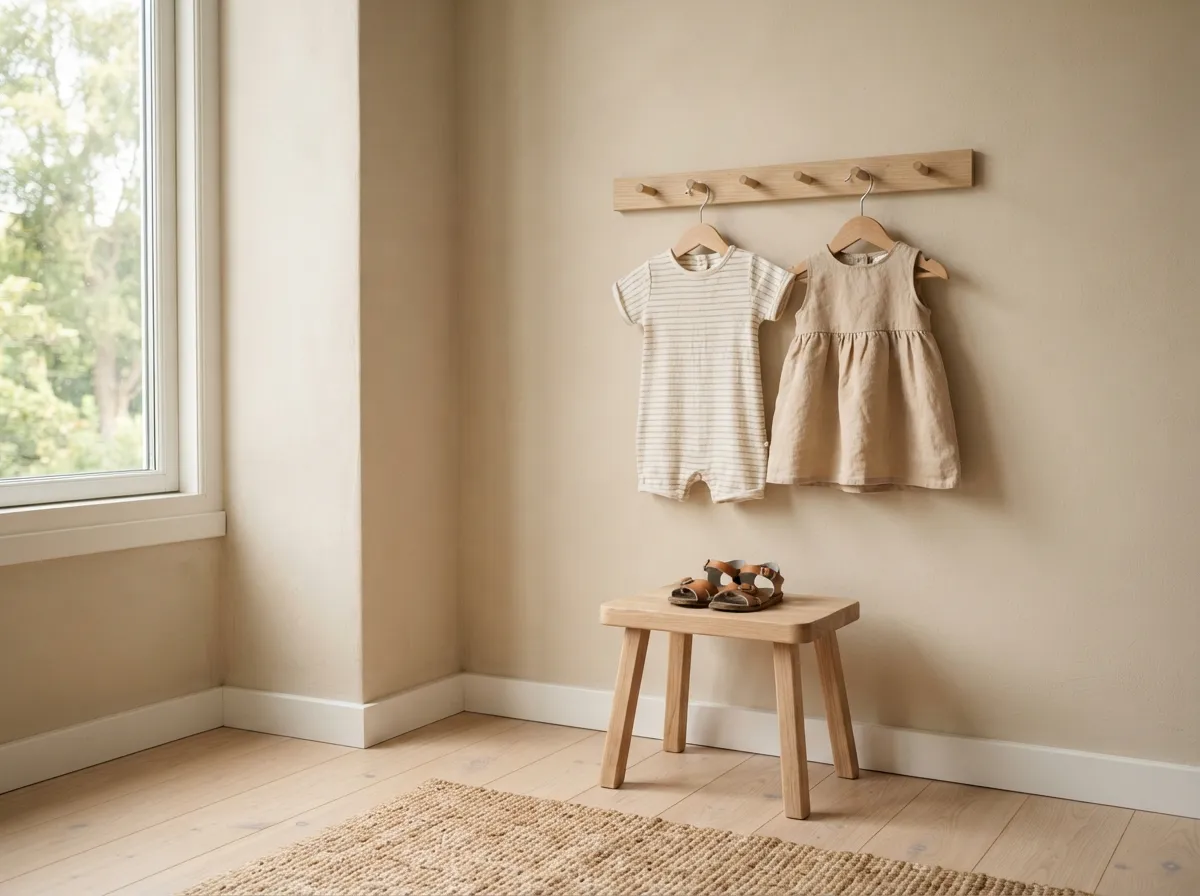
Morning routines become much simpler when you prepare clothes the night before. Hanging daily outfits on low, accessible peg rails encourages children to dress themselves independently.
These simple wooden hooks keep clothes off the floor and off bulky hangers. They utilize empty wall space without adding visual clutter to the shared bedroom.
Choose natural wood rails that match your existing trim or furniture. This small addition keeps the floor area completely clear and orderly.
17. Foldable Canvas Bins for Quick Toy Cleanup
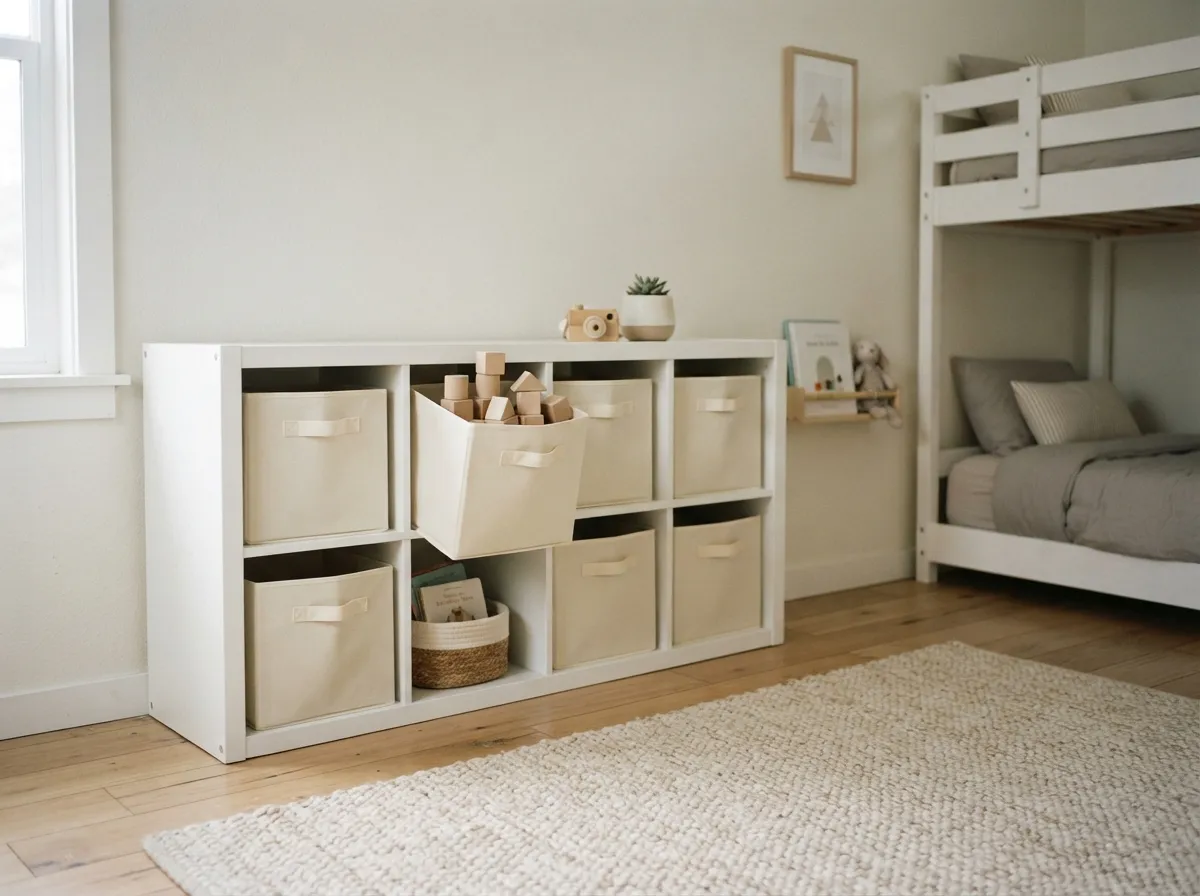
Clutter can accumulate quickly when multiple children share a small space. Foldable canvas bins offer an easy way to gather toys at the end of the day.
These lightweight fabric boxes fit perfectly into standard shelving units. Kids can easily pull them out and carry them around the room during playtime.
When they are not in use, you can fold them flat to save valuable storage space. Neutral cream and beige tones keep the play area looking calm and organized.
18. Integrated Headboard Storage Compartments
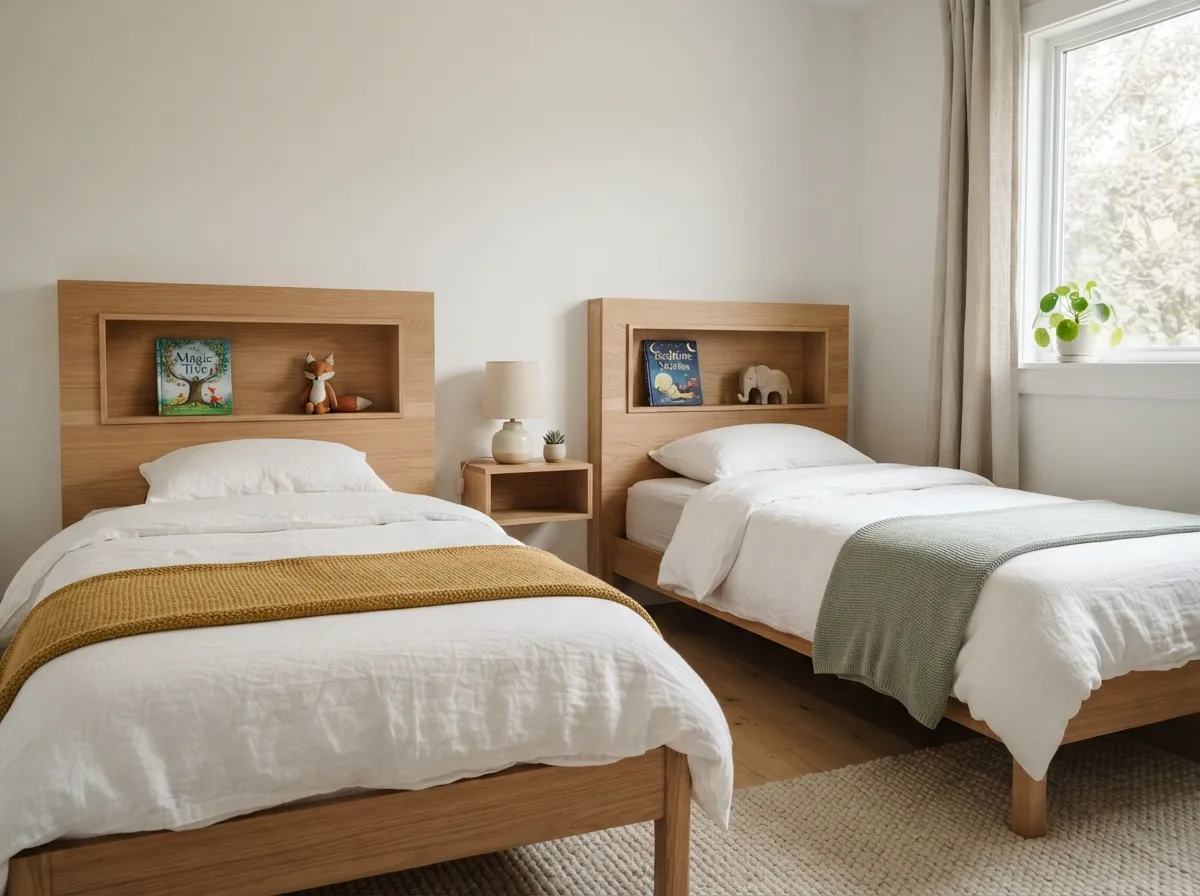
Traditional bedside tables often take up too much floor space in a compact room. Headboards with built-in storage compartments solve this issue beautifully.
These recessed cubbies provide a dedicated spot for bedtime books, water bottles, or small toys. Each child gets their own private shelf right above their pillow.
This clever design eliminates the need for extra bulky furniture between the twin beds. It maximizes the utility of the bed frame while maintaining a clean look.
19. Light Wood Finishes to Brighten the Space
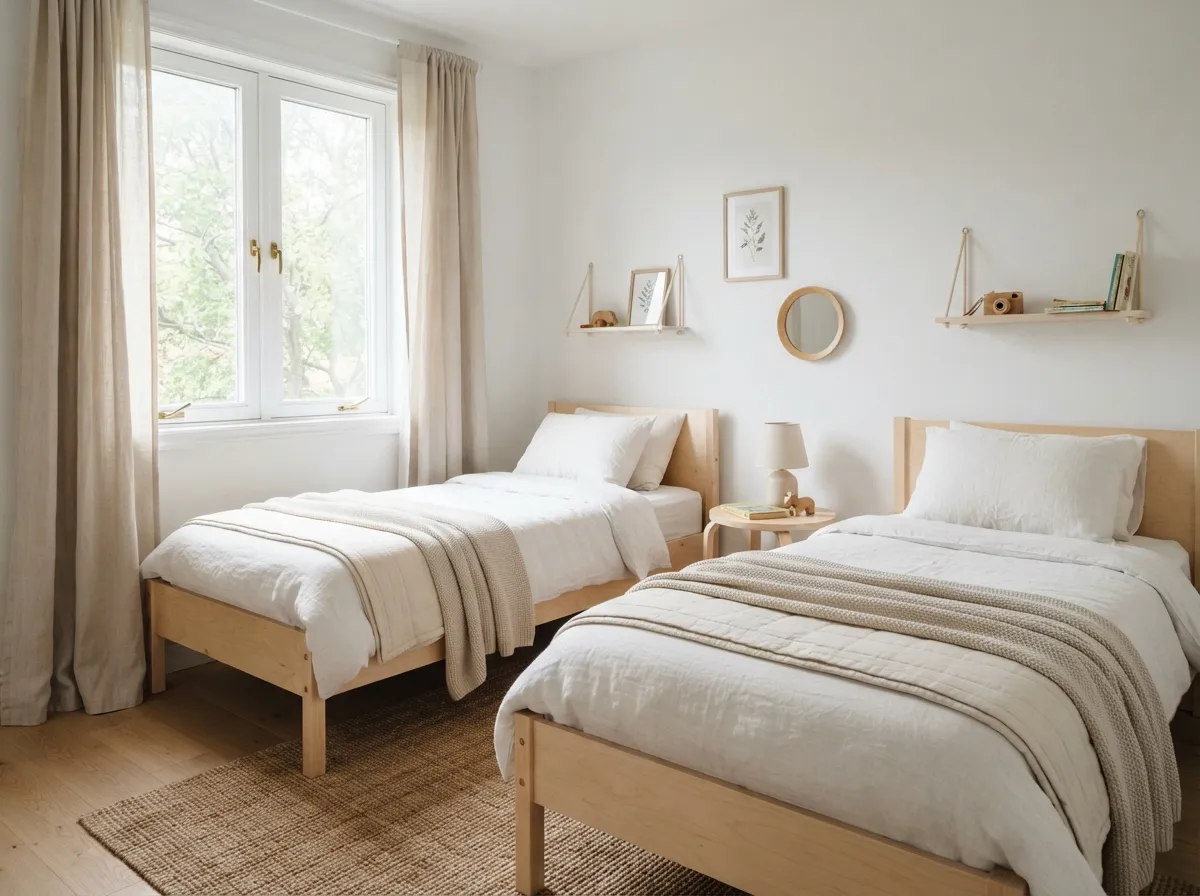
Dark furniture can make a tight shared bedroom feel small and cramped. Selecting light wood finishes like birch, pine, or white oak instantly opens up the area.
These pale timber tones bounce natural light around the room. This effect creates a bright, airy atmosphere that feels spacious and welcoming.
Pairing these wooden frames with white walls creates a cohesive, timeless Scandinavian aesthetic. It is an easy way to make a compact shared room feel much larger.
20. Wall-Mounted Sconces to Free Up Surface Space
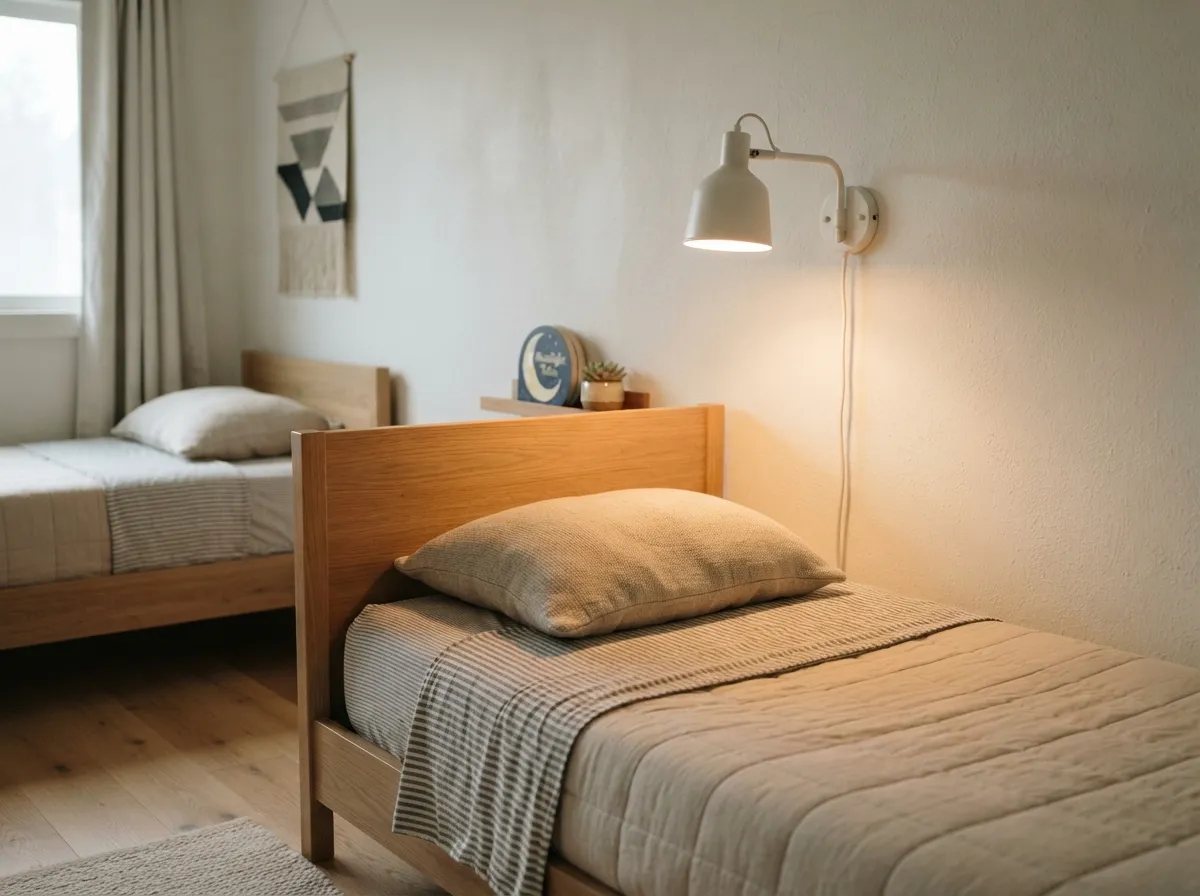
Desk lamps and nightstand lights can easily get knocked over during playtime. Wall-mounted sconces offer a safer, more streamlined lighting alternative for kids.
Installing these fixtures directly above each bed frees up valuable surface space. This setup leaves nightstands or headboard shelves clear for other essential items.
Choose adjustable swing-arm designs so your children can direct the light exactly where they need it. It creates a cozy reading nook without taking up any floor space.
Creating a shared minimalist bedroom is all about balancing functionality with simplicity. By prioritizing multi-purpose furniture, smart storage, and a cohesive color palette, you can design a calm, organized oasis that comfortably accommodates both children without feeling crowded or chaotic.