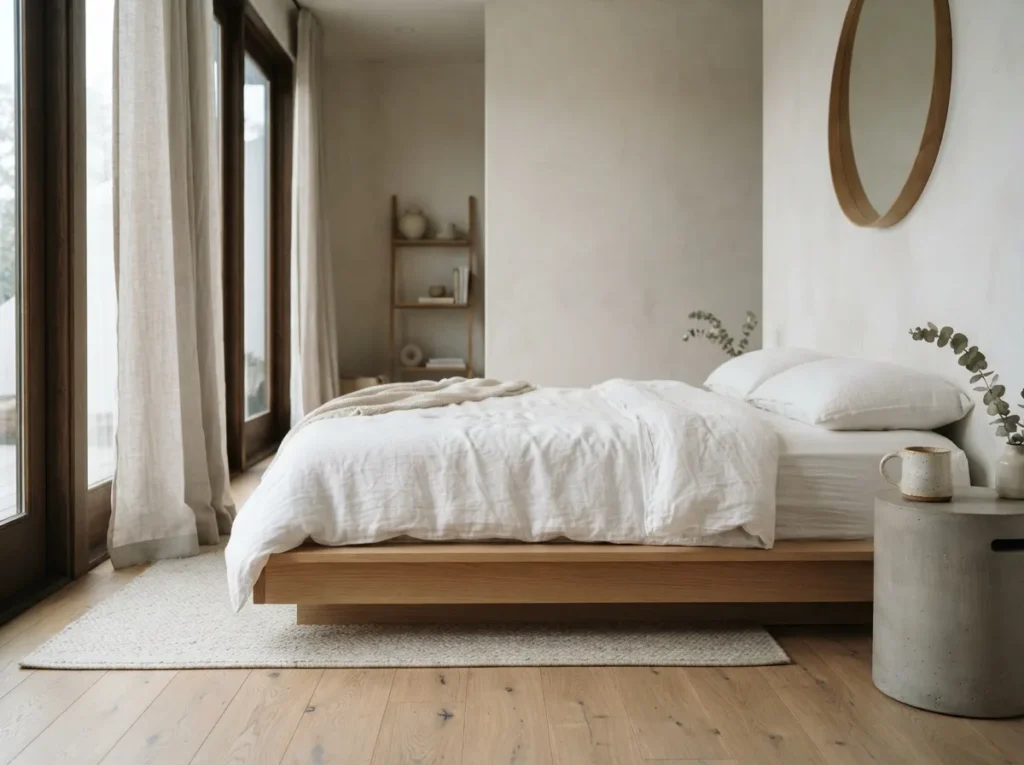
Discover the tranquility of Japandi minimalist bedroom ideas. This guide blends Japanese serenity with Scandinavian warmth, creating peaceful, functional spaces. Achieve a harmonious retreat with these practical design principles for your personal sanctuary.
1. Minimalist Platform Bed Selection
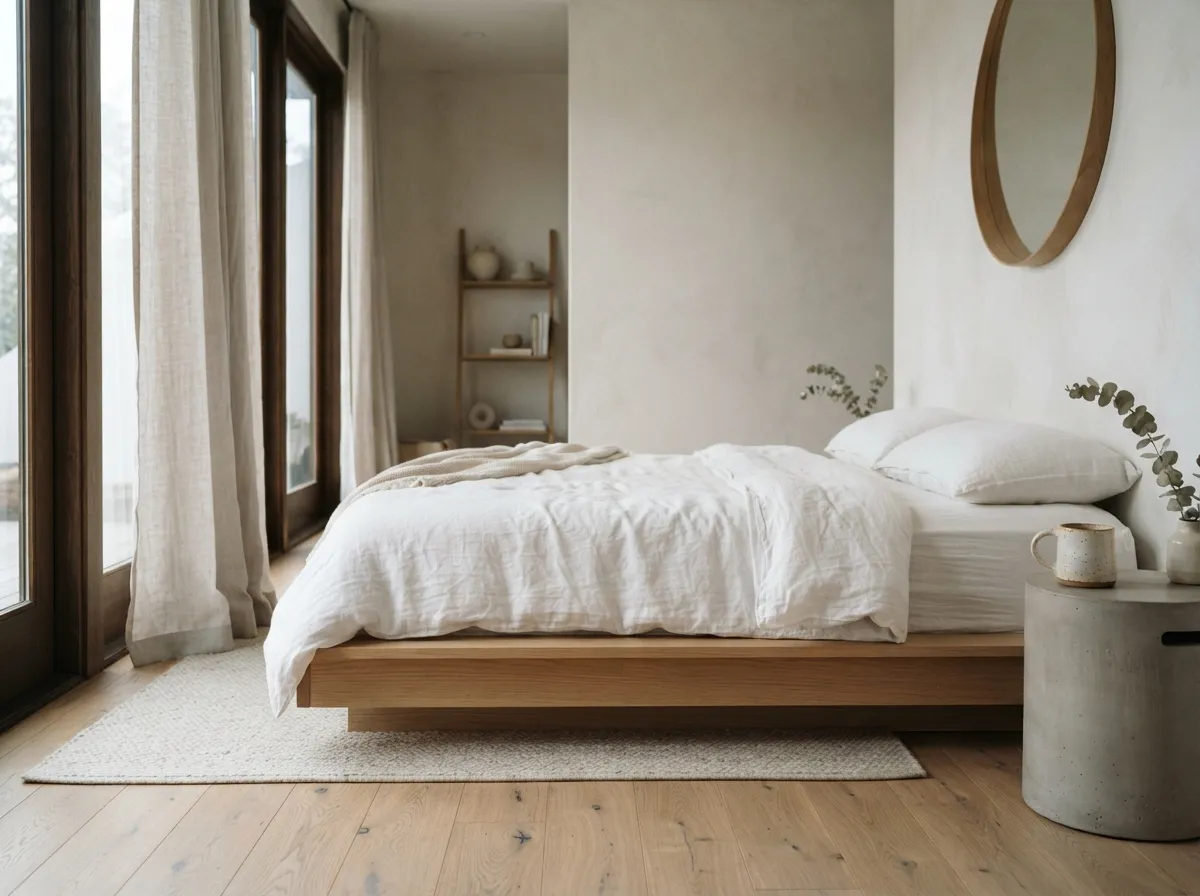
The foundation of any serene Japandi bedroom begins with the right bed. Opting for a minimalist platform bed is a crucial step towards achieving this aesthetic.
Its inherently low profile contributes to an expansive and grounded feeling in the room. This design choice emphasizes clean lines and a simple silhouette.
A platform bed often eliminates the need for a box spring, allowing for a sleeker look that aligns perfectly with both Japanese and Scandinavian design principles. Look for options in natural wood finishes, such as light oak or beech, to enhance the organic connection.
The bed should feel sturdy and inviting, promoting restful sleep in an uncluttered environment. This selection truly sets the tone for tranquility.
2. Natural Wood Tones for Furniture
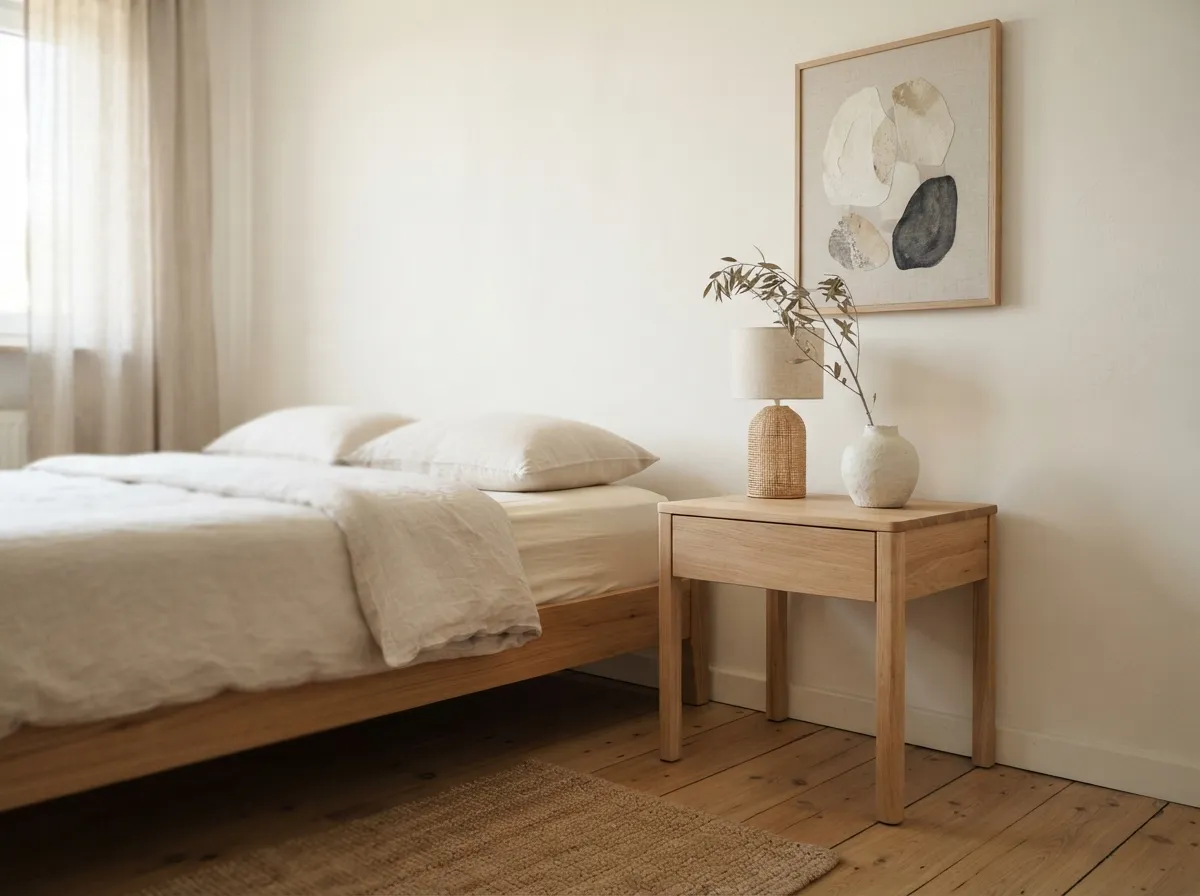
Natural wood tones are indispensable in crafting a Japandi minimalist bedroom. They introduce a vital element of warmth and a deep connection to the natural world, balancing the room’s clean lines.
Light-colored woods, like blonde oak, ash, or birch, are particularly favored. These wood finishes should appear in key furniture pieces.
Think of a simple, functional bedside table or a modest chest of drawers. The grain of the wood itself becomes a subtle pattern, adding visual interest without overwhelming the space.
The beauty of natural wood lies in its authenticity. It brings an organic texture and a sense of calm durability.
This emphasis on natural materials helps to create an inviting and comforting atmosphere, promoting relaxation. The choice of furniture should always prioritize function and simple forms.
Each piece serves a purpose, contributing to the overall sense of peace.
3. Woven Textures for Soft Furnishings
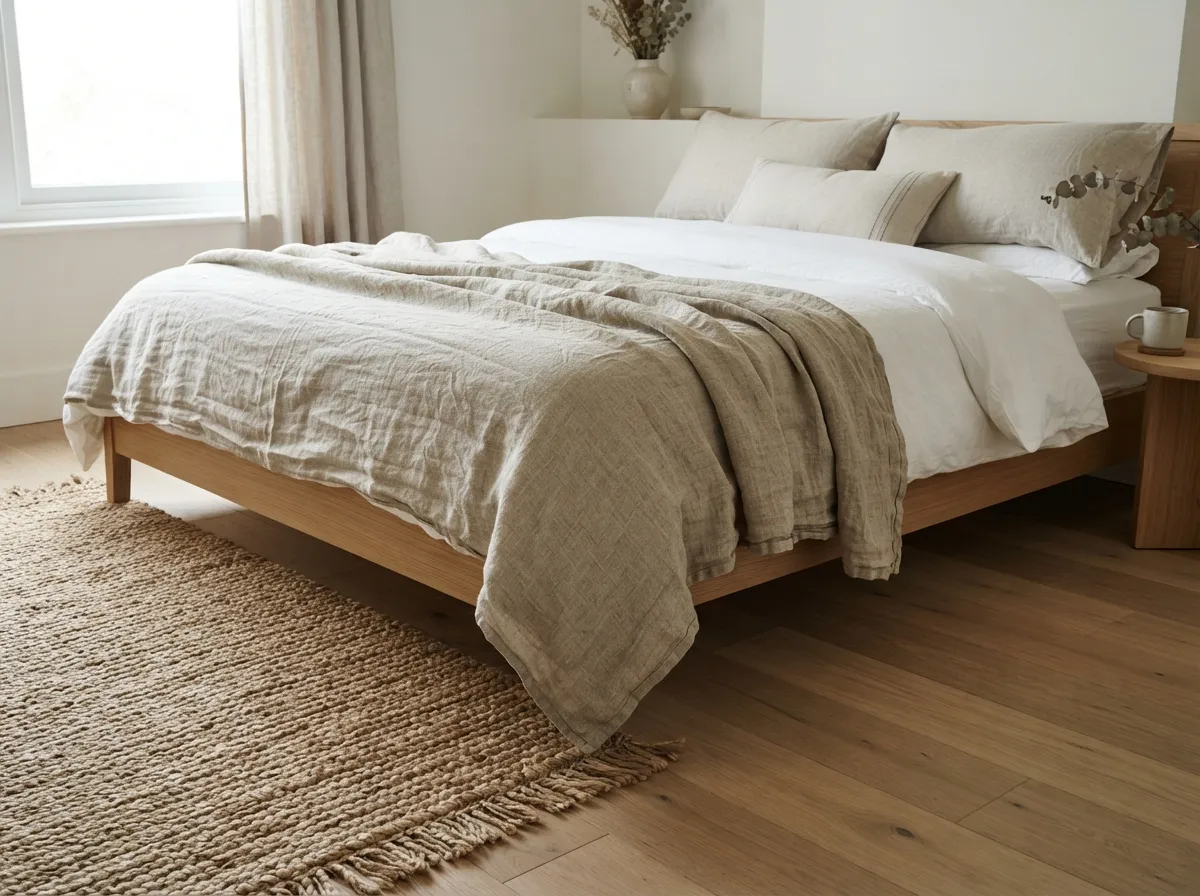
Introducing woven textures through soft furnishings is essential for adding depth and comfort to a Japandi bedroom without compromising its minimalist ethos. Materials like linen, cotton, jute, and subtle wool blends bring a tactile quality that enriches the environment.
Consider a loosely woven linen throw draped over the bed or a natural jute rug grounding the space. These elements invite touch and provide a gentle contrast to smoother surfaces.
They contribute to a layered, yet uncluttered, feeling. The natural fibers inherently possess an organic beauty and provide subtle visual interest.
They soften the room’s geometry and enhance the overall sense of coziness. Such textiles also align with sustainability, often being natural and long-lasting.
They embody the thoughtful and intentional approach that defines Japandi design.
4. Subtle, Earthy Color Palettes
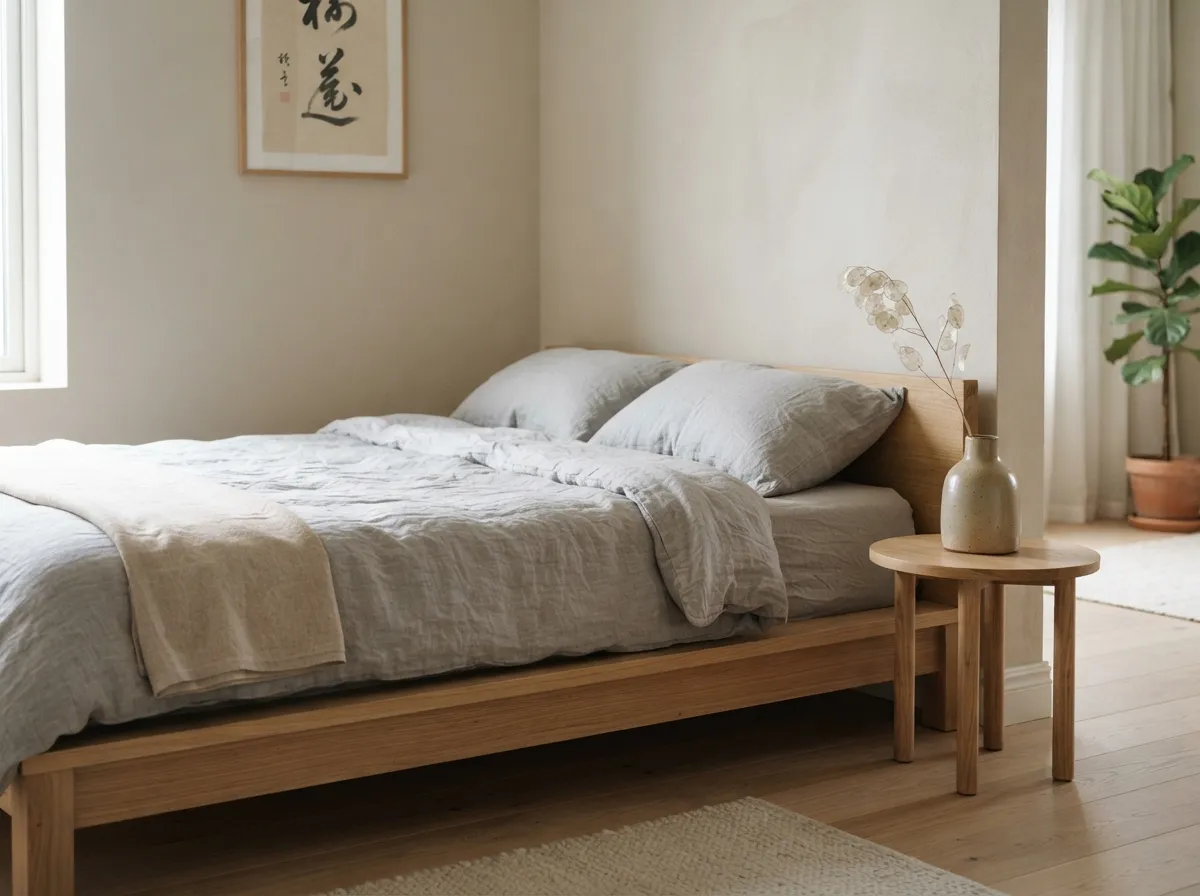
The serene atmosphere of a Japandi bedroom is largely defined by its subtle, earthy color palette. These colors draw inspiration directly from nature, promoting a sense of calm and visual harmony.
Think of soft beiges, muted greys, off-whites, and gentle clay tones. These hues should dominate the larger surfaces like walls and bedding.
They create a quiet backdrop that allows the room’s textures and forms to shine. A touch of soft sage green or a whisper of muted blue can be introduced through small accents.
The goal is to foster an environment of peace and uninterrupted flow. Bright or overly saturated colors are avoided to maintain the understated elegance.
This careful selection ensures a relaxing and comforting space. By using a restricted yet rich palette, the bedroom becomes a cohesive and calming retreat.
Each color choice contributes to the overall feeling of balance and tranquility.
5. Thoughtful Decluttering and Organization
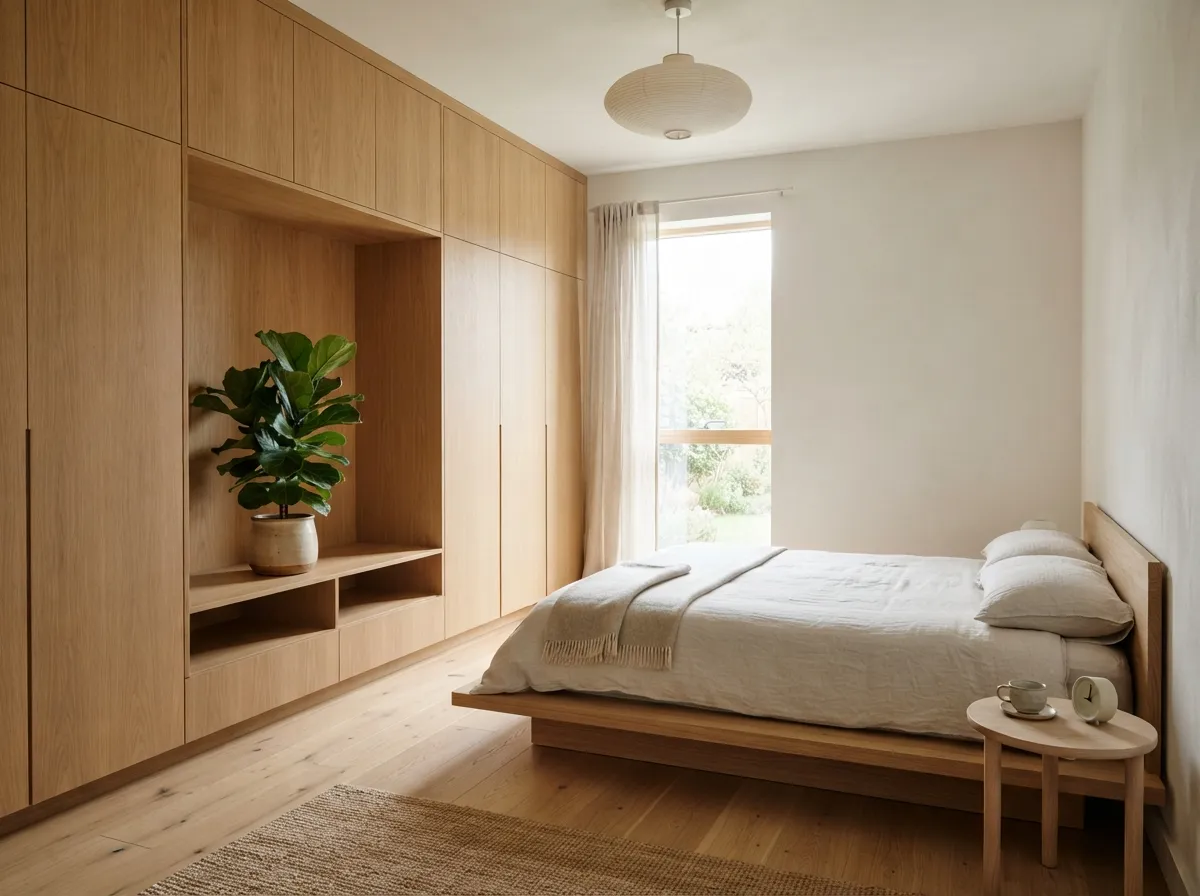
Thoughtful decluttering and organization are fundamental to establishing a truly Japandi minimalist bedroom. This philosophy goes beyond mere tidiness; it’s about carefully curating your possessions and ensuring everything has its rightful place.
An uncluttered space fosters a clear mind. Each item in the room should serve a purpose or bring genuine joy.
Storage solutions should be discreet and integrated, like drawers built into a platform bed or simple closed cabinets. The aim is to reduce visual noise significantly.
Regularly assessing your belongings helps maintain this serene state. Only keep what is essential and beautiful to you.
This practice creates an environment that feels spacious and allows for unobstructed movement and thought. A well-organized bedroom contributes immensely to a sense of peace and functionality.
It allows you to fully appreciate the clean lines and natural materials that define the Japandi aesthetic.
6. Soft, Diffused Lighting Solutions
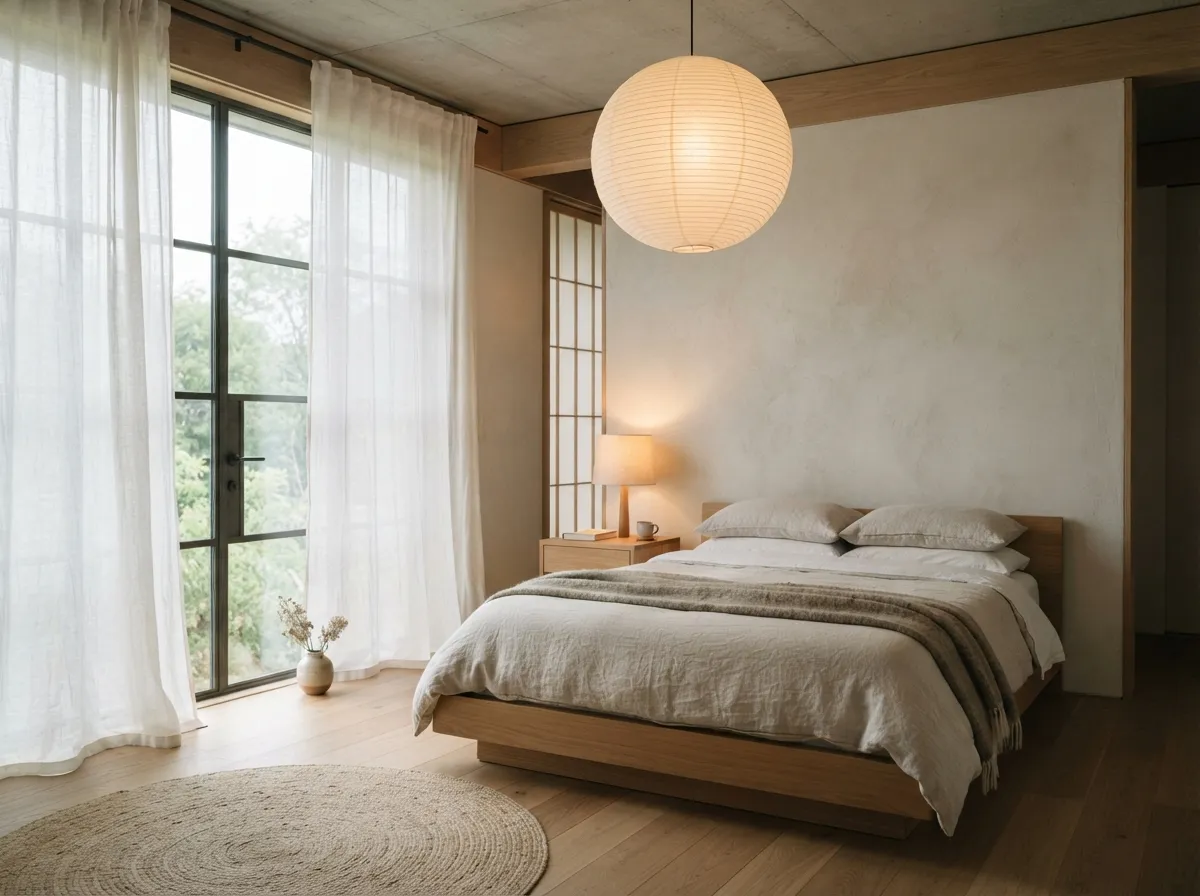
Achieving a truly serene Japandi bedroom hinges on mastering your lighting. Harsh overhead lights can disrupt the calm atmosphere we aim for.
Instead, prioritize soft, diffused light sources that gently illuminate the space. Consider natural light as your primary inspiration.
Sheer linen or cotton curtains allow daylight to filter through, creating a warm, inviting glow during the day. For artificial lighting, look to fixtures that spread light evenly without creating sharp shadows.
Japanese-inspired paper lanterns or minimalist floor lamps with fabric shades are excellent choices. They provide a gentle, ambient light that enhances comfort and promotes relaxation.
Dimmers are also invaluable for adjusting the mood throughout the day and evening.
7. Incorporating Live Greenery (Plants)
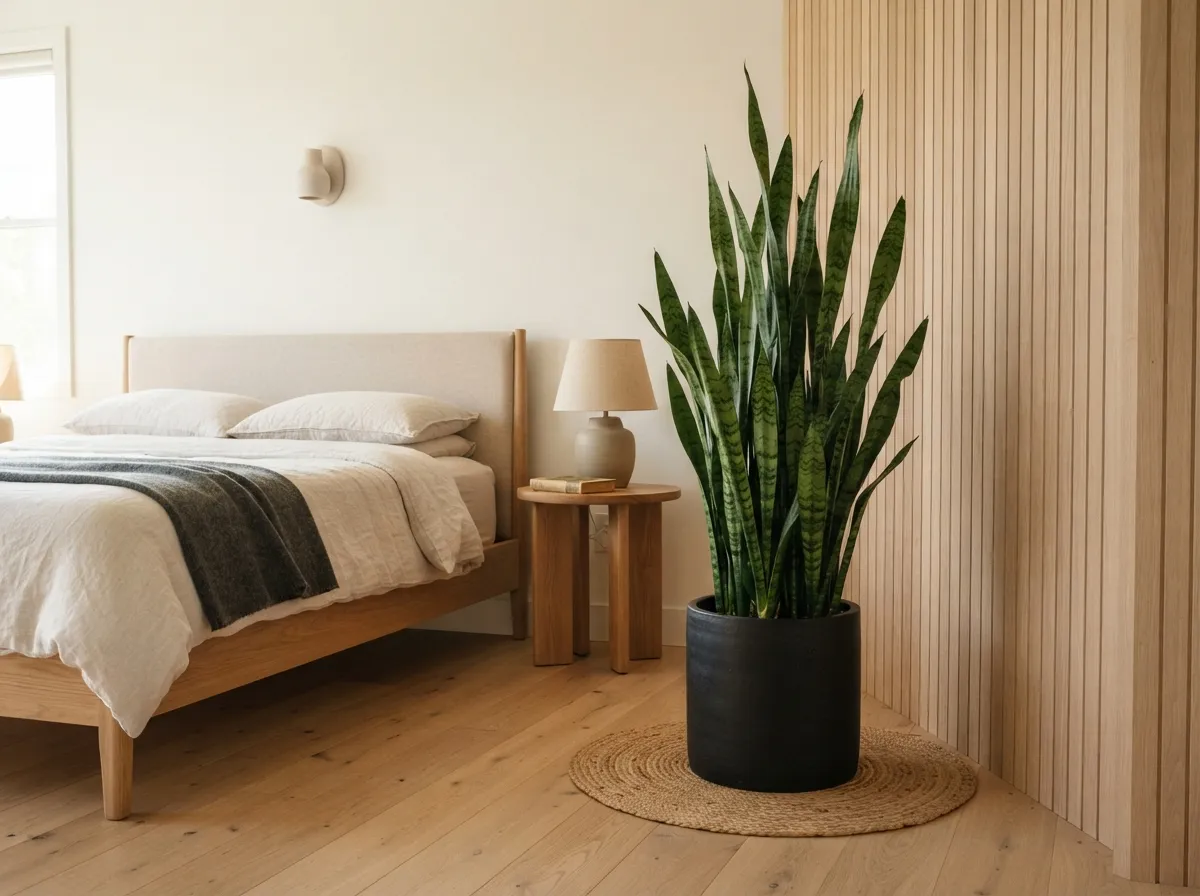
Bringing elements of nature indoors is a cornerstone of both Japanese and Scandinavian design principles. Live greenery breathes life into a minimalist space, adding a touch of organic beauty and tranquility.
Choose simple, low-maintenance plants that complement the clean aesthetic. Snake plants, peace lilies, or a small fiddle-leaf fig in a plain ceramic or terracotta pot work wonderfully.
Place them strategically to add visual interest without creating clutter. A plant in a corner, on a nightstand, or on a low shelf can instantly elevate the room’s connection to the natural world.
They also contribute to a fresher indoor environment.
8. Simple, Clean-Lined Nightstands
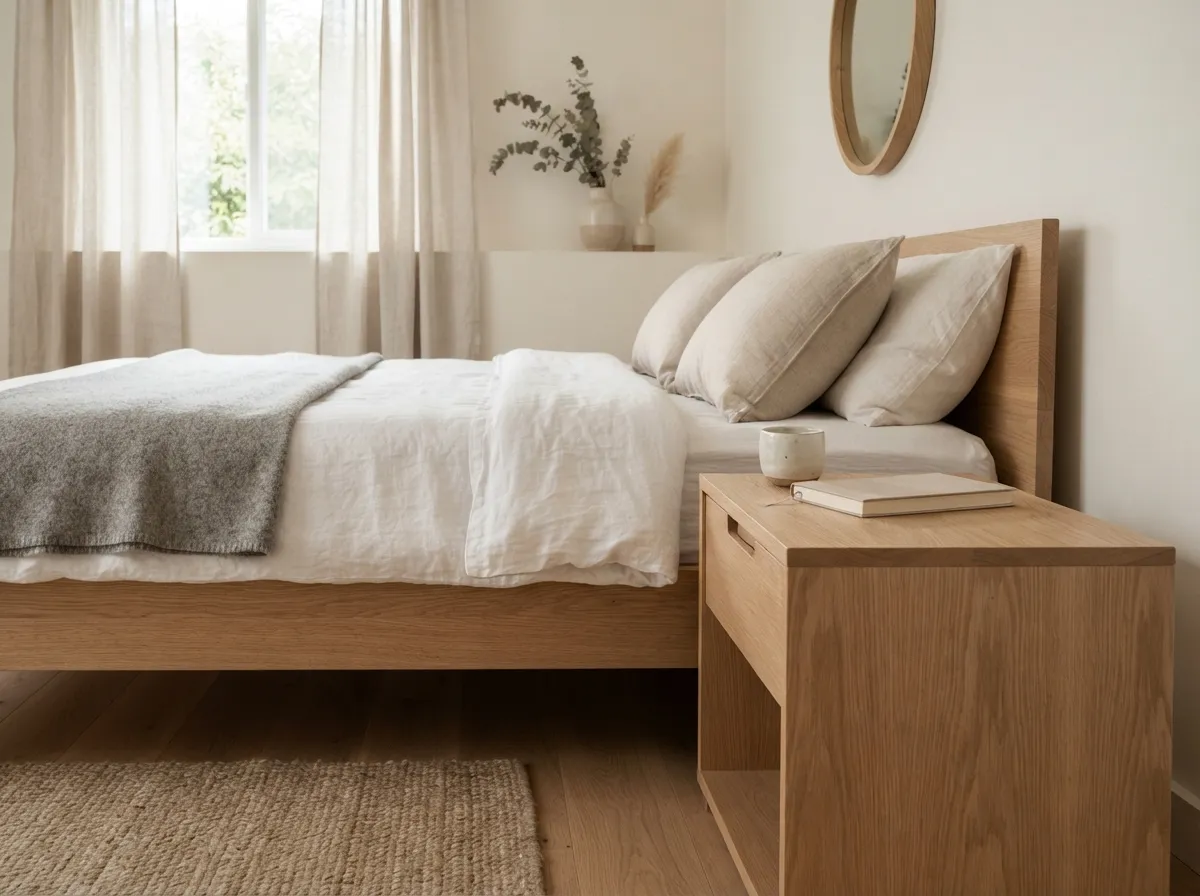
In a Japandi bedroom, every piece of furniture serves a purpose while maintaining an uncluttered appearance. Nightstands are no exception; they should be functional yet visually discreet.
Opt for nightstands with clean lines and minimal ornamentation. Materials like light-toned wood, such as oak or birch, or even a simple, matte black metal frame, align perfectly with the aesthetic.
Storage should be integrated seamlessly, perhaps with a single drawer or an open shelf to keep essentials tidy.
The goal is to provide a surface for a lamp or a book without becoming a focal point. Keep the surface clear of unnecessary items to maintain a sense of calm and order.
9. Rattan or Wicker Accent Pieces
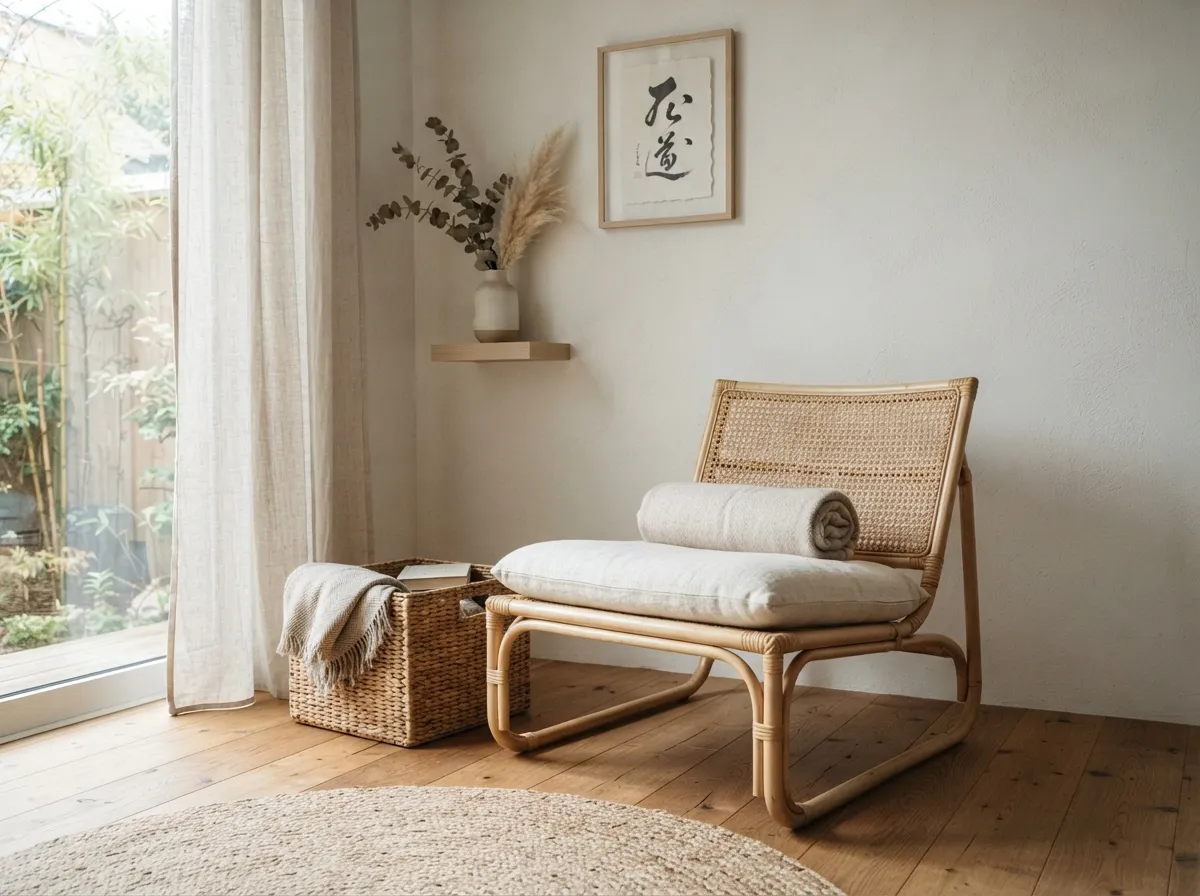
To add warmth and texture without disrupting the minimalist flow, consider incorporating rattan or wicker accent pieces. These natural materials introduce an earthy, organic feel that is quintessentially Japandi.
A rattan chair in a reading nook, a woven wicker storage basket, or even a subtle headboard made from these materials can add character. They provide a welcome contrast to smoother surfaces and straight lines.
Choose items with simple, understated designs to ensure they blend harmoniously. The natural variations in the weave and color add depth and an artisanal touch, connecting the space to craftsmanship and the outdoors.
10. Low-Profile Furniture Choices
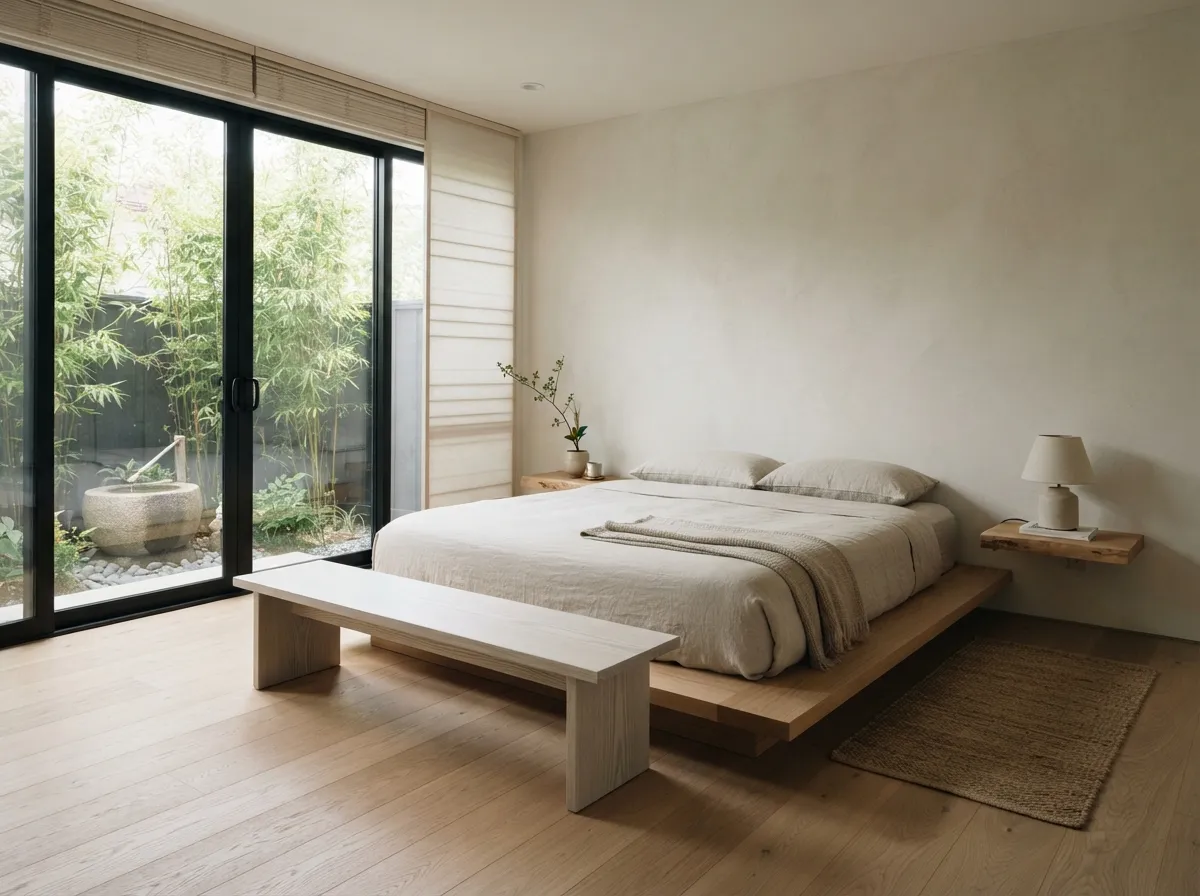
A hallmark of Japandi design is the preference for low-profile furniture. This approach creates an expansive, airy feel in the room, making it appear larger and more open.
It also fosters a sense of groundedness and calm.
Think about a platform bed frame that sits close to the floor, or a low-slung dresser with short legs. The reduced height of furniture encourages a connection to the floor and a more relaxed posture.
This design choice is deeply rooted in traditional Japanese aesthetics, emphasizing modesty and an appreciation for the surrounding space. It contributes significantly to the overall tranquil and minimalist atmosphere of the bedroom.
11. Organic Cotton or Linen Bedding
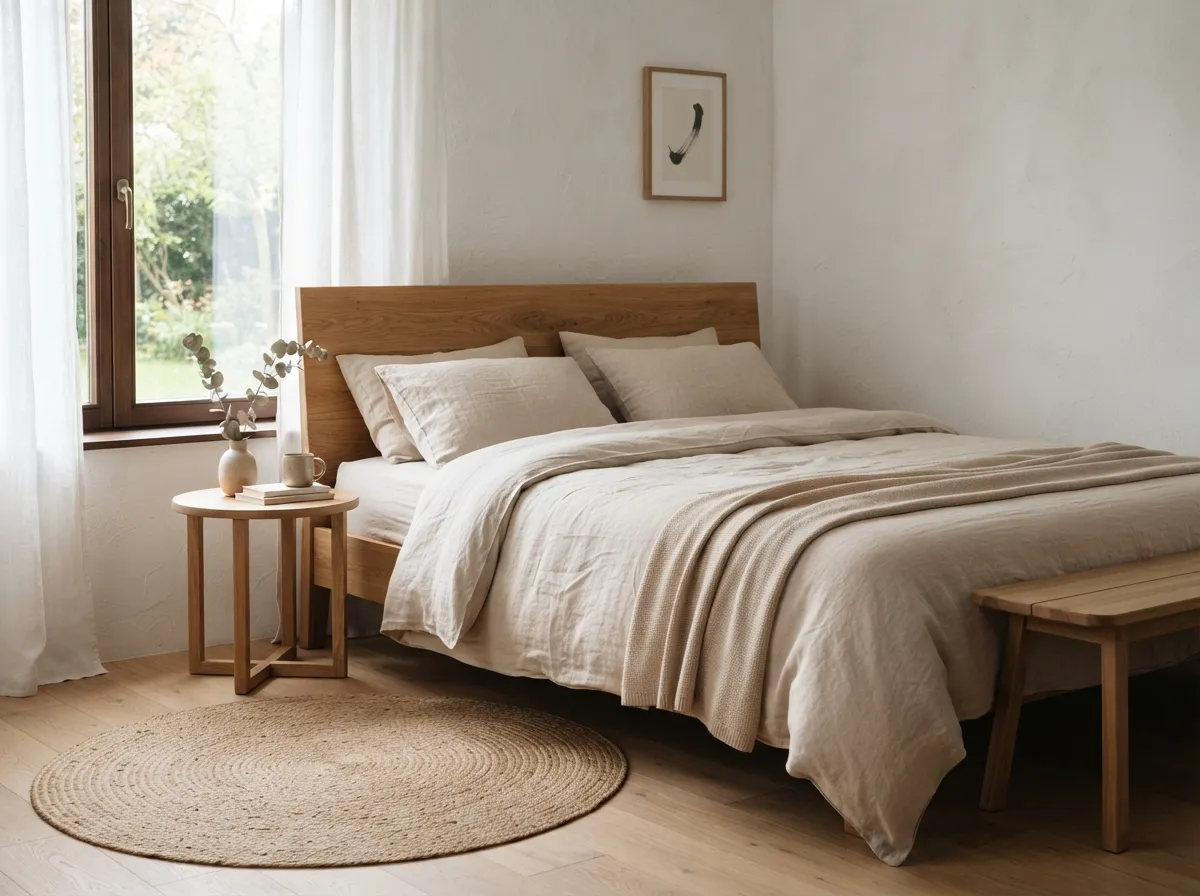
Opting for organic cotton or linen bedding is a cornerstone of Japandi design. These natural fibers offer unparalleled comfort and breathability, essential for a restful sleep environment.
Their inherently soft textures and gentle drape contribute to a relaxed, inviting atmosphere. They often come in muted, earthy tones that perfectly complement the minimalist aesthetic.
This choice reflects a commitment to natural materials and a desire for simple, understated elegance. The subtle imperfections in linen, for example, add character without compromising serenity.
Such bedding choices enhance the bedroom’s warmth and comfort. It’s about creating a tactile experience that promotes calm.
12. Functional Storage Solutions
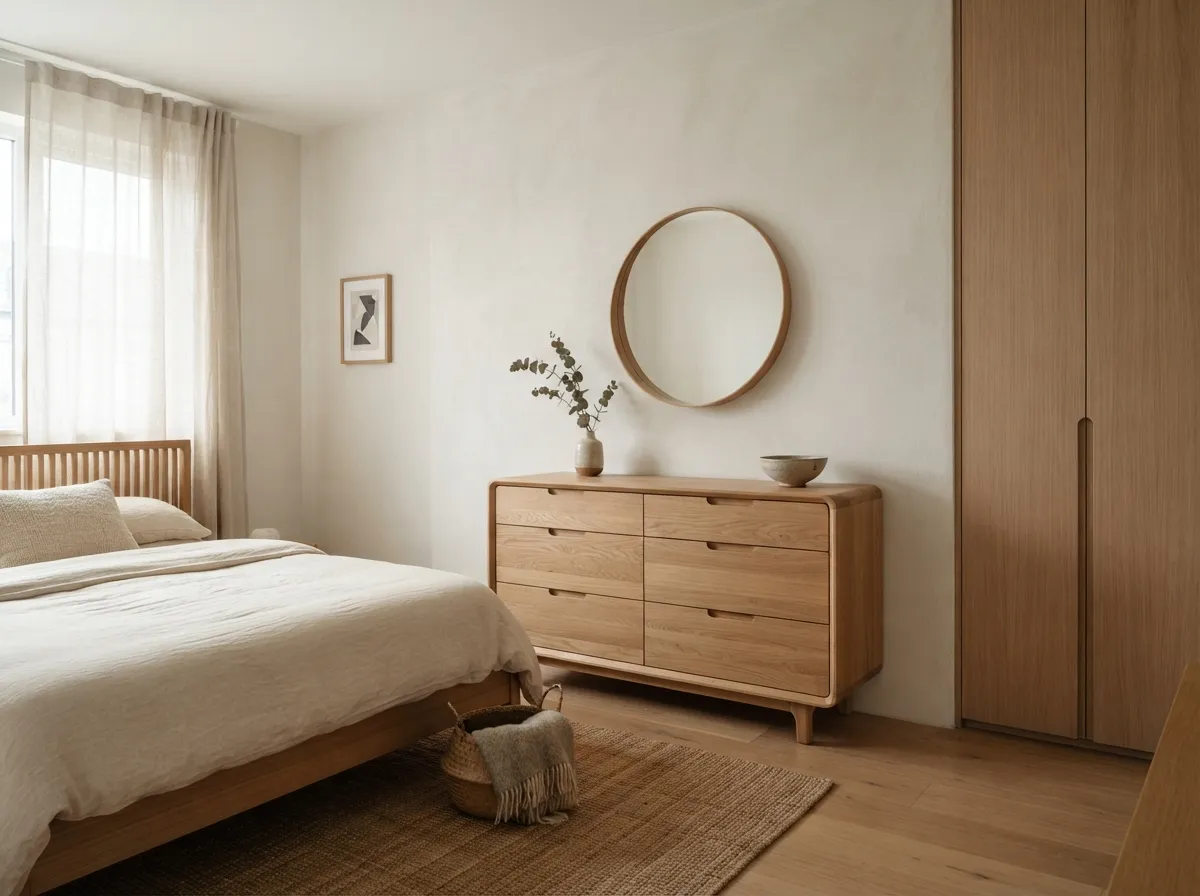
Functional storage is paramount in maintaining a minimalist Japandi bedroom. The goal is to keep surfaces clear and spaces uncluttered, promoting a sense of calm.
Consider built-in wardrobes or low-profile dressers that blend seamlessly with the room’s design. These pieces often feature clean lines and natural wood finishes, echoing both Japanese and Scandinavian aesthetics.
Hidden storage solutions, like beds with integrated drawers or discreet shelving units, are especially effective. They allow for an organized space without visual distractions.
Every item should have its designated place. This intentional approach to storage ensures a serene and highly functional environment, free from unnecessary visual noise.
13. Handcrafted Ceramic Decor
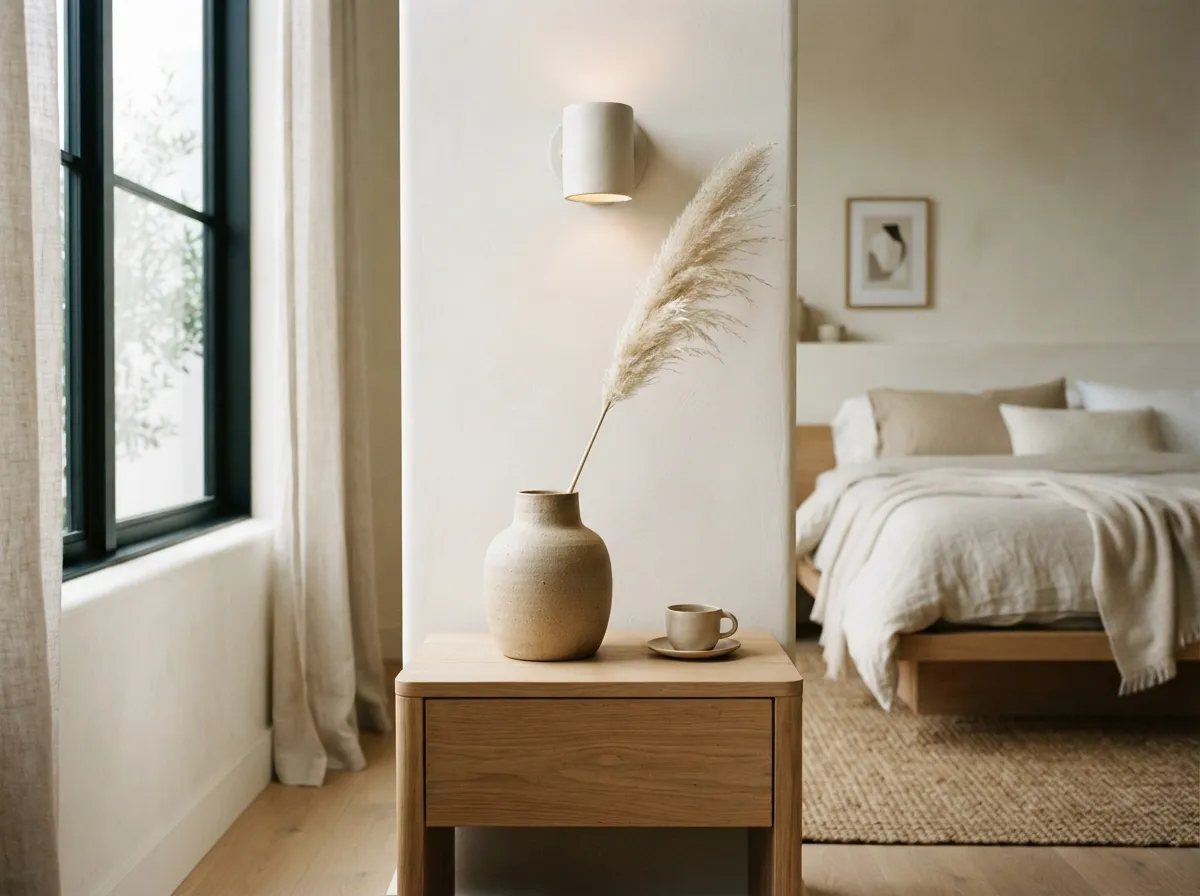
Incorporating handcrafted ceramic decor introduces an element of natural artistry. These pieces often feature imperfect textures and earthy tones, embodying the Wabi-sabi appreciation for imperfection.
A simple, artisanal ceramic vase on a bedside table can add a subtle touch of warmth and personality. Look for items with a matte finish or a natural glaze that highlights the material’s integrity.
These decorative accents should be chosen thoughtfully, ensuring they contribute to the room’s calm atmosphere rather than detracting from it. One or two well-placed items are often sufficient.
They serve as quiet focal points, celebrating craftsmanship and natural beauty. Such pieces reinforce the Japandi commitment to quality and understated design.
14. Sliding Shoji-Inspired Doors
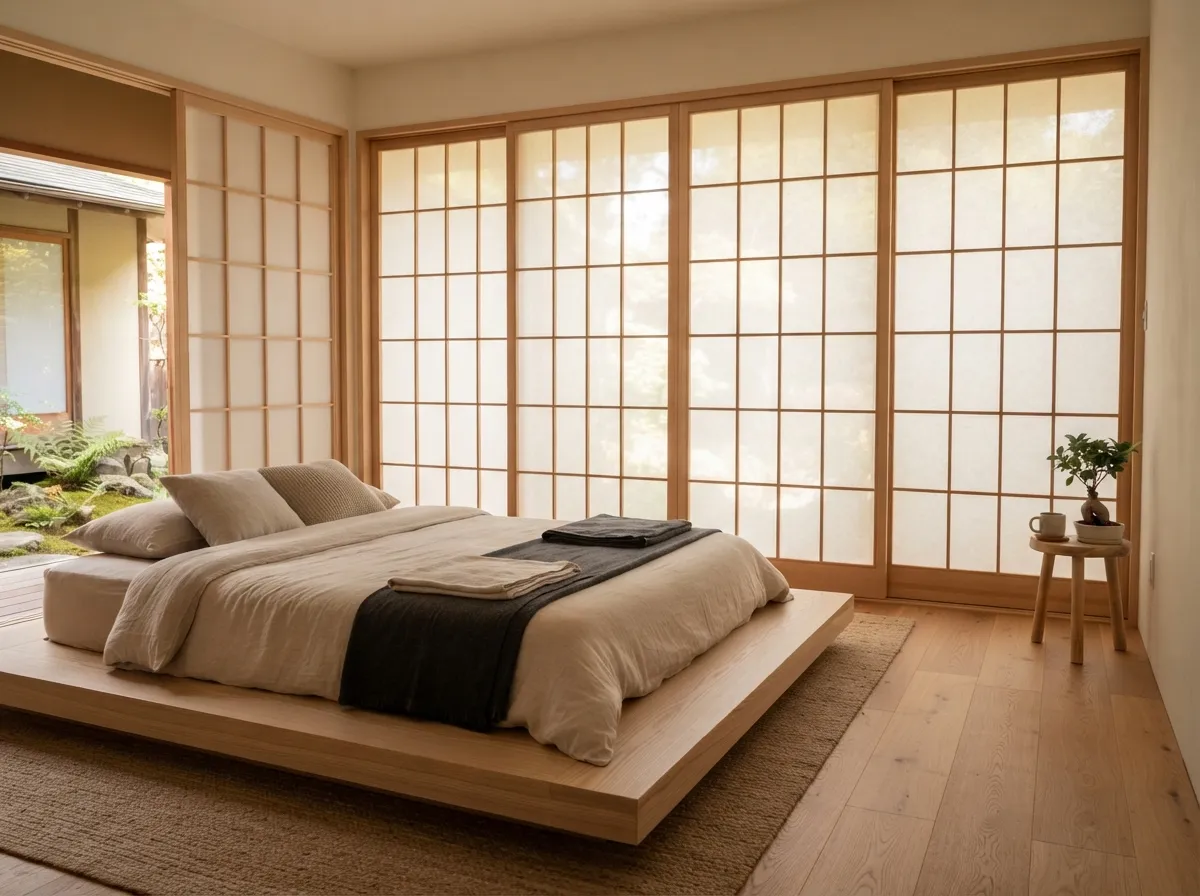
Sliding, Shoji-inspired doors are a hallmark of Japanese design that beautifully complement a Japandi bedroom. Their inherent ability to diffuse light creates a soft, ambient glow throughout the space.
These doors offer a practical, space-saving alternative to traditional hinged doors, making them ideal for minimalist layouts. They can be used for closets, en-suites, or even as room dividers.
Crafted from light wood frames and translucent panels, they introduce a natural, earthy element. The gentle texture of the panels adds visual interest without overwhelming the aesthetic.
They foster a sense of openness while still providing privacy when needed. This design choice contributes significantly to the calm and airy feel characteristic of Japandi interiors.
15. Bare Walls with Minimal Art
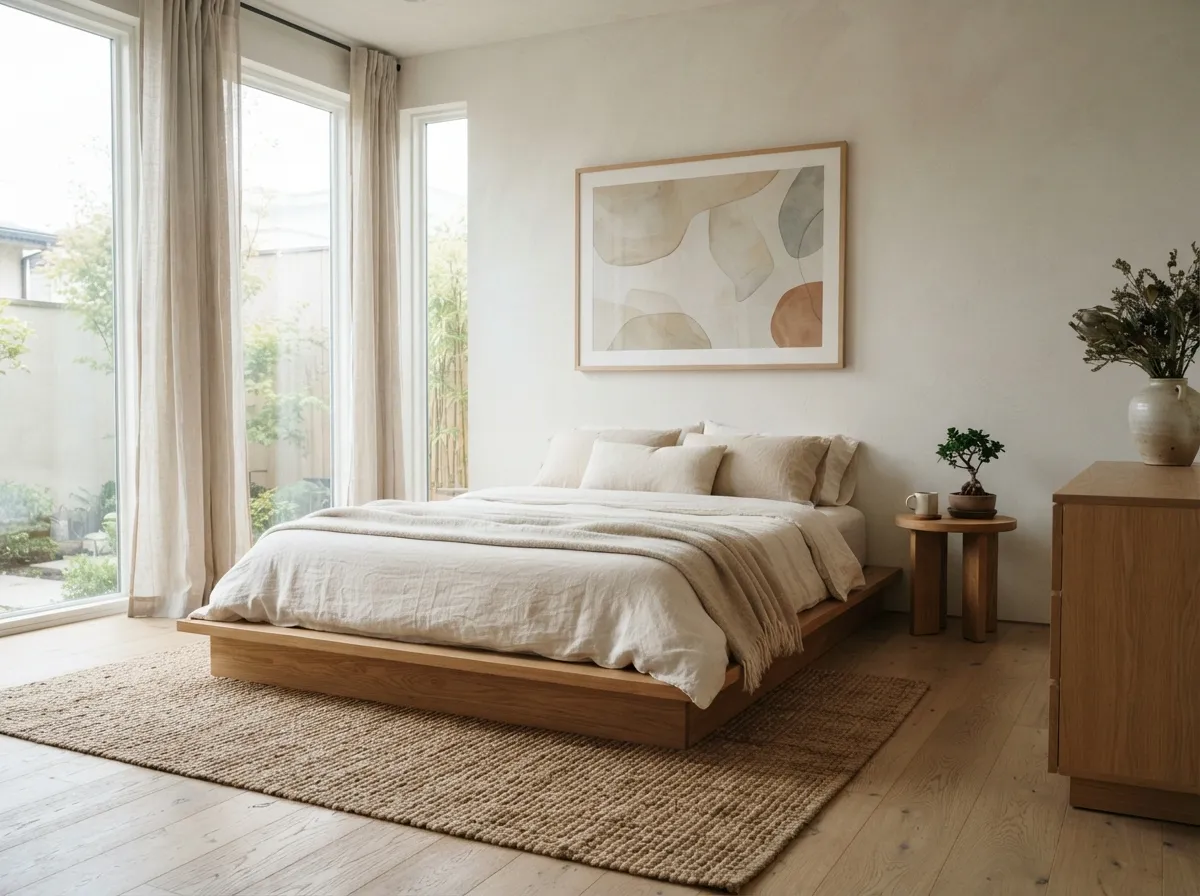
Embracing bare walls with very minimal art is central to the Japandi aesthetic. The emphasis is placed on negative space, allowing the room to breathe and fostering a profound sense of calm.
Rather than filling every wall, choose one or two carefully selected pieces that resonate with the room’s natural palette. Abstract art or subtle nature-inspired prints work exceptionally well.
The art should act as a quiet accent, not a dominant feature. It should blend harmoniously with the room’s overall serenity, adding depth without visual clutter.
This intentional approach ensures that each chosen piece enhances the peaceful atmosphere. It encourages reflection and appreciation for simplicity, aligning perfectly with minimalist principles.
16. Warm, Textured Area Rugs
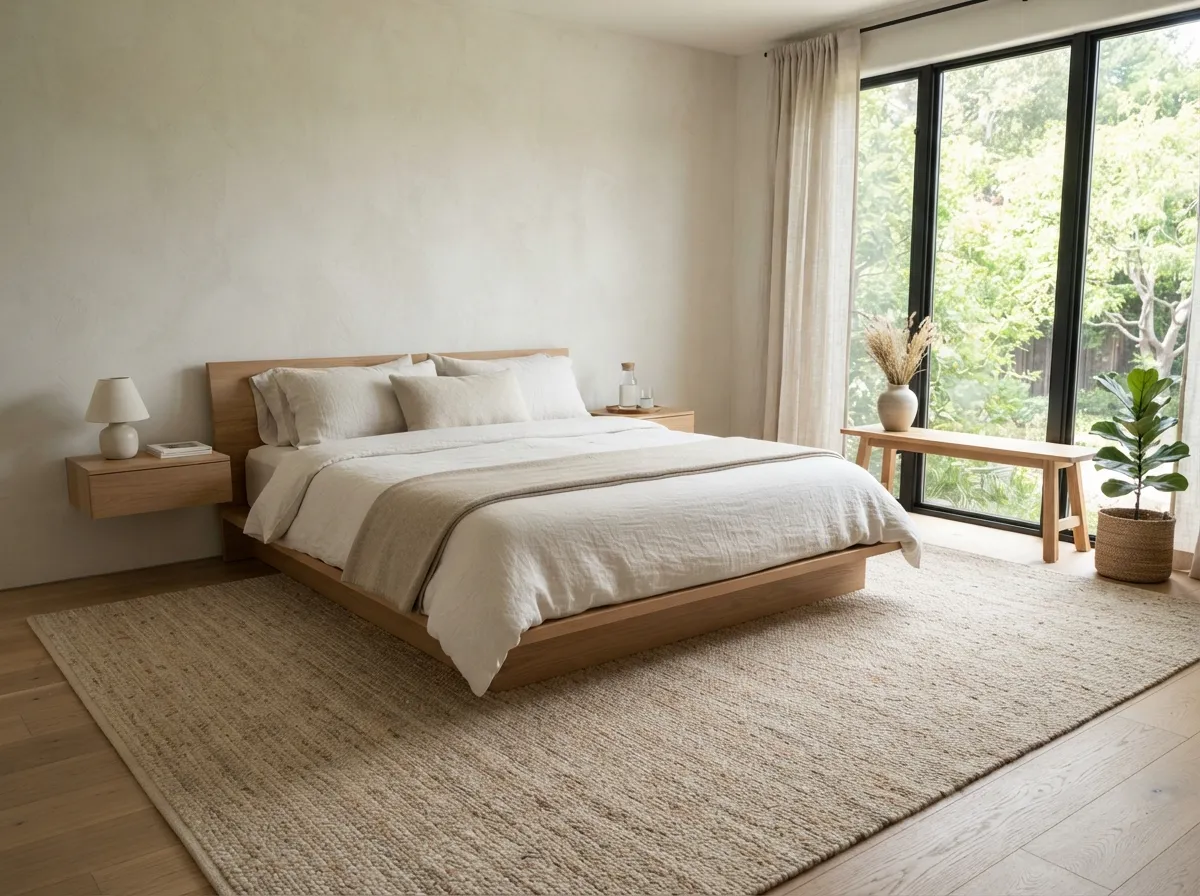
Introducing a warm, textured area rug is an excellent way to ground your Japandi bedroom design. These rugs add a layer of comfort and define zones within a larger space.
They contribute softness underfoot, which is vital for a cozy atmosphere.
Opt for natural fibers like wool, jute, or sisal. Their organic textures complement the natural materials prevalent in Japandi style.
Choose neutral tones such as muted grays, creams, or earthy browns. These colors maintain the serene aesthetic while adding subtle depth.
A well-chosen rug completes the room, bringing visual warmth without introducing clutter or excessive patterns.
17. Natural Fiber Window Treatments
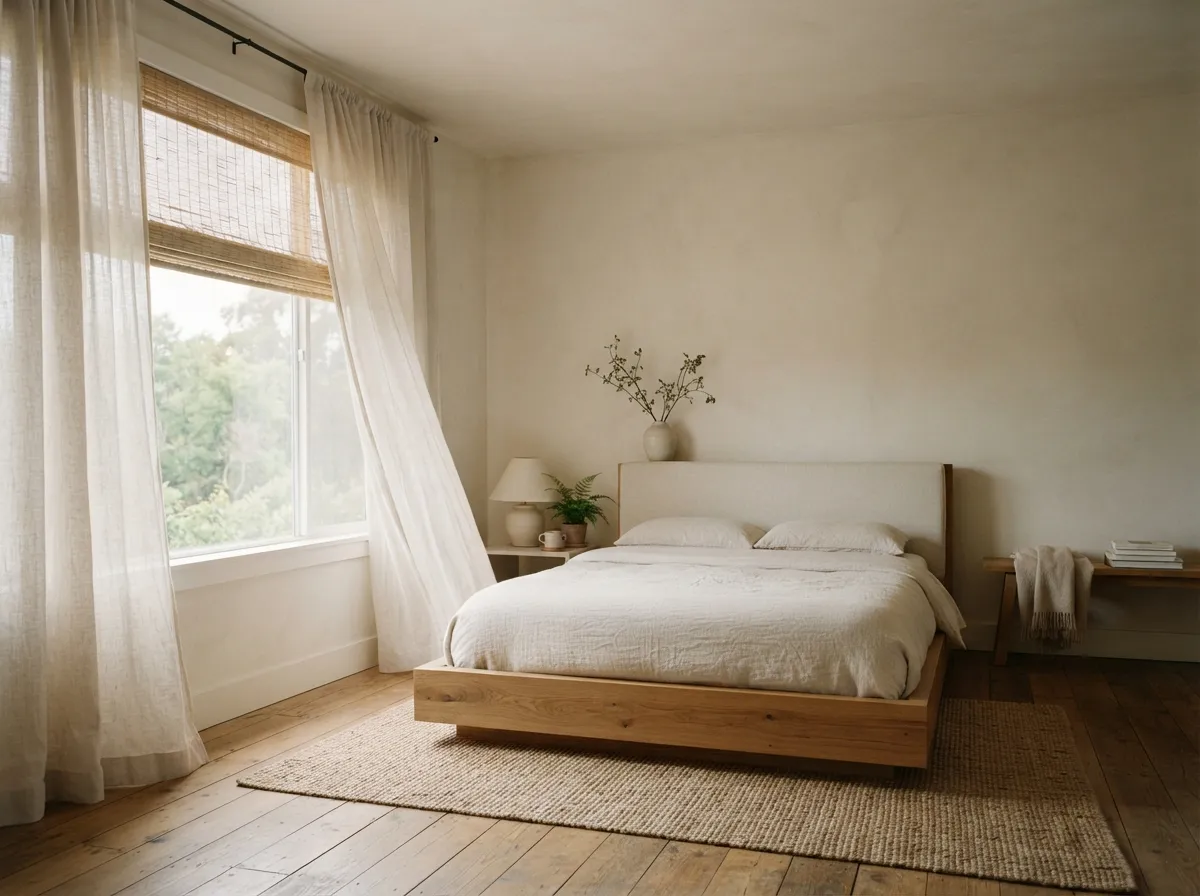
Window treatments made from natural fibers are essential for enhancing the calm and organic feel of a Japandi bedroom. They provide privacy while allowing filtered light to create a gentle glow.
Materials such as linen, cotton, or bamboo are ideal choices. Their inherent textures add visual interest without overwhelming the minimalist design.
Consider simple drapes that puddle slightly or sleek bamboo blinds. These options offer a clean look that aligns with both Japanese and Scandinavian aesthetics.
The soft draping of natural fabrics helps to soften the clean lines of the room, contributing to an overall inviting and relaxed environment.
18. Wood Slat Wall Accents
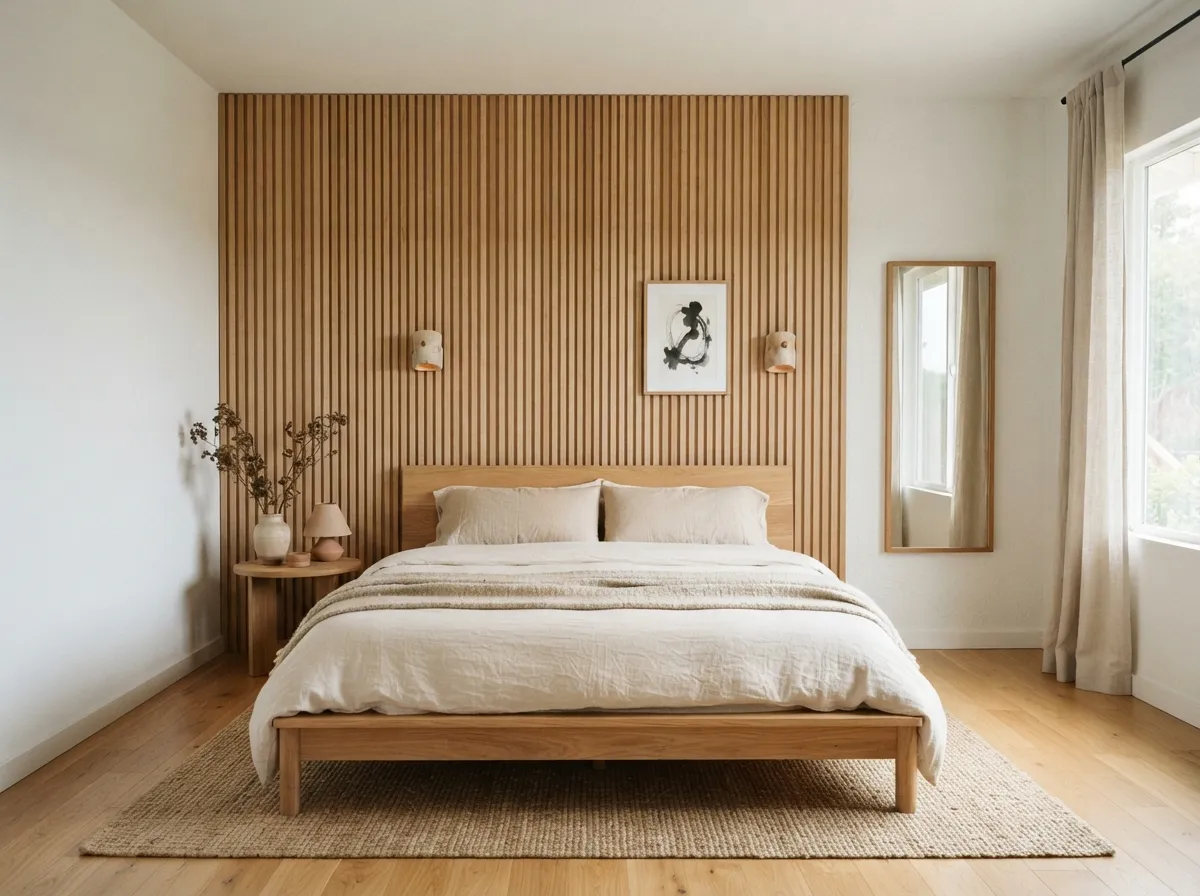
Incorporating wood slat wall accents can introduce architectural interest and a calming rhythm to your Japandi bedroom. This design element beautifully merges Japanese craftsmanship with Scandinavian simplicity.
These slats add a tactile dimension to the walls, breaking up large, plain surfaces. They create a focal point, often behind the bed, drawing the eye naturally.
Choose light-toned woods such as birch or ash for a bright, airy feel. The natural grain of the wood brings an organic touch into the space.
The vertical lines of the slats can also give the impression of height, making the room feel more expansive and open.
19. Zen Garden-Inspired Elements
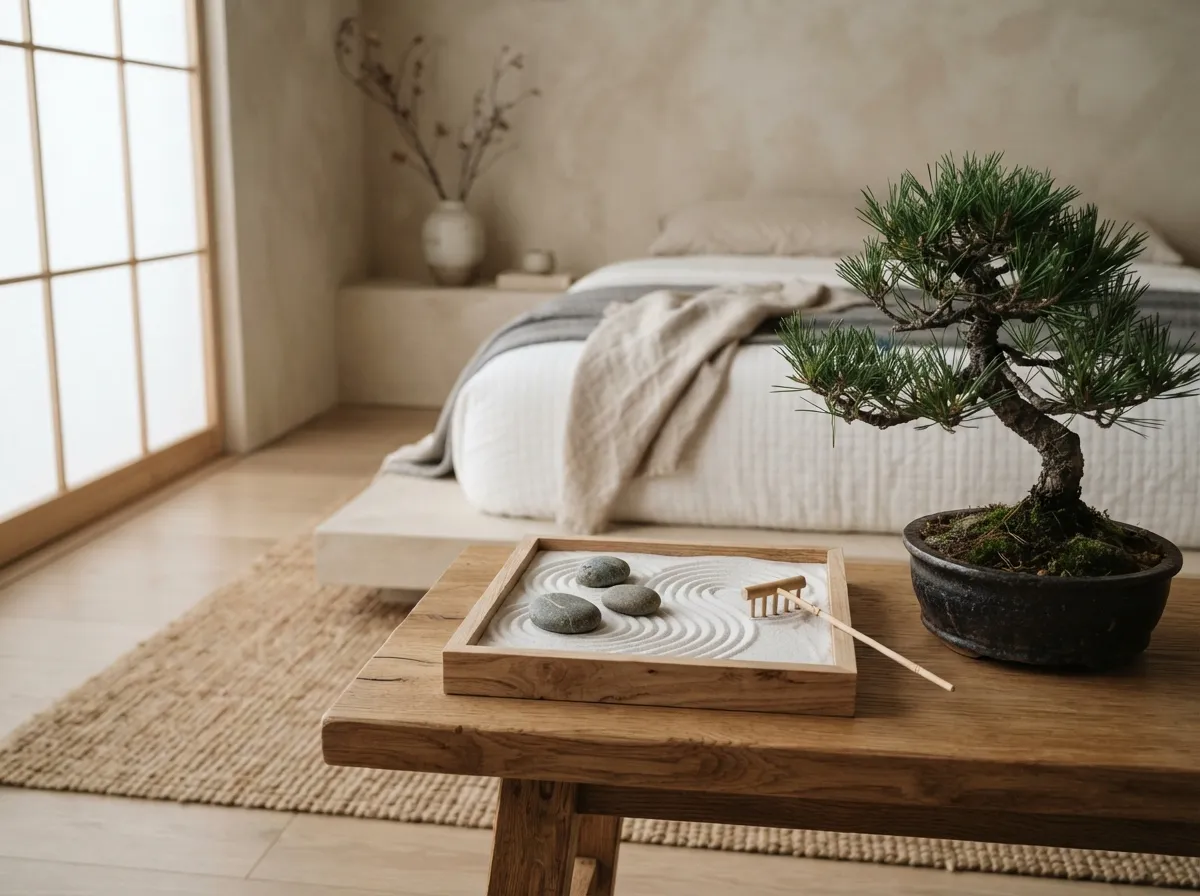
Bring tranquility into your bedroom with Zen garden-inspired elements, fostering a sense of peace and mindfulness. These small details evoke the serenity of nature indoors.
Consider a small tabletop rock garden with fine sand and a few carefully placed stones. This simple arrangement encourages quiet contemplation.
Another option is a minimalist bonsai tree or a sculptural indoor plant like a snake plant. These living elements connect the room to the outdoors.
These additions are subtle yet powerful, reinforcing the calm and balanced atmosphere central to Japandi design principles.
20. Asymmetrical Balance in Layout
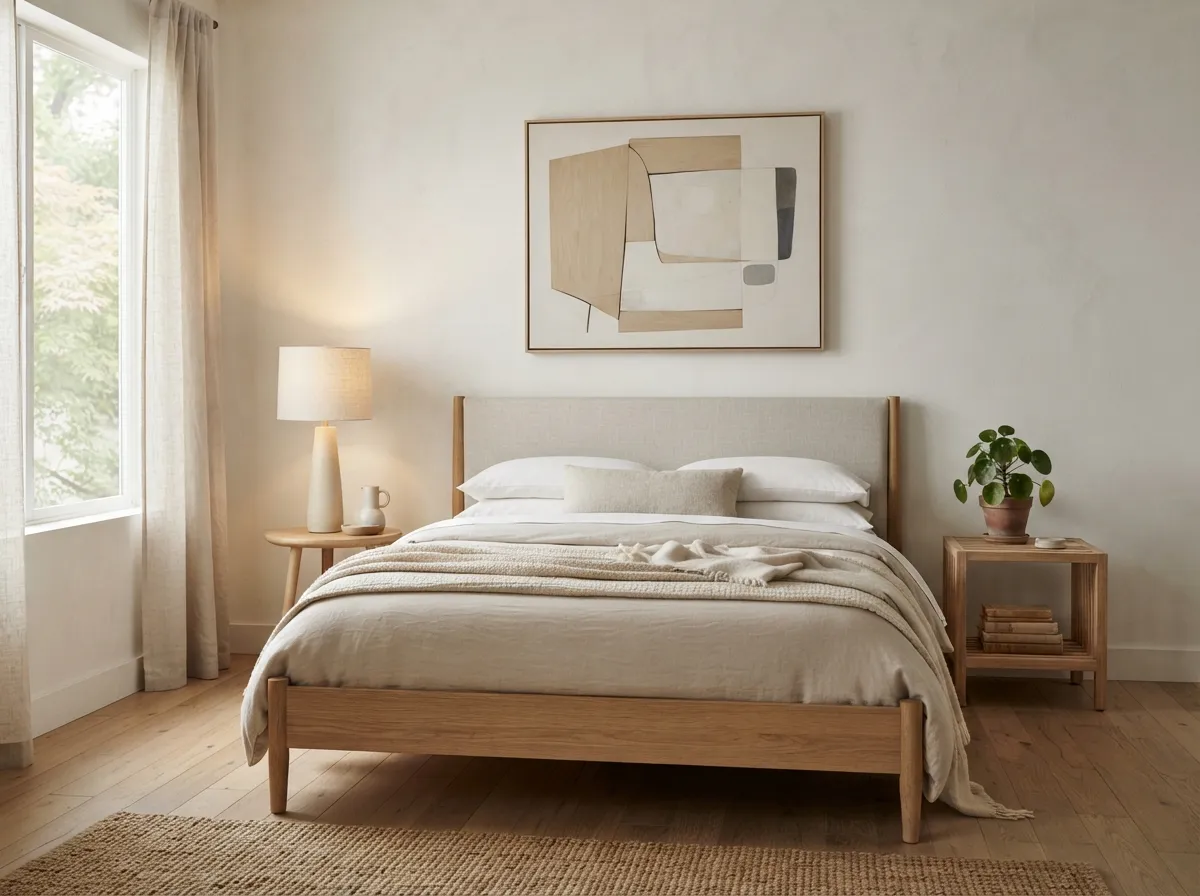
Embrace asymmetrical balance in your bedroom layout to create a dynamic yet harmonious space. This approach moves beyond strict symmetry, offering a more natural and relaxed feel.
Instead of identical nightstands, use varied pieces that still complement each other. For example, one side might have a low cabinet, while the other features a simple stool.
Balance visual weight through size, shape, and color rather than exact duplication. A larger lamp on one side can be balanced by a cluster of smaller decorative items on the other.
This method allows for more freedom in design and results in a space that feels curated and thoughtfully composed, rather than rigidly matched.
21. Stone or Concrete Small Accents
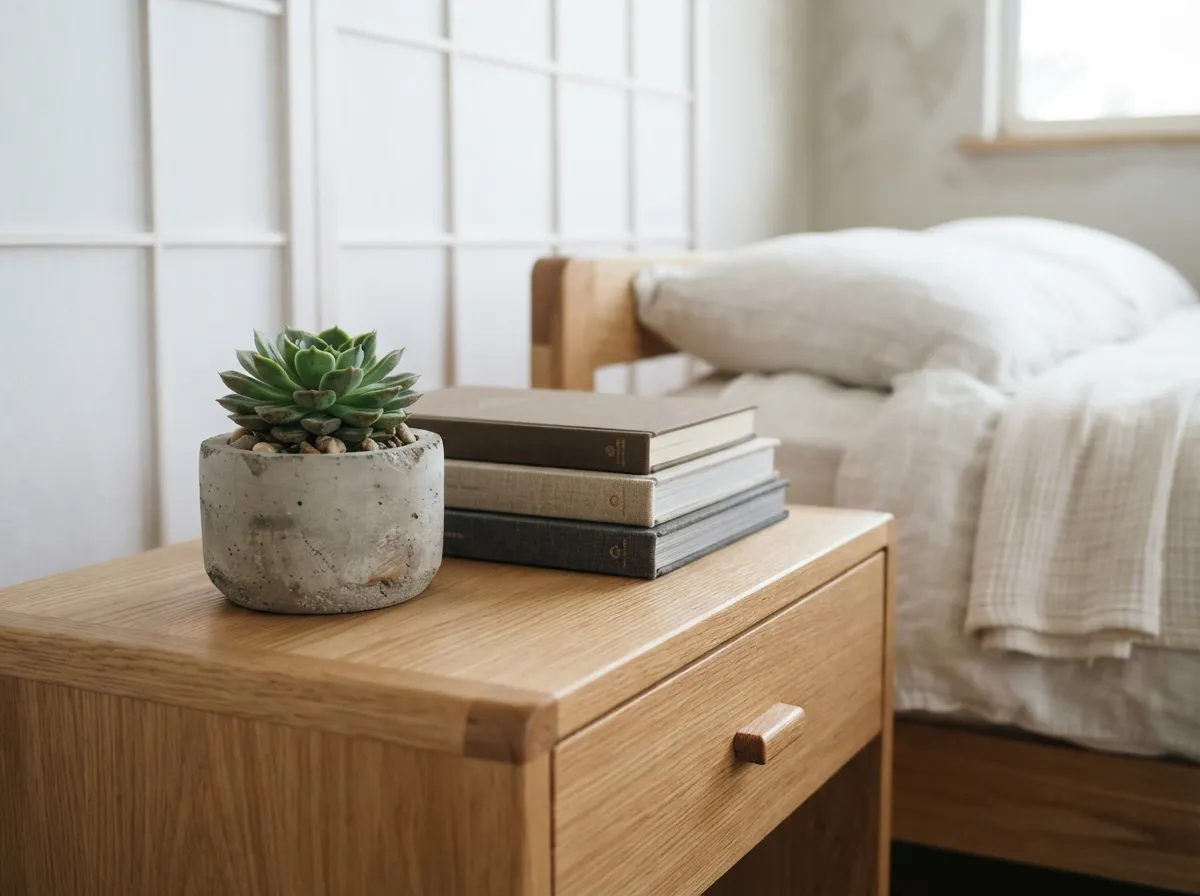
Introducing small accents made from stone or concrete is an excellent way to ground your Japandi bedroom. These raw, elemental materials add a sense of earthiness and authenticity to the space.
Think of items such as a sculptural concrete tray on your dresser or a smooth stone coaster on your bedside table. Their natural textures provide a subtle contrast to softer fabrics and warmer wood tones.
These modest additions enhance the minimalist aesthetic by celebrating natural form and durability.
22. Open Shelving for Essentials
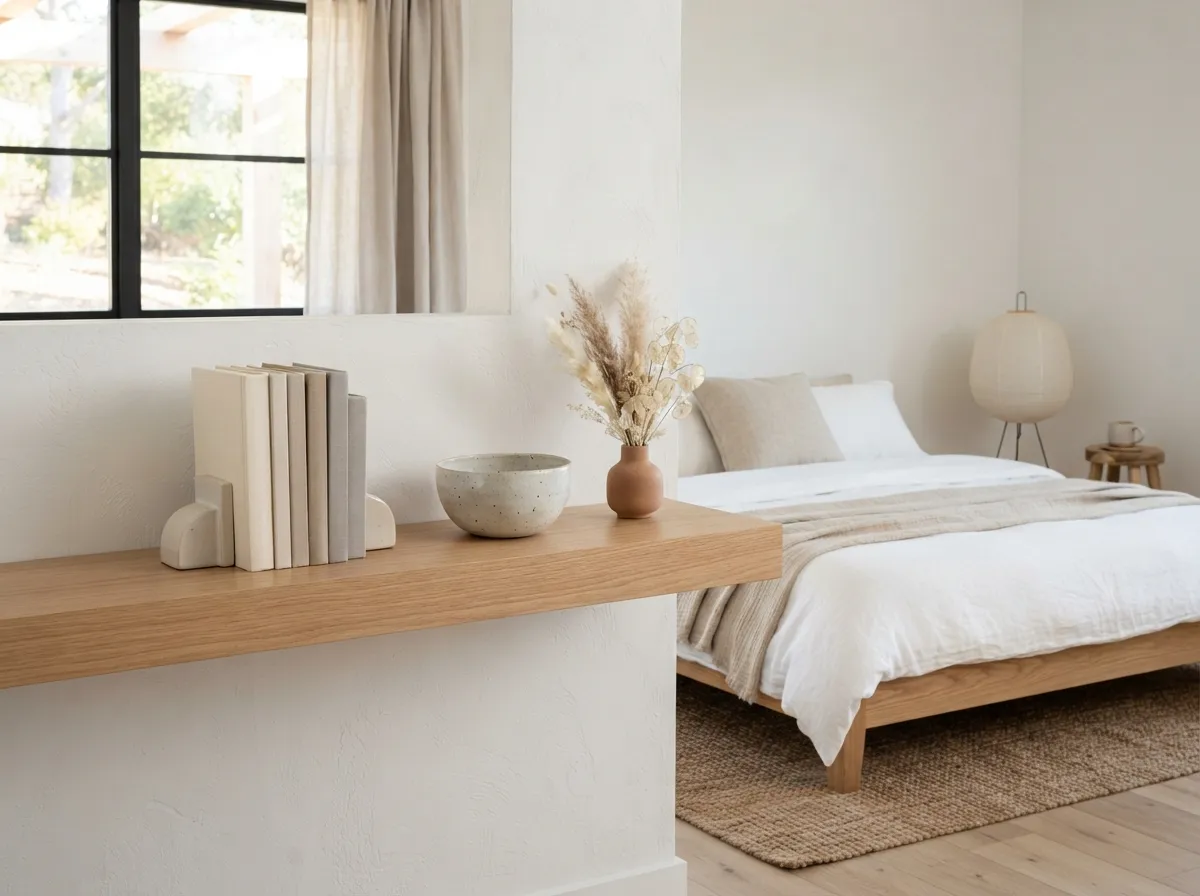
Open shelving offers both functionality and a chance for curated display in a Japandi bedroom. Instead of cluttered storage, these shelves are designed to hold only essential items that contribute to the room’s calm atmosphere.
Consider a few choice items like a small ceramic vase, a handful of beloved books, or a subtly scented candle. This approach reduces visual weight and keeps frequently used items accessible without creating disorder.
It promotes a thoughtful selection of belongings, aligning with the minimalist ethos.
23. Prioritizing Natural Light
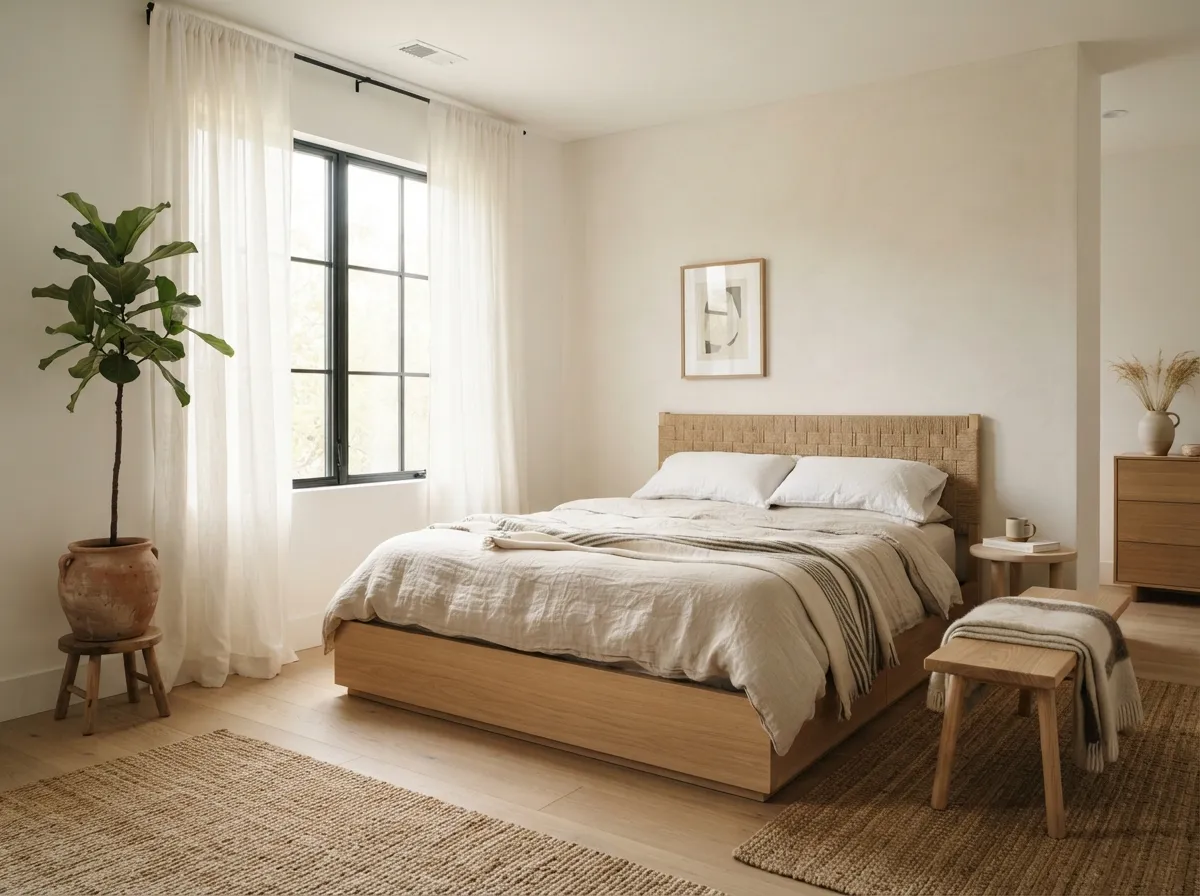
Maximizing natural light is fundamental to creating a truly serene Japandi bedroom. Large, unobstructed windows allow sunlight to flood the space, enhancing the feeling of openness and airiness.
Opt for minimal window treatments, such as sheer linen curtains, that filter light gently rather than blocking it entirely. This practice not only brightens the room but also highlights the natural textures and muted color palette.
Abundant natural light contributes significantly to the overall sense of peace and wellbeing.
Embracing Japandi design means cultivating a space of calm and simplicity. By integrating natural materials, clean lines, and thoughtful accents, you can create a bedroom that promotes relaxation and well-being. These 23 ideas offer a pathway to a beautifully serene, functional living environment.