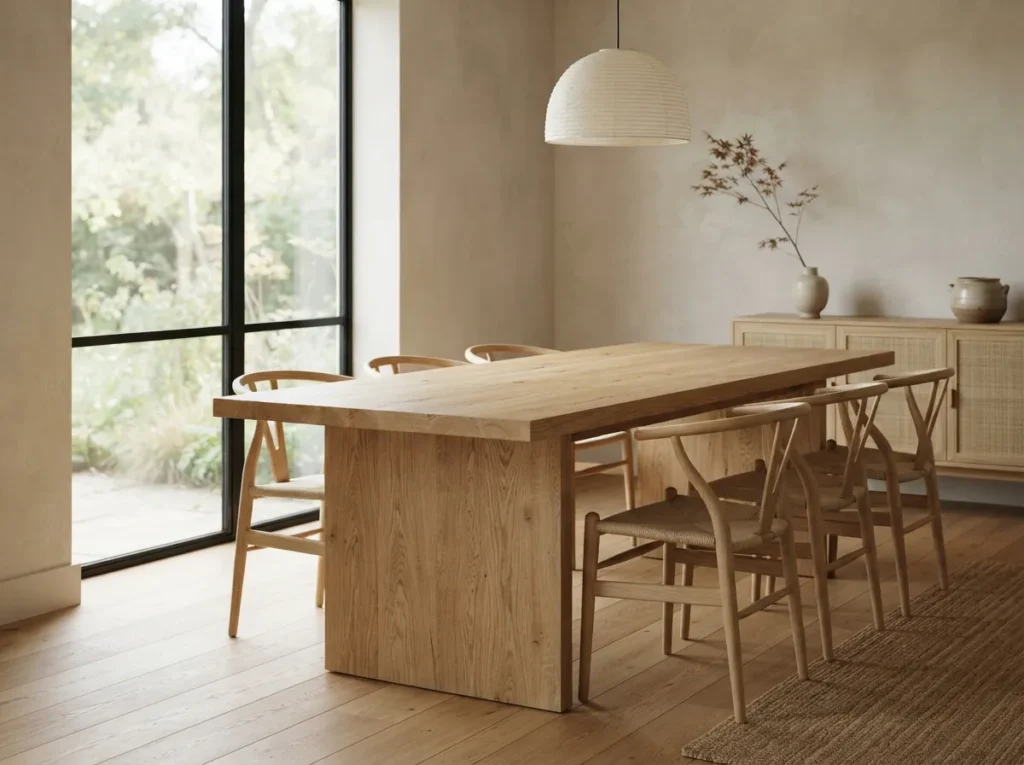
Discover the harmony of Japanese minimalism and Scandinavian warmth with these Japandi dining room ideas. Create a serene, functional, and inviting space perfect for meals and gatherings. Explore simple lines, natural materials, and a calming aesthetic to transform your dining area.
1. Focus on a Solid Wood Dining Table
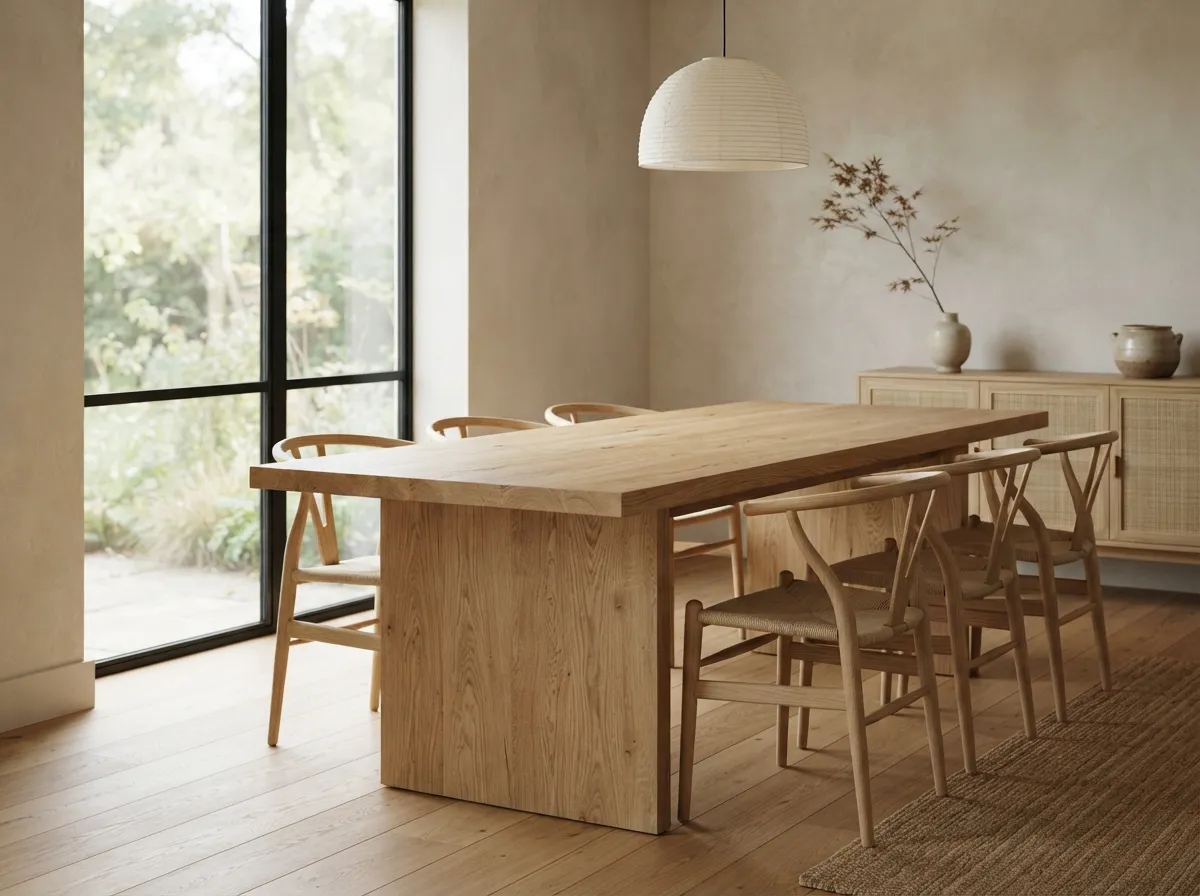
At the heart of every Japandi dining room is a solid wood dining table, a choice that symbolizes natural beauty and functionality. Choose a table with clean lines and an uncomplicated silhouette, letting the beauty of the raw material speak for itself.
Woods like light oak or natural teak are ideal, showcasing soothing wood grains and rich textures. This table serves as a focal point, inviting togetherness and genuine conversation.
The presence of this solid wood table instantly grounds the room, providing a sense of warmth and stability. It is not just a piece of furniture, but an investment in timeless aesthetics and a tranquil dining experience.
The simple yet sturdy craftsmanship ensures this table will last for years, supporting many precious moments with family and friends.
2. Incorporate Woven Rattan Dining Chairs
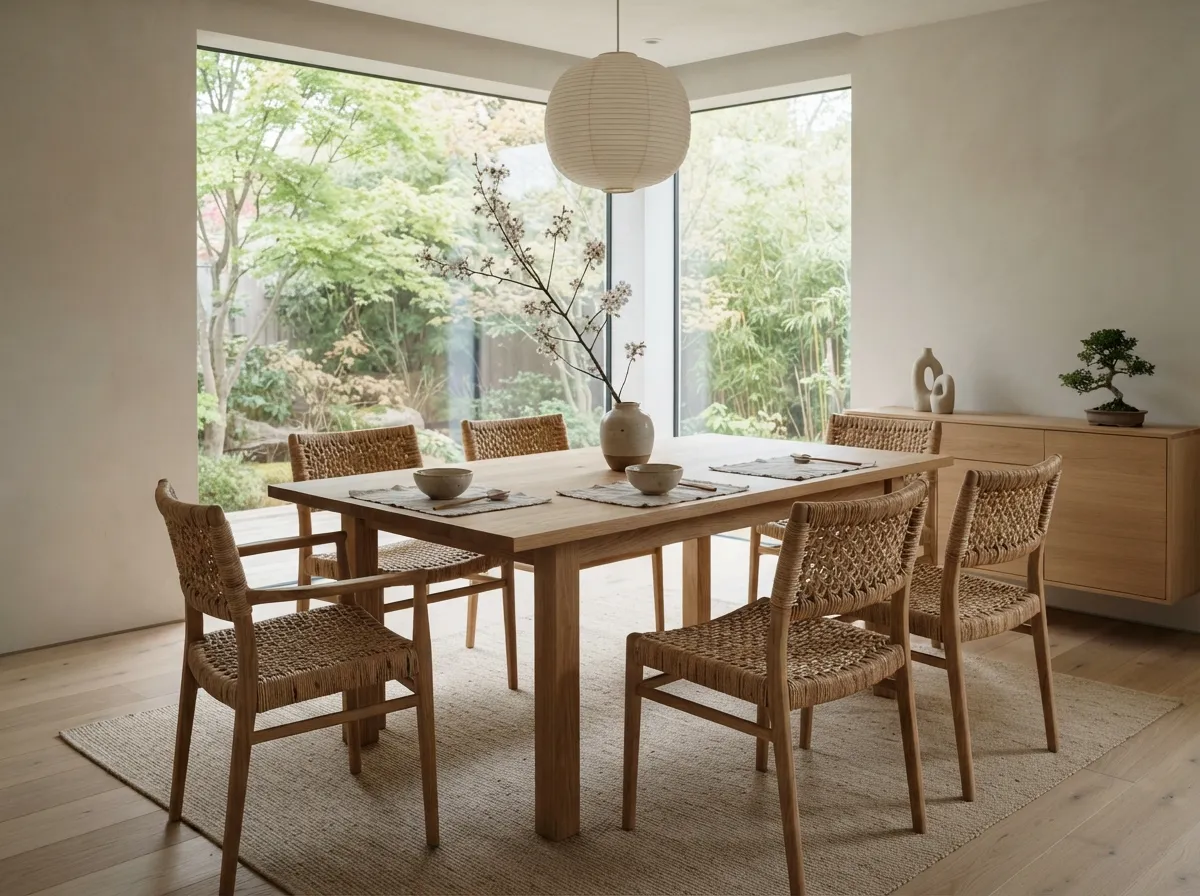
To complement your solid wood dining table, consider woven rattan dining chairs. This natural material adds organic texture and a light touch to your Japandi space, creating an interesting yet harmonious contrast.
These chairs, with light-colored rattan weaving and sleek wooden frames, bring a relaxed and unpretentious vibe. Their minimalist yet comfortable design encourages an inviting atmosphere for eating and gathering.
This choice is not only aesthetic but also practical, as rattan is known to be lightweight and durable. The presence of this woven element introduces softness and rich visual dimension without sacrificing simplicity.
They add a layer of warmth, making the dining room feel more welcoming and natural, perfect for the Japandi design philosophy.
3. Embrace a Neutral Wall Color Palette
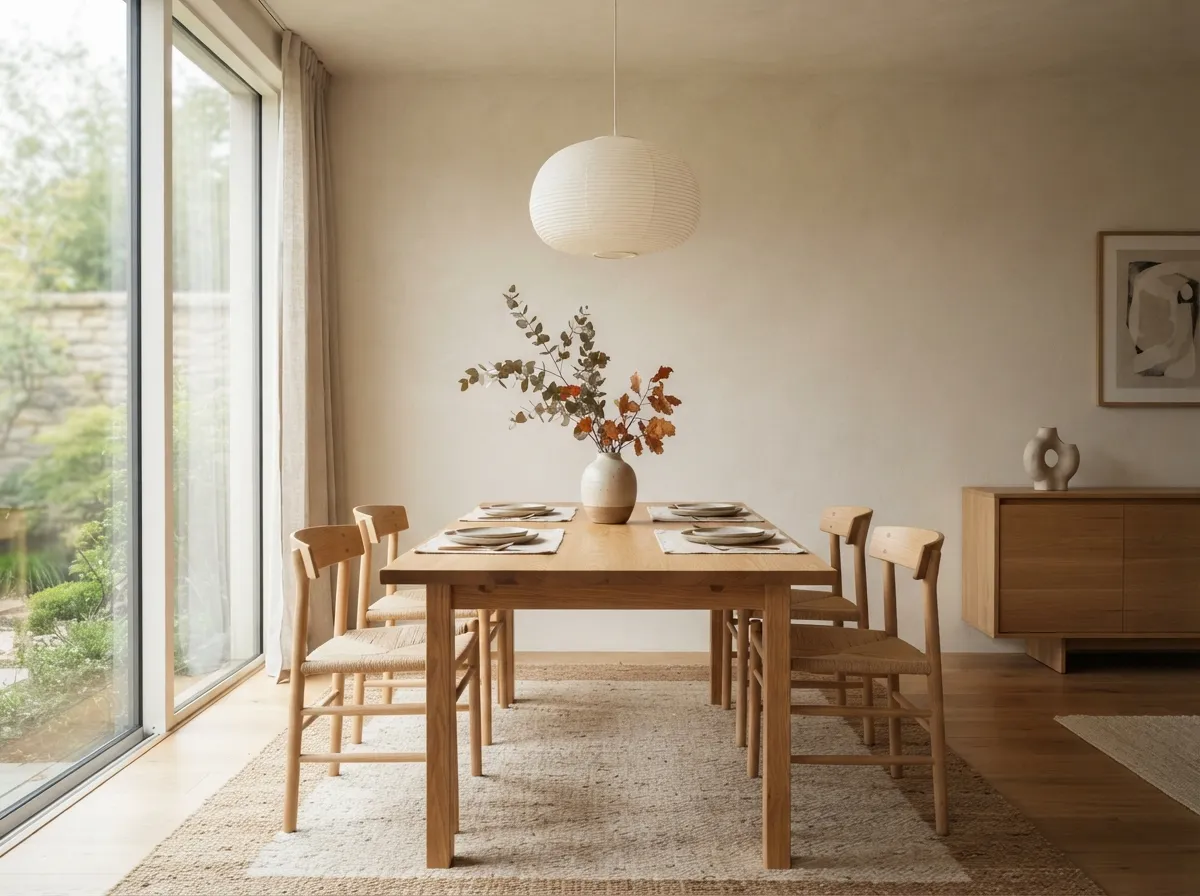
Creating a calm backdrop is key in Japandi design, and this starts with a neutral wall color palette. Choose colors like warm off-white, light gray, or soft cream to create a soothing atmosphere.
These colors maximize the diffusion of natural light, making the dining room feel more spacious and open. Clean, clutter-free walls allow wooden furniture and other natural textures to shine.
The neutral palette also serves as a perfect canvas, allowing you to add minimalist accents through decor. It encourages a focus on the form, texture, and functionality of every element in the room.
The overall atmosphere is one of tranquility and simplicity, supporting a peaceful and unburdened environment, the true essence of the Japandi aesthetic.
4. Choose Subtle Ceramic Dinnerware
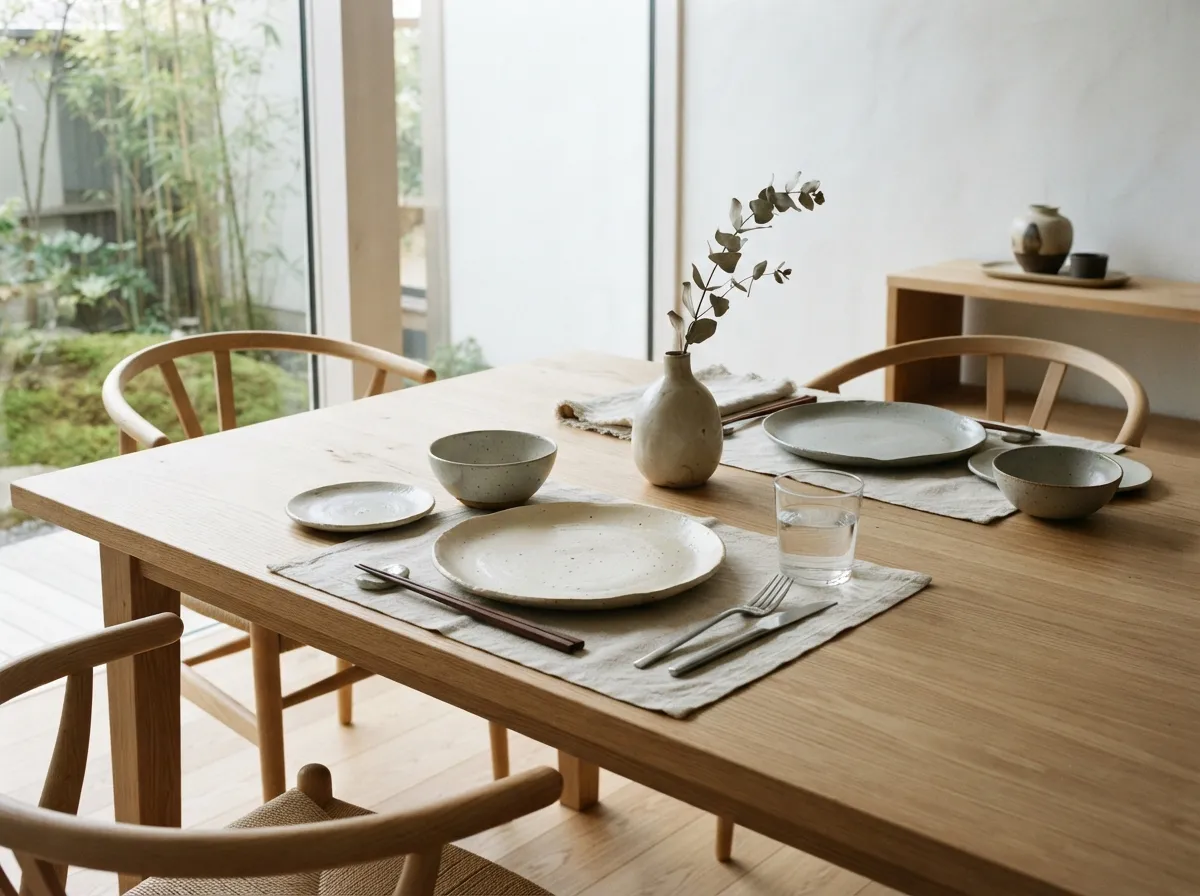
Completing the Japandi dining experience involves careful selection of dinnerware. Choose simple ceramic dinnerware with unpretentious nuances and smooth textures.
This adds a touch of understated elegance to your table.
Matte ceramic plates in colors like natural cream, light gray, or soft terracotta are ideal. They often feature handmade imperfections that add character and authenticity.
This dinnerware is not only functional but also part of the Japandi aesthetic, celebrating beauty in simplicity. Every meal becomes an opportunity to appreciate natural materials and forms.
This choice emphasizes attention to detail and value in carefully crafted items, elevating your dining room atmosphere with an unpretentious touch.
5. Adorn with a Textured Linen Tablecloth
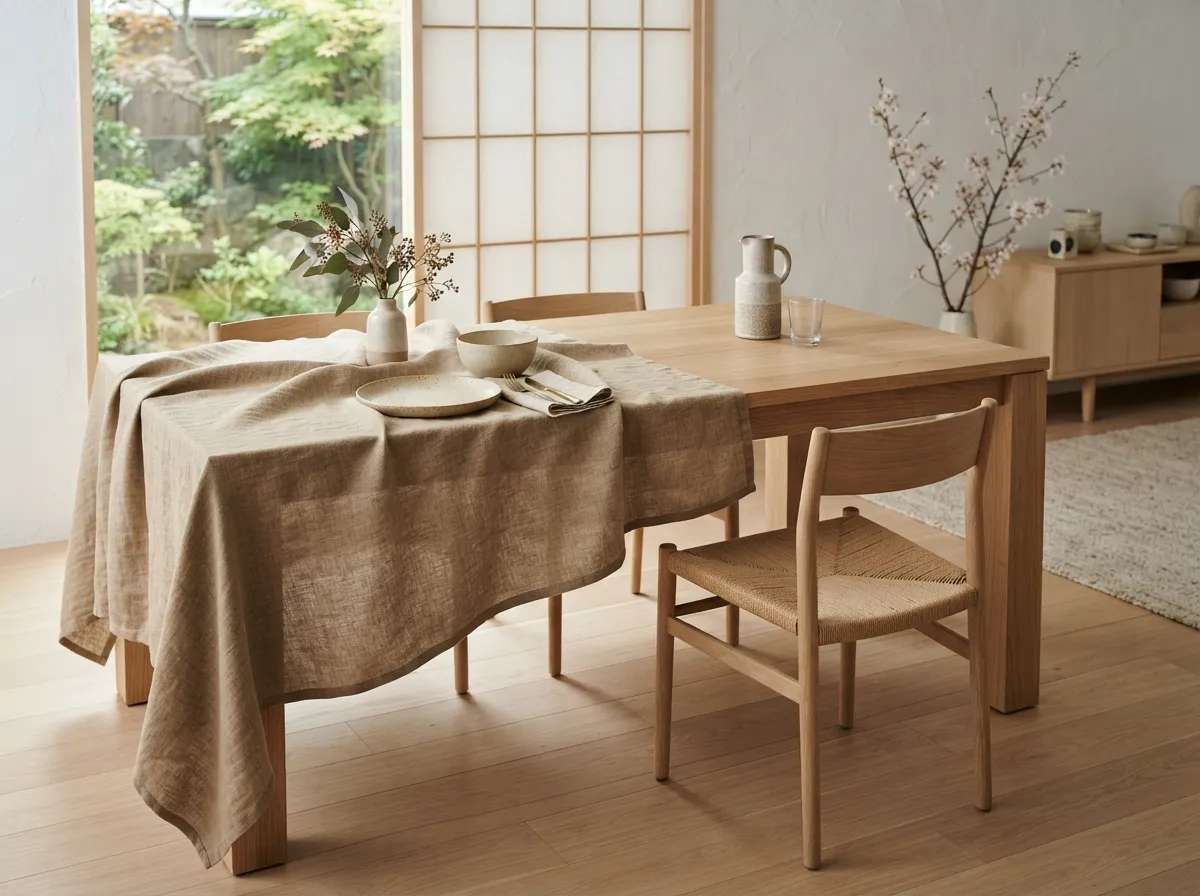
To add a layer of softness and warmth to your dining table, use a textured linen tablecloth. This natural material introduces organic texture and a beautiful drape, softening the hard lines of the table.
Choose linen in neutral colors like natural flax or faded white, which complement the calm Japandi palette. The visible fabric weave adds tactile appeal without disrupting the minimalist aesthetic.
This soft linen tablecloth provides a touch of understated elegance and enhances the dining experience. It creates a more intimate and inviting atmosphere, suitable for any gathering.
Its simple yet significant presence unites all table elements, from solid wood to ceramics, in a cohesive and calming presentation.
6. Install Simple Geometric Pendant Lighting
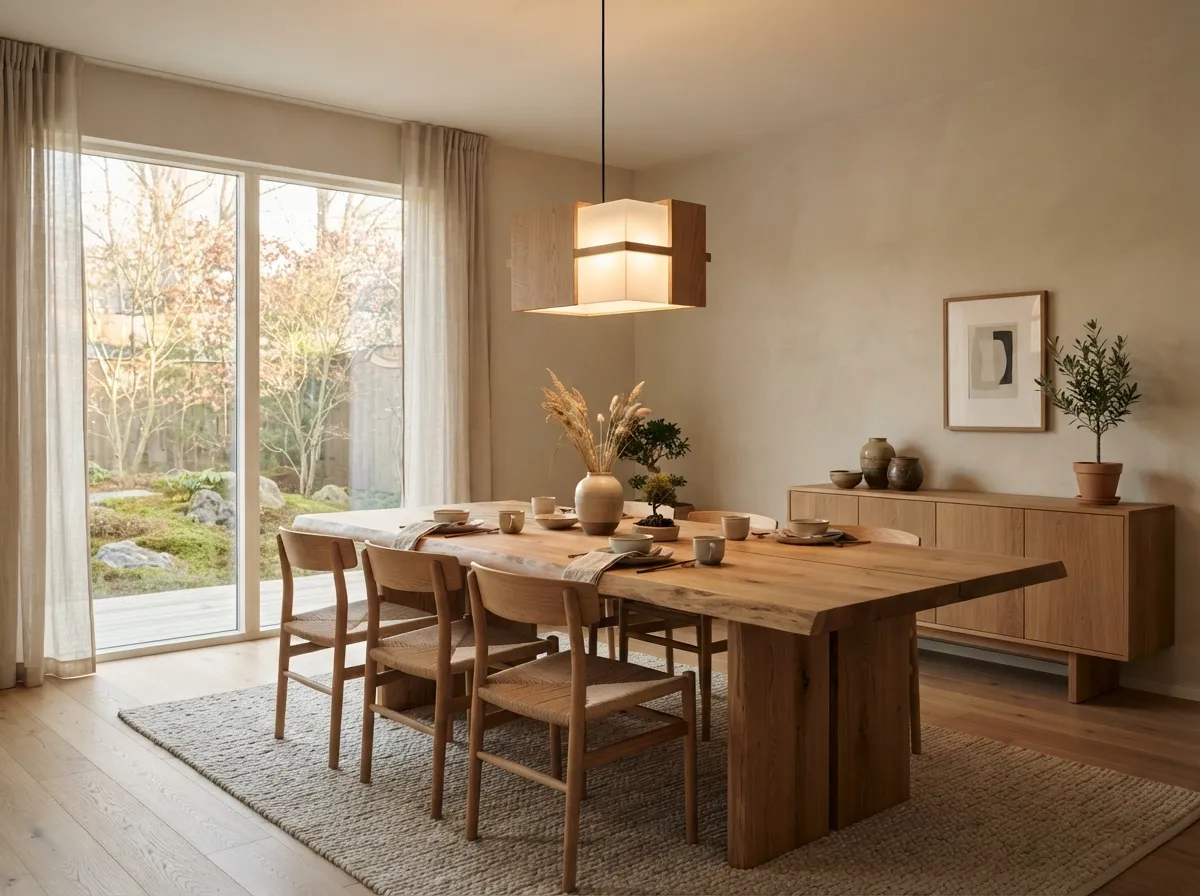
Lighting is key to creating a harmonious Japandi atmosphere. Choose simple geometric pendant lights that serve as both functional and decorative elements.
These lights can take the form of blocks or spheres, often made from natural materials like light wood combined with frosted glass, or sleek matte black metal.
Their clean and minimalist design provides a gentle contemporary touch without dominating the space. The warm, soft light emitted will create a cozy and soothing dining atmosphere.
Strategic placement above a natural wood dining table will highlight the beauty of the furniture’s texture and create a calm focal point.
7. Select a Low-Profile Sideboard
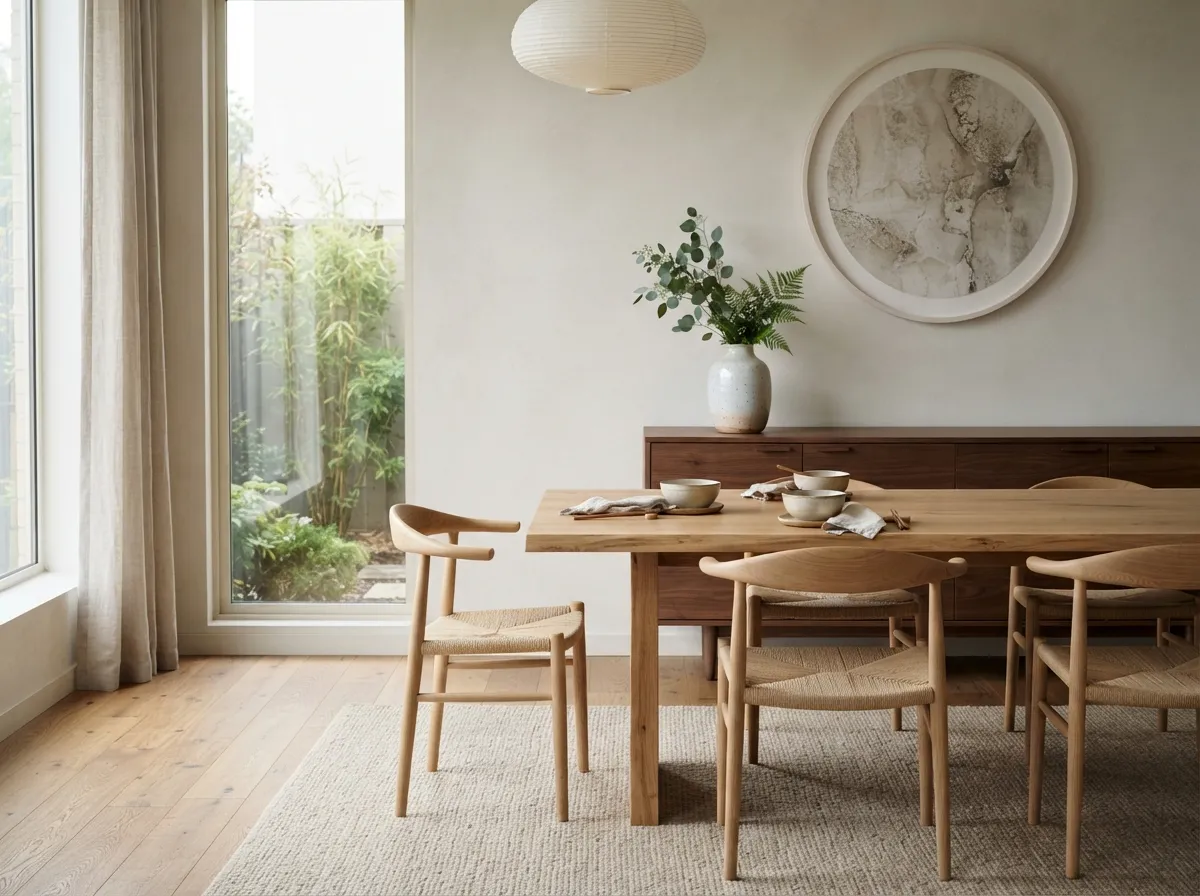
To maintain the airy and uncluttered impression typical of Japandi, selecting a “low-profile” sideboard is crucial. This furniture highlights clean lines and an unexaggerated design.
This sleek sideboard is often made of natural wood like light oak or walnut, with simple opening mechanisms or minimalist handles. It maintains an unobtrusive aesthetic.
The low position of the sideboard along a neutral wall allows the space to feel more open and spacious. It also provides a surface for carefully curated displays.
You can place a single simple ceramic vase or a small plant on top, maintaining a clean and functional look while adding a touch of natural beauty to the dining room.
8. Display Ikebana-Inspired Floral Arrangements
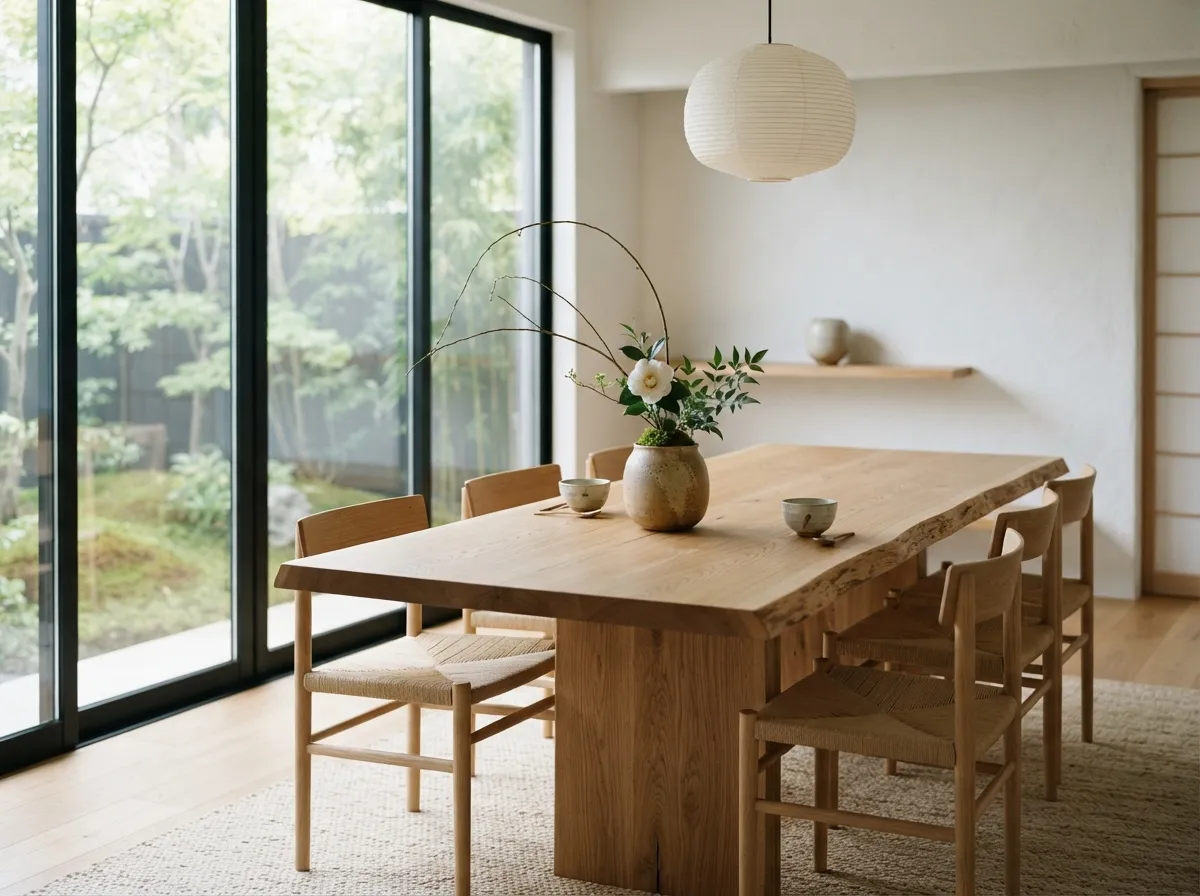
Bringing natural elements into the space is a hallmark of the Japandi style. Ikebana-inspired floral arrangements offer a way to do this with an artistic touch.
It’s not about large bouquets, but rather an emphasis on minimalism, asymmetry, and negative space. A few carefully placed branches or a single bloom in an earthenware vase is enough.
This display becomes a calm focal point in the center of the natural wood dining table, adding vitality without creating a crowded impression. Soft light entering through large windows will illuminate its beauty.
The focus is on natural forms, lines, and textures, creating a profound dialogue between nature and design. It is a memorable way to appreciate the simplicity and beauty of materials.
9. Opt for Warm Wood Flooring
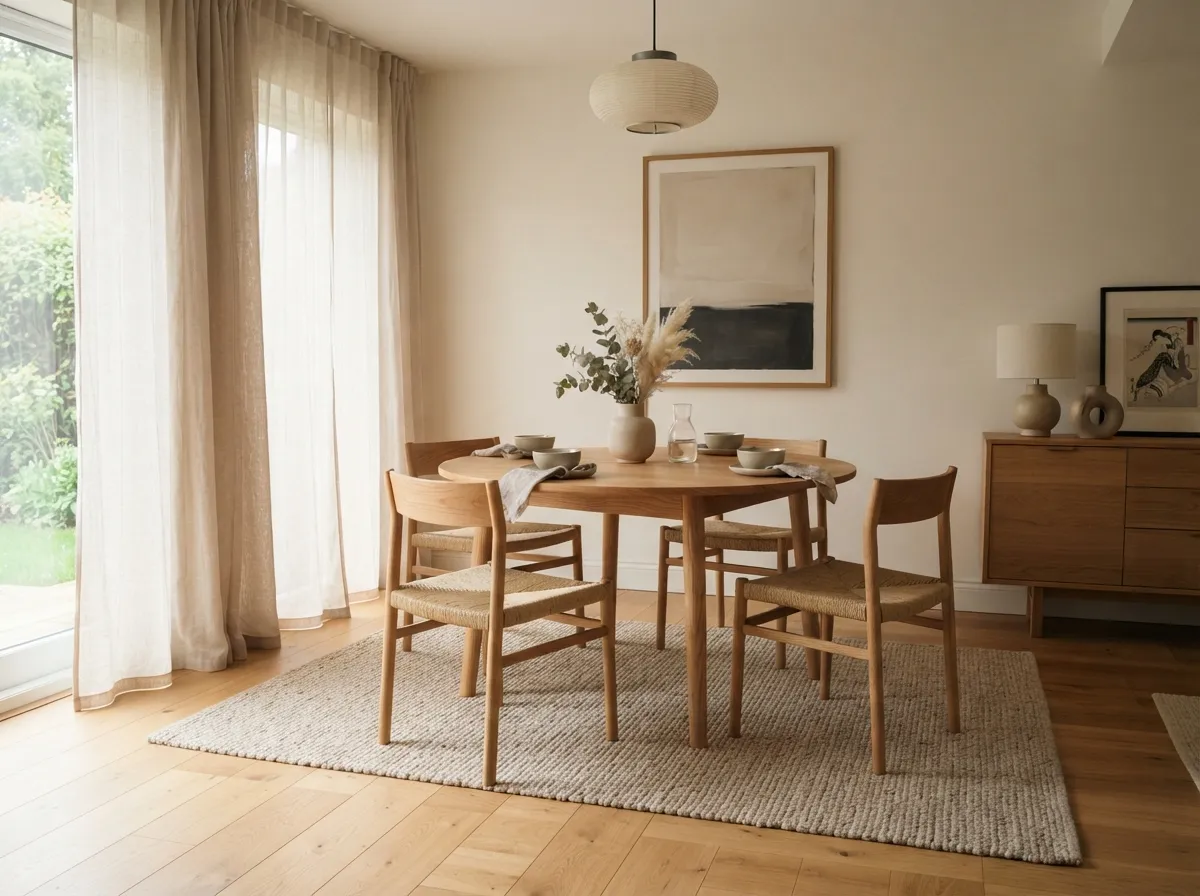
Warm-toned wood flooring is an essential foundation for creating a grounded and cozy Japandi atmosphere. Light to medium wood tones will provide an airy impression.
Wood floorboards like light oak or maple with clearly visible natural grains bring a strong connection to nature. This creates a solid foundation for minimalist furniture.
This warm floor surface feels comfortable underfoot and visually unites all dining room elements. It supports the neutral color palette common in Japandi design.
With the addition of a soft-textured rug in neutral colors, this wood flooring will further highlight the warmth and depth of the space, perfectly complementing the natural wood dining table.
10. Integrate Japanese-Style Bench Seating
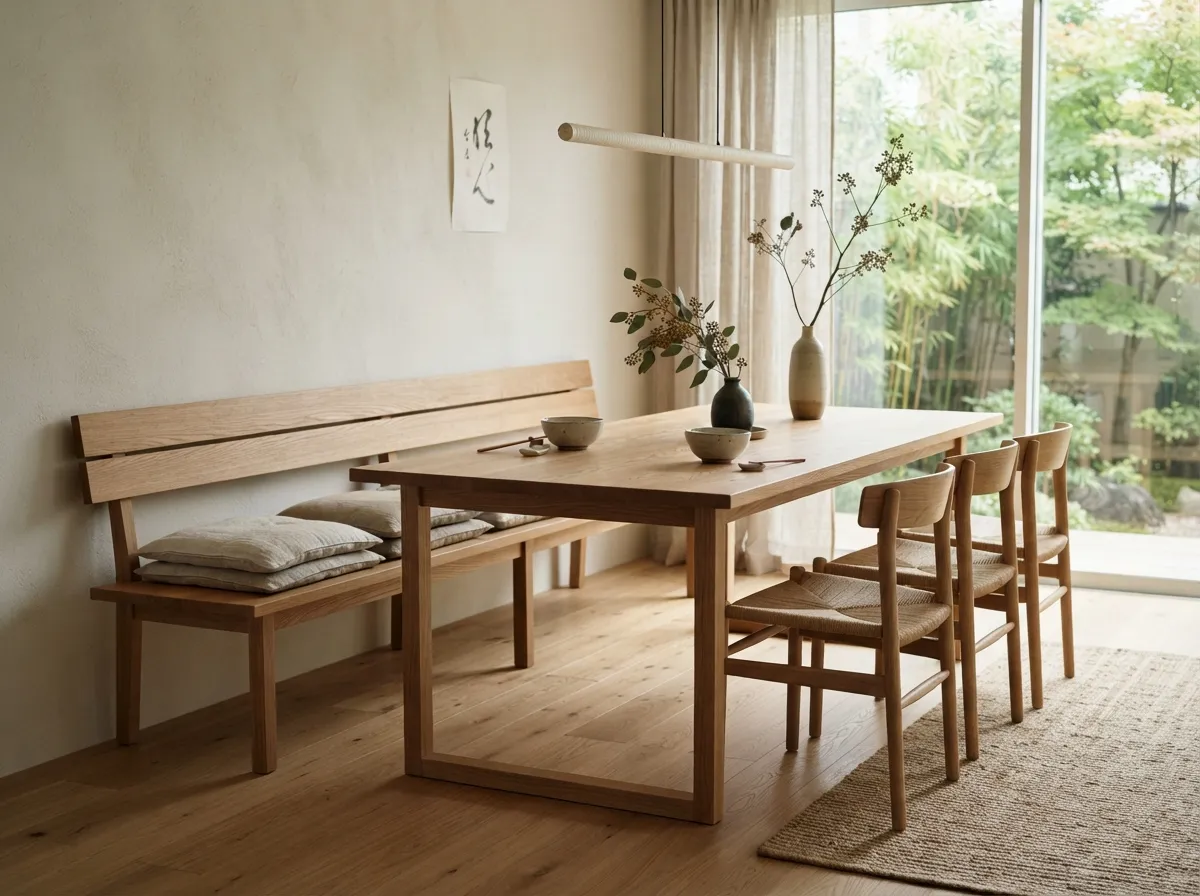
Japanese-style benches offer an efficient and aesthetic seating solution for Japandi dining rooms. Their sleek, backless design saves space visually.
This long natural wood bench can be placed on one side of the dining table or against a wall, encouraging a more communal and relaxed dining atmosphere. It creates clean visual lines.
For added comfort, add plush neutral-colored linen cushions on top of the bench. This will soften the wood look and invite longer sitting.
Combining the bench with minimalist chairs on the other side of the dining table creates an interesting visual balance, emphasizing functional simplicity and the beauty of natural materials.
11. Add Natural Stone Accents
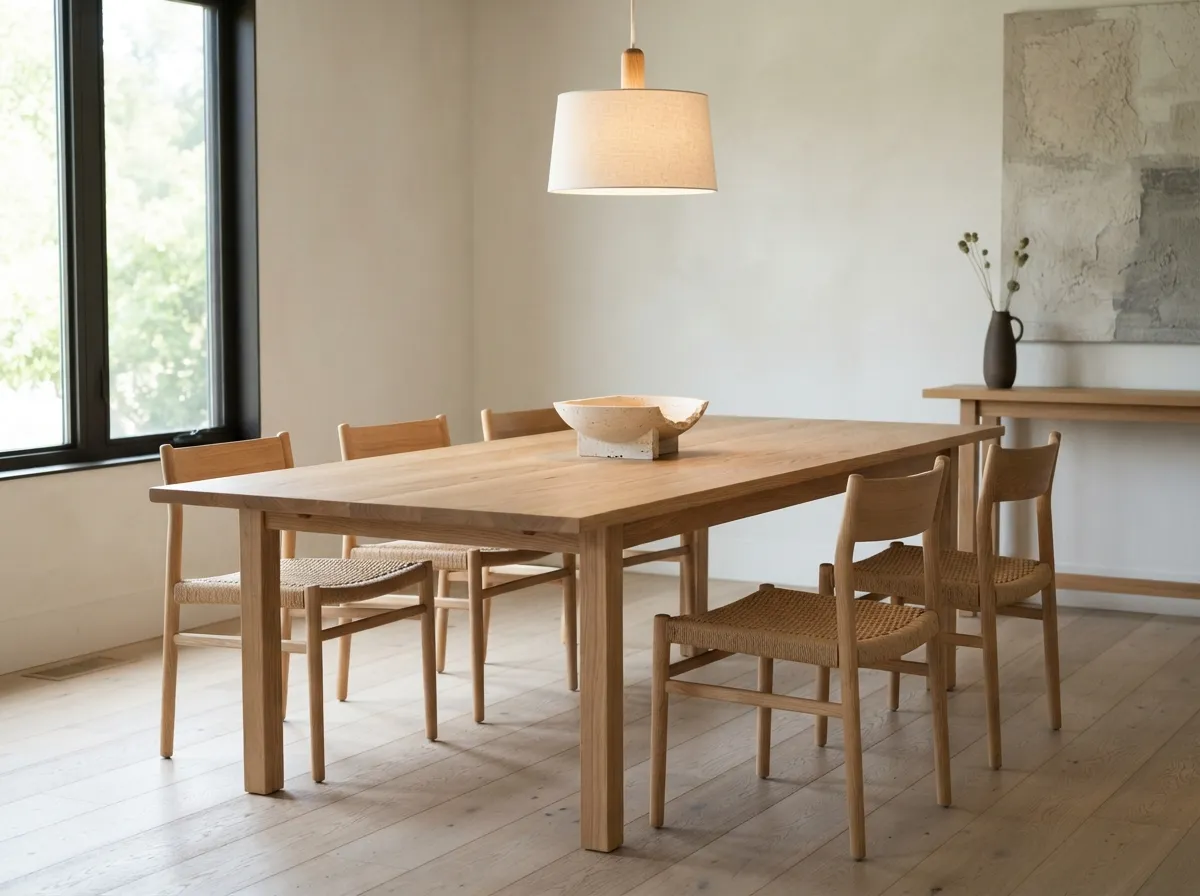
Incorporating natural stone accents is a smart way to bring texture and organic connection to your Japandi dining room. Think about materials like travertine or softly polished marble, showcasing soothing natural patterns and colors.
A small decorative bowl made of limestone, placed in the center of your oak dining table, can instantly add visual depth. Alternatively, consider simple dark gray slate coasters for a more subtle touch.
These elements not only enrich the room’s material palette but also radiate unpretentious warmth. They blend perfectly with wood elements and other soft textiles, creating a harmonious and balanced composition.
This natural touch highlights the beauty of raw materials, a core principle in the Japandi aesthetic.
12. Hang Soft, Sheer Window Treatments
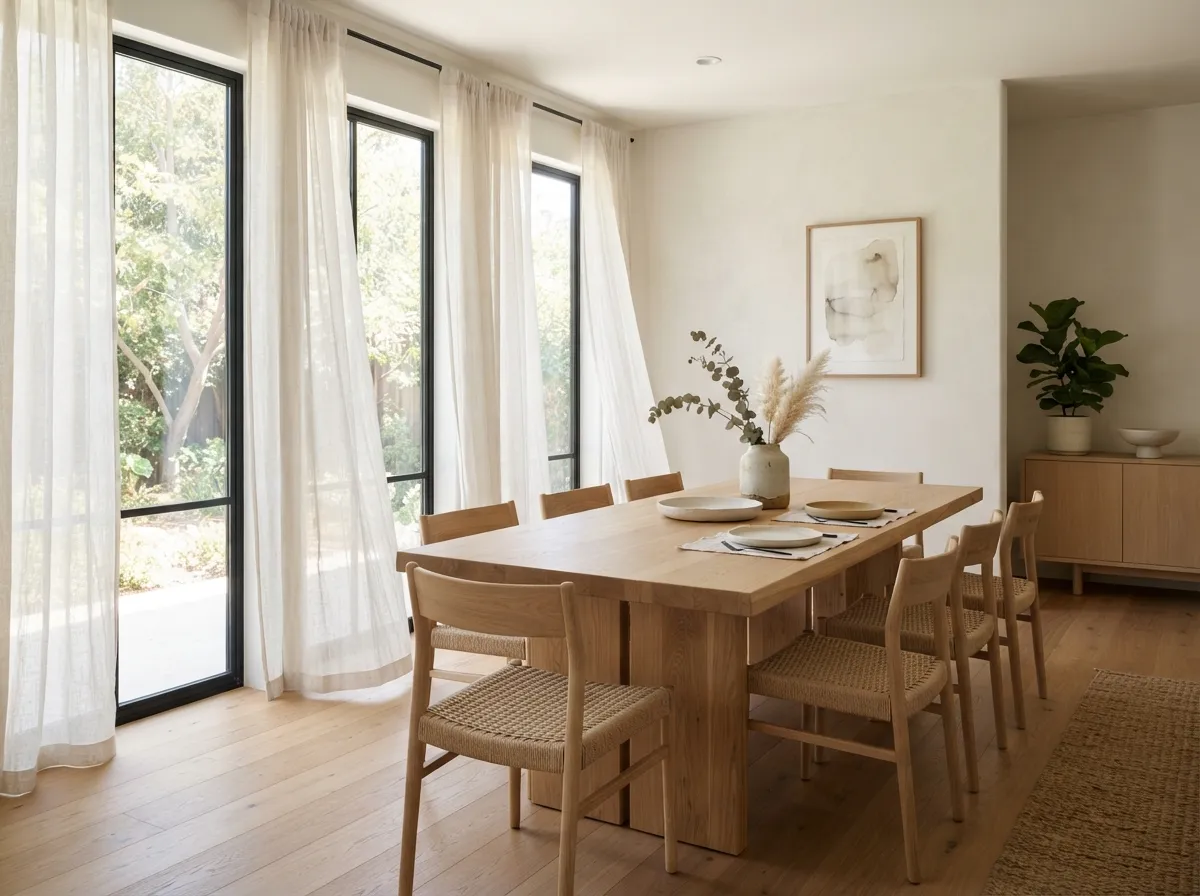
Soft, sheer curtains are an ideal choice for Japandi dining rooms, as they function to filter natural light. They allow sunlight to enter gently, creating a bright yet non-glaring atmosphere throughout the room.
Using cream or bone-white sheer linen curtains that drape to the floor will add light texture and softness to clean architecture. These curtains maintain privacy without sacrificing the airy feel or the outside view.
When moved by a gentle breeze, these curtains create a soothing subtle movement, adding calm visual dynamics. They blend beautifully with the neutral walls and light wood furniture that dominate the dining room.
The effect is a space that feels more spacious and open, inviting tranquility and relaxation for every meal.
13. Maintain Decluttered Open Shelving
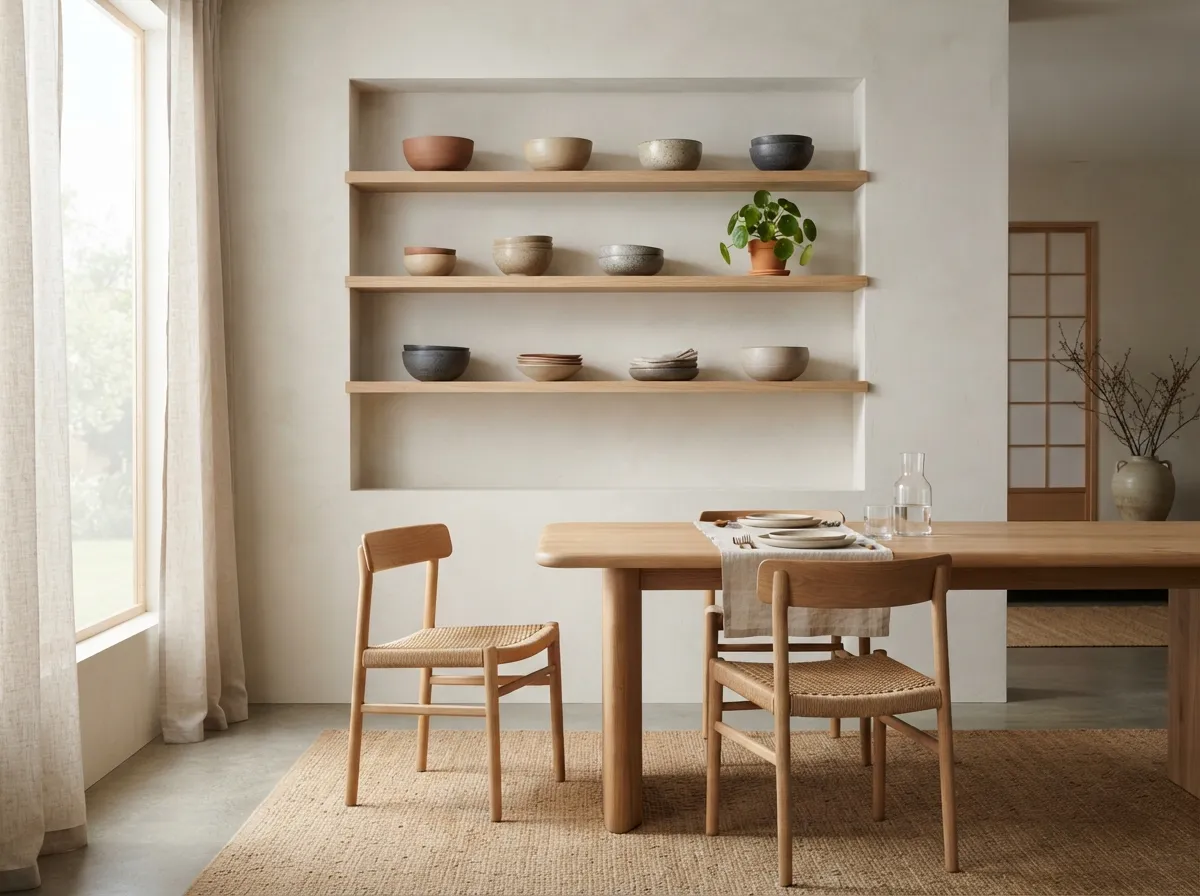
Neatly arranged open shelving is a functional and aesthetic element in Japandi design. The key is careful curation, ensuring every displayed item has a purpose or its own aesthetic value.
Imagine light oak shelves filled with a few handmade ceramic bowls in shades of gray and cream. You can also add one or two art books with minimalist covers, as well as small green plants in terracotta pots.
This arrangement creates an interesting focal point without creating a cluttered impression, maintaining the essential airy vibe. Each item is chosen to add character and warmth, in harmony with the room’s natural color palette.
These shelves showcase the beauty of individual objects, highlighting the ‘less is more’ principle that underpins the Japandi philosophy.
14. Maximize Natural Light Flow
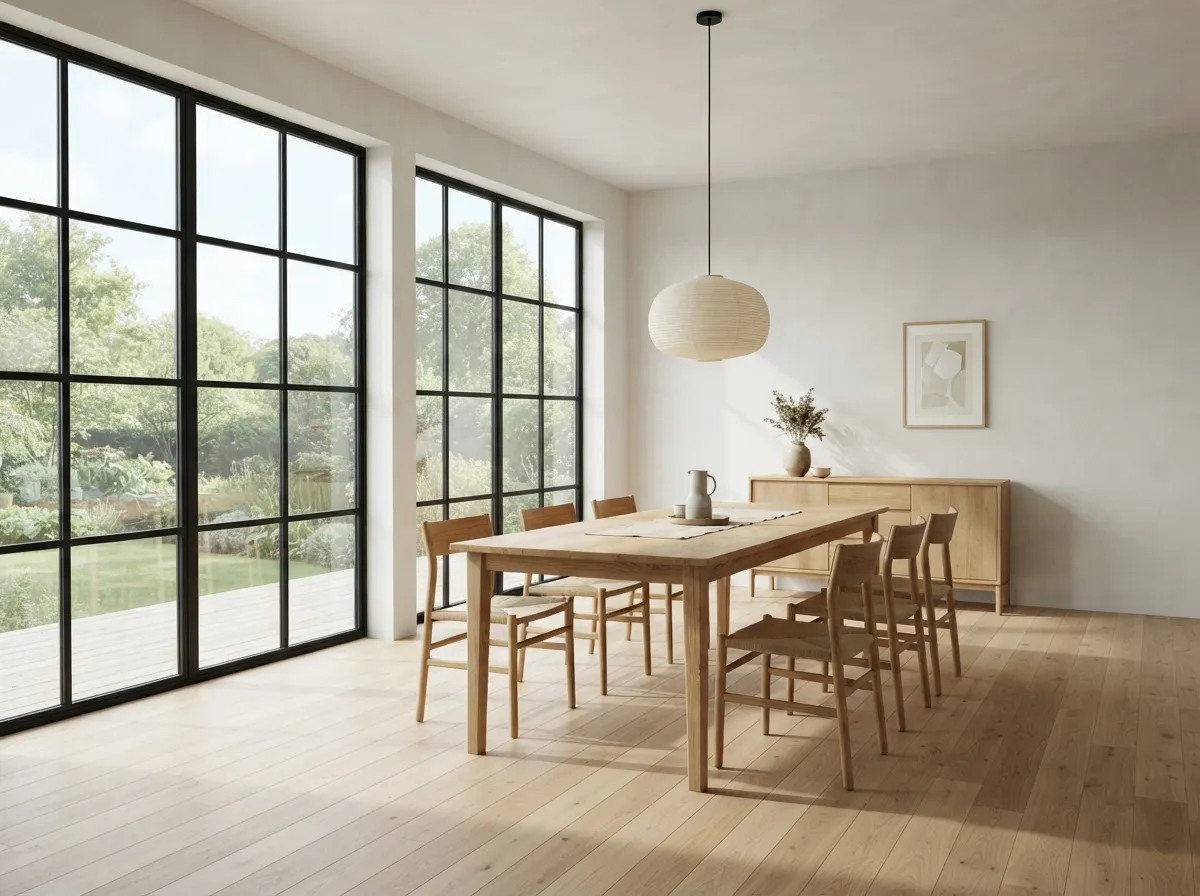
Maximizing natural light flow is a main pillar in creating a soothing and functional Japandi atmosphere. This design utilizes large windows and open layouts to allow light to optimally illuminate every corner of the room.
Abundant sunlight not only makes the dining room feel more spacious, but also highlights the natural textures on the wooden dining table and chair upholstery. Light-colored walls like ivory or cream help reflect light, enhancing the brightening effect.
By minimizing the use of heavy curtains or other visual barriers, the room feels integrated with the outdoor environment. This creates a seamless connection between the interior and nature, supporting peace of mind while dining.
The result is a space that always feels fresh and alive, a perfect place to enjoy quiet moments during the day.
15. Feature Hand-Thrown Pottery Vases
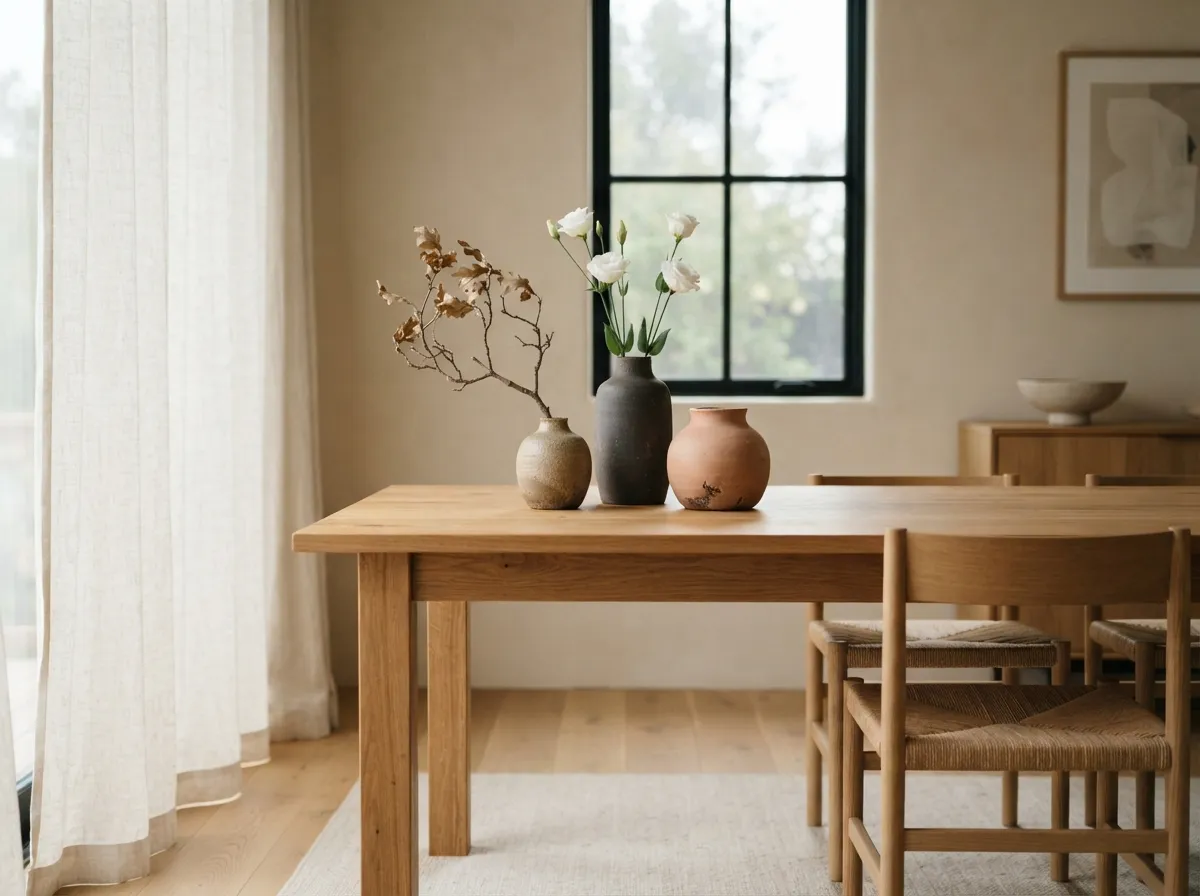
Hand-thrown pottery vases bring an authentic touch and depth of character highly valued in the Japandi style. Each vase has its own uniqueness, with slight imperfections highlighting the making process.
Imagine placing two or three ceramic vases in soothing earthy colors—such as charcoal gray, cream, and terracotta—as a centerpiece on your dining table. These vases can hold a simple dried branch or two, or a few minimalist flower stems.
The rough texture on the ceramic surface adds rich tactile dimension, blending beautifully with the smoothness of the table wood and the simplicity of linen. It is an elegant way to celebrate imperfect beauty and human craftsmanship.
The presence of these vases creates a warm and unpretentious visual focus, completing the room’s aesthetic with a personal and soulful artistic touch.
16. Utilize Unfinished Wood Textures
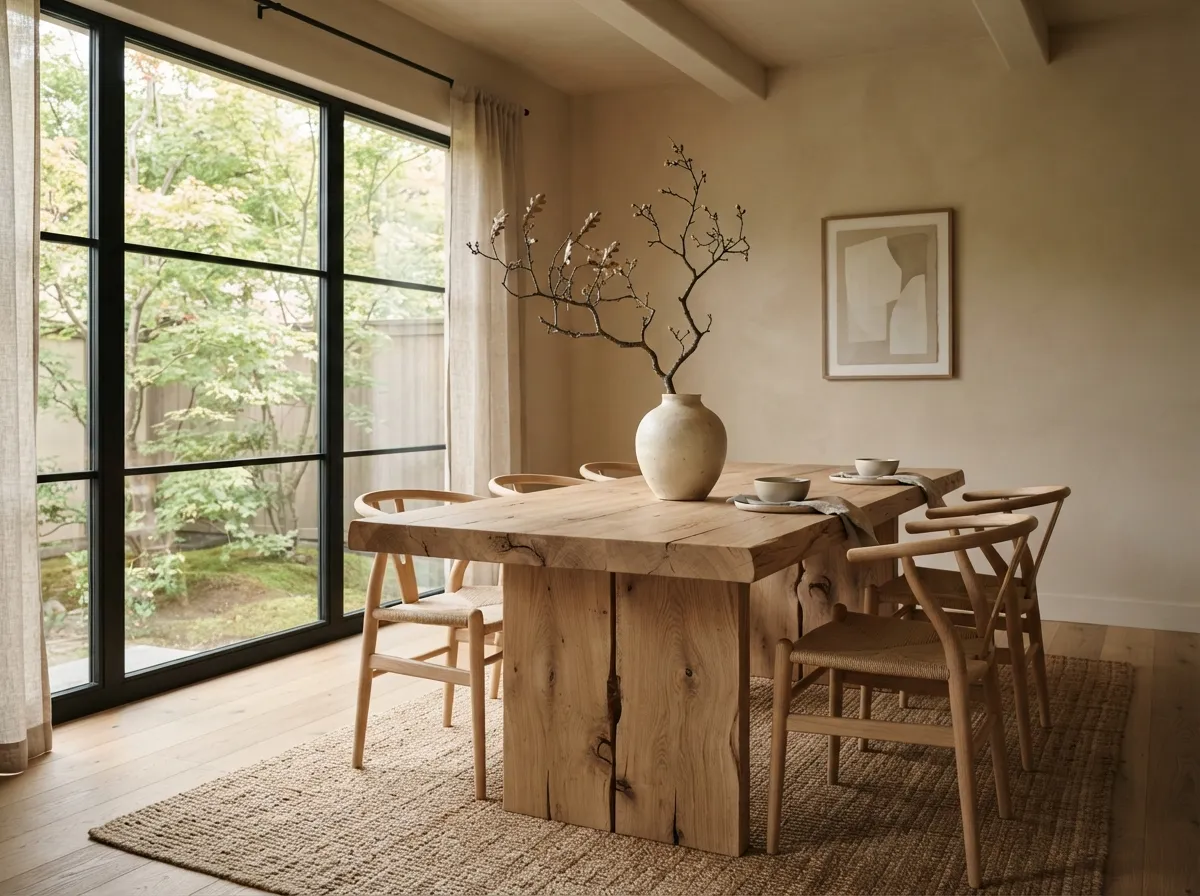
Incorporating unfinished natural wood textures is the essence of Japandi design, bringing unparalleled warmth and authenticity to your dining room. Imagine a dining table made of light oak wood with clearly visible wood grain, making it a grounding focal point.
This natural surface not only adds visual dimension but also an inviting tactile touch. Every grain and wood knot tells its own story, creating a truly unique and personal nuance.
Pair the table with matching chairs or even a minimalist credenza that displays similar beauty. This raw wood touch instantly connects your interior with nature, promoting a calm and harmonious atmosphere.
17. Introduce Muted Greenery with Potted Plants
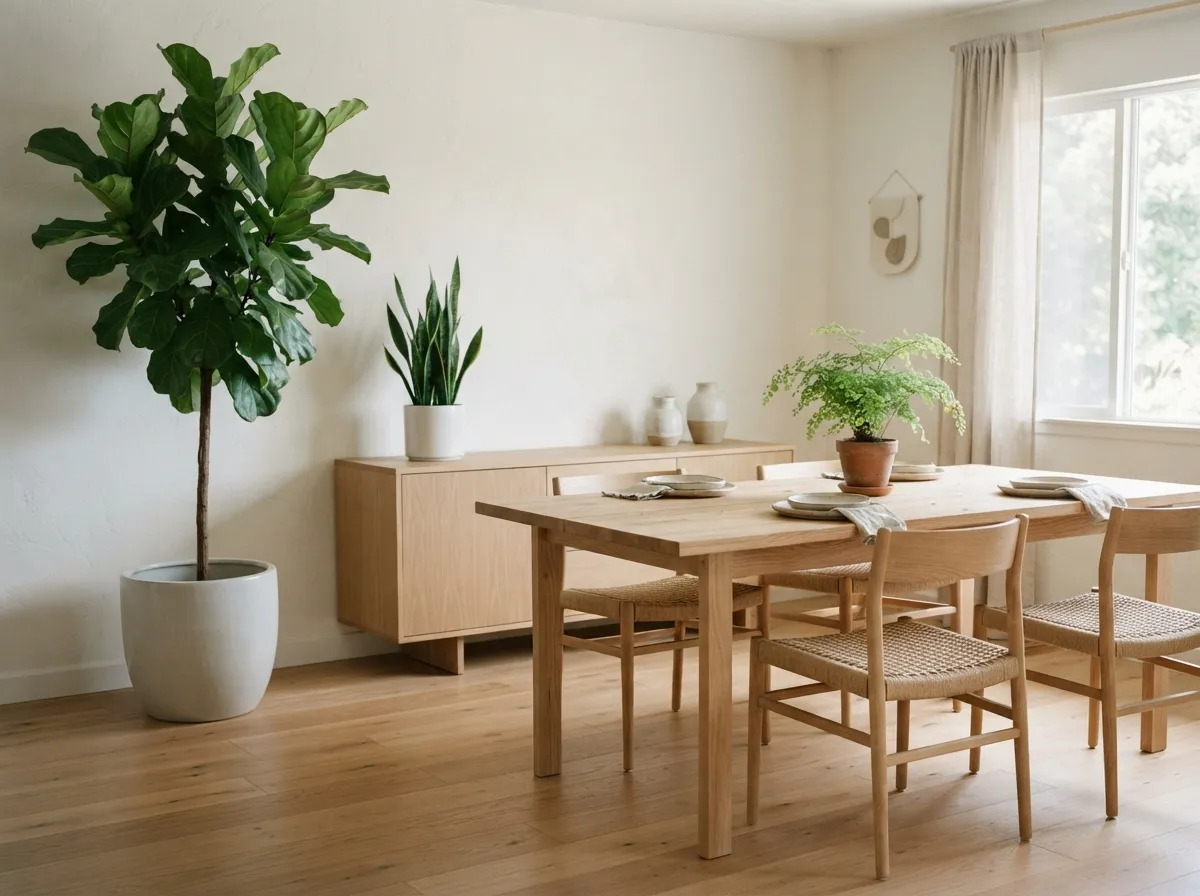
Including potted plants with muted green foliage is a smart way to enliven your Japandi dining room. This calm green adds a splash of life without disrupting the overall tranquility of the design, creating a perfect balance.
Consider placing a tall Fiddle Leaf Fig in a gray ceramic pot in the corner of the room. Then, place a smaller Snake Plant on a wooden credenza.
On the dining table, add a subtle touch with a small fern in a simple clay pot. These plants not only beautify the room but also improve air quality, providing a touch of natural freshness highly valued in the Japandi aesthetic.
18. Prioritize Clean-Lined Furniture
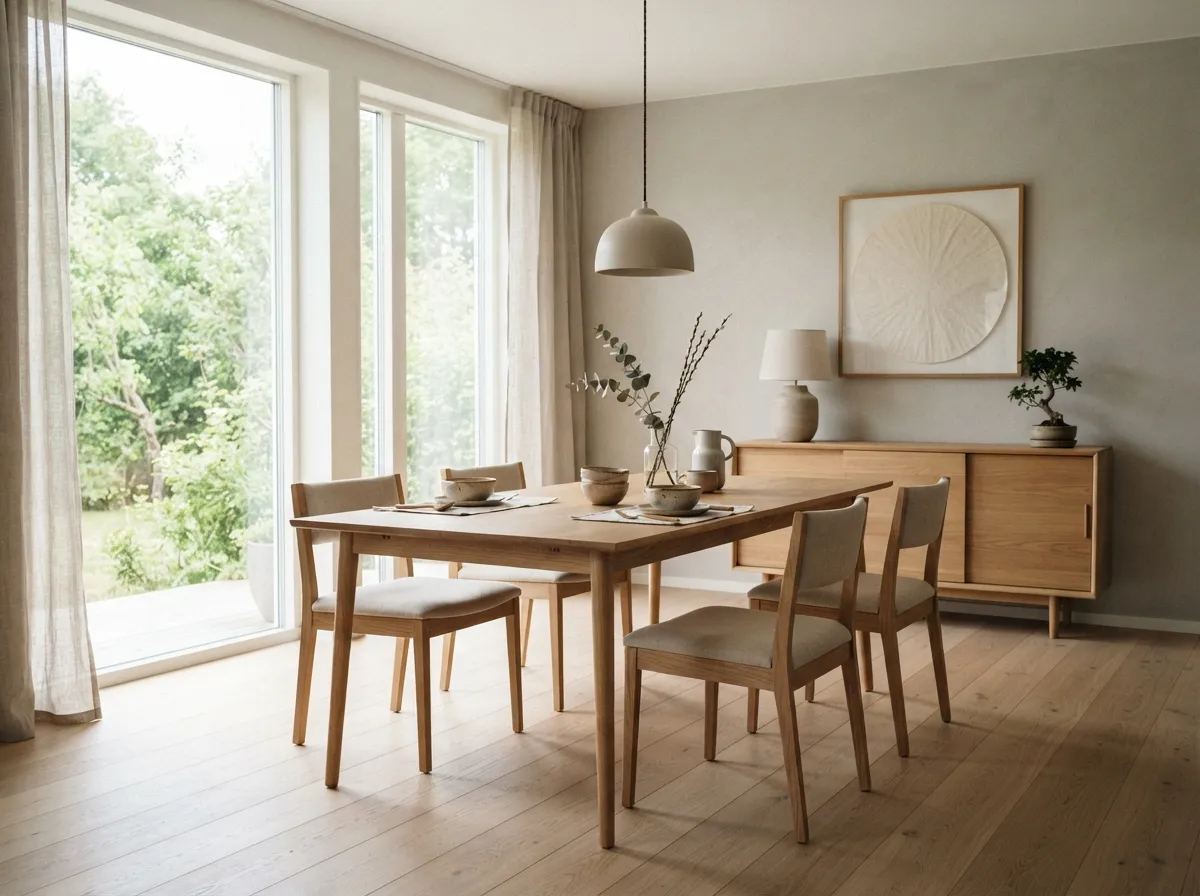
In Japandi design, clean-lined furniture is key to achieving an airy and uncluttered look. Choose furniture that has simple and functional silhouettes, radiating a timeless sense of tranquility.
Imagine a rectangular dining table with slender legs made of light wood, paired with chairs that have minimalist frames without excessive ornamentation. Designs like this create a focus on form and material.
A sleek, low credenza against the wall will also complement this aesthetic, offering storage without sacrificing simplicity. Smooth surfaces and straight lines or soft curves on this furniture contribute to a peaceful and harmonious atmosphere in the dining room.
19. Allow Wabi-Sabi Inspired Imperfections
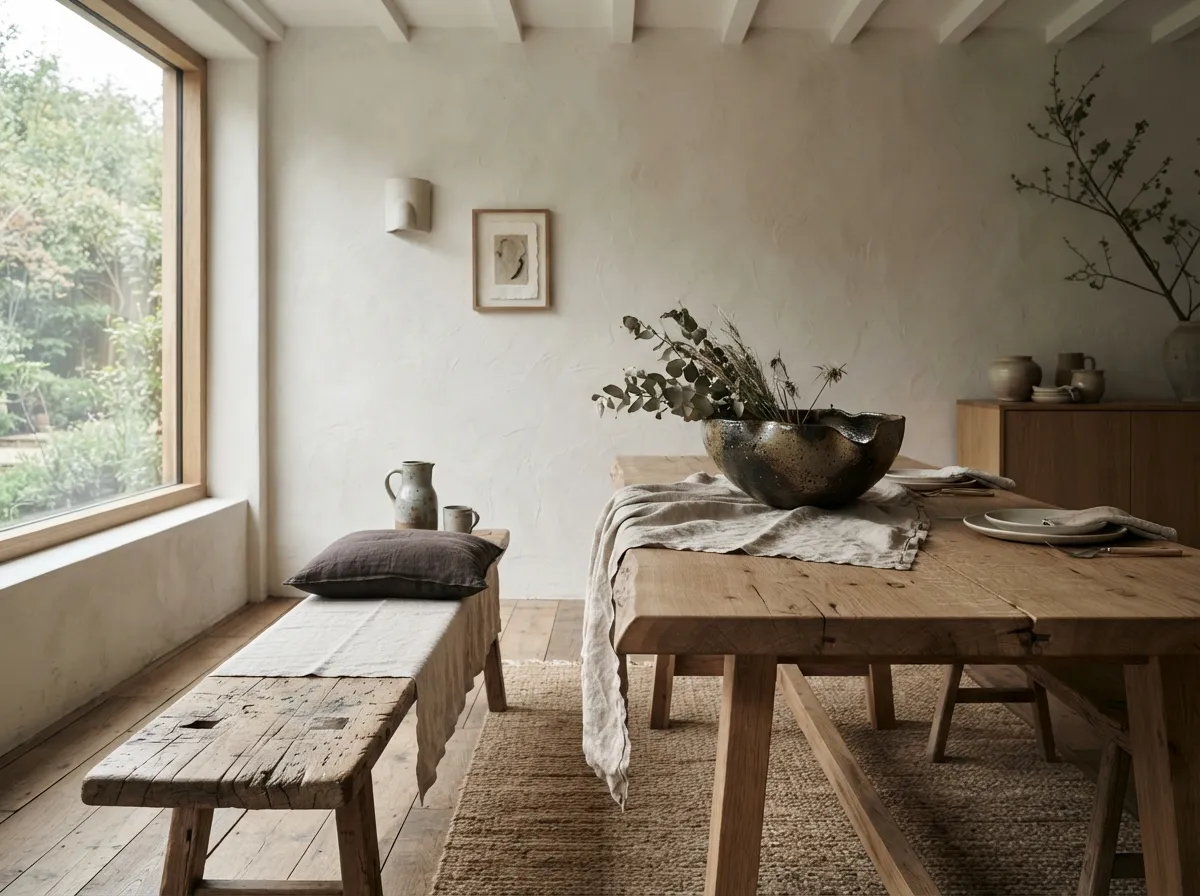
Embracing the Wabi-Sabi concept means appreciating the beauty of imperfection and natural authenticity. In your Japandi dining room, this can be realized through elements that show signs of age, irregular textures, or handmade craftsmanship.
Place handmade ceramic bowls on the dining table, perhaps with slightly uneven glaze or unique shapes. This will add captivating character and visual depth.
Also consider a natural linen tablecloth with slight wrinkles that add a touch of softness, or a long bench made of reclaimed wood that shows natural grains and marks. These details create an authentic and warm atmosphere, far from a rigid impression.
20. Implement a Shoji Screen Room Divider
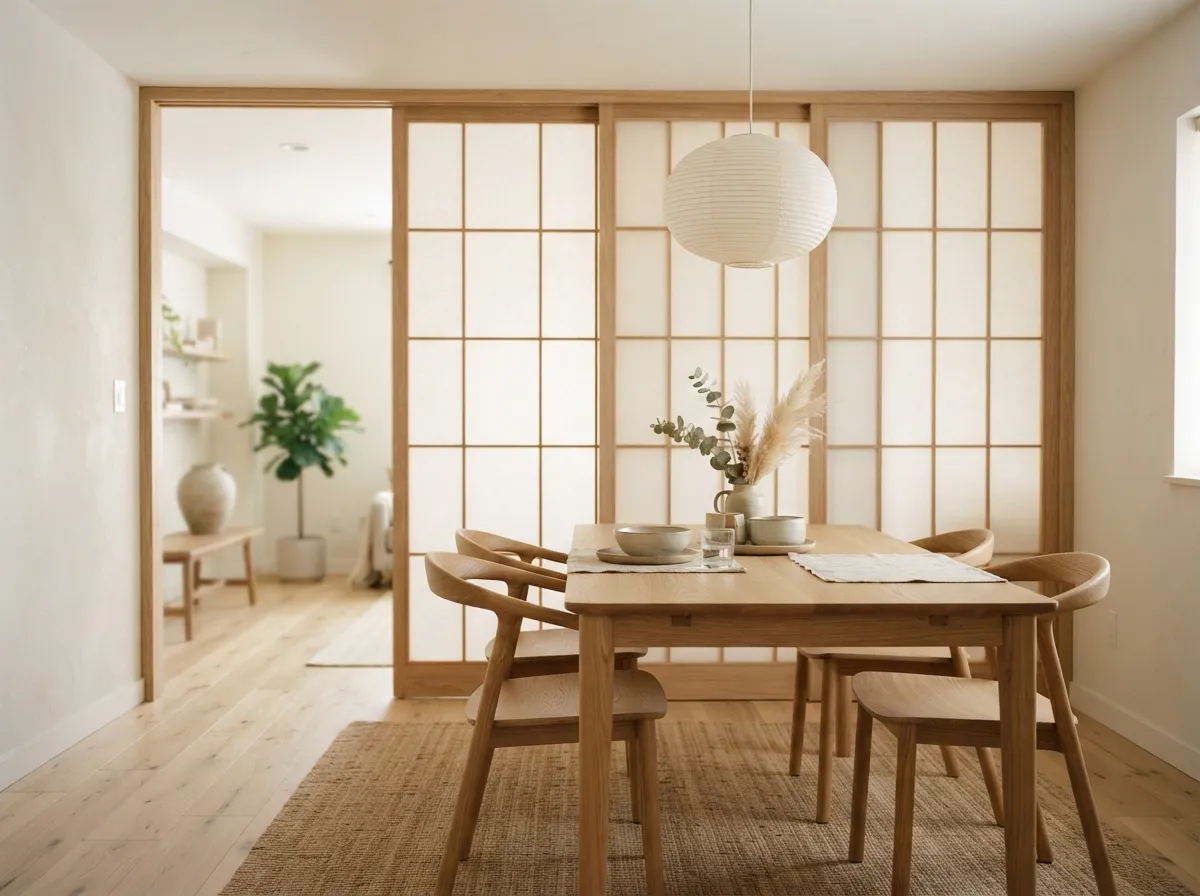
Implementing a Shoji screen as a room divider is an elegant and functional way to define areas in your Japandi dining room. This traditional Japanese screen, with a light wooden frame and translucent rice paper, provides partial privacy without completely isolating the space.
This Shoji screen filters natural light, creating soft, diffused lighting throughout the room, adding a peaceful atmosphere. It is ideal for separating the dining area from other spaces like the living room or hallway.
Its simple design and natural materials are perfectly in harmony with the Japandi aesthetic, which values function and minimalist beauty. This screen is not just a divider, but also a soothing decorative element that adds depth to the interior design.
21. Ground the Space with an Earthy Tones Rug
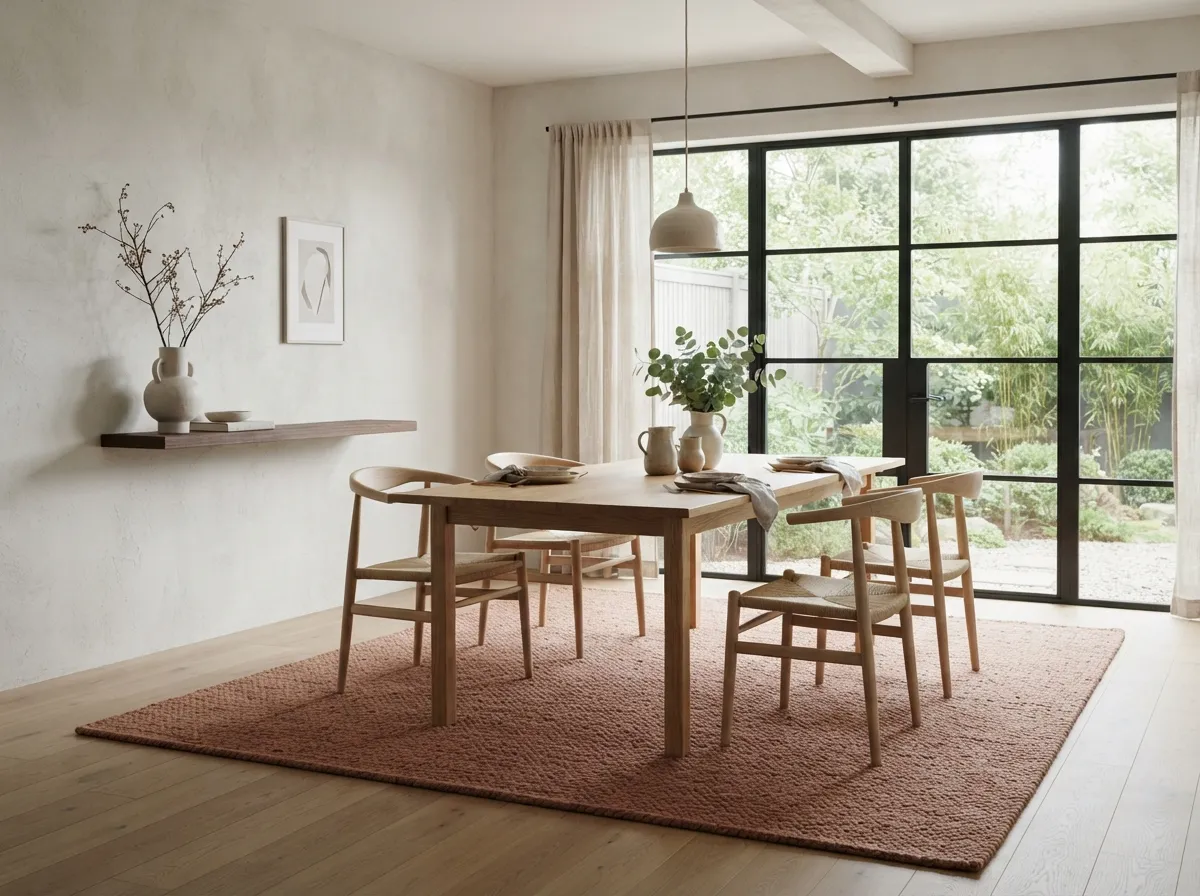
Creating a solid foundation for your Japandi dining room starts with choosing the right rug. Earthy-toned rugs, such as soft cream, calm terracotta, or muted greenish-gray, can instantly anchor the entire dining area.
Natural materials like wool or jute add rich texture and underfoot comfort. These rugs not only define the dining zone but also introduce inviting warmth, making the space feel more intimate and personal.
Try choosing a rug with a minimalist pattern or no pattern at all to suit the calm Japandi aesthetic. It will be a strong yet harmonious visual element, perfectly complementing your solid wood dining table.
22. Incorporate Smart, Functional Storage
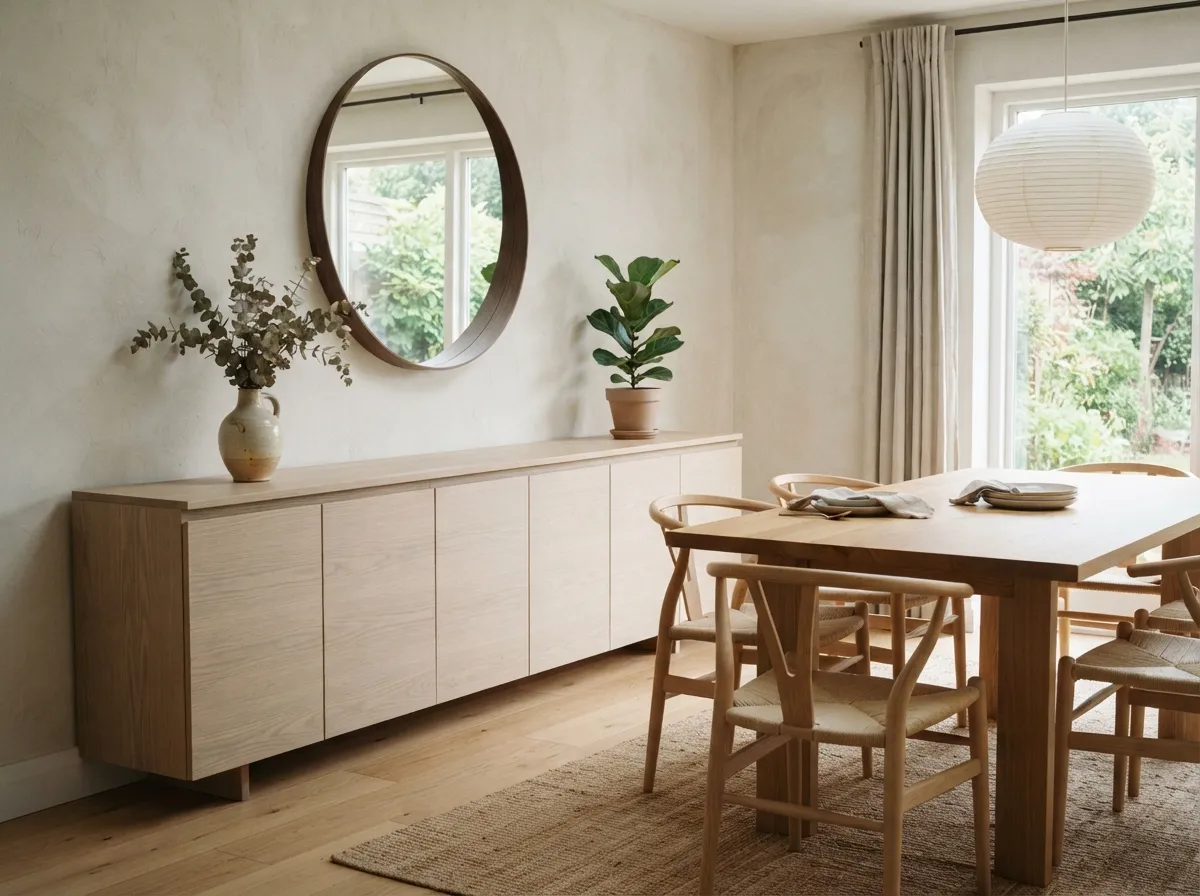
In Japandi design, function and aesthetics must go hand in hand, especially when it comes to storage. Incorporating smart and functional storage solutions is essential to keep your dining room tidy and clutter-free.
Consider a wooden sideboard with clean lines or seamlessly integrated open wall shelving. Choose natural materials like light oak or dark walnut for the cabinet, ensuring every part has a clear purpose.
You can store dinnerware or linens inside, while the top can be decorated with a simple ceramic vase or a few books. This storage supports the Japandi philosophy of living with essence, where every item has a place and value.
23. Showcase Sculptural Wooden Bowls
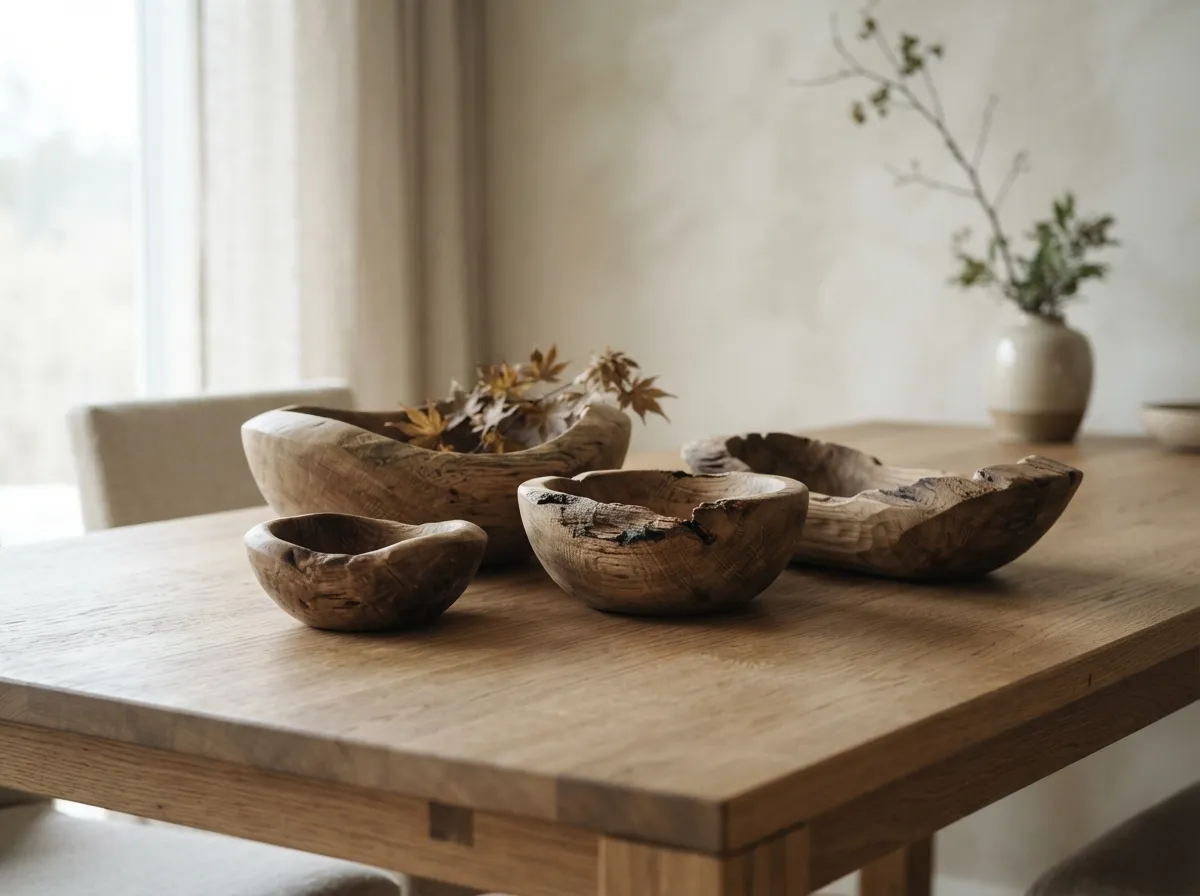
Enhancing the visual appeal of your Japandi dining room can be as simple as showcasing artistic sculptural wooden bowls. Each bowl, with its organic shape and natural wood grain, serves as a work of art in itself.
Place these bowls as a table centerpiece or on open shelves. Choose bowls made of teak, mango, or acacia wood for different natural beauty and textures.
The presence of these wooden bowls not only adds a rustic and warm touch but also celebrates the beauty of natural materials. They serve as attractive visual focal points, inviting the eye to admire their unique details.
24. Create a Zen Garden Miniature Centerpiece
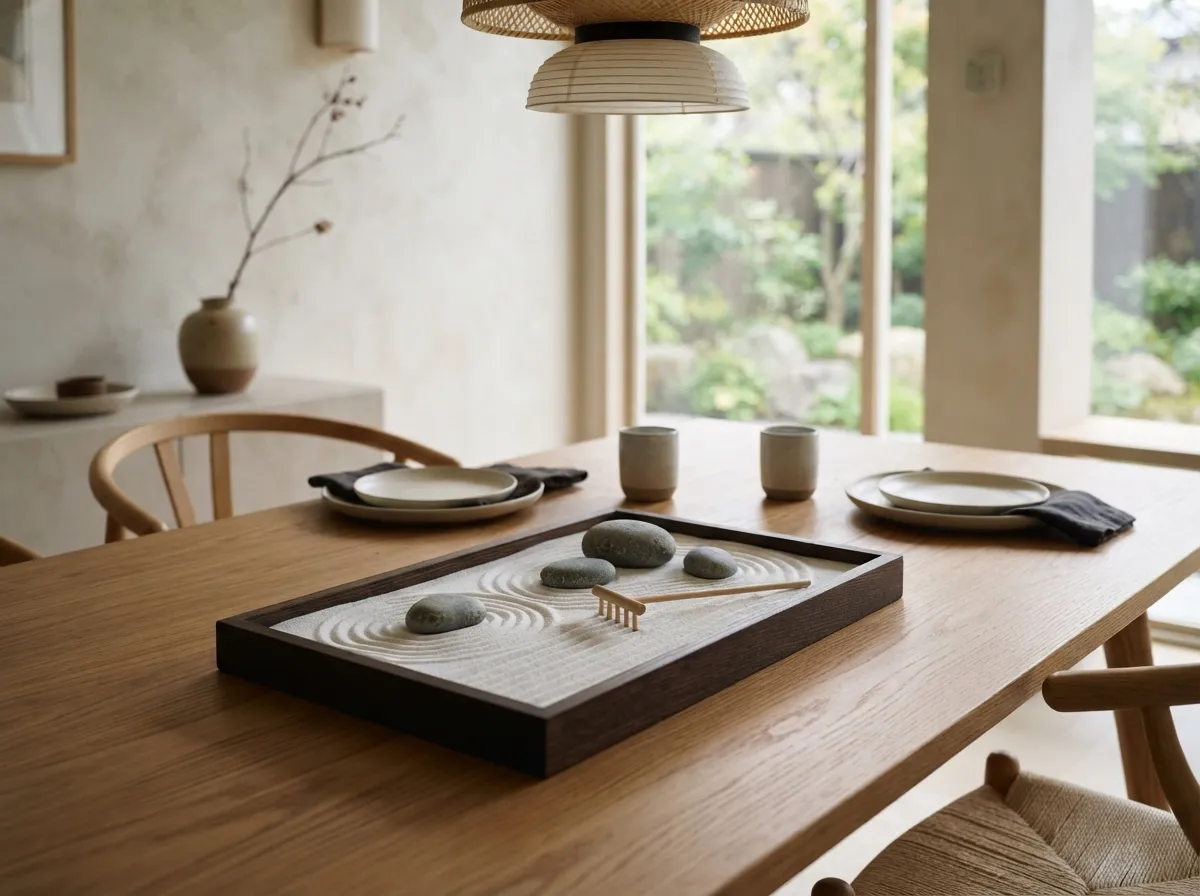
To add a touch of tranquility and Eastern philosophy to your dining room, consider creating a miniature Zen garden as a table centerpiece. It is a beautiful way to introduce a meditative element into the dining environment.
You can use a flat tray filled with fine sand, a few smooth river stones, and perhaps a mini rake. The activity of raking the sand can be a brief moment of mindfulness before or after a meal.
This centerpiece is not only decorative but also serves as a reminder of tranquility and simplicity. It creates a peaceful and reflective atmosphere, perfectly in harmony with Japandi design principles.
25. Mix Light and Dark Wood Tones
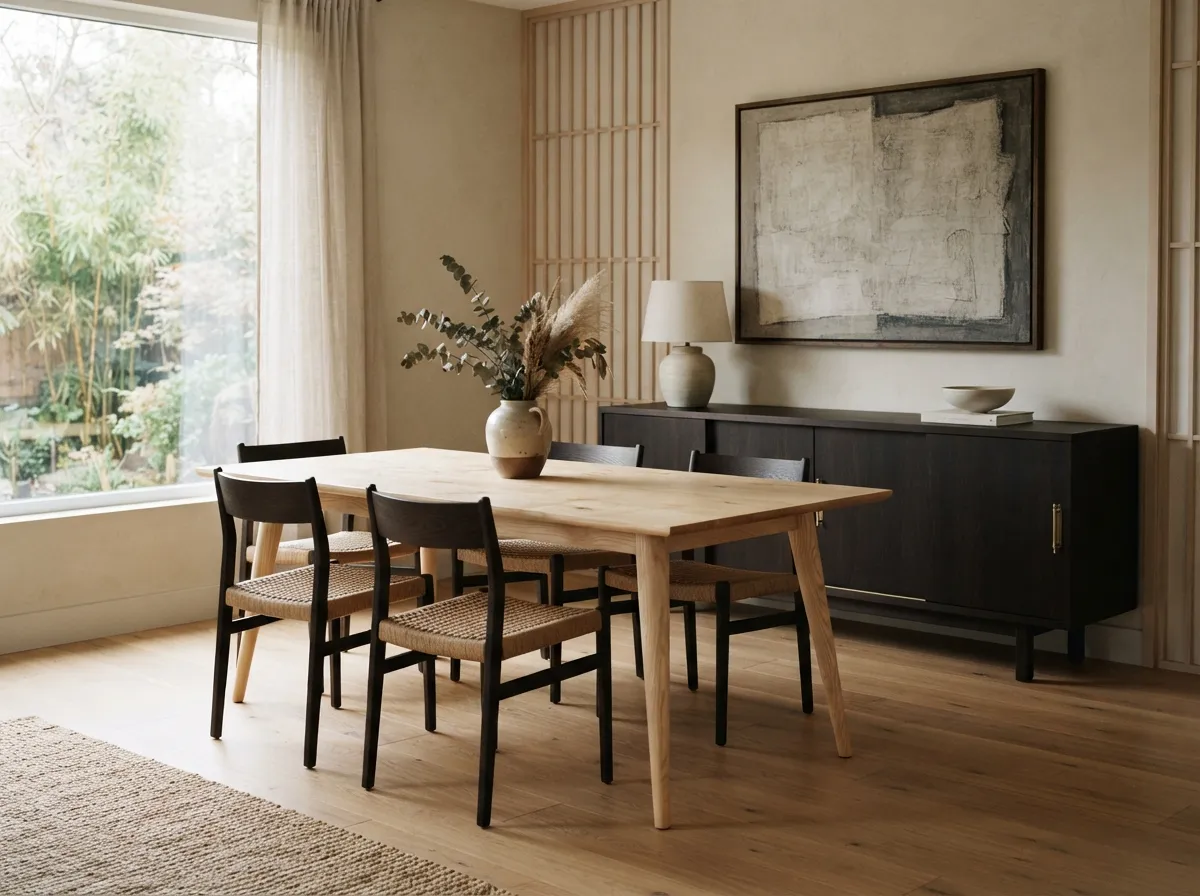
Creating depth and visual interest in Japandi design can be achieved by skillfully mixing light and dark wood tones. This balance adds dynamics without disrupting the overall tranquility of the room.
You can pair a light oak dining table with darker walnut dining chairs. Alternatively, consider bright pine wood flooring with a richly colored teak sideboard.
This contrast between light and dark colors provides interesting dimension to the space. It celebrates the natural beauty of each wood type, creating a harmonious and layered composition, typical of the authentic Japandi style.
26. Use Recycled Paper Lanterns
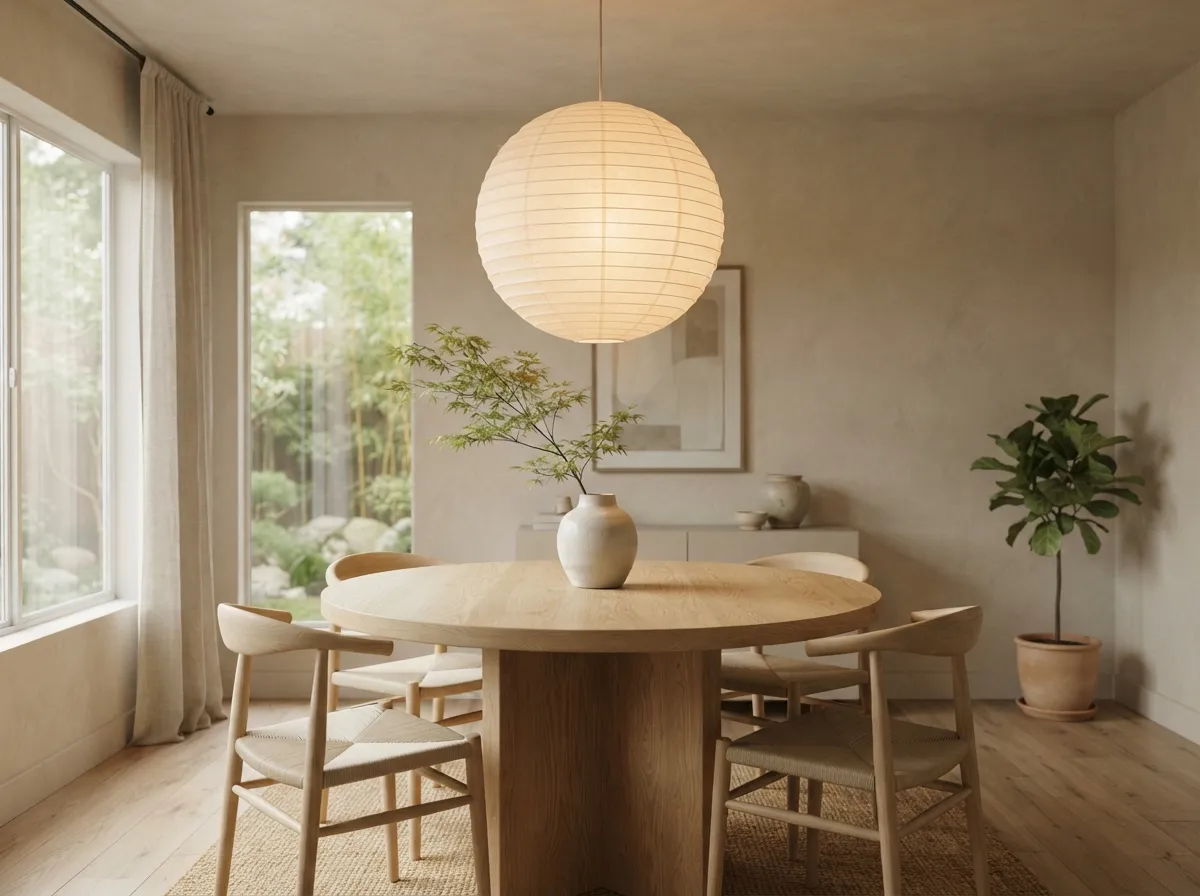
Using recycled paper lanterns is an effective way to introduce a wabi-sabi touch to your Japandi dining room. The soft, diffused light produced by these lanterns creates a highly tranquil and welcoming atmosphere.
The natural material of recycled paper also aligns perfectly with the ethos of sustainability. It adds a soothing organic texture without being visually overwhelming.
Hang a large lantern as a focal point above a light-colored wooden dining table. Pair it with simple wooden chairs and some greenery in ceramic pots for a more complete look.
This decorative element not only functions as a light source but also as a thoughtful and mindful style statement.
27. Place Bamboo Placemats
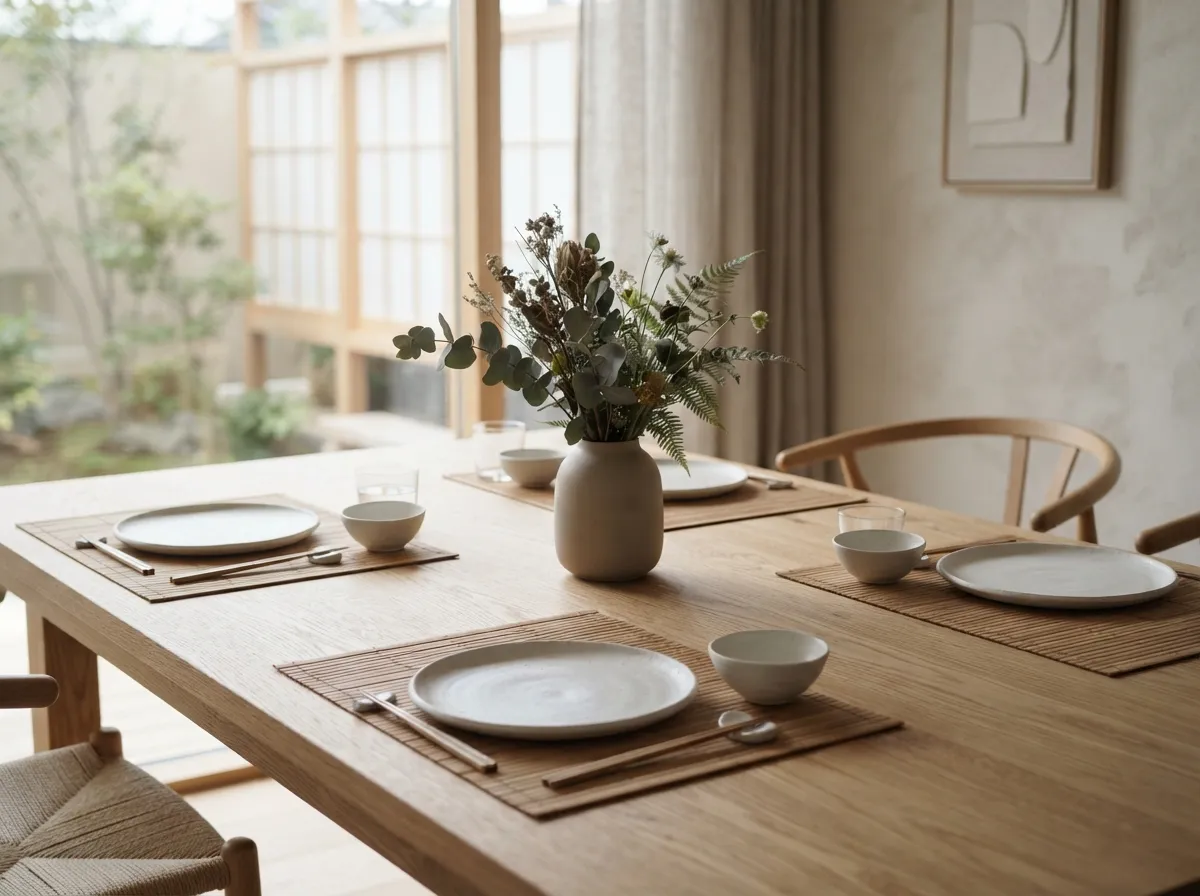
To add warmth and natural texture to your Japandi dining table, consider using bamboo placemats. Bamboo material offers an unparalleled organic touch and a pleasant tactile nuance.
Bamboo placemats help define each seating place without creating visual clutter. This perfectly aligns with the principles of functionality and simplicity of the Japandi style.
Choose placemats in soothing natural bamboo colors, complementing minimalist ceramic plates. Pair them with simple cutlery and clear glasses for a cohesive look.
Small details like this significantly enhance the dining experience, instilling a sense of respect for natural materials and craftsmanship.
28. Ensure Open-Concept Layout Integration
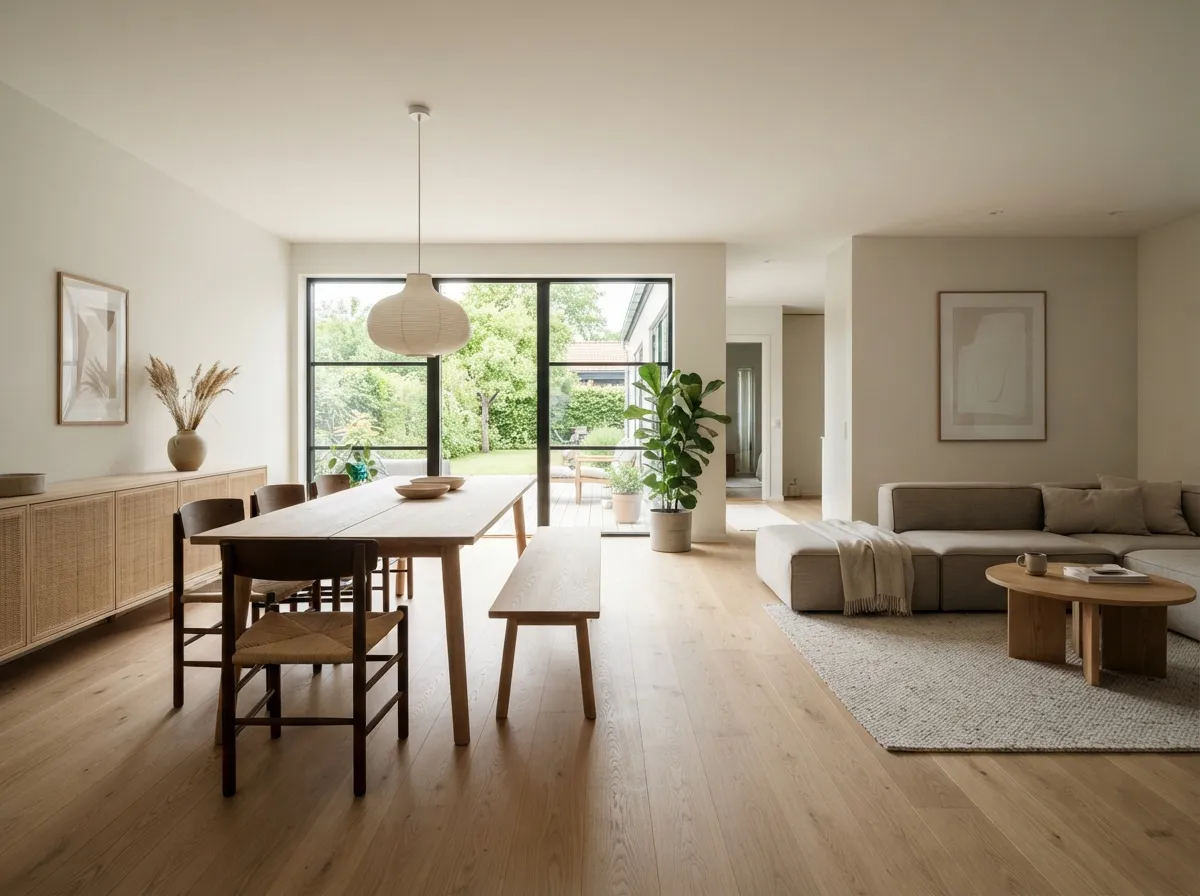
Open-concept layout integration is crucial in creating a seamless and cohesive flow for Japandi design. It allows the dining room to feel spacious and connected to other areas of the home.
It is important to maintain visual continuity by using consistent materials and color palettes throughout the area. For example, the same light-colored wood flooring can flow from the dining room to the living room.
Ensure that the dining area, although integrated, still retains its own identity. This can be achieved with strategic furniture placement, such as a low-profile credenza that subtly separates the area.
This approach creates an airy and bright atmosphere, inviting interaction and comfort throughout your home.
29. Curate a Single, Thoughtful Wall Art Piece
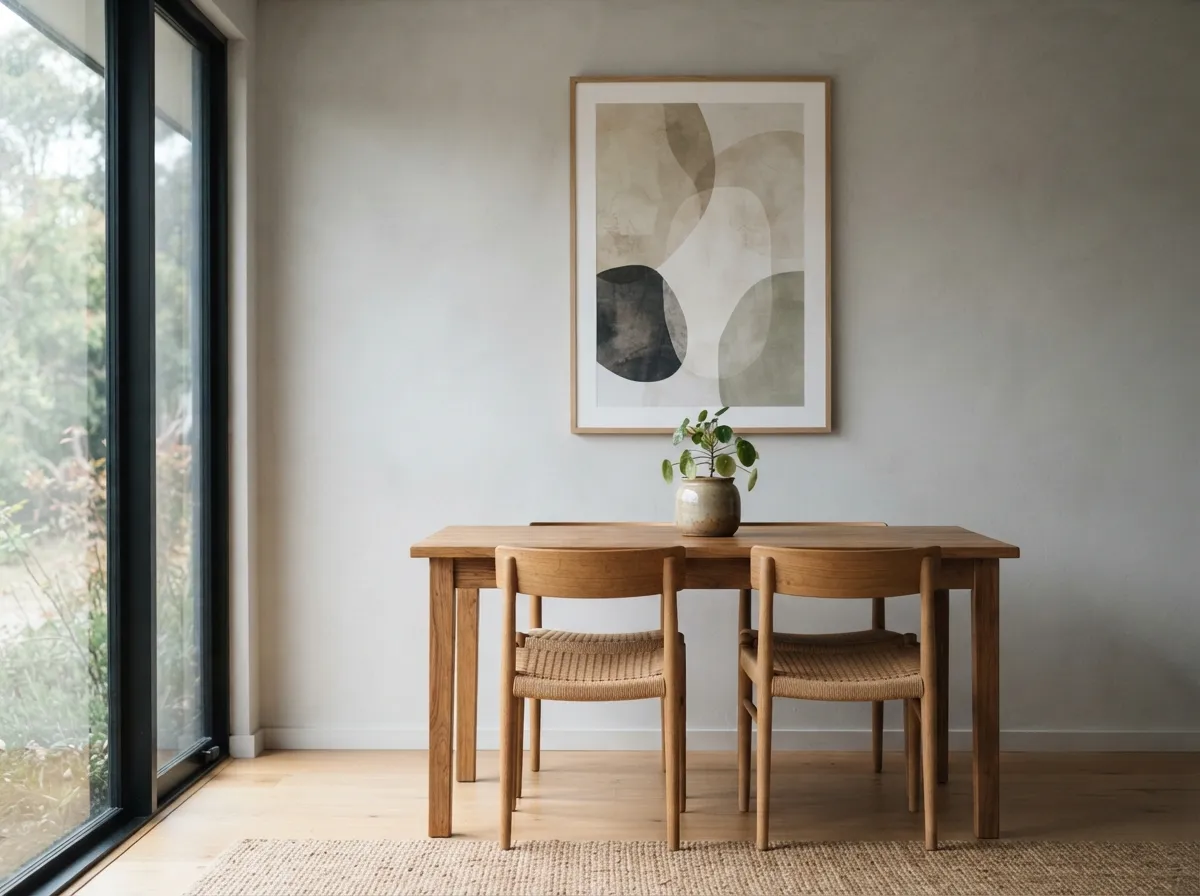
In the Japandi aesthetic, the power of a single, carefully chosen piece of wall art cannot be underestimated. A thoughtful painting or wall art piece can become a visual focal point without overwhelming the room’s simplicity.
Choose abstract art with neutral colors or nature-inspired motifs, such as organic shapes or minimalist calligraphy. Its placement should be on a clean wall, highlighting its beauty and simplicity.
This artwork adds subtle depth and personal character while still maintaining minimalist principles. It becomes a memorable and calming visual statement.
Leave the surrounding wall empty to give the artwork space to ‘breathe’, creating an impression of tranquility and mindfulness in your dining room.
Embracing Japandi design means prioritizing peace, functionality, and natural beauty. These ideas offer a roadmap to a dining room that feels grounded and tranquil, fostering a sense of calm in your home. Enjoy a space where simplicity meets understated elegance.