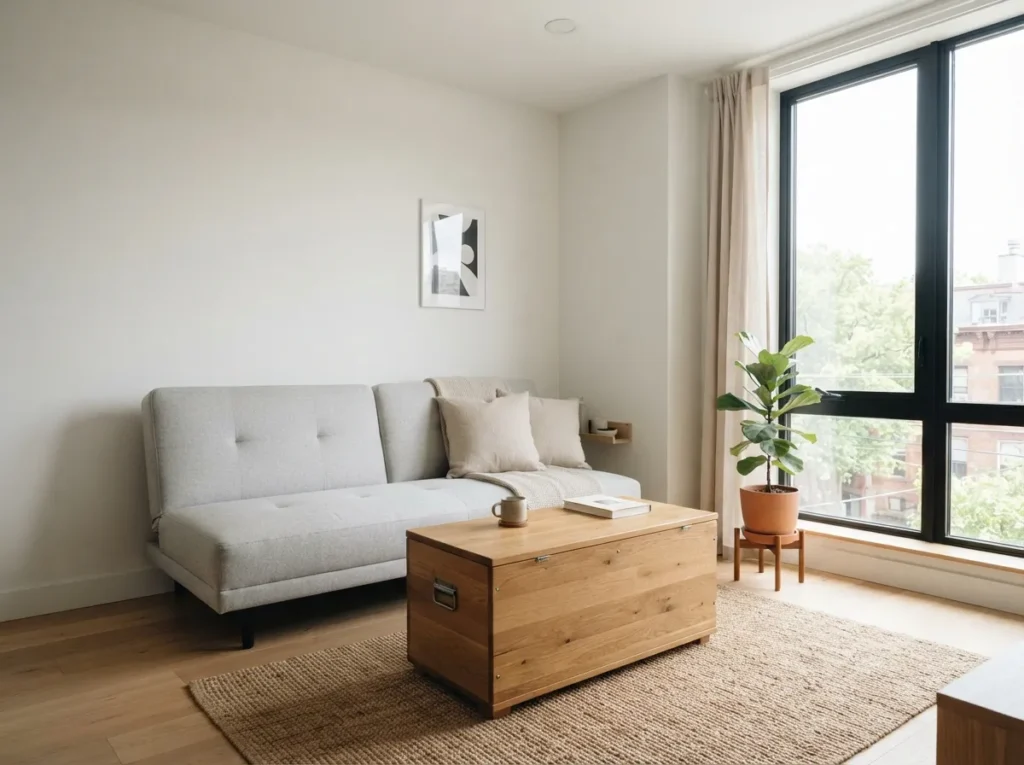
Downsizing from a house to an apartment doesn’t mean sacrificing style. Embrace minimalist apartment decor to create a serene, functional space. Discover how to live beautifully with less, making your smaller home feel expansive, inviting, and perfectly tailored to your new lifestyle.
1. Prioritize Multi-Functional Furniture
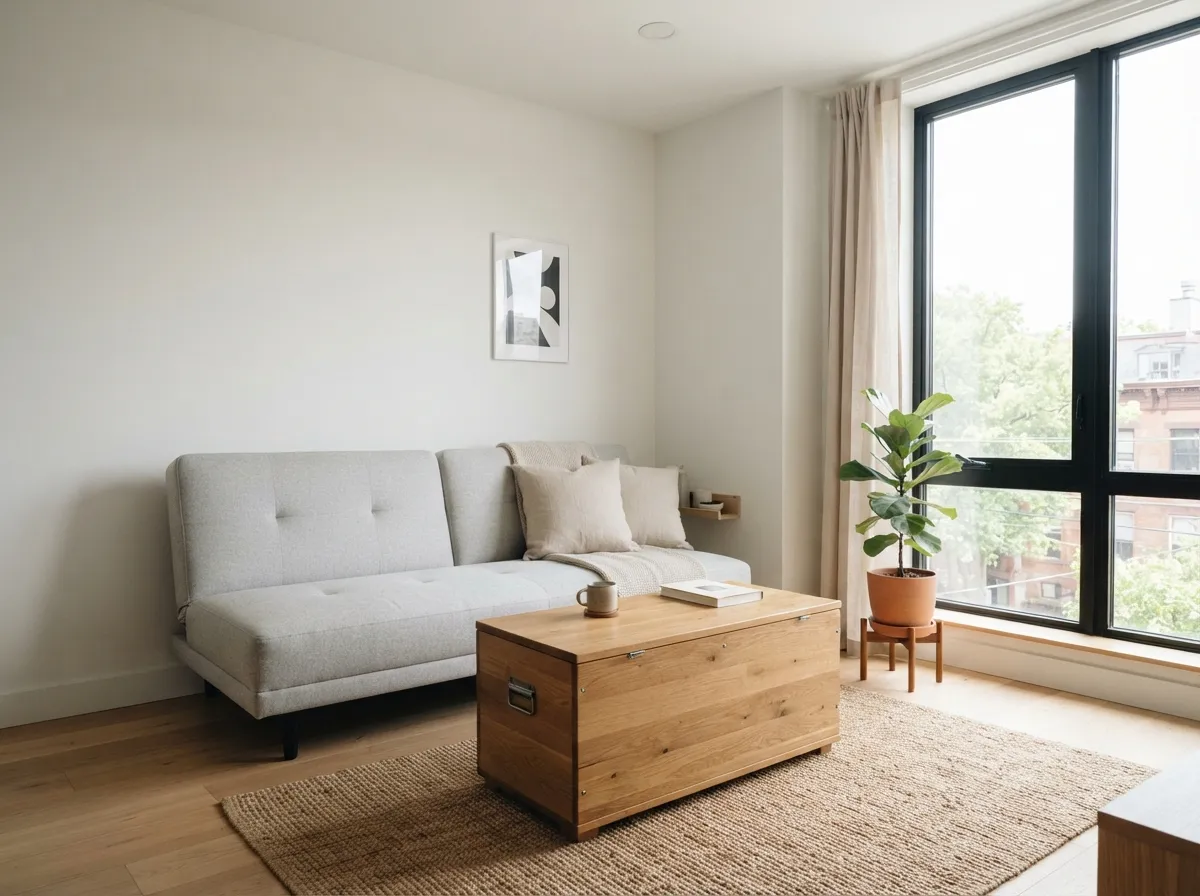
Downsizing means making every square foot count. Multi-functional furniture is your secret weapon for maximizing utility in a smaller apartment.
Consider pieces like a sleek sofa that easily converts into a comfortable bed for guests. This eliminates the need for a dedicated guest room.
Ottomans with hidden storage can serve as extra seating, a coffee table, and a place to tuck away blankets or magazines. Look for expandable dining tables that adjust to your entertaining needs.
Choosing items with dual purposes helps maintain an open, uncluttered feel while still providing all the necessary conveniences.
2. Embrace a Neutral Color Palette
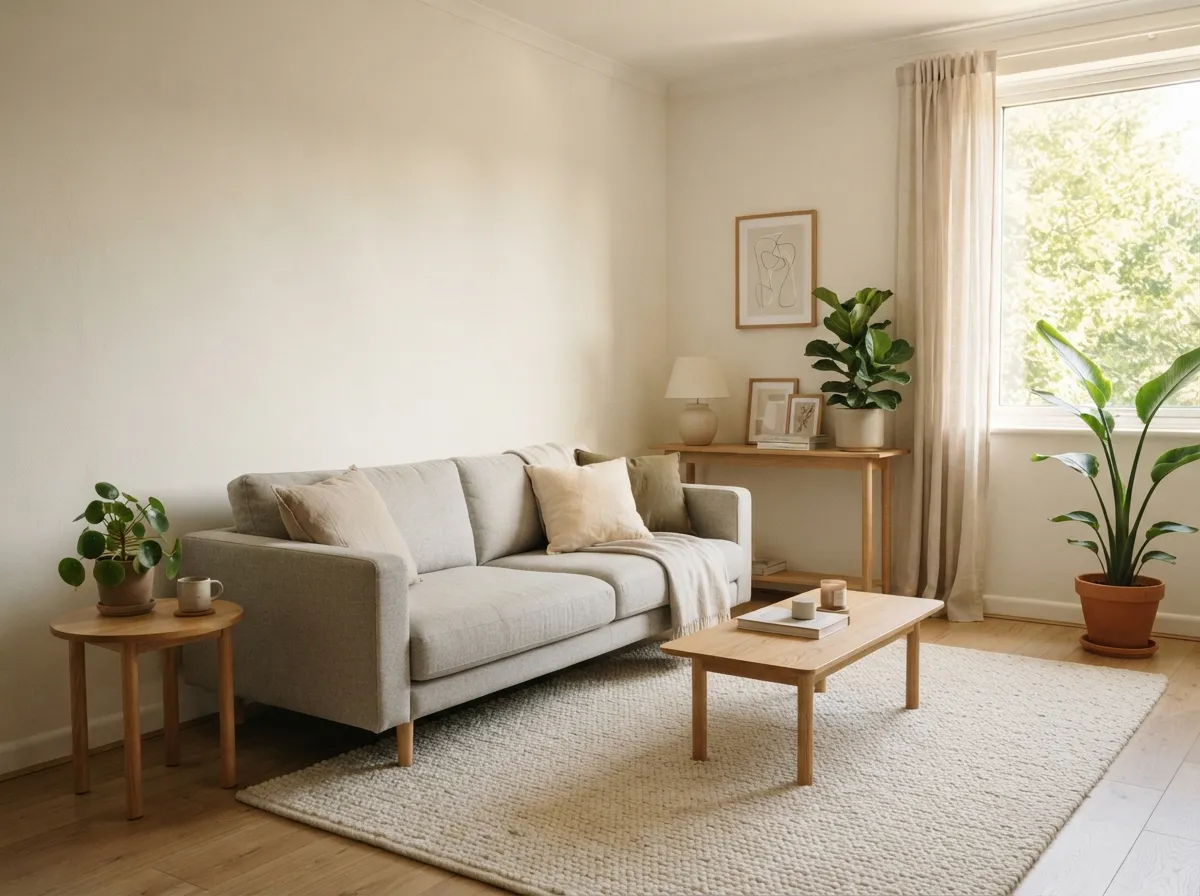
A carefully chosen color palette plays a crucial role in making smaller spaces feel more expansive. Neutral tones are ideal for achieving this airy, open aesthetic.
Soft off-white walls and light grey upholstery on the sofa create a serene backdrop. These subtle shades reflect light, making the room appear larger and brighter.
Introduce warmth through natural wood accents, like a light oak console table or a floor lamp with a wooden base. A minimalist rug in a subtle pattern can add texture without overwhelming the space.
Simple green plants provide a gentle pop of color, preventing the room from feeling stark and instead creating a calming atmosphere.
3. Utilize Vertical Space with Shelving
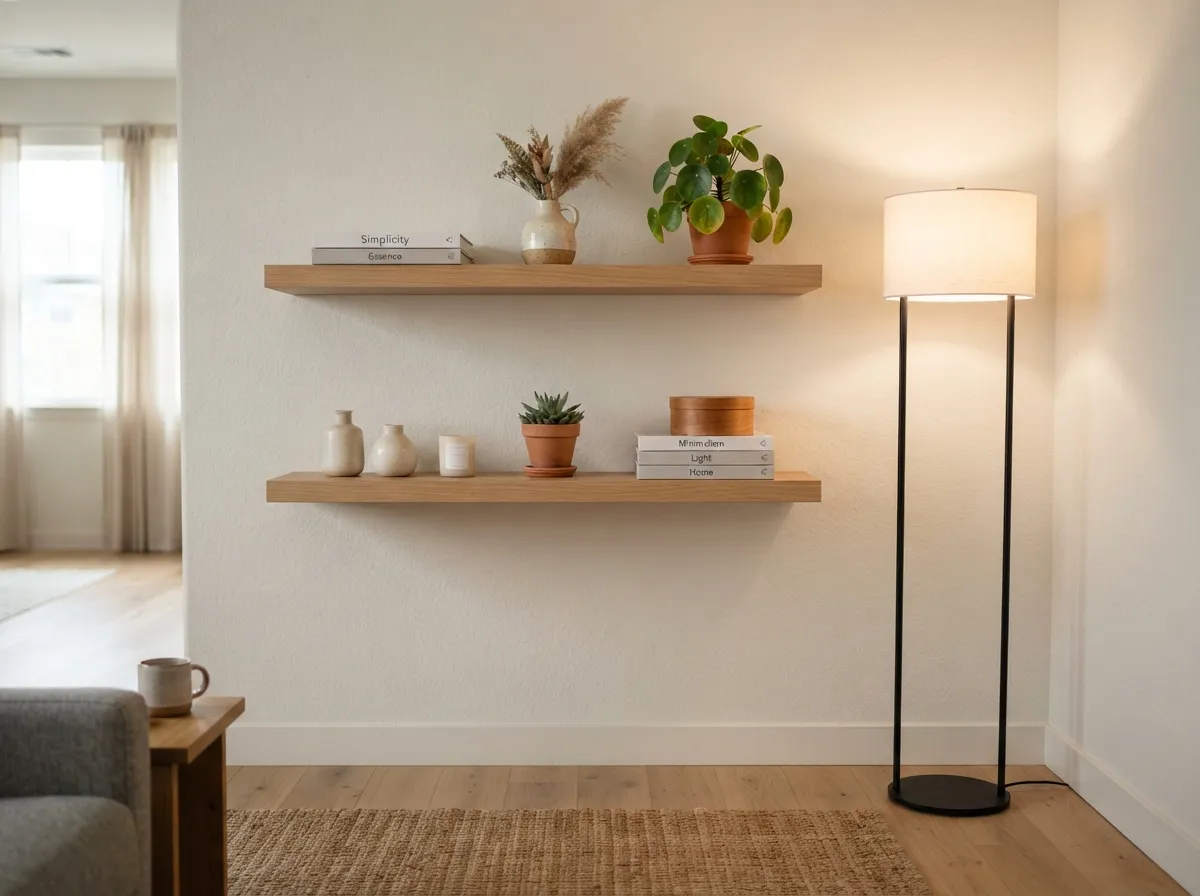
When floor space is limited, the walls become prime real estate for storage and display. Vertical shelving solutions are essential for a minimalist apartment.
Floating wooden shelves create a sense of lightness while offering practical spots for your cherished items. Arrange a few carefully selected books, ceramic vases, and small potted plants.
This approach keeps your floor clear, contributing to an uncluttered and spacious feel. A tall, slim floor lamp provides focused light without taking up much room.
Thoughtful vertical organization helps maintain visual order and keeps necessities within easy reach, all while enhancing the apartment’s clean lines.
4. Invest in Quality, Not Quantity
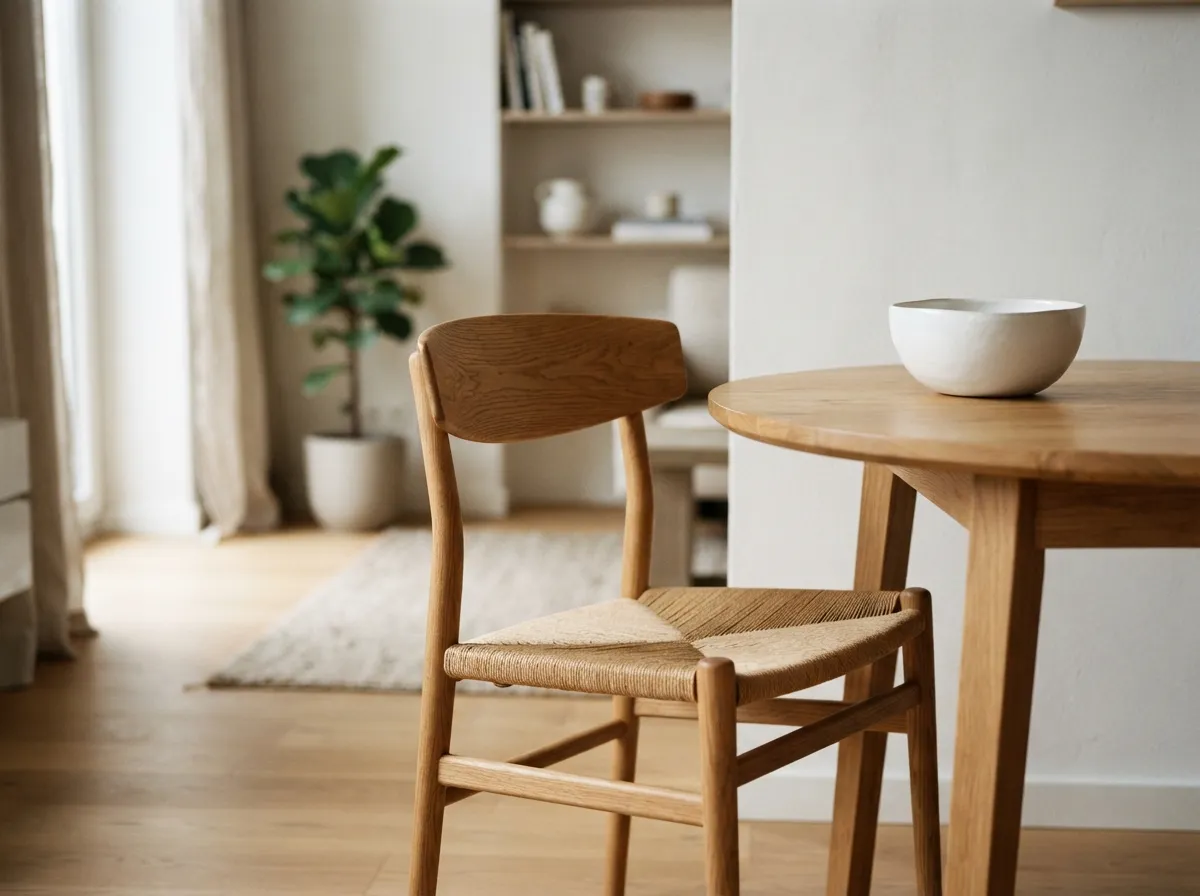
Downsizing is an opportunity to curate your belongings with intention. Focus on investing in fewer, higher-quality pieces that stand the test of time.
Choosing durable materials and timeless designs means your furniture will last longer and continue to look good for years. This reduces the need for frequent replacements.
Consider a well-crafted wooden dining chair and a sturdy, compact dining table. The visible wood grain of the chair signifies its quality and natural appeal.
This philosophy contributes to a more sustainable lifestyle and a home environment that feels considered and deliberate, reflecting true minimalist principles.
5. Declutter Ruthlessly Before Moving
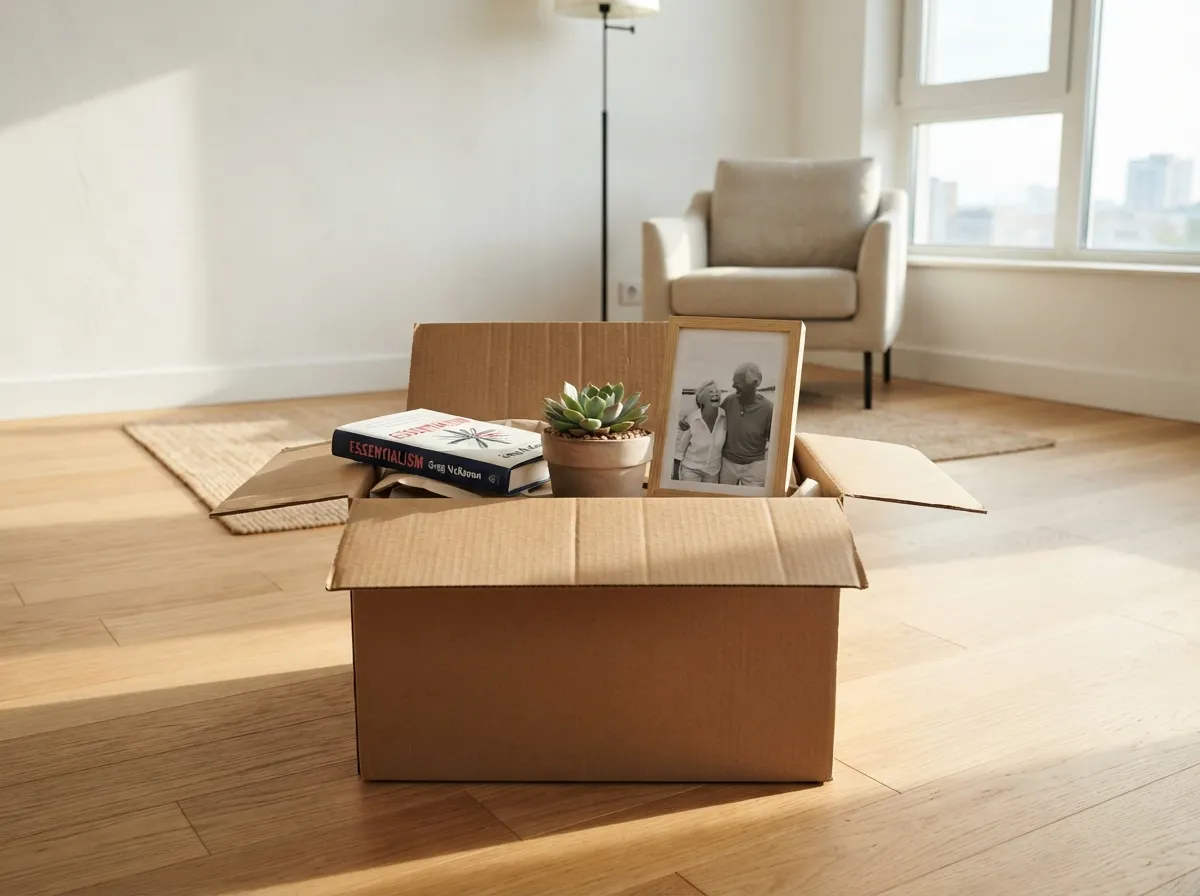
The most critical step in downsizing for an apartment is a thorough decluttering process before you even pack a single box. This proactive approach simplifies the entire move.
Be honest with yourself about what truly serves a purpose or brings you joy. Use the “one year rule” – if you haven’t used it in a year, it’s likely time to let it go.
This ensures that only essential and cherished items make their way into your new, smaller space. The process makes unpacking easier and immediately establishes a minimalist foundation.
Starting with a clean slate helps your new apartment feel genuinely spacious and organized from day one, setting the tone for your streamlined life.
6. Create Defined Zones in Open Layouts
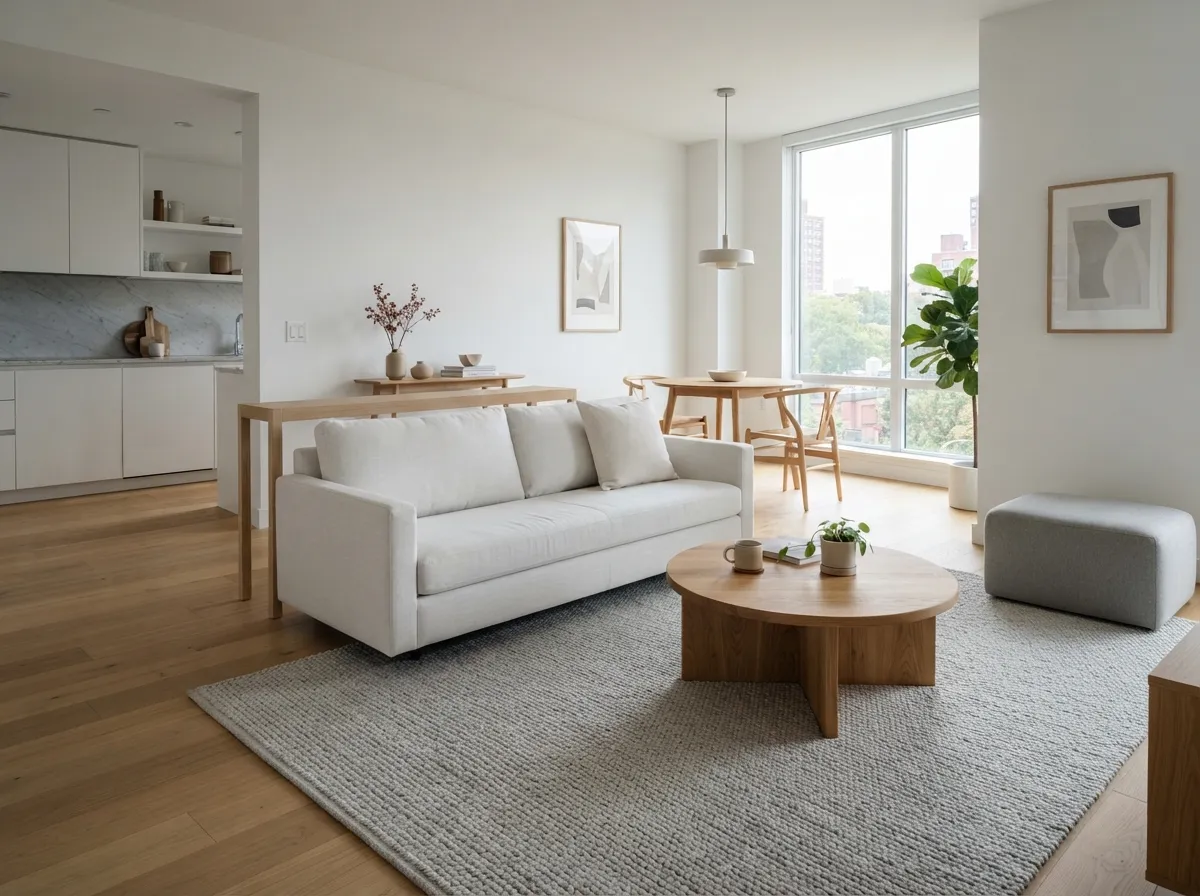
Transitioning from a house to an apartment often means embracing open-concept living. While spacious, these layouts can sometimes feel undefined without careful planning.
To combat this, strategically use design elements to delineate areas. A large area rug, for instance, can anchor your living room furniture, clearly separating it from a dining or workspace.
Consider a low-profile console table or a sleek bookshelf to act as a subtle room divider. These pieces help organize your minimalist apartment, making each zone feel intentional and functional.
This approach ensures every part of your open space serves a clear purpose, creating a sense of order and calm.
7. Incorporate Hidden Storage Solutions
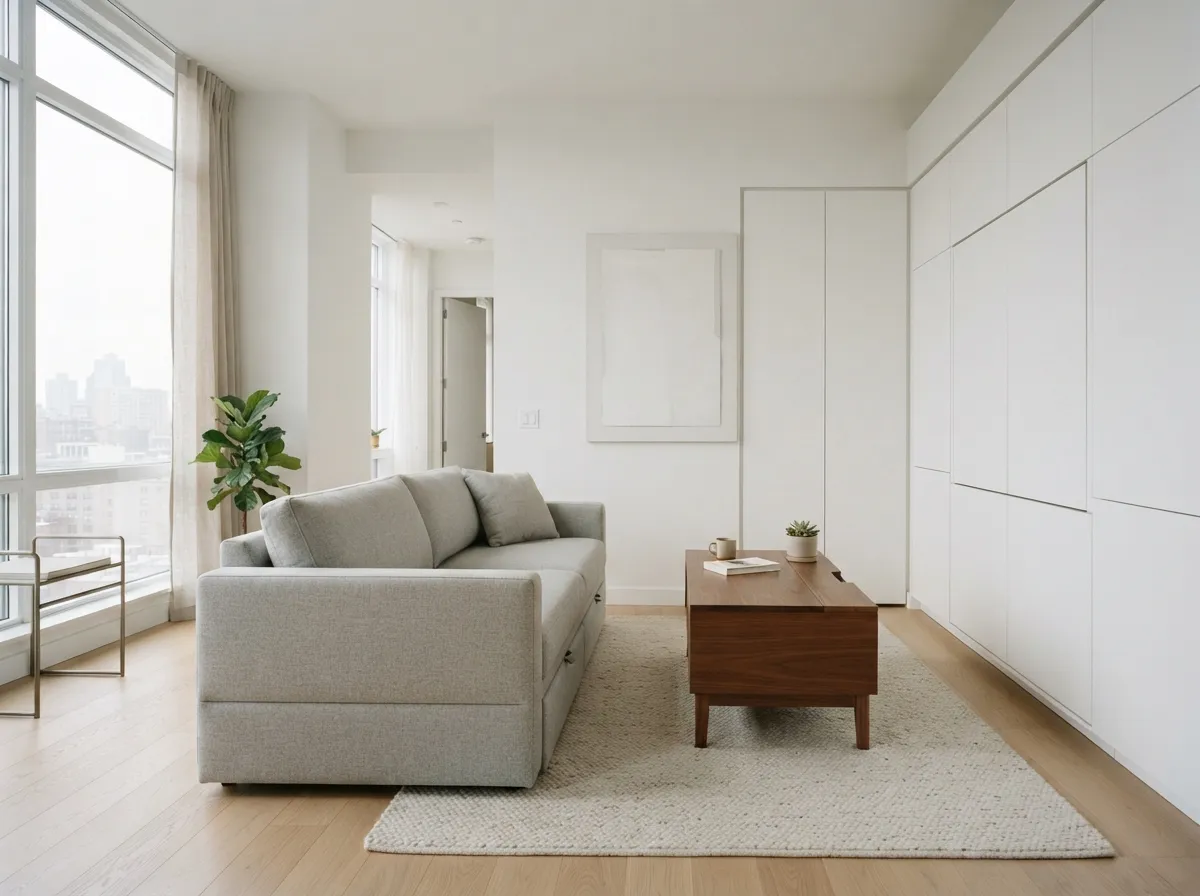
Downsizing requires a smart approach to storage, especially in a smaller footprint. The key is to maximize functionality without introducing clutter into your minimalist aesthetic.
Embrace furniture that works double duty. Ottomans with lift-top storage or a bed frame with integrated drawers underneath are perfect examples of concealed organization.
Think vertically with sleek, wall-mounted cabinetry or shelving units that blend seamlessly with your wall color. These solutions keep belongings out of sight, maintaining a pristine and spacious feel.
Every item has its place, ensuring your apartment remains tidy and visually uncluttered, essential for a minimalist home.
8. Choose Lightweight, Visually Open Furniture
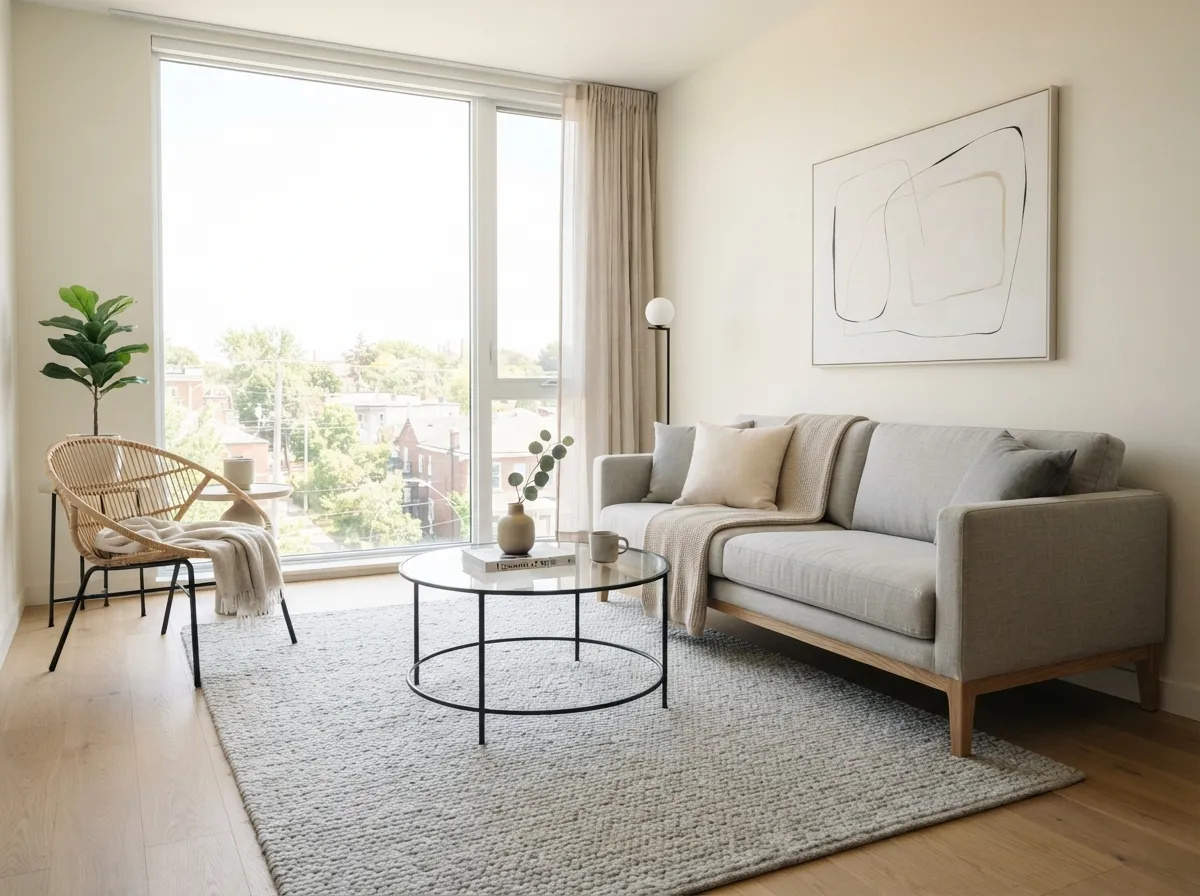
When moving into a smaller apartment, heavy or bulky furniture can quickly overwhelm the space. Opting for pieces that appear light and airy is crucial for maintaining an open feel.
Look for furniture with slender legs, open frames, or transparent elements like glass tops. A coffee table with a thin metal frame and a glass surface allows light to pass through, reducing visual weight.
Armchairs or sofas with exposed, delicate legs lift the furniture off the floor, making the room feel larger. This creates unimpeded sightlines, contributing to an expansive and calm atmosphere.
Such choices prevent your apartment from feeling crowded and enhance the overall sense of airiness.
9. Add Warmth with Natural Textures
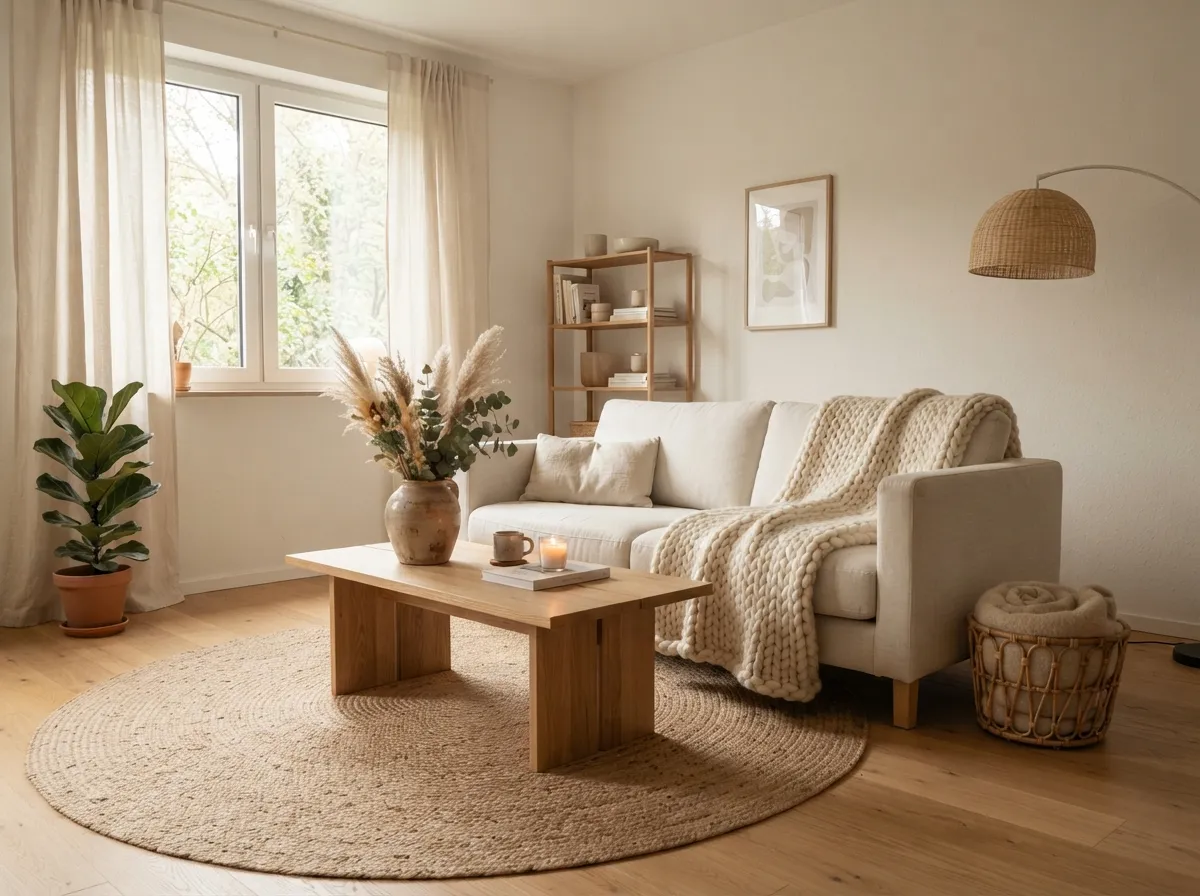
Minimalism doesn’t mean sacrificing comfort or personality. Infusing natural textures is an excellent way to add warmth and depth to your apartment without introducing clutter or vibrant colors.
Incorporate materials like light wood for furniture, soft wool for throws, or textured linen for curtains. These elements bring a tactile richness that makes a space feel inviting and grounded.
Consider a woven rattan basket for discreet storage or ceramic pottery on a shelf. These natural materials create subtle visual interest and a sense of coziness.
They help prevent a minimalist space from feeling stark, ensuring your apartment feels welcoming and lived-in.
10. Strategically Place Mirrors to Expand Space
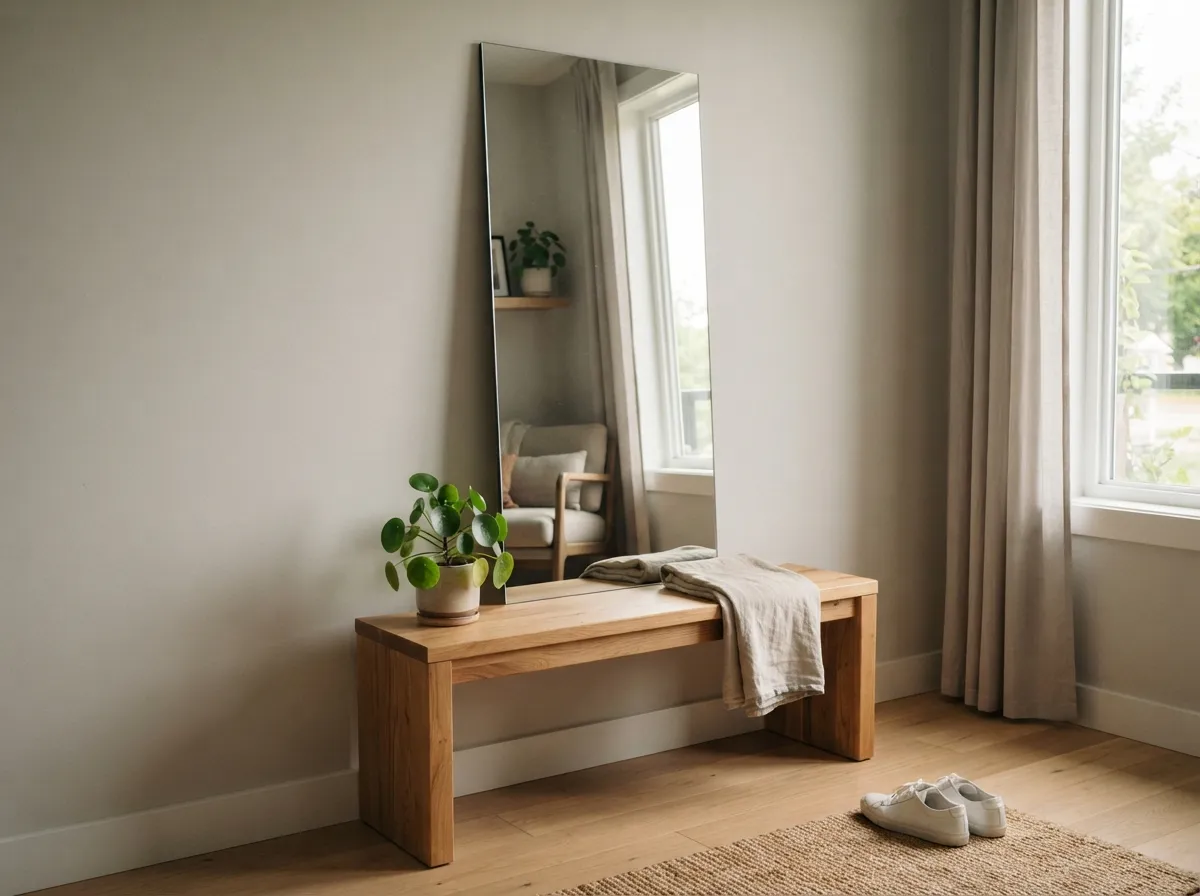
Mirrors are a designer’s secret weapon for making smaller apartments feel significantly larger and brighter. Their reflective qualities can visually double the perception of space.
Place a large, frameless or simply framed mirror on a wall opposite a window. This clever positioning reflects the outdoor view and natural light, creating an illusion of depth and openness.
Consider a full-length mirror leaning against a wall in an entryway or a large wall-mounted mirror in your living area. They visually push back walls and amplify light.
This simple addition makes your apartment feel more expansive and inviting, a key element when optimizing a downsized living space.
11. Select Streamlined Window Treatments
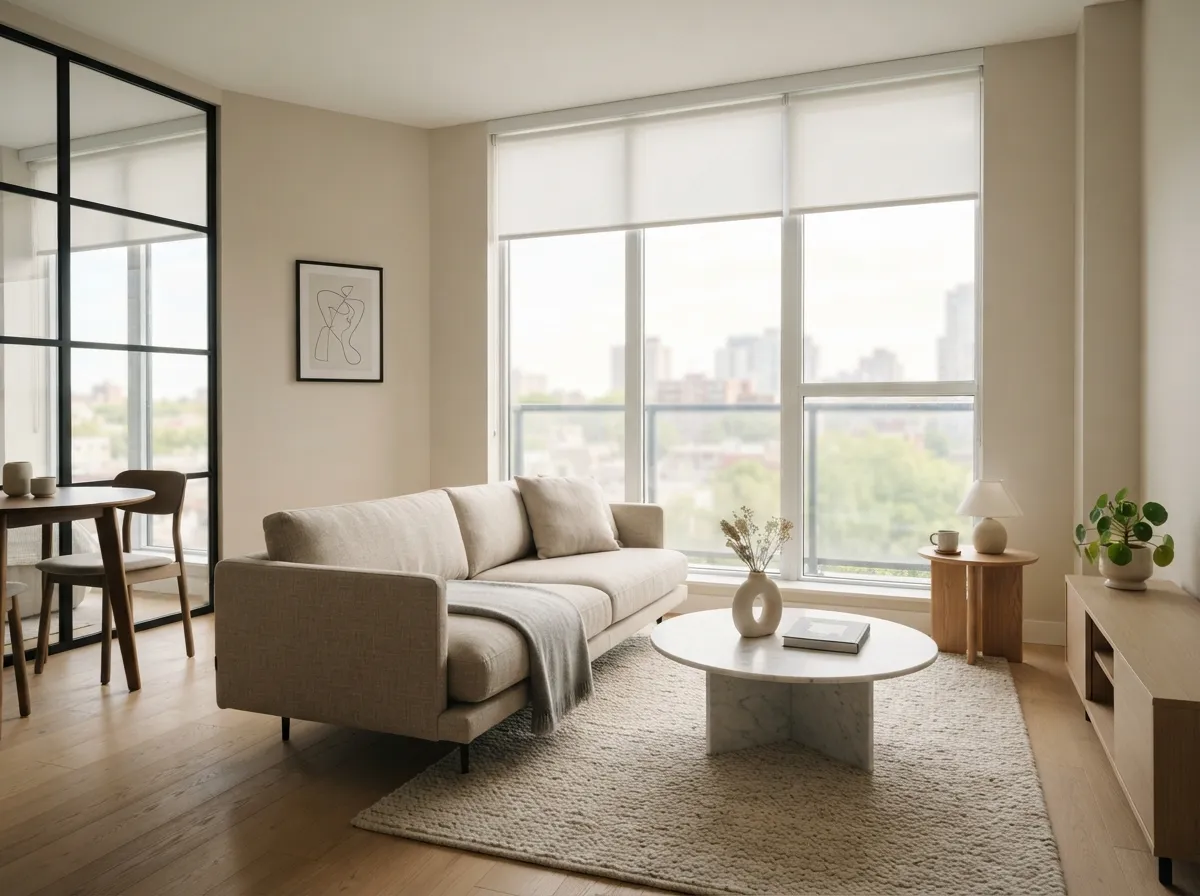
Choosing the right window treatments is key to maintaining a minimalist aesthetic in a smaller apartment. Opt for solutions that are sleek and unobtrusive, allowing natural light to flow freely.
Simple roller blinds in a light, neutral shade are an excellent choice. They offer privacy when needed but disappear almost entirely when open, maximizing your view and daylight.
Sheer curtains can also add a soft layer of privacy and diffuse sunlight beautifully. Look for natural linen or cotton fabrics that drape elegantly without adding visual weight to the room.
These streamlined options contribute to a calm and uncluttered atmosphere. They ensure your windows enhance the space rather than becoming a focal point of excessive fabric or hardware.
12. Opt for Wall-Mounted or Legged Furniture
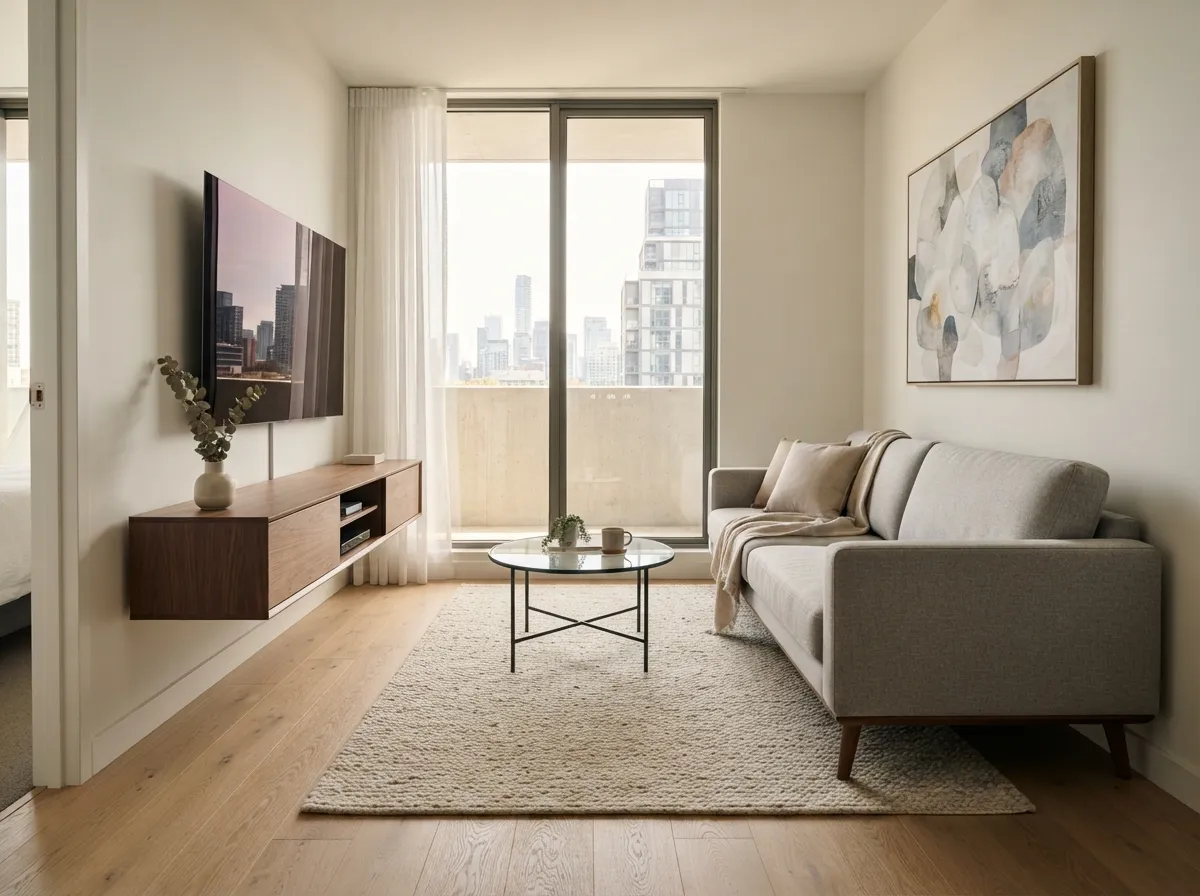
Creating an illusion of spaciousness is vital when downsizing. Furniture that is elevated or wall-mounted helps achieve this by keeping the floor clear and open.
Wall-mounted shelves, floating media consoles, or even desks free up valuable floor space. This visual trick makes the room appear larger and less cluttered, offering practical storage without bulk.
For freestanding pieces like sofas, armchairs, and tables, choose designs with slender, tapered legs. These styles allow light to pass underneath, reducing the furniture’s visual weight and making the room feel more expansive.
This approach not only enhances the sense of openness but also makes cleaning much easier, as dust and debris have fewer places to accumulate on the floor.
13. Integrate Smart Lighting for Ambiance
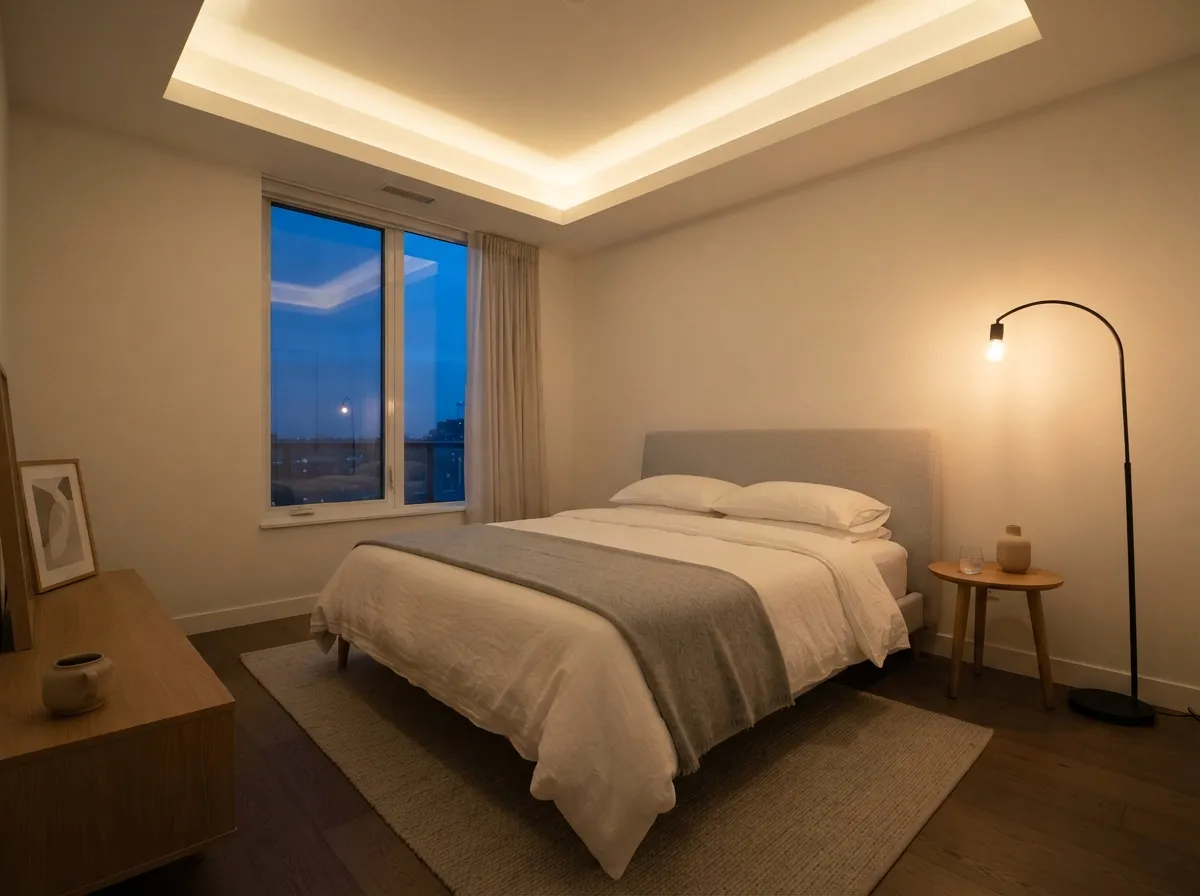
Layered lighting is crucial for creating depth and warmth in any minimalist apartment. Thoughtful lighting design can enhance the mood and functionality of your space.
Combine ambient lighting from overhead fixtures with task lighting provided by floor or table lamps. This allows you to adjust the brightness and focus light where it’s most needed.
Consider incorporating warm white or yellow accent lights, such as hidden LED strips along ceiling coves or under shelves. These subtle glows add a soft, inviting ambiance without being overly bright.
The goal is to create a well-lit environment that feels cozy and inviting, allowing you to control the atmosphere. This avoids relying solely on harsh overhead light, making your apartment more comfortable.
14. Curate Meaningful Art and Decor
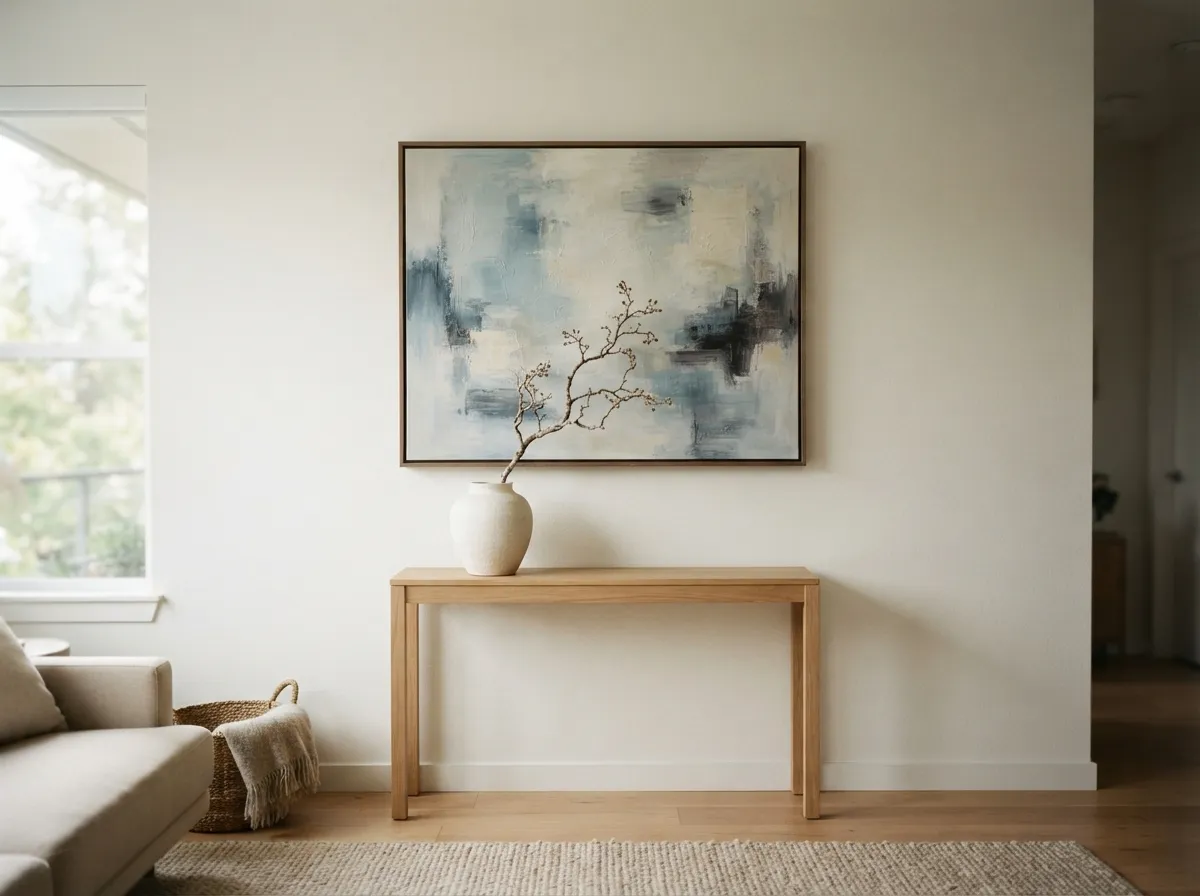
In a minimalist apartment, every decorative item should be chosen with intention and purpose. Less is truly more when it comes to personalizing your space without creating clutter.
Focus on a few impactful pieces of art that resonate with you personally. A single large, abstract painting can make a powerful statement without overwhelming a wall.
Select sculptural objects or a thoughtfully chosen vase with a single branch or flower. These items add character and texture, serving as focal points that draw the eye.
By curating only meaningful pieces, you ensure that your decor enhances the apartment’s aesthetic. This approach prevents visual noise and keeps the environment serene and reflective of your taste.
15. Use Rugs to Define Areas and Add Comfort
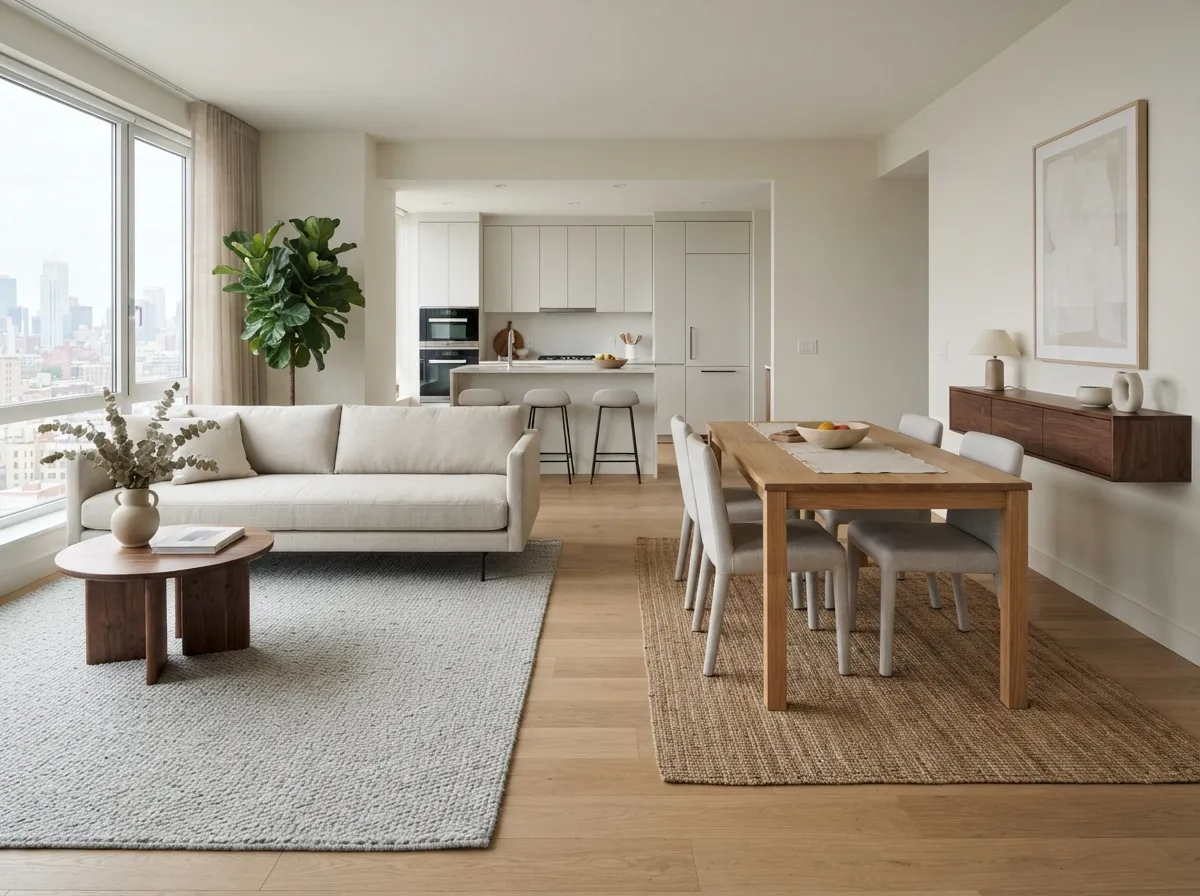
Area rugs are essential tools for delineating different zones within an open-concept apartment. They provide visual anchors and enhance comfort underfoot.
In a combined living and dining space, a large rug can clearly define the lounge area. This creates a sense of distinct rooms without the need for physical walls.
Choose rugs in neutral colors, subtle patterns, or natural fibers like wool or jute. These textures add warmth and softness without detracting from the minimalist design.
Rugs also introduce an element of comfort and help absorb sound, making the apartment feel more intimate and inviting. They ground furniture pieces, bringing cohesion to the overall layout.
16. Keep Surfaces Clear and Uncluttered
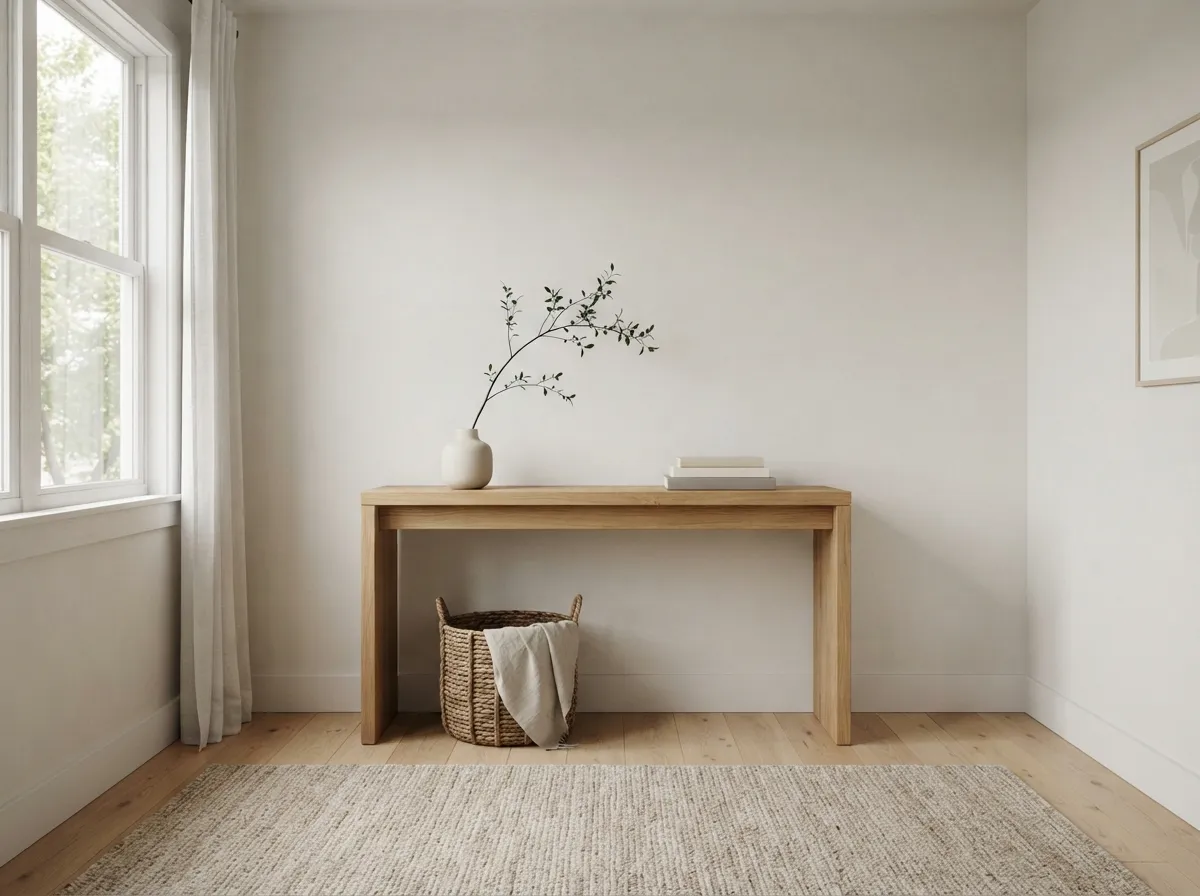
Maintaining clear surfaces is fundamental to minimalist apartment living. This practice immediately creates a sense of calm and openness, making even smaller rooms feel more expansive.
It also simplifies your daily routine by reducing visual noise and distractions.
Choose only a few carefully selected decorative items for display. A simple ceramic vase on a natural wood console table, for example, adds warmth without overwhelming the space.
This intentional approach ensures every item serves a purpose or brings genuine joy.
Regularly assess what occupies your tabletops and shelves. If an item doesn’t contribute to the room’s function or aesthetic, consider finding it a proper storage spot or rehoming it.
This discipline is key to long-term clutter control.
17. Designate a Dedicated Entryway Drop Zone
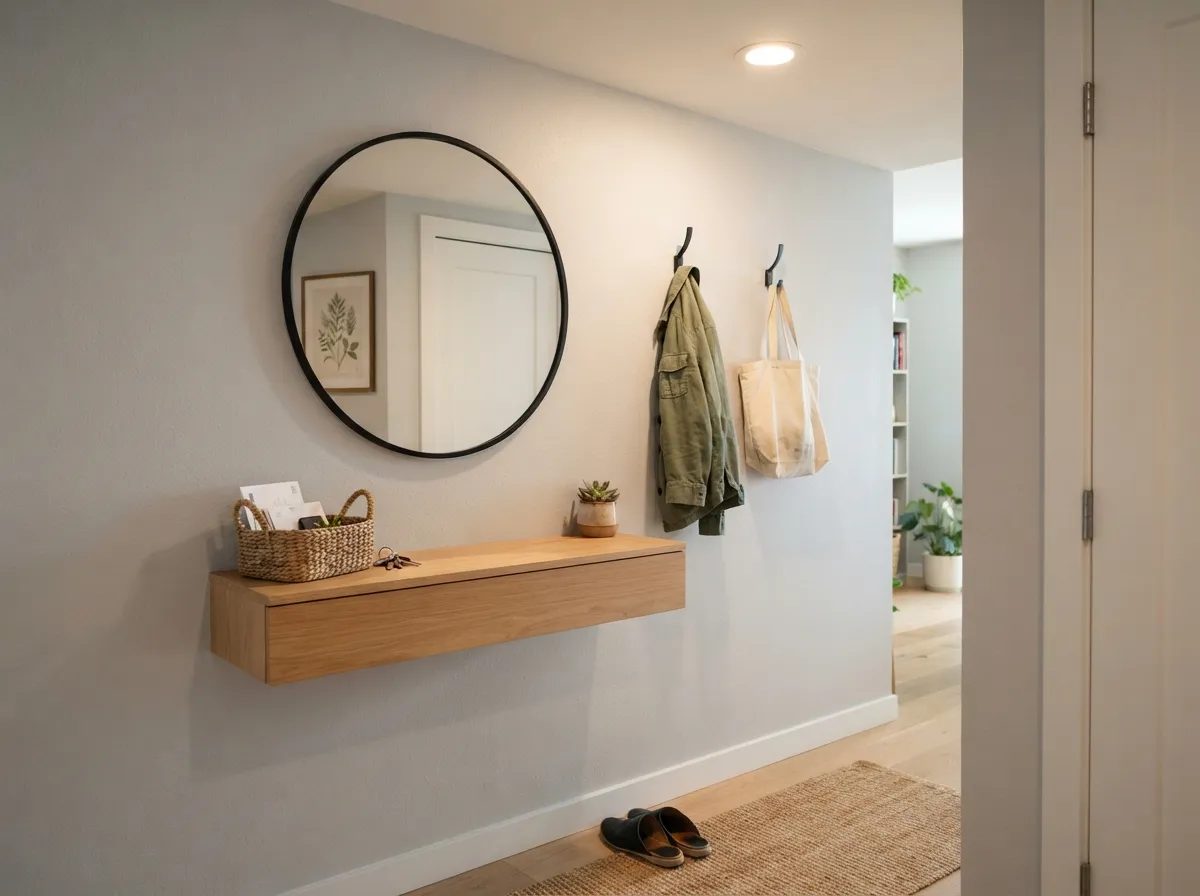
An organized entryway is essential for preventing clutter from migrating further into your apartment. A dedicated drop zone provides a practical spot for everyday essentials right as you enter or leave your home.
This helps maintain order and a smooth transition.
Consider a slim floating shelf or a compact console table. These pieces offer a surface for keys, mail, and sunglasses without taking up valuable floor space.
Wall-mounted hooks are also invaluable for coats, bags, or even a small umbrella.
Incorporate a small decorative bowl or tray for smaller items to keep them contained. The goal is to create a functional and inviting first impression of your home.
A simple mirror above the console can also add both utility and a sense of depth.
18. Choose Space-Saving Dining Options
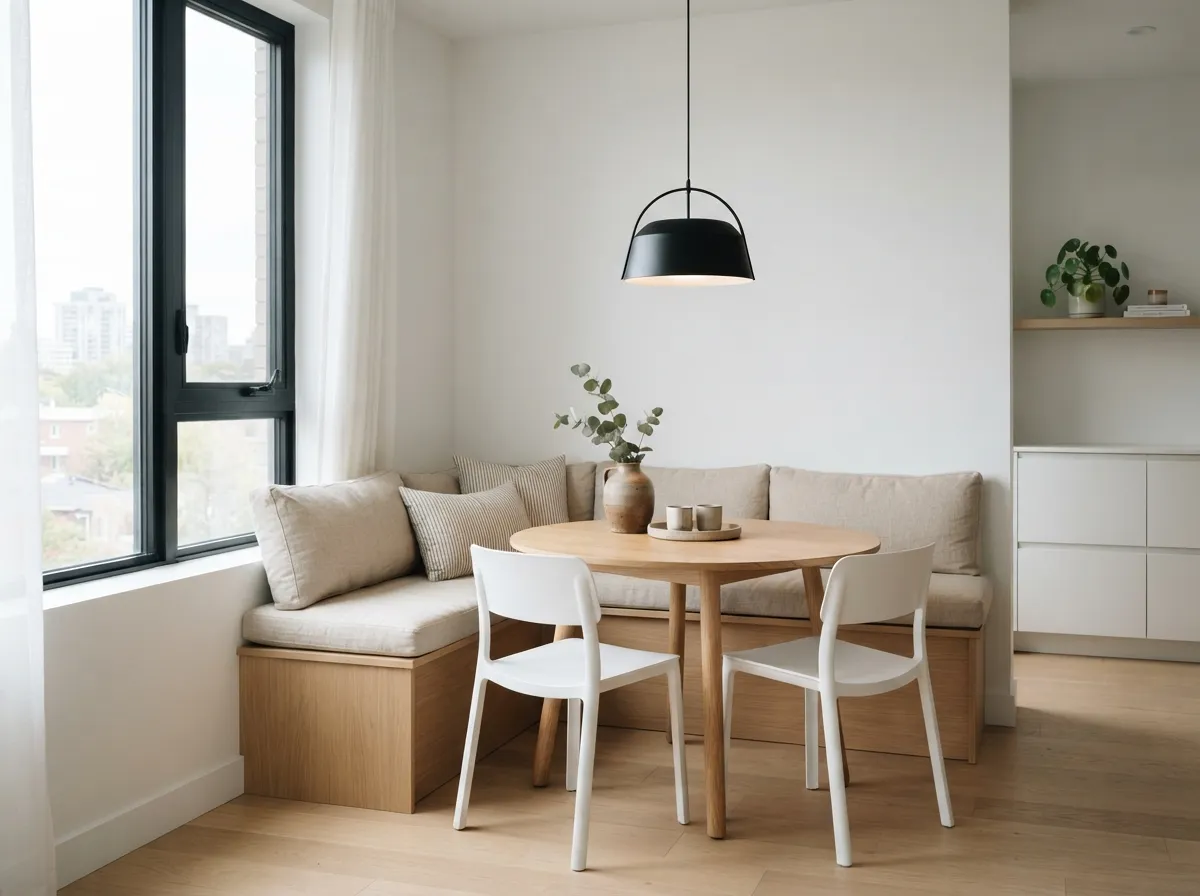
In a smaller apartment, efficient dining solutions are paramount. Opt for furniture that maximizes space without sacrificing style or comfort.
This approach ensures your dining area remains functional and inviting for meals and gatherings.
An extendable dining table is an excellent choice, allowing you to accommodate guests when needed and retract it for daily use. Alternatively, a round table can often fit more people in a smaller footprint than a square or rectangular one.
Consider a table in light wood or with a white top to maintain a bright, open feel.
Pair your table with armless chairs that tuck completely underneath. Stackable chairs are another clever option for easy storage when not in use.
Built-in banquette seating along a wall can also save space and offer additional storage beneath the bench.
19. Organize Your Kitchen with Purpose
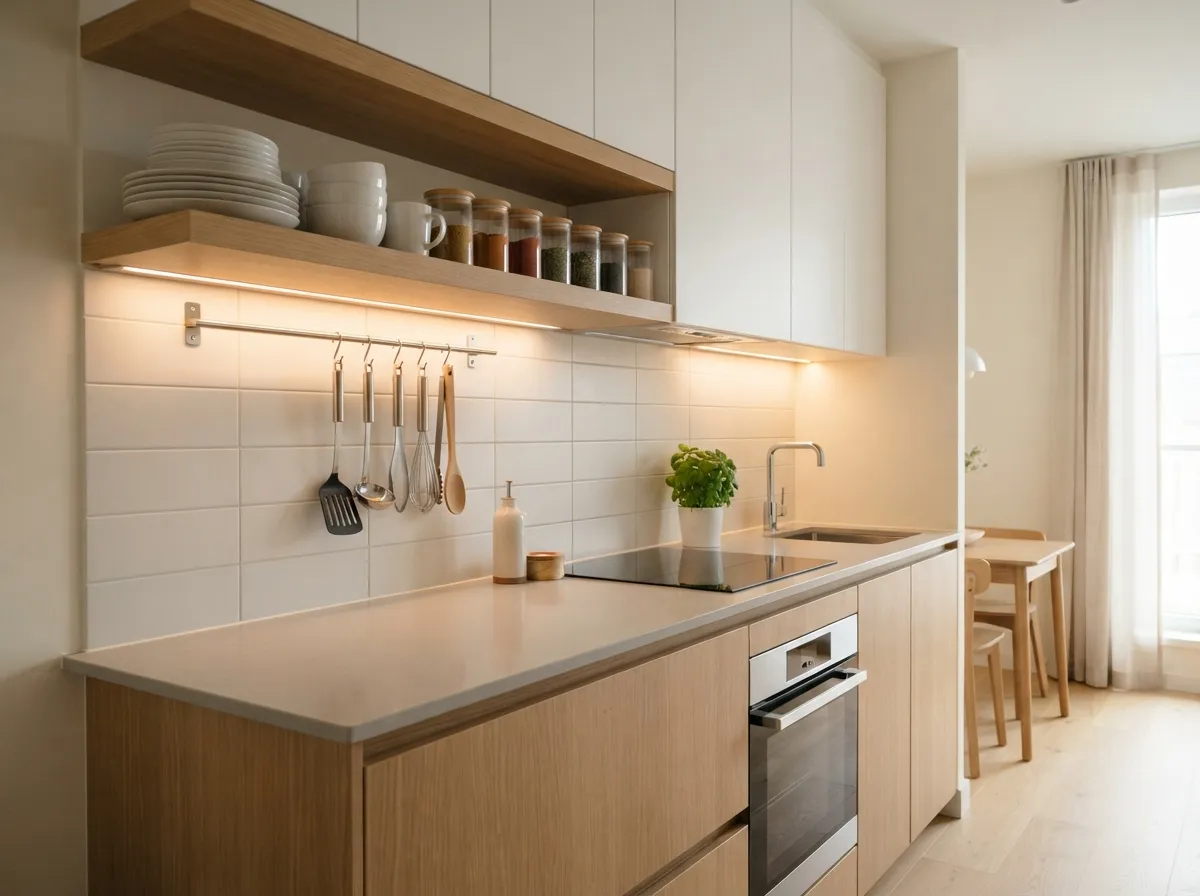
A minimalist kitchen thrives on thoughtful organization and purposeful storage. Begin by decluttering countertops and storing rarely used appliances out of sight.
This creates a clean, efficient workspace that is a pleasure to use.
Utilize drawer dividers for cutlery and utensils to keep them tidy. Vertical storage solutions, such as pot and pan organizers or tiered shelving within cabinets, can significantly maximize space.
Open shelving can display neatly stacked, matching dishes or glass jars of pantry staples.
Focus on multi-functional items that reduce the need for excessive gadgets. Choose neutral-toned cabinets, like white or light wood, to enhance the sense of openness.
Under-cabinet lighting adds both functionality and a warm ambiance, highlighting the clean lines of your organized space.
20. Create a Serene Bedroom Retreat
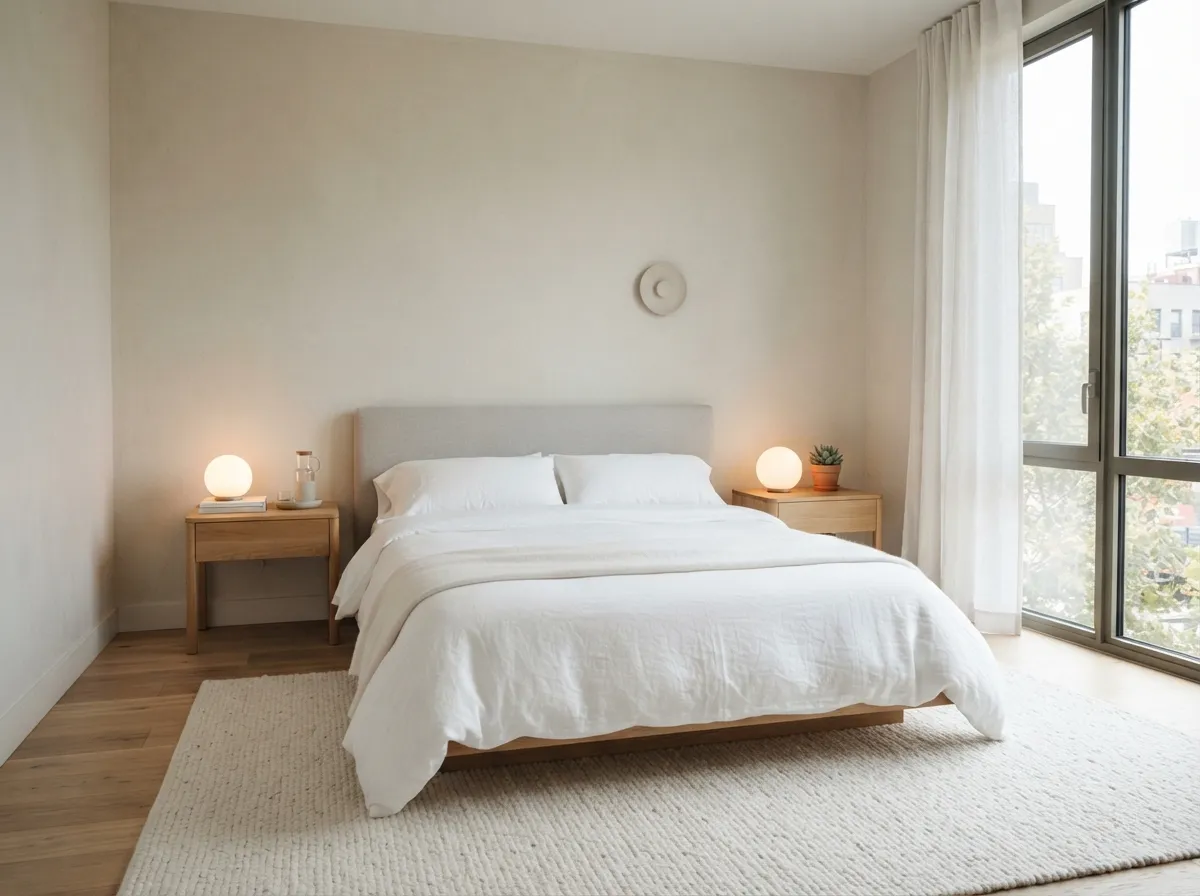
Your bedroom should serve as a calming personal space, especially in a minimalist apartment. Focus on creating an atmosphere that promotes rest and relaxation.
This means reducing visual clutter and embracing simplicity.
Choose a neutral color palette for walls and bedding, such as soft whites, light grays, or warm beiges. These hues contribute to a peaceful environment and make the room feel more spacious.
Opt for natural materials like linen or cotton for bedding to enhance comfort.
Furniture should be essential and streamlined. A simple platform bed with a clean-lined headboard is perfect.
Keep nightstands clear, perhaps with just a small, functional lamp. Natural light filtering through sheer curtains can elevate the tranquil mood, creating a truly peaceful bedroom.
21. Maximize Bathroom Storage Efficiency
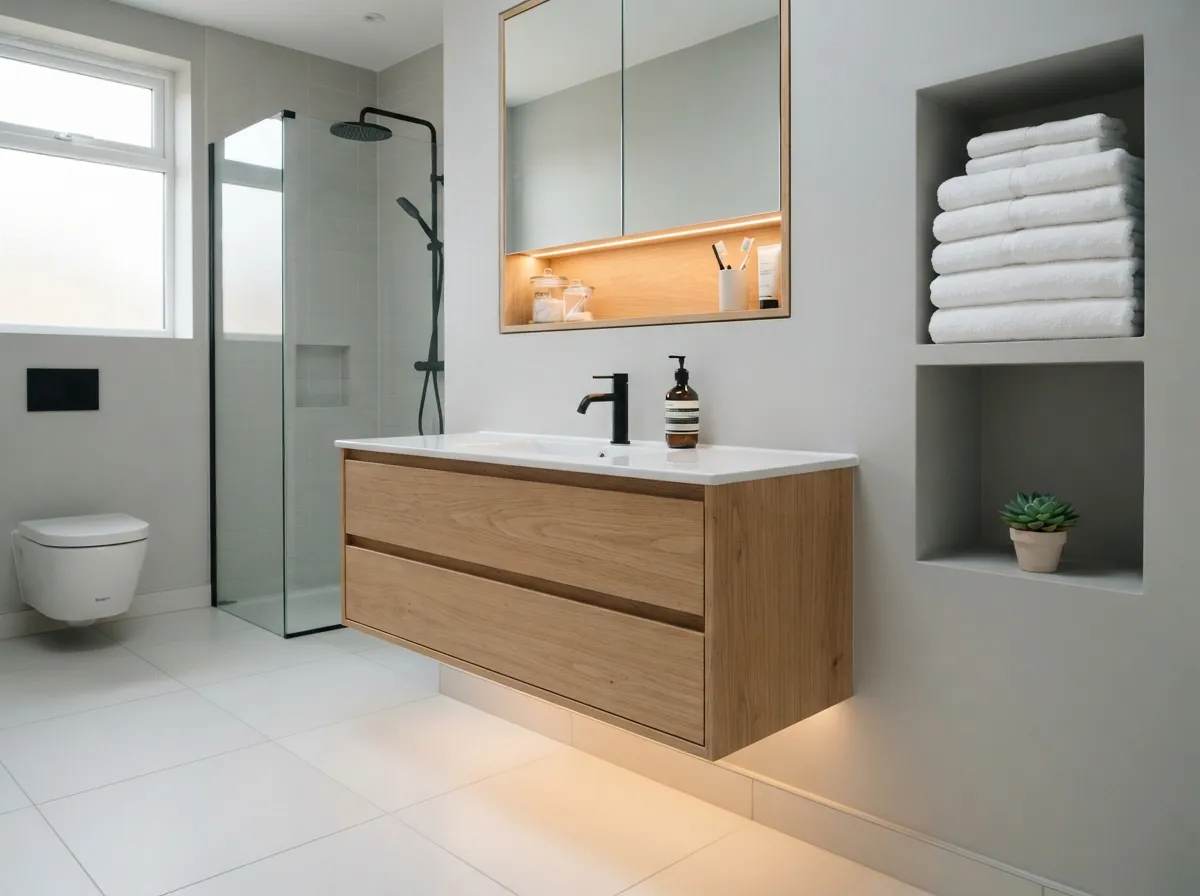
Downsizing often means re-evaluating every inch, especially in the bathroom. Optimizing storage here is key to maintaining a clutter-free, functional space.
Every item needs a designated spot to prevent visual noise. Consider wall-mounted solutions like a floating vanity with integrated drawers.
This frees up floor space and offers seamless storage for essentials, keeping counters clear. The light oak wood adds warmth without bulk.
A recessed medicine cabinet with a mirror front is another smart choice. It provides hidden storage for smaller items while serving a dual purpose.
This keeps personal care products out of sight. Even open shelving can be efficient when thoughtfully used.
A small alcove with neat displays of white towels and a single succulent plant contributes to a spa-like feel. This balances utility with a touch of decor.
22. Incorporate Greenery with Indoor Plants
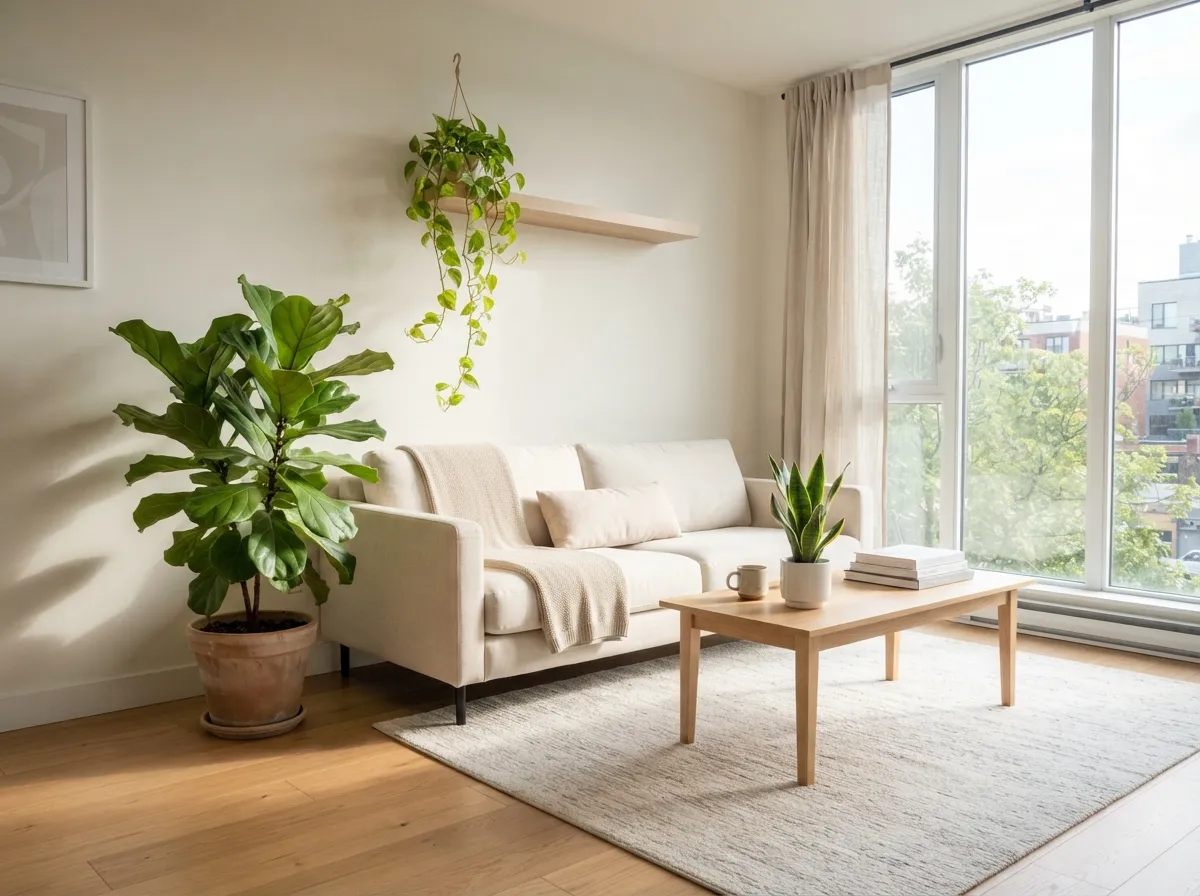
Bringing nature indoors is a simple yet effective way to add vitality to a minimalist apartment. Indoor plants introduce organic shapes and textures, softening clean lines and adding a touch of life.
They enhance the overall atmosphere. A well-chosen plant, like a large fiddle-leaf fig, can become a natural focal point in a living room.
Placed in a simple terracotta pot next to a cream linen sofa, it offers a grounding presence. This creates a sense of calm.
Smaller plants also play a significant role in elevating decor. A snake plant on a light wood coffee table or a trailing Pothos on a floating shelf adds subtle interest.
The gentle cascade of vines contributes to a relaxed feel. Beyond aesthetics, plants can improve air quality and connect you to the natural world, which is especially comforting when downsizing.
Natural light streaming through the window helps these green companions thrive.
23. Select Durable, Easy-to-Maintain Materials
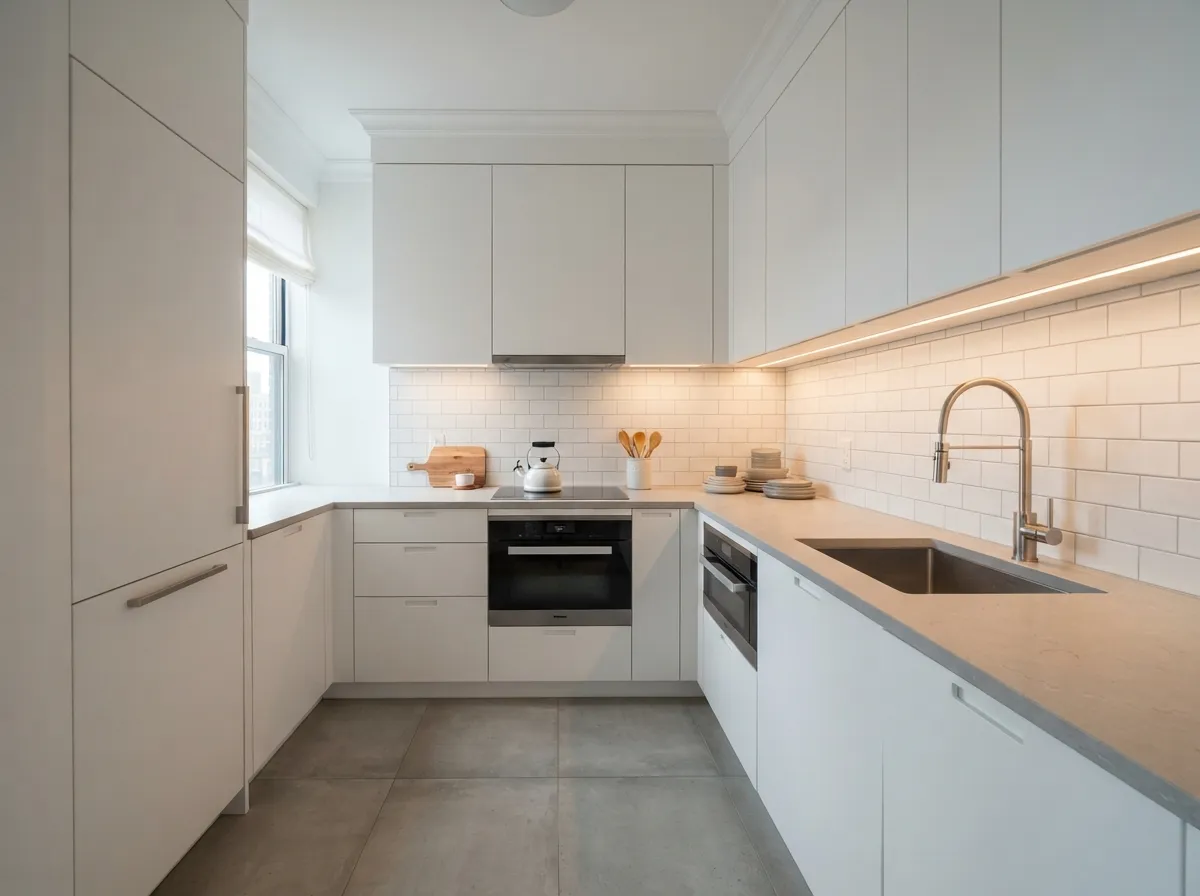
When furnishing a smaller apartment after downsizing, prioritizing durable and easy-to-maintain materials is a smart long-term strategy. This choice ensures longevity and reduces the burden of constant upkeep, allowing more time for enjoyment.
Focus on quality over quantity. In the kitchen, consider sleek flat-panel cabinetry with a matte white finish.
This provides a clean look that resists fingerprints. Paired with honed light gray quartz countertops, the surfaces are both resilient and simple to clean.
For wall coverings, a backsplash of simple white subway tiles offers a timeless appeal. These tiles are easy to wipe down and maintain their fresh appearance.
Large format concrete-look porcelain tiles on the floor add modern durability. Even hardware, like a brushed stainless steel sink and faucet, contributes to ease of care.
Warm under-cabinet LED lighting not only illuminates work surfaces but also highlights the practical beauty of these choices.
24. Personalize with Subtle Family Heirlooms
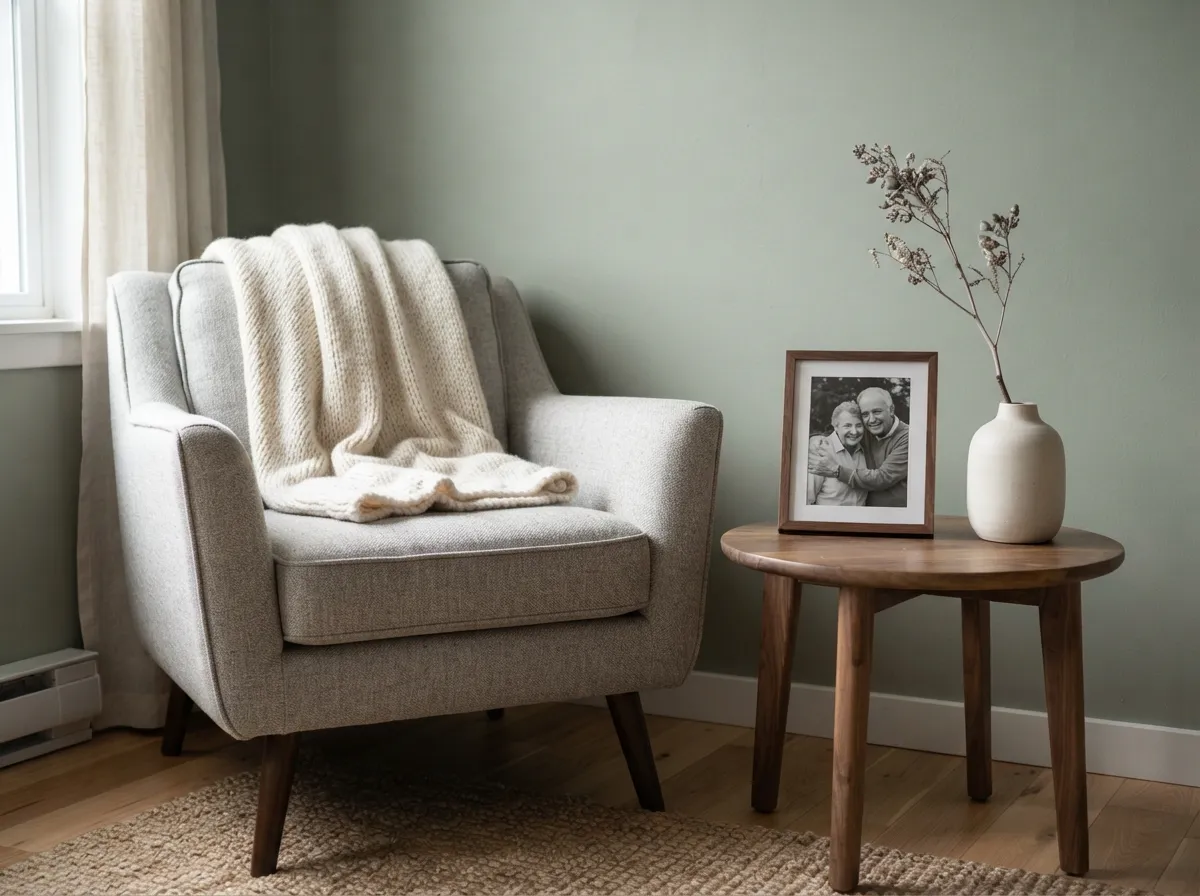
Downsizing doesn’t mean sacrificing personal connection; it means curating memories thoughtfully. Integrate subtle family heirlooms to infuse your minimalist apartment with warmth and character.
These cherished items tell your story without clutter. Consider displaying a framed black and white photograph of an older couple on a small, round side table.
Made of natural walnut wood, the table provides a simple, elegant base for this personal touch. It offers a quiet nod to heritage.
The key is selectivity and integration. A comfortable light gray upholstered armchair paired with a soft cream throw blanket creates an inviting space.
The heirloom piece fits naturally within this serene setting. A muted sage green wall provides a calming backdrop, allowing the personal items to stand out gently.
A simple ceramic vase with a single dried botanical branch completes the vignette. These elements together make the space uniquely yours.
25. Maintain a Regular Decluttering Routine
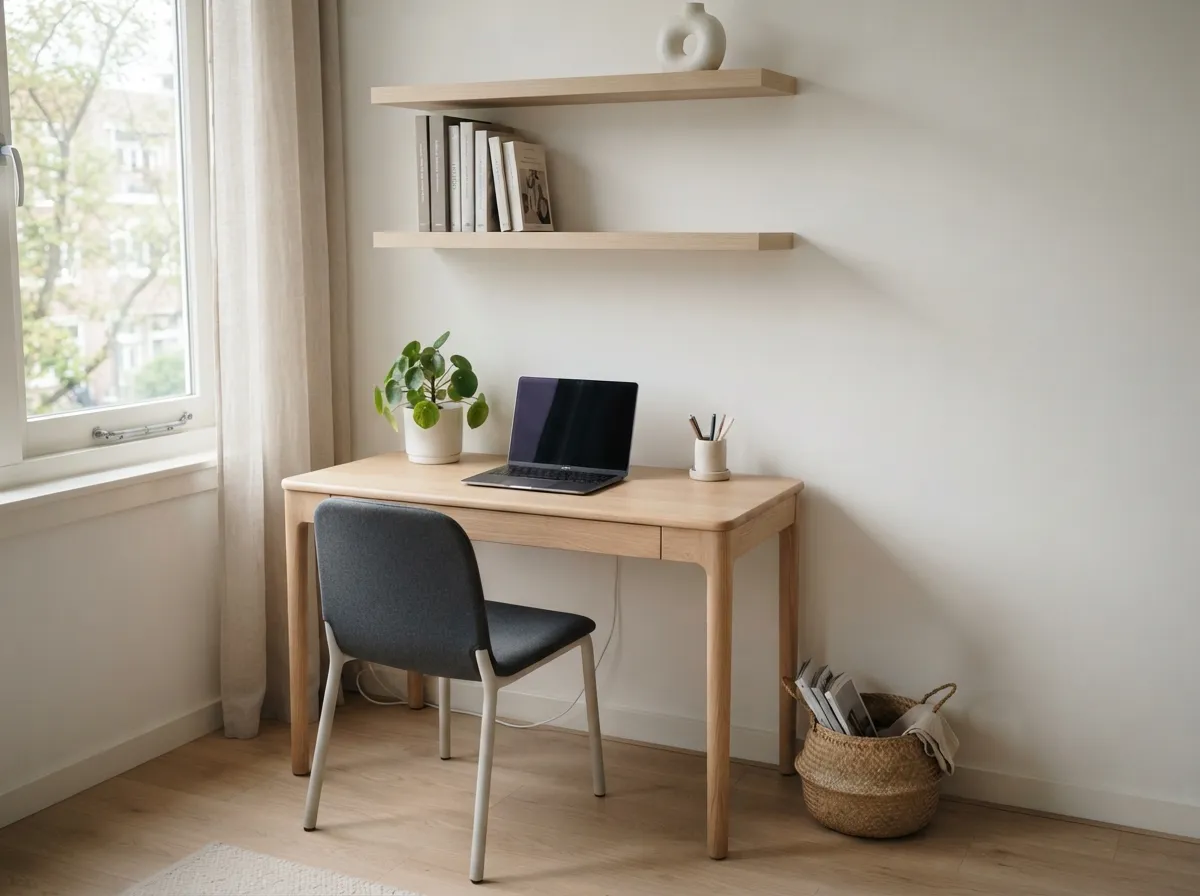
Maintaining a minimalist apartment requires an ongoing commitment to decluttering. This isn’t a one-time event but a continuous routine that keeps your space functional and visually calm.
Regular purging prevents accumulation. Establish clear zones for different activities and their associated items.
In a home office, a clean light wood desk should only hold immediate necessities like a laptop and a small plant. This promotes focus and clarity.
Storage solutions like floating shelves are ideal for displaying a few carefully selected books or a single decorative object. Everything else should have a designated hidden spot or be considered for removal.
A simple, ergonomic desk chair fits neatly. Utilize discreet storage options, such as a small woven basket next to the desk for magazines.
This provides a home for items that might otherwise create visual noise. Keeping walls crisp off-white and floors light oak laminate further enhances the sense of order.
26. Think About Flow and Walkways
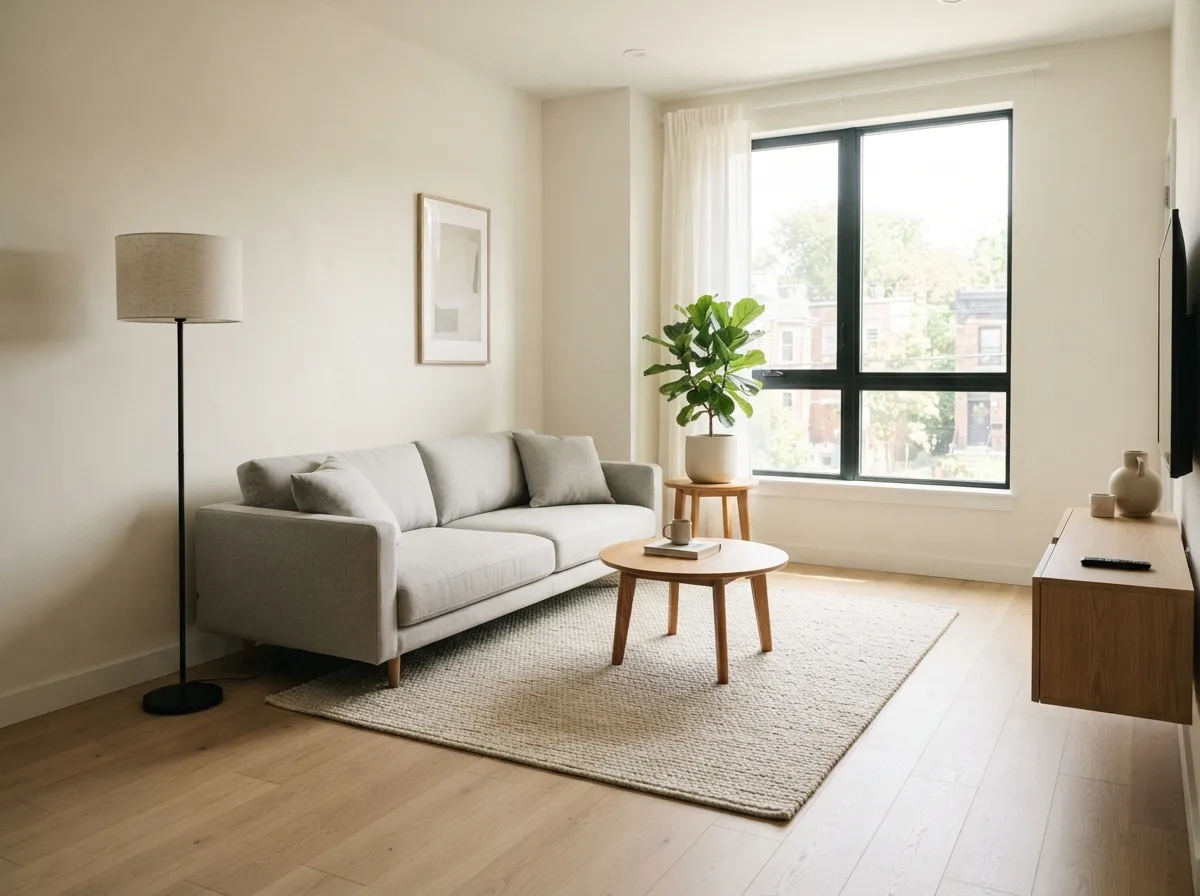
When moving from a larger house to an apartment, considering the flow of movement is paramount. Clear pathways are essential for making a smaller space feel open and functional.
Each piece of furniture should be placed intentionally, ensuring it doesn’t obstruct natural routes. Maintaining open walkways prevents your apartment from feeling cramped or cluttered.
This thoughtful arrangement allows for ease of navigation, which is crucial in a more compact environment. It’s about creating an intuitive layout that guides you smoothly through each area.
An unimpeded flow also contributes to a sense of calm and order. It reinforces the minimalist principle of reducing visual obstacles.
Your apartment will feel more expansive and welcoming with well-defined circulation paths. This careful planning helps maximize every square foot without sacrificing comfort or accessibility.
It makes daily living more efficient and enjoyable.
27. Utilize Natural Light Effectively
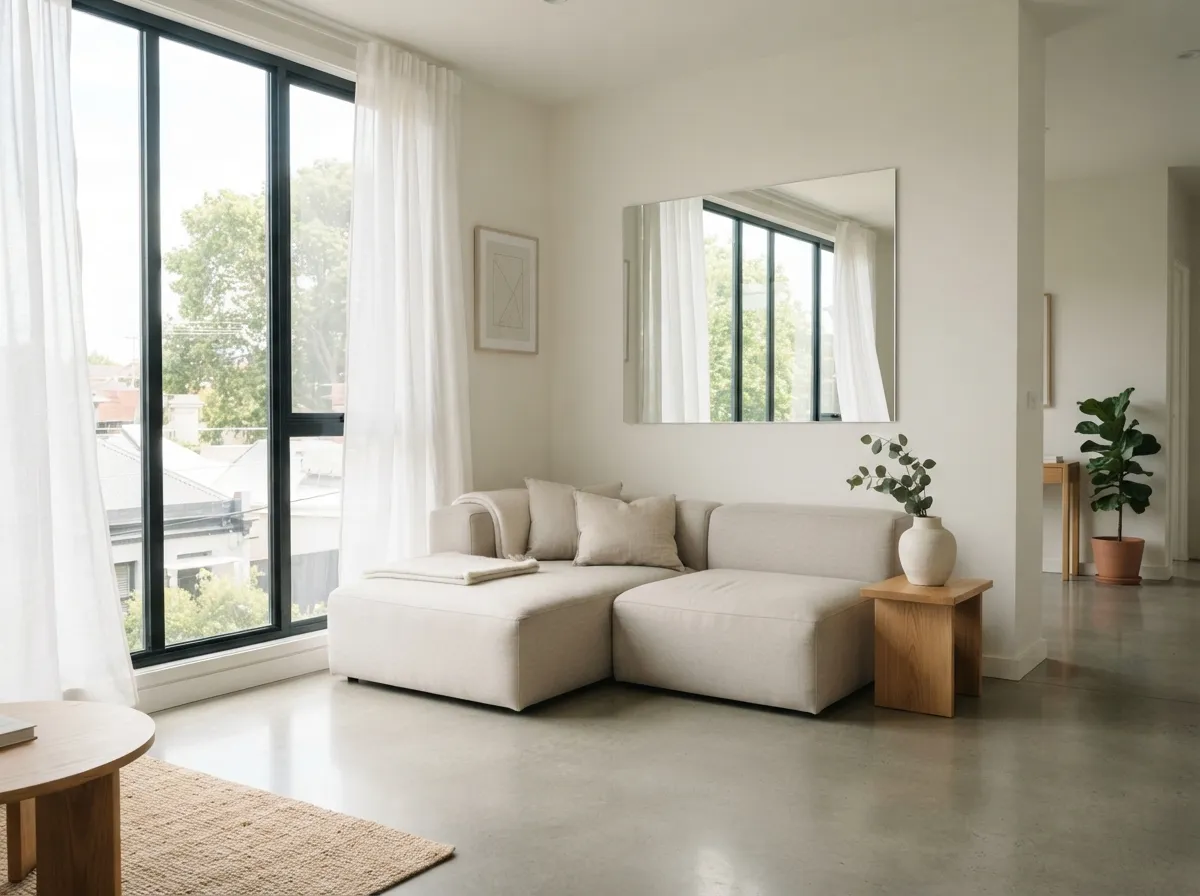
Maximizing natural light is one of the most effective strategies for making a downsized apartment feel larger and more inviting. Abundant light creates an open and airy atmosphere, counteracting any sense of confinement.
It connects the interior with the outside world. Choose window treatments that allow light to filter in freely, such as sheer curtains or simple blinds.
Avoid heavy drapes that can block valuable sunlight. Positioning mirrors strategically can also amplify light by reflecting it deeper into the room.
Light-colored walls and ceilings further enhance this effect, bouncing light around the space. This bright palette visually expands the room.
Natural light also highlights the clean lines and uncluttered nature of minimalist decor. This approach not only brightens your home but also contributes to a more uplifting and positive living environment.
It’s a key element in achieving that desired minimalist feel.
28. Choose Compact, Comfortable Seating
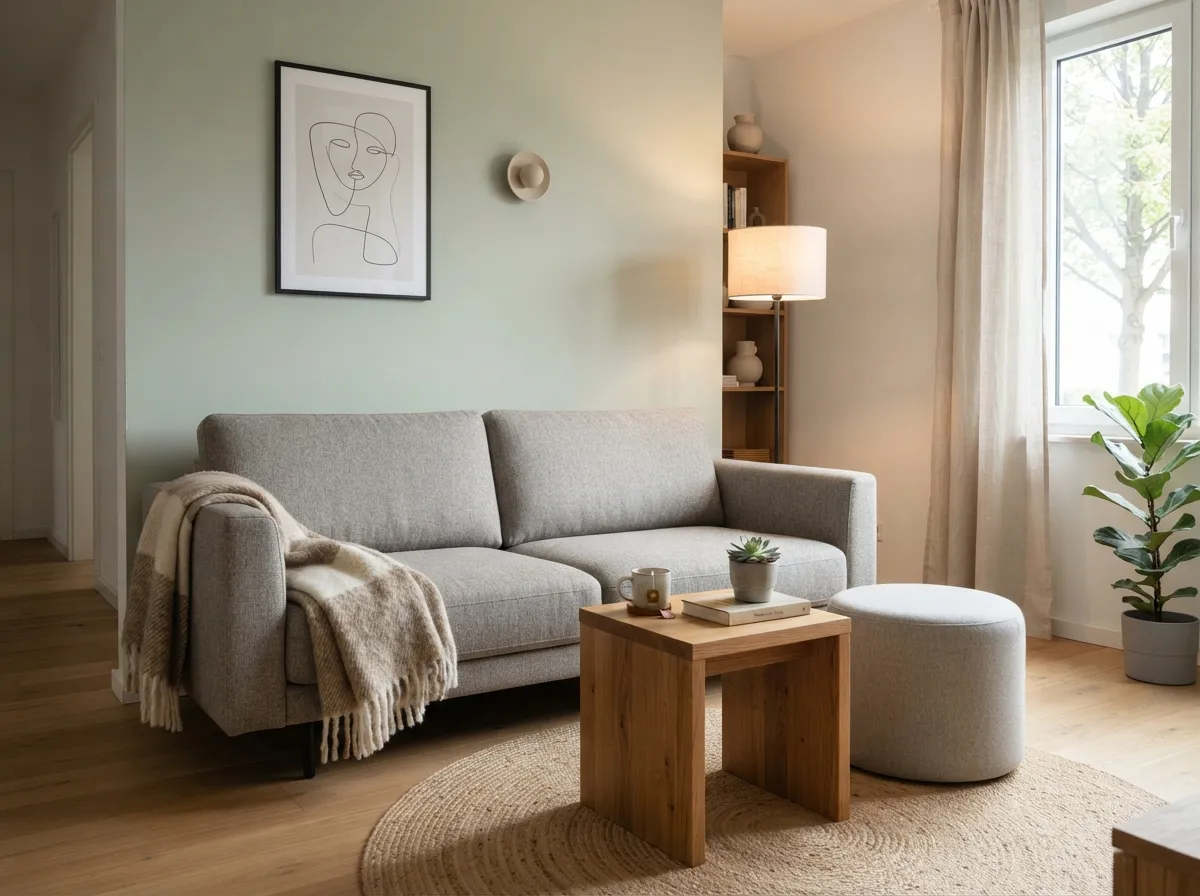
When space is at a premium, selecting compact yet comfortable seating becomes a priority. You want pieces that fit your apartment’s scale without overwhelming the room.
Look for designs with clean lines and a smaller footprint. Consider seating options that offer hidden functionalities, such as ottomans with storage or sofas with pull-out beds for guests.
These multi-purpose items help maximize utility in a minimalist setting. Ensure they still provide ample comfort for daily relaxation.
The material choice is also important; durable, easy-to-maintain fabrics in neutral tones are ideal. They contribute to a calm visual aesthetic while standing up to everyday use.
Prioritize pieces that invite you to sit and unwind. Comfort should never be sacrificed for size.
The right compact seating provides a cozy spot to relax, making your downsized apartment feel truly like home.
29. Focus on Quality Over Trend-Driven Pieces
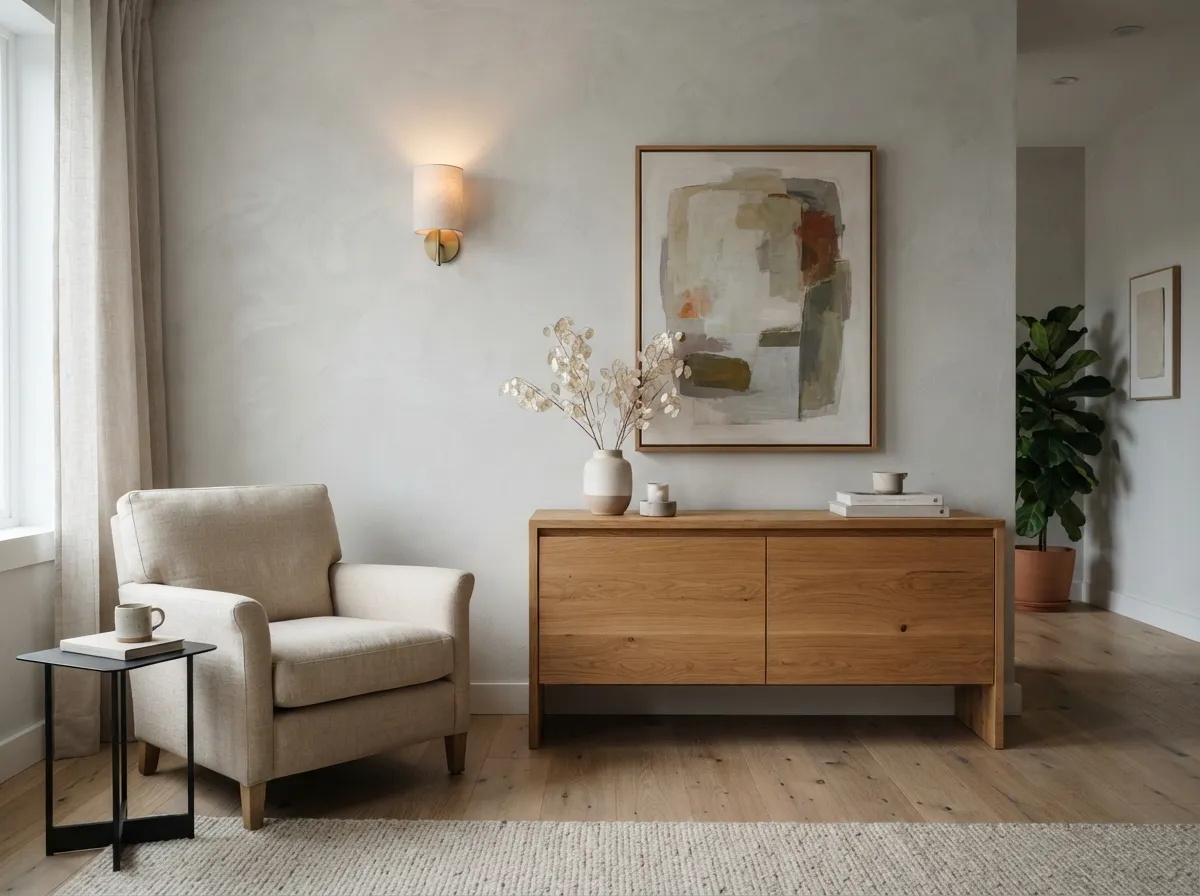
In a minimalist apartment, the emphasis shifts from quantity to the enduring quality of your possessions. Investing in well-made, timeless pieces is a wise decision, particularly when downsizing.
These items are built to last, offering durability and longevity. Choosing quality means you avoid the need for frequent replacements, which aligns perfectly with minimalist principles.
Such pieces often feature classic designs that do not fall victim to fleeting trends. They maintain their appeal and functionality over many years.
A high-quality item, whether it’s a solid wood dining table or a well-constructed armchair, brings a sense of permanence and integrity to your home. It contributes to a calm and considered environment.
This approach supports a more sustainable way of living. Ultimately, focusing on quality enhances the overall feel and aesthetic of your apartment.
It creates a cohesive, refined space that truly reflects your values.
Embracing minimalist apartment decor transforms downsizing into an opportunity for a refreshed living experience. By thoughtfully selecting pieces, maximizing function, and curating your environment, you’ve crafted a home that feels spacious and uniquely yours. Enjoy the calm and clarity your new, intentional space brings.