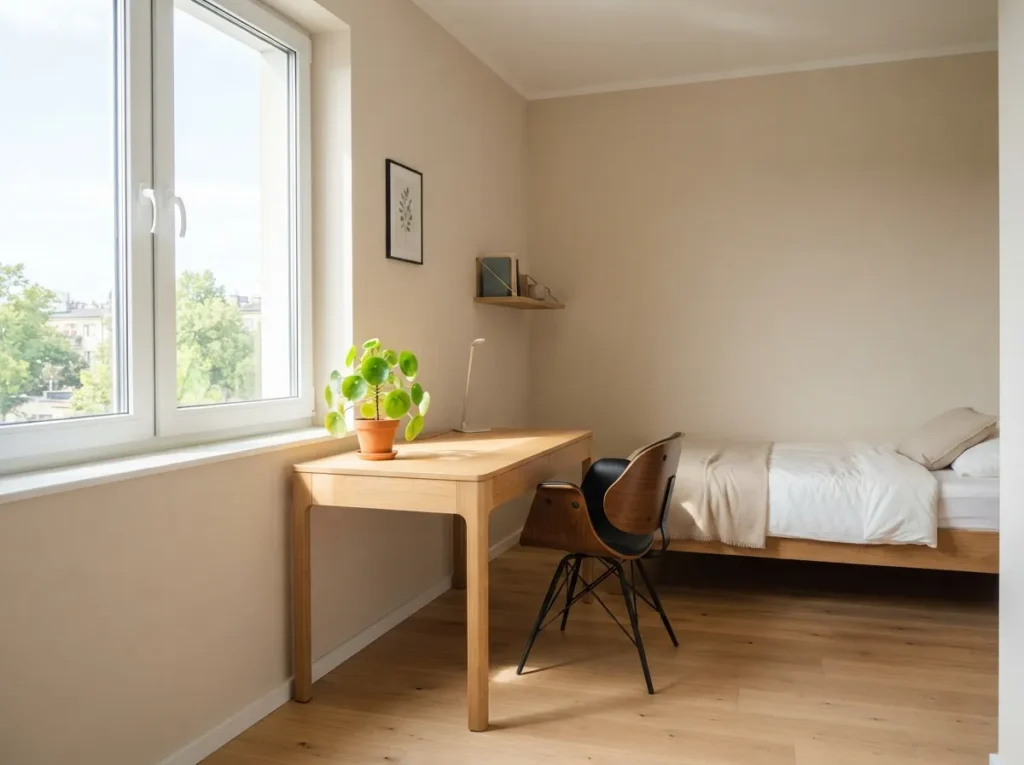
Living minimally as a student doesn’t mean sacrificing style. Discover practical, budget-friendly ways to transform your apartment into a calm, functional, and aesthetically pleasing sanctuary. These ideas focus on smart choices to create a serene space without breaking the bank.
1. Declutter Ruthlessly First
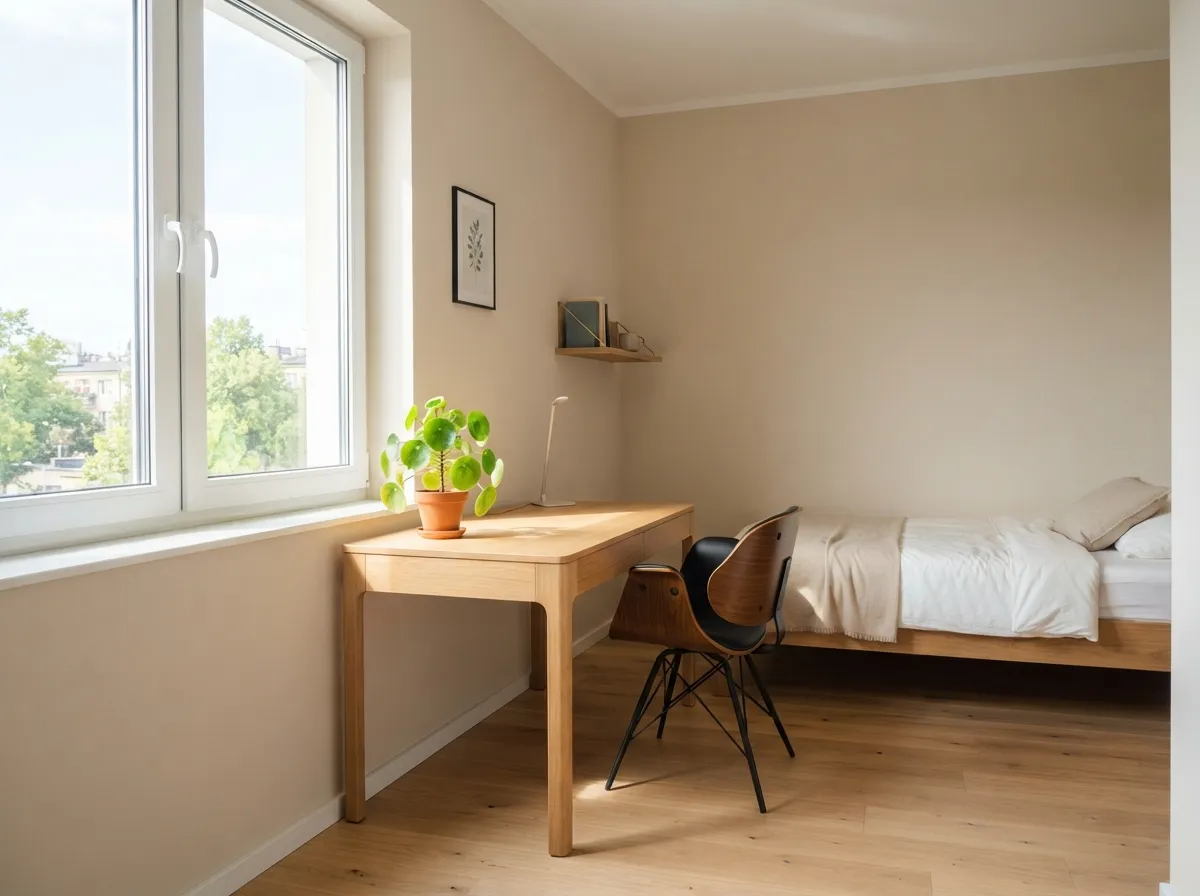
To truly embrace a minimalist aesthetic, the first crucial step is to declutter your space ruthlessly. This thoughtful process removes items that no longer serve a purpose, immediately creating an airy and spacious feeling in your apartment.
Notice how the soft beige walls reflect the abundant natural light, enhancing this sense of openness. Removing excess clutter instantly makes even a small room feel significantly larger and more inviting, preparing it for essential, functional pieces.
Imagine the calm clarity a decluttered environment offers. With only essential items, like the sleek wooden desk and a comfortable chair, your mind can focus better, free from visual distractions.
This initial purge sets a strong foundation, allowing the simple beauty of chosen pieces, such as the vibrant green potted plant, to truly stand out.
2. Embrace Multi-Functional Furniture
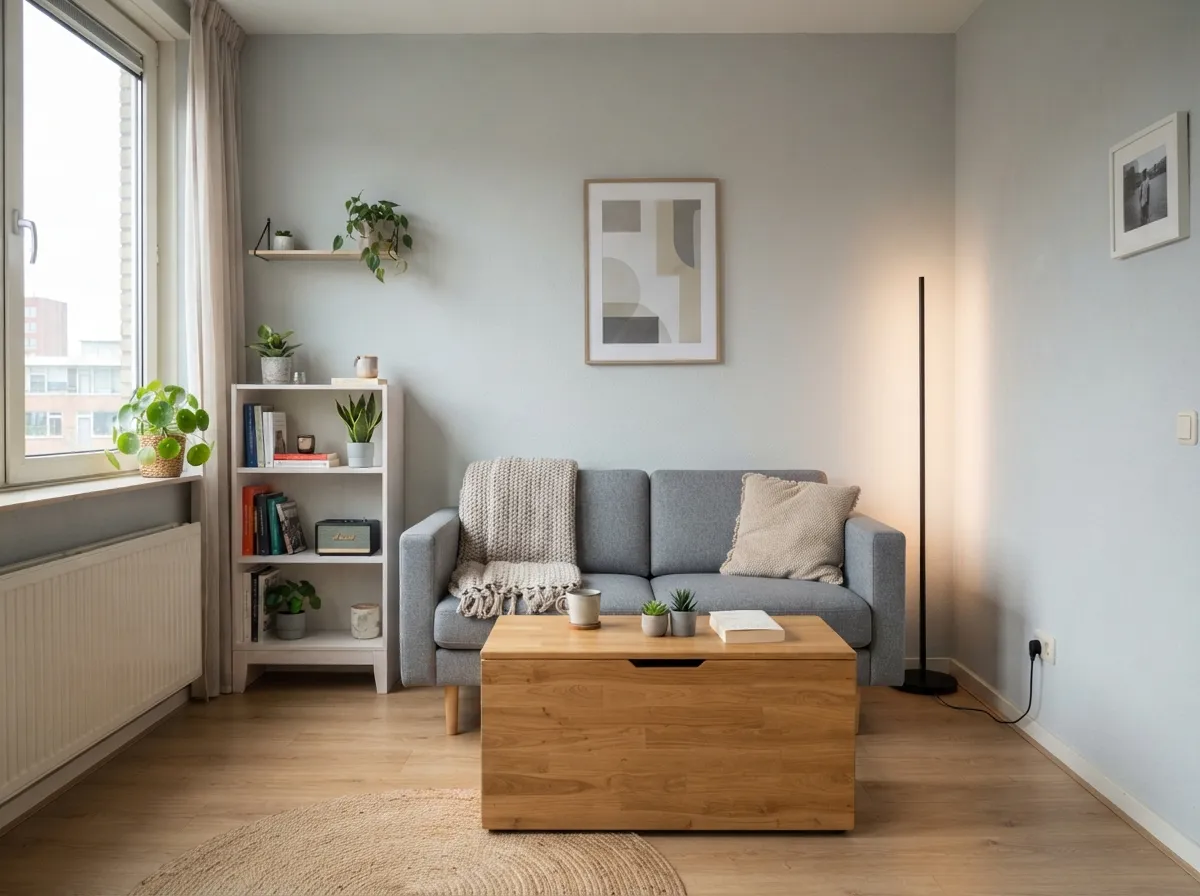
In a student apartment, every square inch counts, making multi-functional furniture an absolute game-changer. These clever pieces work harder, often serving two or three purposes, ideal for compact living.
Consider the sleek grey storage ottoman positioned in front of the sofa; it functions as both a comfortable footrest and a coffee table. Crucially, its hidden compartment offers discrete storage for blankets or books, keeping your space tidy.
This approach allows you to maximize utility without overcrowding the room. Each item, like the tall, minimalist floor lamp beside the sofa, contributes to both function and a clean aesthetic.
Choosing furniture that adapts to your needs frees up valuable floor space, creating a more open and organized environment.
3. Hunt for Secondhand Treasures
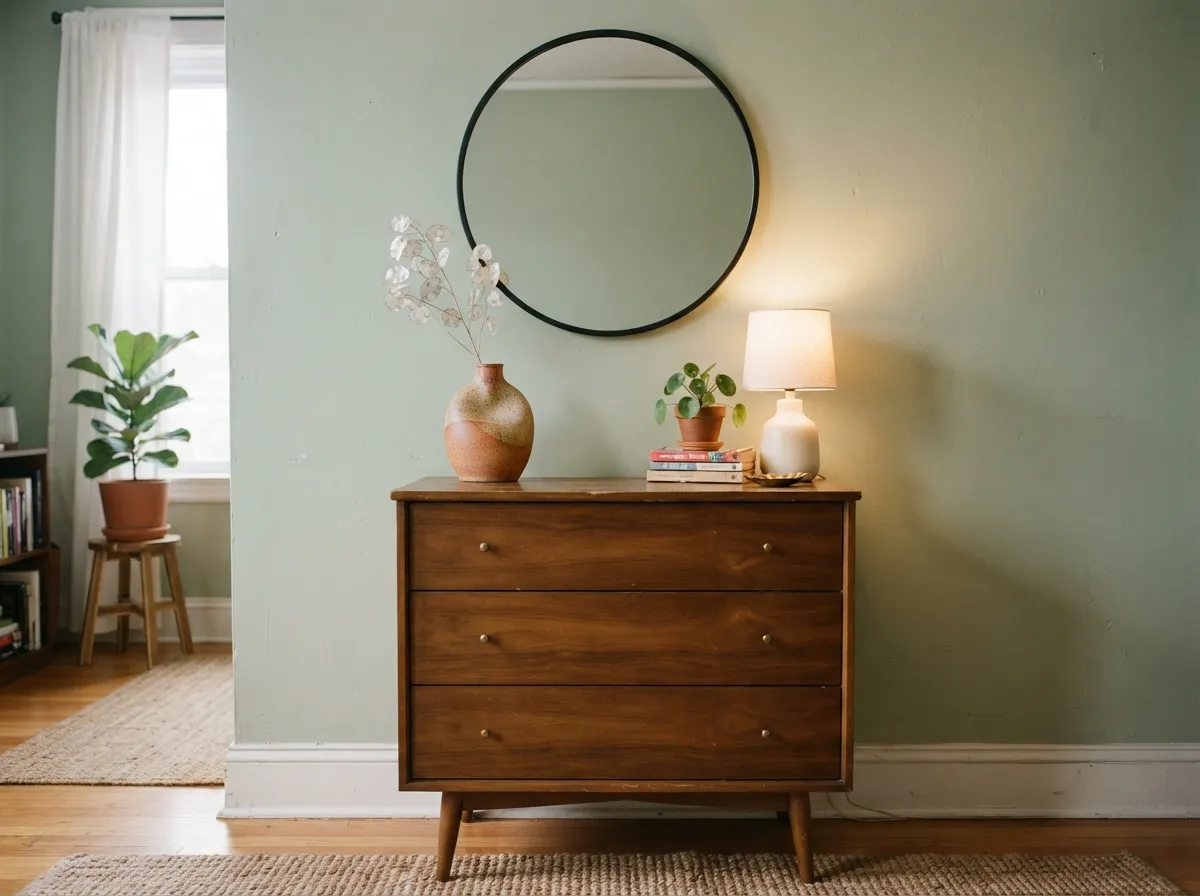
Furnishing a minimalist apartment on a student budget doesn’t mean sacrificing style; it means being smart about where you shop. Hunting for secondhand treasures is an eco-friendly and incredibly cost-effective way to find unique pieces.
Consider this charming vintage wooden dresser, perhaps discovered at a local thrift store. Its warm, aged wood grain adds instant character and history to the room, far beyond what new, mass-produced items can offer.
Paired with a simple, handcrafted ceramic vase holding a dried flower and a round mirror above, the dresser becomes a stylish focal point. These pre-loved items bring personality, enhancing your minimalist aesthetic.
Embracing secondhand finds also supports sustainability, giving items a second life. This thoughtful approach helps you create a home that feels uniquely yours.
4. DIY Simple Wall Art
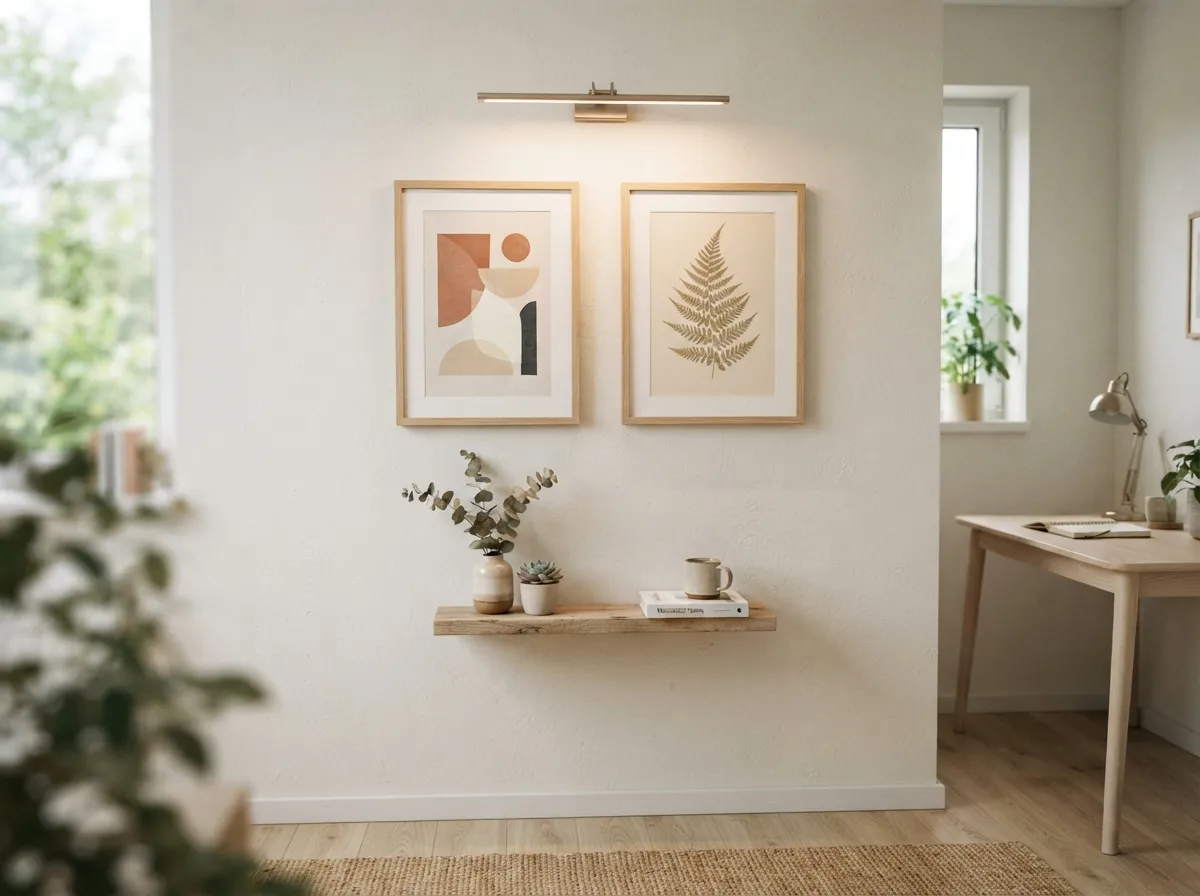
Personalizing your apartment doesn’t require a large budget when you unleash your creativity. DIY simple wall art offers an affordable and deeply satisfying way to infuse your personality into a minimalist space.
Consider a gallery wall featuring a few framed pieces, like the abstract geometric design in muted terracotta and beige tones. This piece, along with a delicate pressed botanical print, adds texture and visual interest without overwhelming the room’s clean lines.
These handmade additions are far more meaningful than store-bought decor. The simple frames, perhaps in natural wood, unify the collection, making the arrangement feel cohesive and intentional.
Such artistic touches elevate the aesthetic, transforming a plain wall into a focal point. They perfectly complement the warm glow from the subtle picture light above, creating an inviting atmosphere.
5. Utilize Vertical Storage Space
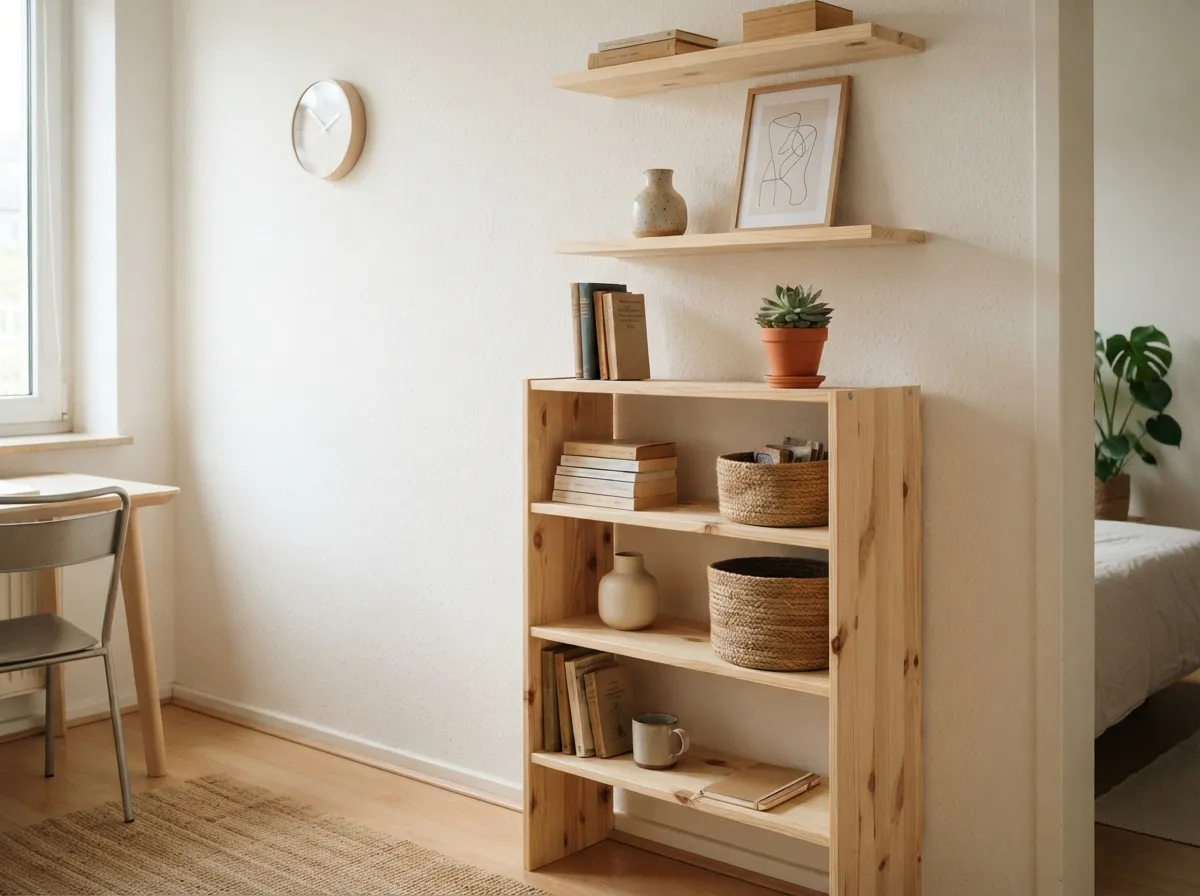
When living in a student apartment, floor space is often limited, making vertical storage your best friend. Thinking upwards allows you to maximize storage capacity without making your room feel cramped or cluttered.
Consider the tall, narrow open shelving unit featured here, crafted from light wood. It provides ample space for essentials, from neatly organized books to minimalist storage boxes, keeping everything accessible yet out of the way.
Above the main unit, simple floating shelves offer additional display opportunities. They are perfect for showcasing a small potted plant or a few decorative items, adding personality without consuming precious horizontal space.
This strategic use of height creates an illusion of a larger room, drawing the eye upwards. It’s an effective way to keep your minimalist student apartment functional and tidy.
6. Invest in Neutral Base Colors
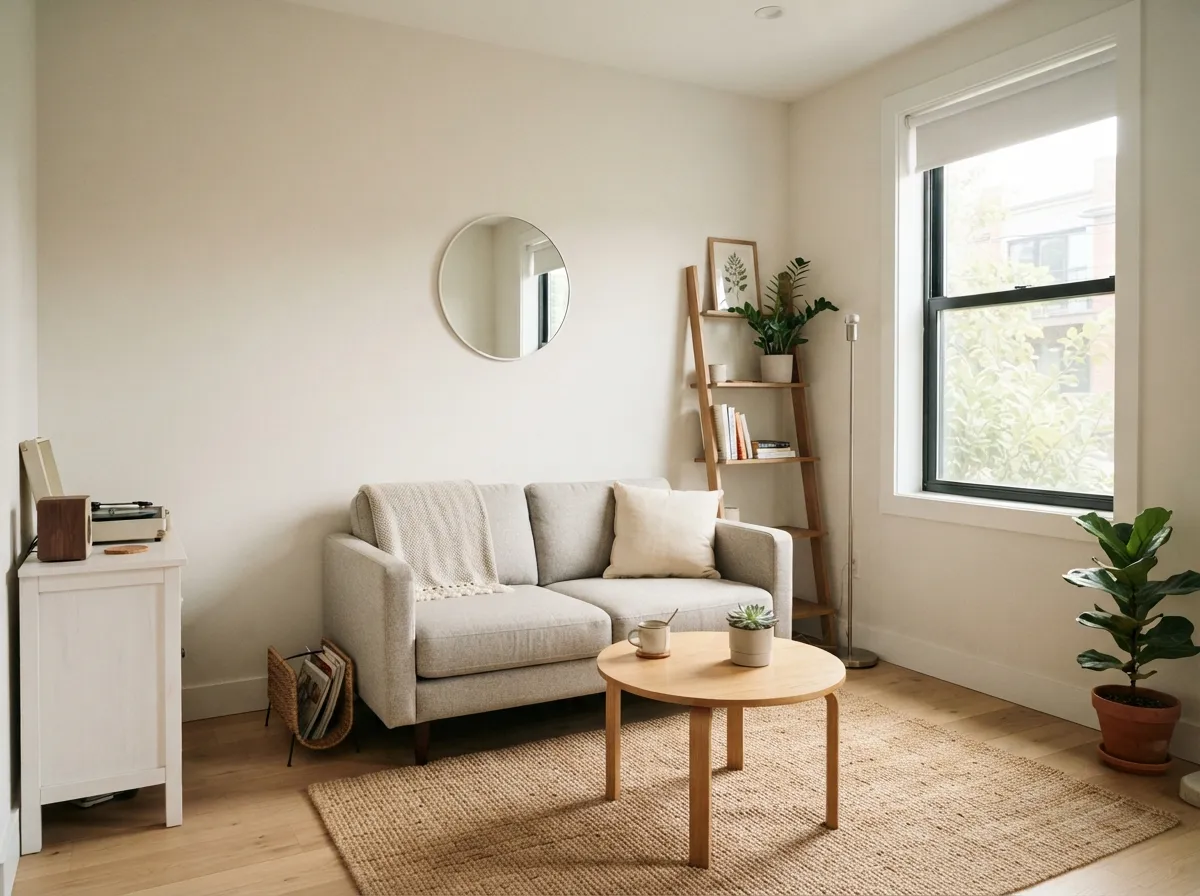
Starting with a neutral base color palette is a smart strategy for a student apartment. Colors like soft gray, cream, or ivory create a calm and spacious backdrop.
This palette not only makes the room feel larger and brighter but is also highly flexible. You can easily add color accents through decor without needing to repaint.
Neutral colors also provide the perfect foundation for a minimalist style. Choose wall paint or main furniture pieces like a small sofa and storage shelves in these shades.
This is a budget-friendly long-term investment, as neutral colors are timeless and easy to mix with various decor themes that might change throughout your college years.
7. Add Warmth with Textiles
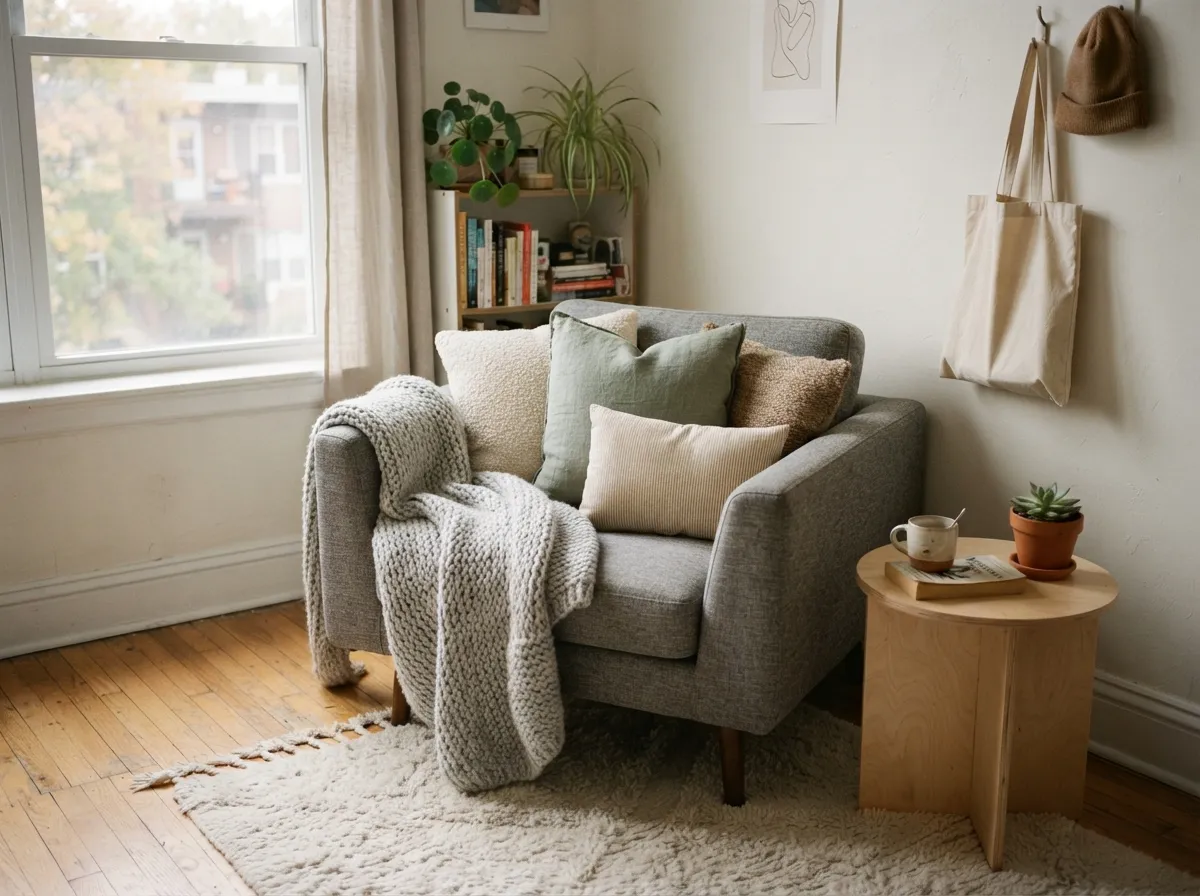
After establishing a neutral base, it’s time to add warmth and texture through textiles. A knitted throw or decorative sofa cushions are instant ways to make the room feel cozier and more personal.
Choose textiles with soft materials like cotton, chunky knits, or faux fur in colors that complement your neutral palette. For instance, a light gray knitted blanket can be draped over a chair.
Add a few pillows with different textures, such as striped or soft velvet cushions, for visual dimension. Don’t forget a small area rug that can provide a soft touch underfoot.
These elements not only enhance comfort but also add layers of style without spending a lot of money, making the apartment more welcoming and inviting.
8. Bring in Greenery with Budget Plants
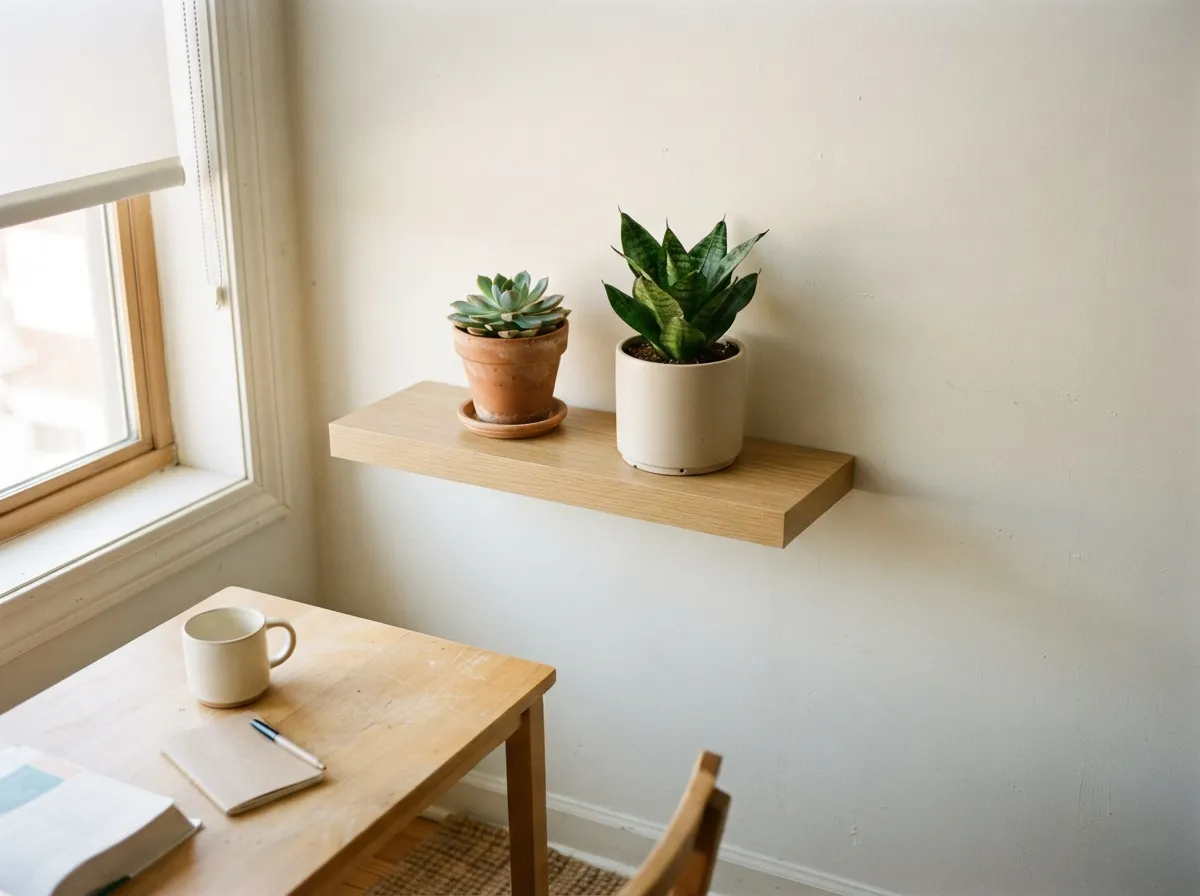
Bringing greenery into the apartment is a simple way to refresh the atmosphere. Plants not only beautify the room but can also improve your air quality and mood.
Choose easy-to-care-for and budget-friendly plants like small succulents, snake plants, or pothos. They don’t require much attention, making them perfect for a busy student’s schedule.
Place succulents in simple terracotta pots on your study desk, or put a snake plant in a minimalist ceramic pot on a bookshelf. You can also hang pothos in a corner of the room.
These plants add a touch of life and natural color to a minimalist space. Their presence creates a calmer and more focused atmosphere for studying or relaxing.
9. Create a Dedicated Study Zone
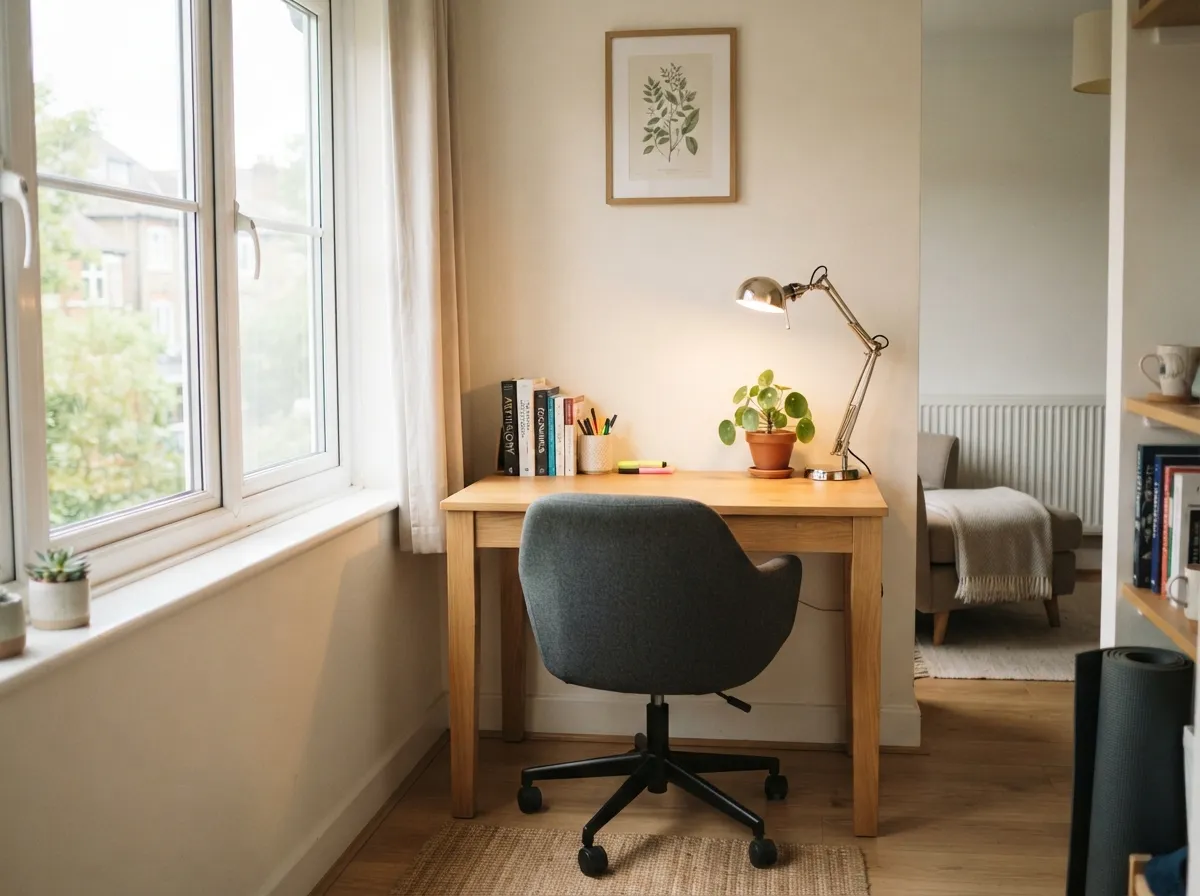
Having a separate study area is crucial for a student’s focus and productivity. It helps you separate study time from downtime, even in a small room.
Choose a compact and functional study desk, ideally made of light wood. Pair it with an ergonomic and comfortable chair, even if it’s a simple chair with good cushioning.
Ensure this zone has adequate task lighting, such as a desk lamp with warm light. Organize your books and study supplies neatly, perhaps using a minimalist desk organizer.
This zone should be free from distractions and well-organized. A small plant in the corner of the desk can also add a touch of tranquility, creating an environment conducive to concentration.
10. Maximize Natural Light
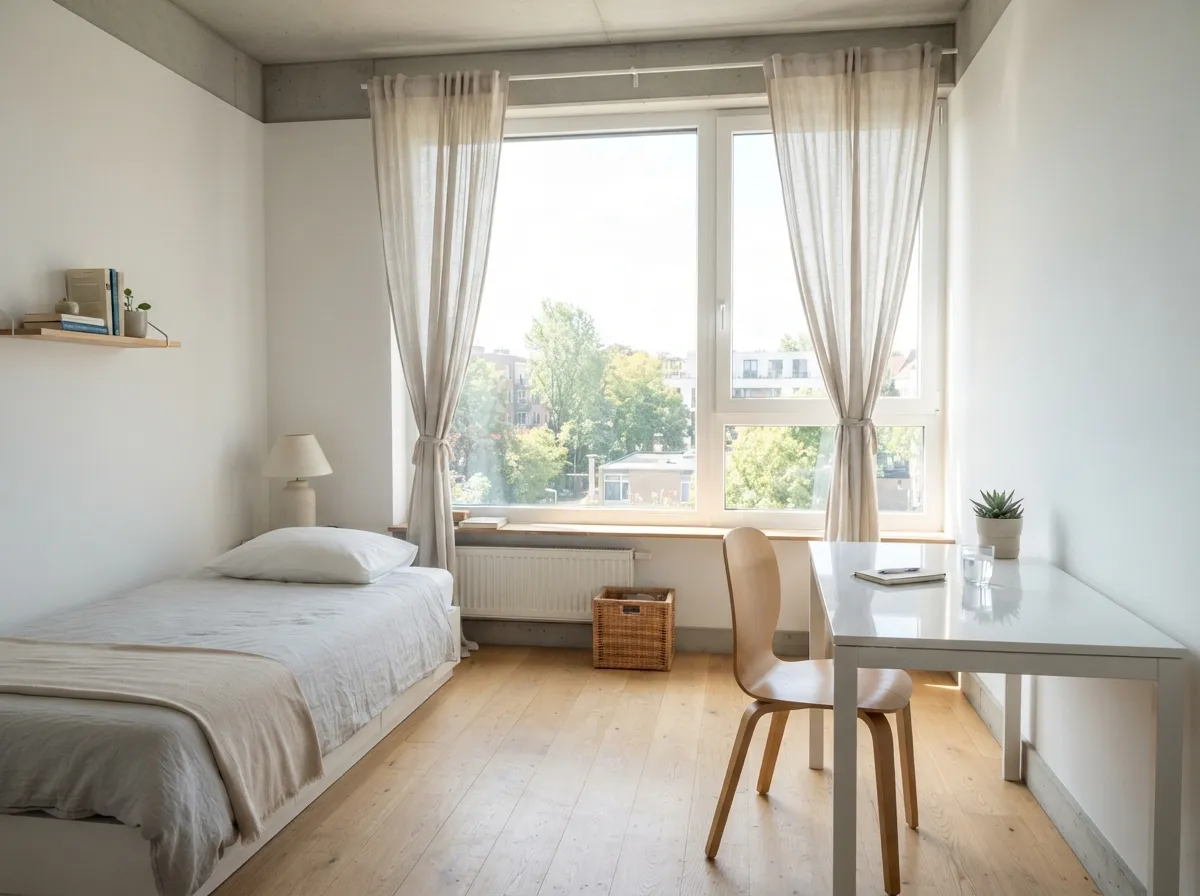
Maximizing natural light is one of the most effective ways to make a small apartment feel larger and brighter. Sunlight can drastically transform the atmosphere of a room.
Remove thick curtains and replace them with light-colored sheer curtains, or leave the windows completely open if privacy allows. This allows light to enter unobstructed.
Arrange your furniture placement so it doesn’t block the windows. For example, place your study desk near the window to get maximum illumination while studying.
Maximizing natural light not only saves energy but also boosts your mood. The room will feel more spacious, fresh, and more pleasant to live in, creating an energetic and positive environment.
11. Use Mirrors to Expand Space
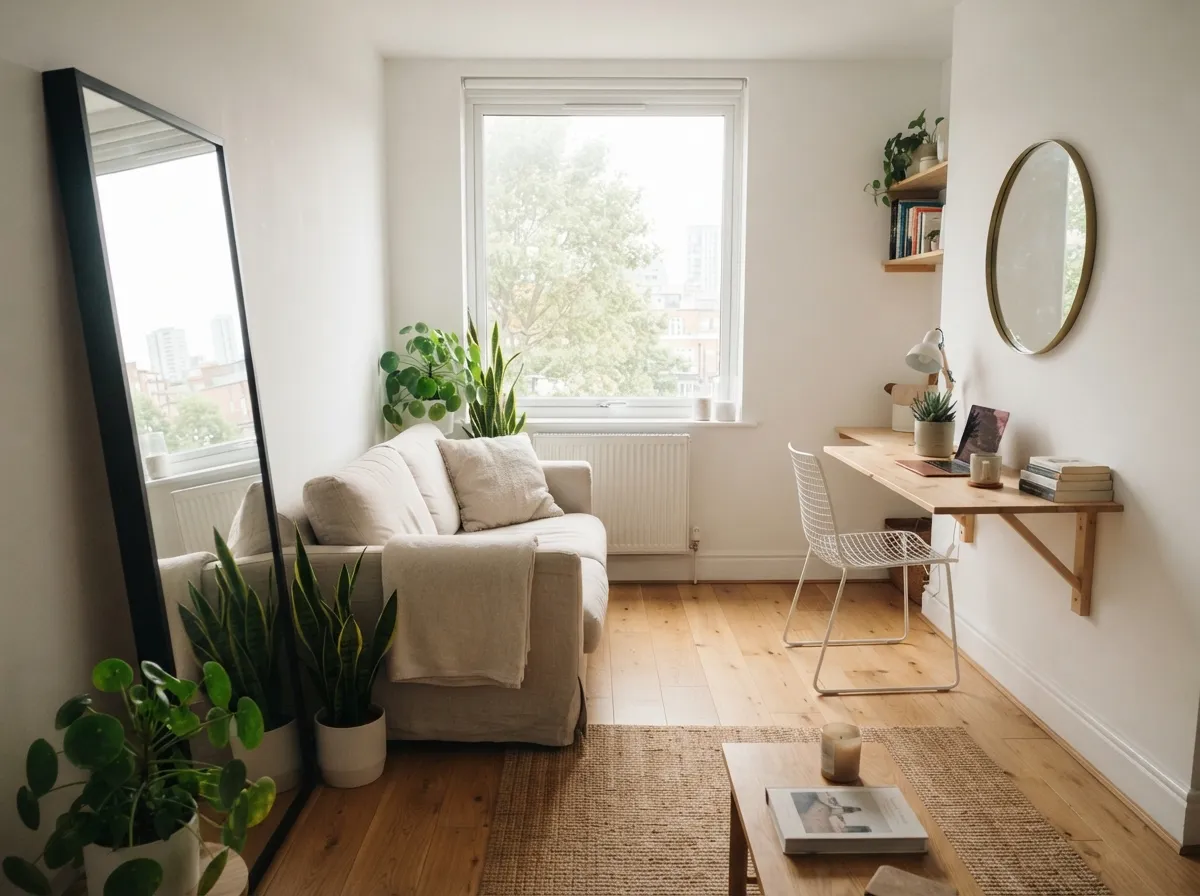
Mirrors are incredible tools for creating an illusion of larger space, a vital trick in any student apartment. By strategically placing them, you can visually expand the room’s dimensions and enhance natural light.
Consider a large, floor-length mirror leaning against a wall, reflecting a window. This instantly doubles the perceived light and depth, making a compact area feel more open and airy.
It is a simple yet powerful design choice.
A decorative round mirror placed above a small study desk also adds a touch of elegance while reflecting light from nearby lamps. This not only brightens the workspace but also integrates perfectly with minimalist decor.
Such additions are budget-friendly yet highly effective.
12. Smart Under-Bed Storage Solutions
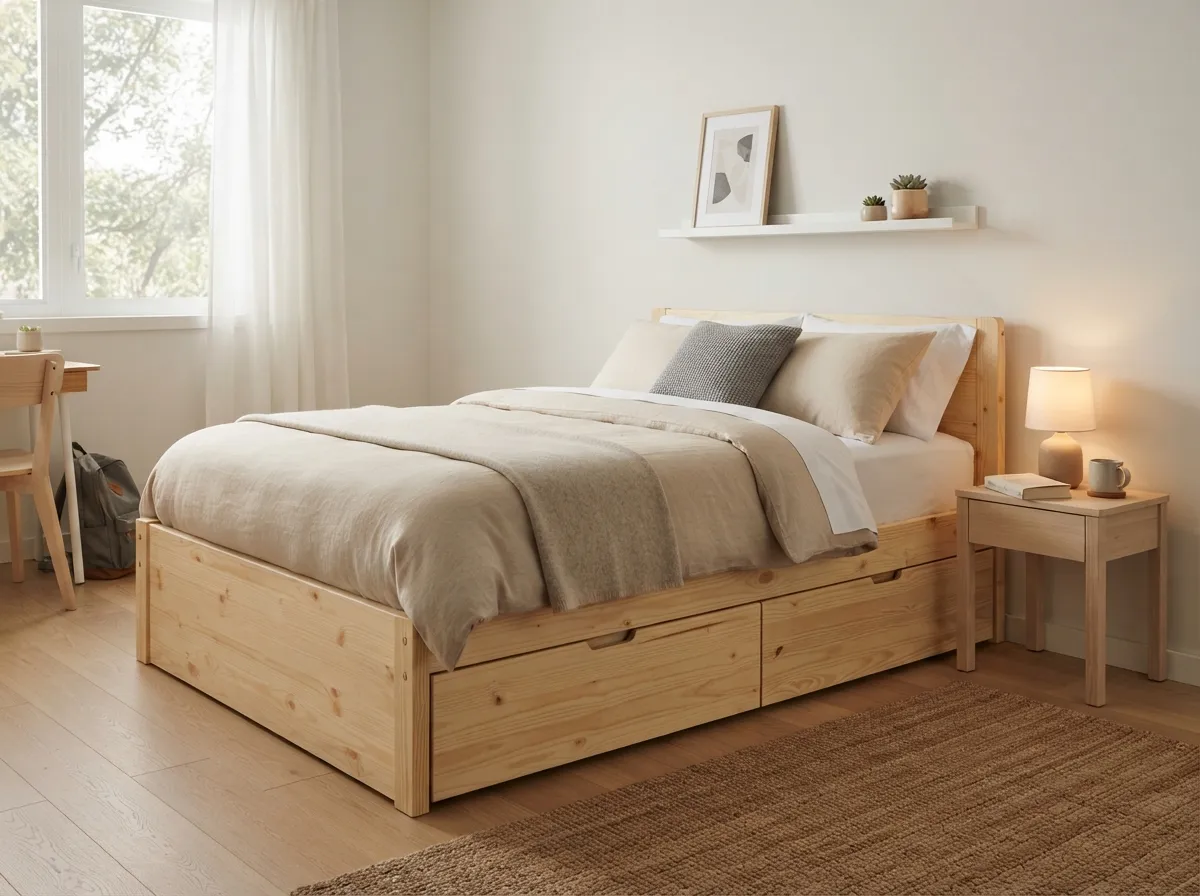
The often-overlooked space beneath your bed offers significant storage potential, especially crucial in a small student apartment. Utilizing this area effectively helps maintain a clutter-free environment without sacrificing valuable floor space.
Integrated under-bed drawers are an excellent option for stashing extra bedding, seasonal clothes, or study materials. Imagine a clean, light wood bed frame featuring several smooth pull-out drawers, keeping everything neatly out of sight and easily accessible.
This design choice, coupled with a neutral color palette for bedding, creates a serene and highly functional bedroom space. A minimalist nightstand with a small, warm lamp further enhances the calming atmosphere while maximizing every inch.
13. Organize with Storage Bins and Baskets
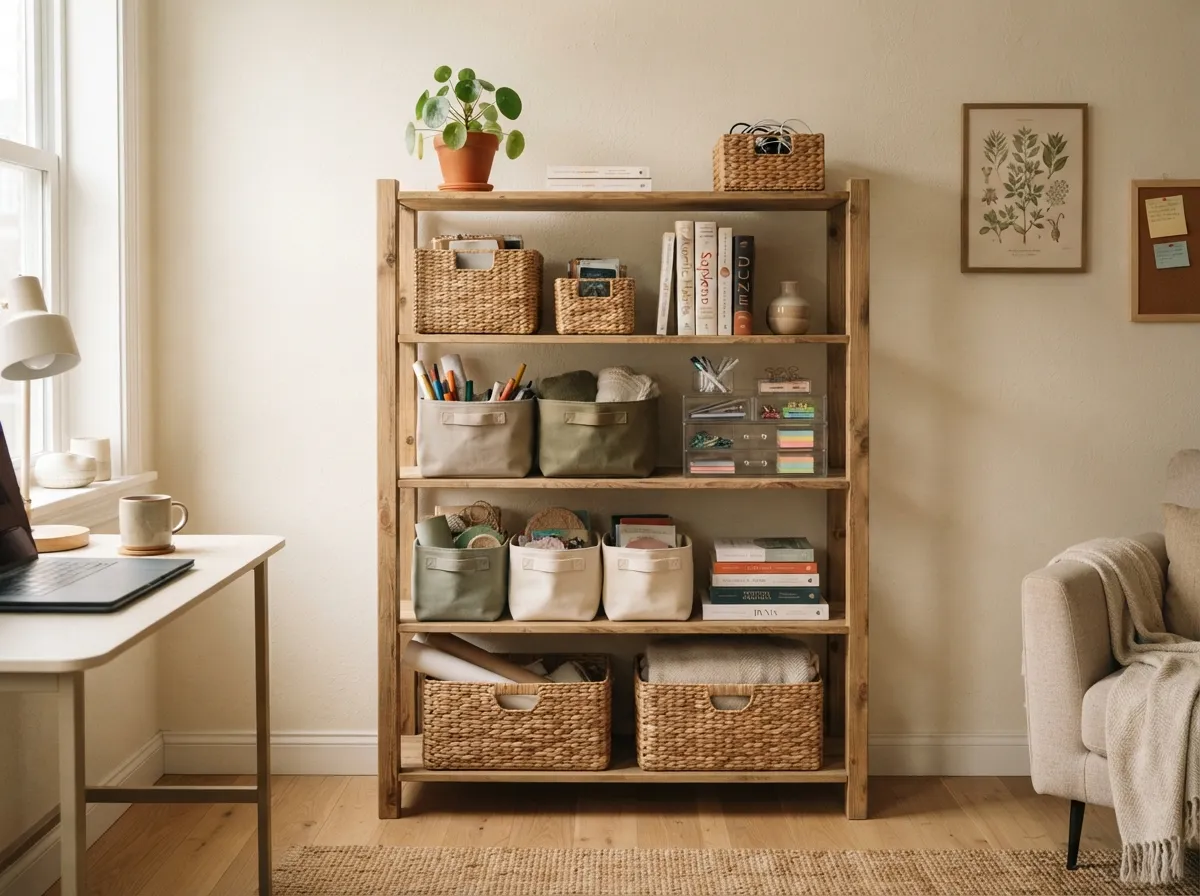
Storage bins and baskets are your best friends for keeping a student apartment tidy and stylish. They offer a versatile way to contain clutter while adding texture and warmth to your decor.
Consider an assortment of woven wicker baskets placed neatly on a natural wood bookshelf. These are perfect for larger items like textbooks or linens, bringing an earthy element to the room.
Soft fabric bins in muted tones can hide smaller essentials within an open wardrobe.
For items you need to see, clear acrylic bins are ideal for organizing desk supplies or toiletries. By combining different materials and sizes, you create a system that is both functional and visually appealing, making everything easy to find.
14. Opt for Open Shelving Wisely
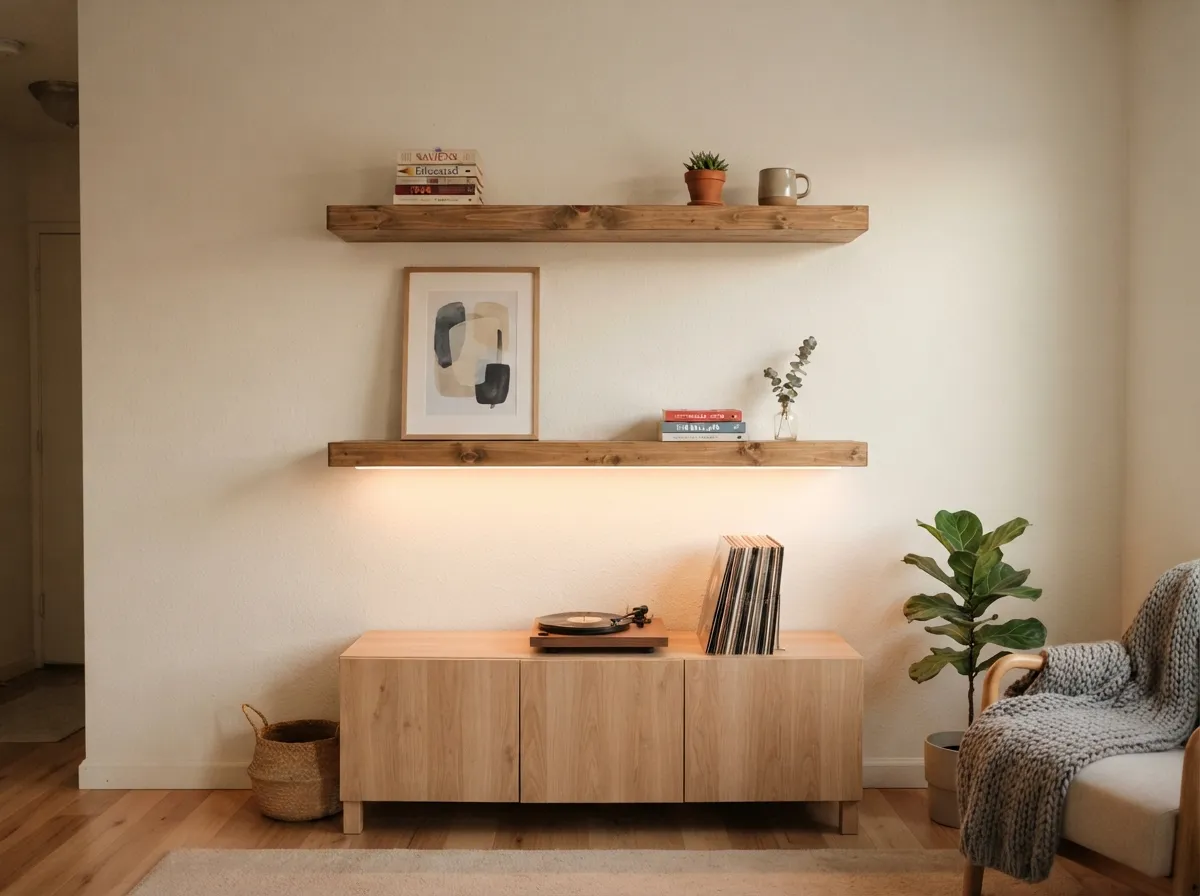
Open shelving provides a sleek, minimalist look that helps a small apartment feel more expansive. The key is curating what you display to avoid any visual clutter, maintaining a sense of calm and order.
Install two long, floating wooden shelves on a prominent wall in your living area or kitchen. Arrange a few carefully selected items, such as a stack of essential books, a small potted succulent, and a simple ceramic mug.
Subtle warm LED strip lighting installed underneath these shelves adds a soft glow, highlighting your chosen pieces. This approach allows you to showcase personality without overwhelming the space, blending practicality with understated elegance.
15. Paint an Accent Wall
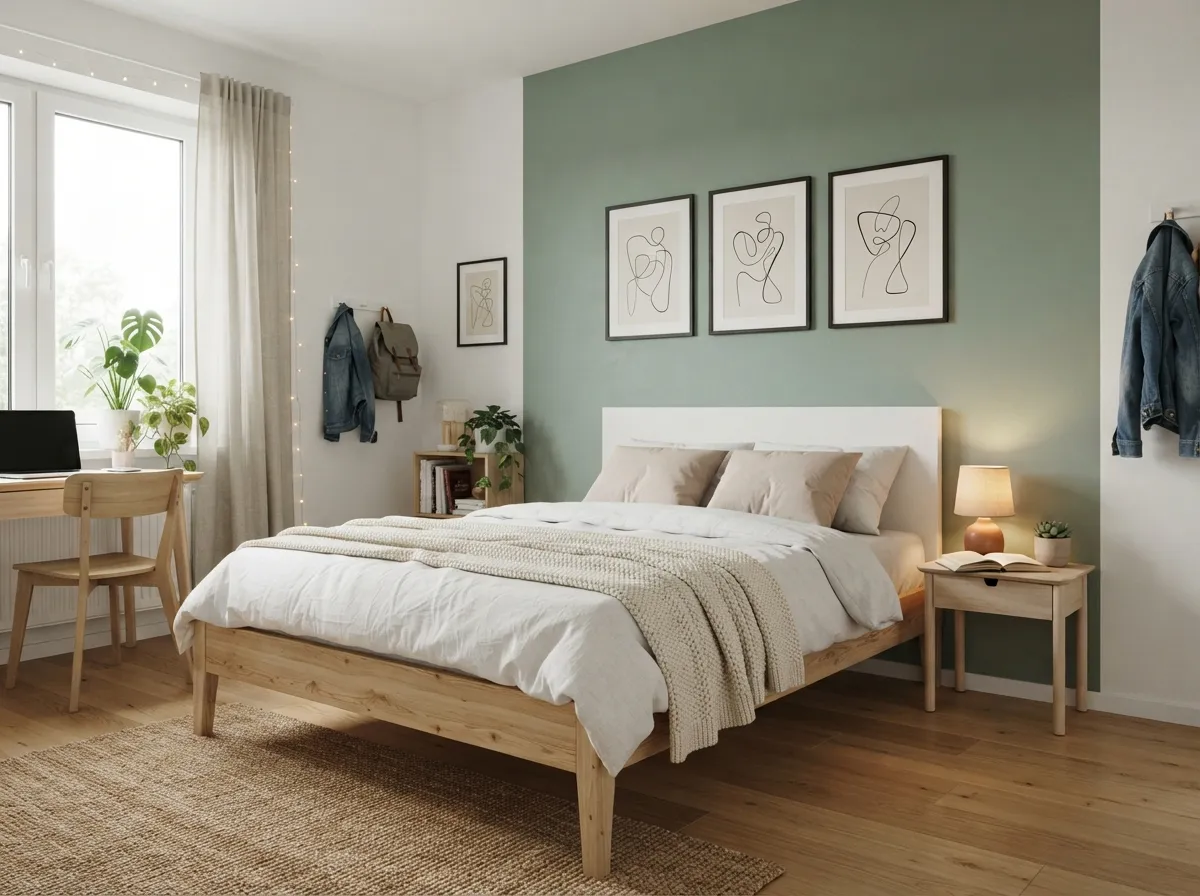
An accent wall is a budget-friendly way to inject personality and define zones in your student apartment without overwhelming the space. It draws the eye and creates a focal point with minimal effort.
Imagine one wall in your bedroom painted a calming muted green, providing a soothing backdrop. Against this tranquil hue, a simple, light-colored wooden bed frame stands out, grounding the room’s design.
Above the bed, a minimalist gallery wall featuring three framed abstract line art prints adds artistic flair. A soft, warm bedside lamp on a small nightstand completes the inviting atmosphere, making the room feel cohesive and stylishly understated.
16. Choose Energy-Efficient Lighting
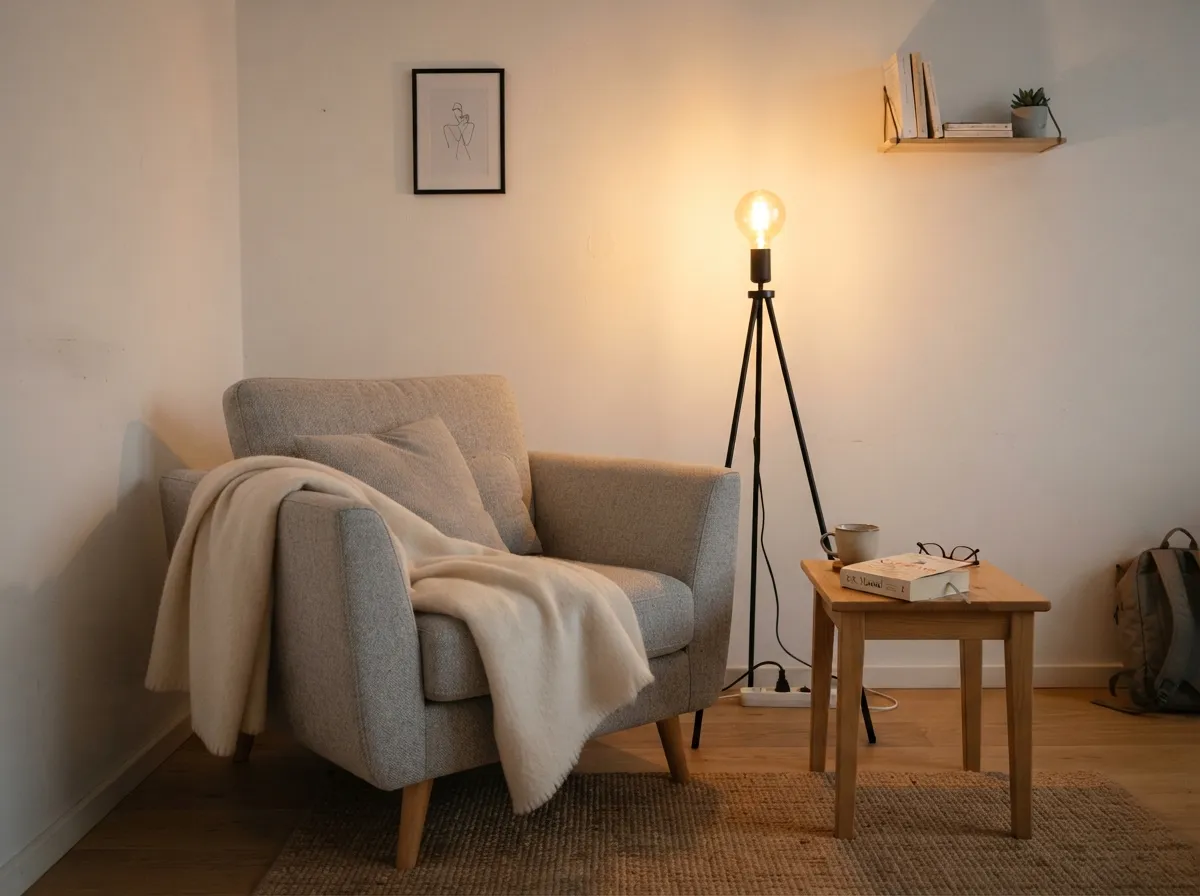
Opting for energy-efficient lighting is a smart move for any student aiming for a minimalist, budget-friendly apartment. LED bulbs, like those in the sleek black floor lamp illuminating the reading nook, consume significantly less power and last much longer than traditional options.
This choice not only helps keep your electricity bills low, freeing up funds for other essentials, but also contributes to a more sustainable living environment. The warm glow from such lighting can truly define the atmosphere.
A carefully chosen warm white LED, perhaps from a simple, elegant desk lamp or a tall floor lamp in a cozy corner, creates an inviting and focused study space. It enhances comfort without adding visual clutter.
Such efficient lighting ensures your apartment remains bright and welcoming, aligning perfectly with a thoughtful, minimalist aesthetic where every element serves a purpose and contributes to peace of mind.
17. Repurpose Old Items Creatively
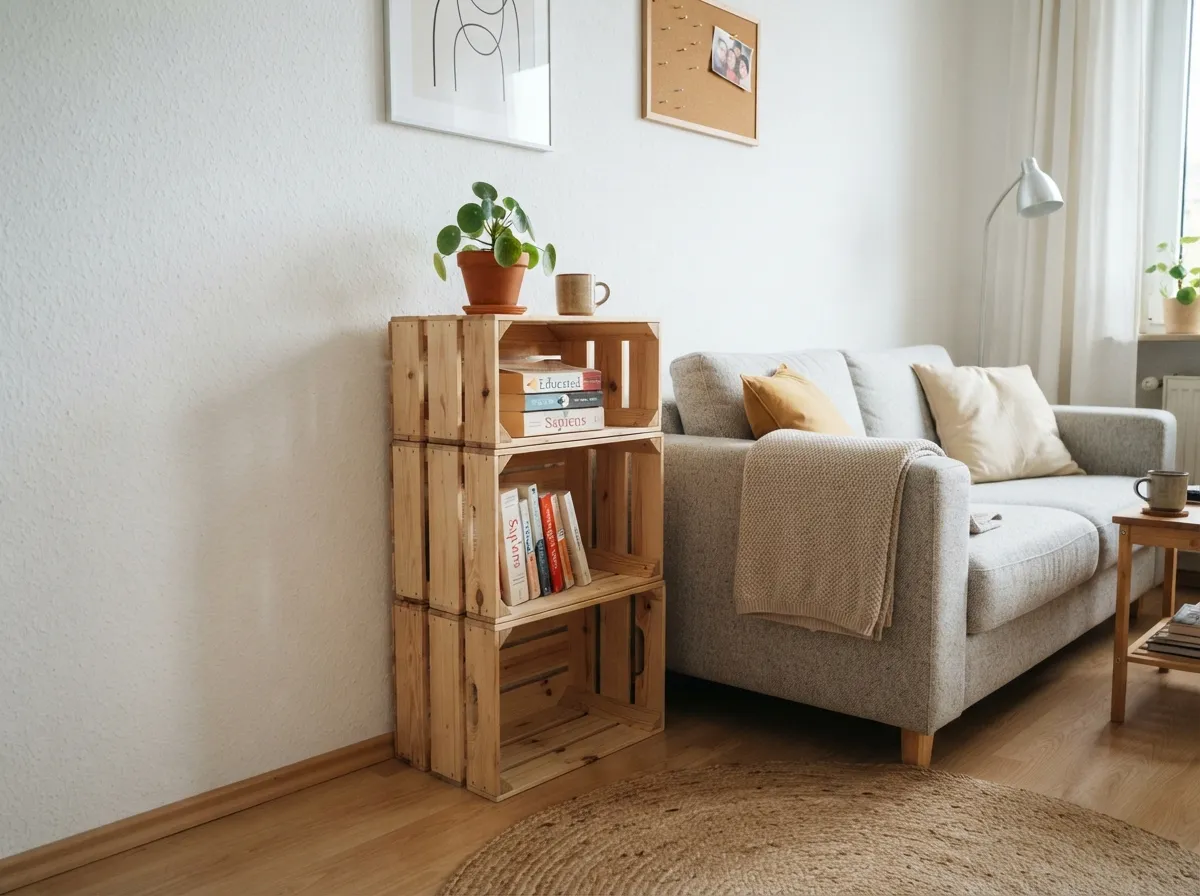
Repurposing old items is a fantastic way to infuse personality and practicality into your minimalist student apartment without breaking the bank. Think beyond their original use to discover new functions for everyday objects.
For instance, a stack of sturdy wooden crates can be brilliantly transformed into a unique, tiered shelving unit, perfect for displaying books or organizing study materials. This adds character and a rustic charm that store-bought furniture often lacks.
Similarly, vintage suitcases can double as unexpected side tables or clever storage solutions, bringing a touch of history and intrigue to your living space. Each repurposed piece tells a story.
This creative approach not only promotes sustainability but also allows you to craft a truly unique and budget-friendly aesthetic. It shows how thoughtful resourcefulness can elevate your minimalist design.
18. Keep Surfaces Clear
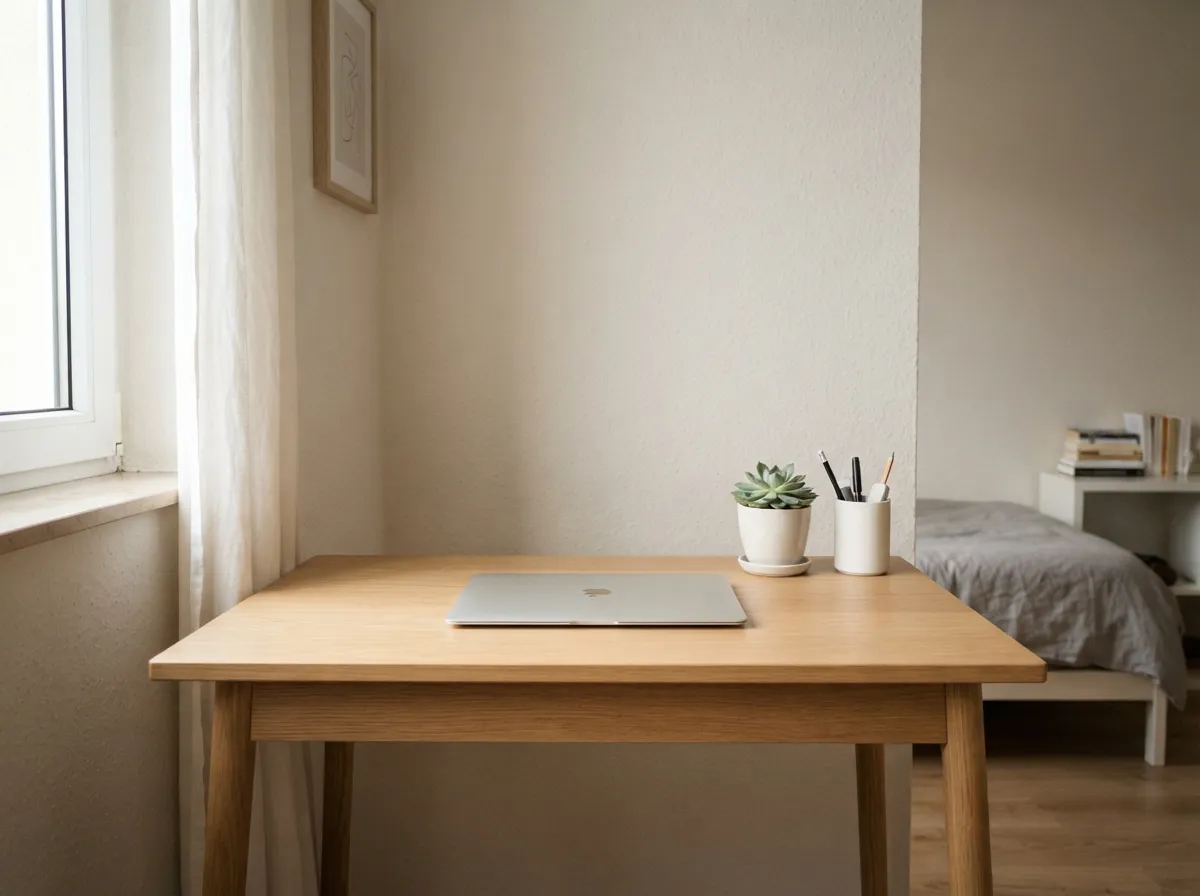
Maintaining clear surfaces is a cornerstone of minimalist design, especially in a student apartment where space is often at a premium. This simple practice instantly creates an illusion of greater spaciousness and order.
Imagine a desk, like the light wooden one depicted, with only essential items present—a laptop, a small, elegant pen holder, and a single succulent. This lack of clutter reduces visual noise, fostering a calmer environment ideal for focused study.
Clear countertops and tabletops also make cleaning significantly easier and quicker, a definite plus for busy students. Designate specific homes for every item to avoid the temptation of leaving things out.
Embracing this habit ensures your apartment feels continually fresh, organized, and conducive to both productivity and relaxation. It’s a powerful strategy for maintaining a serene and functional minimalist space.
19. Create Cohesive Color Palettes
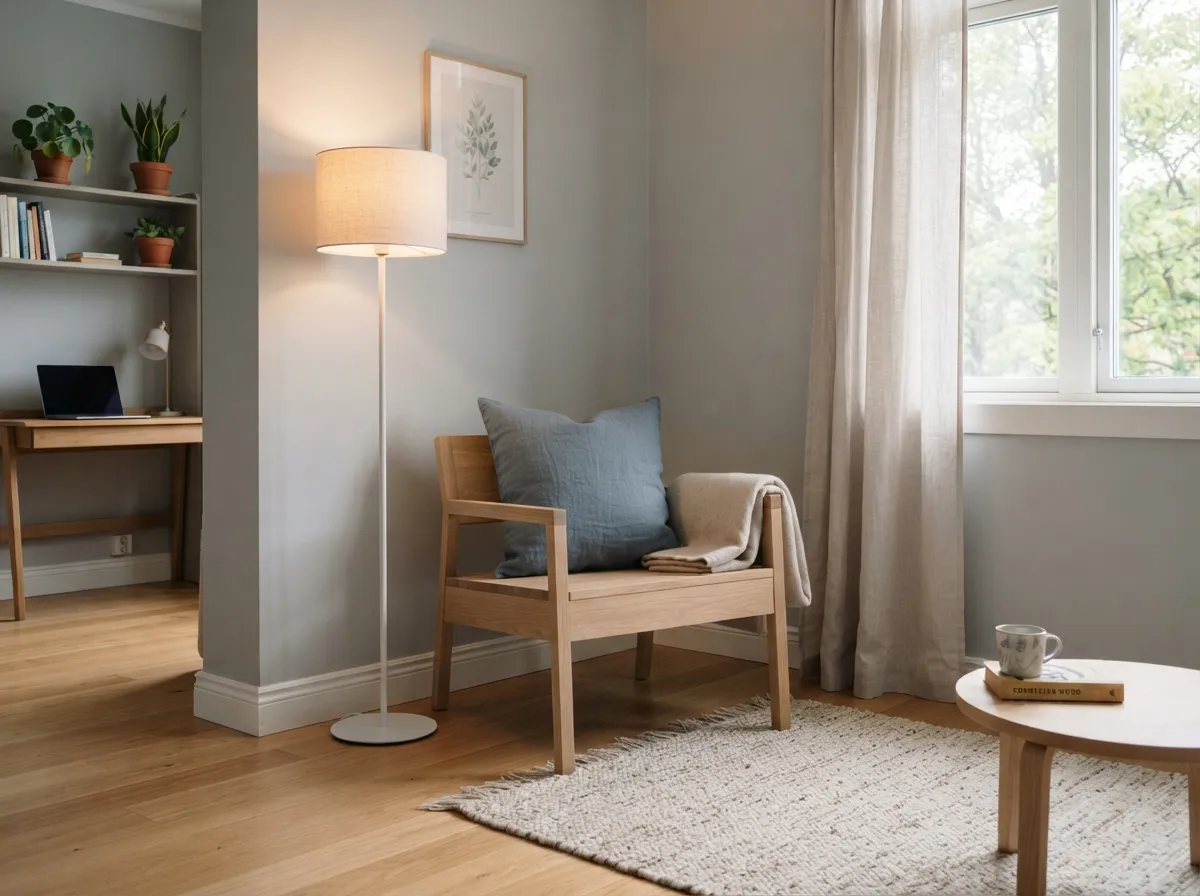
A cohesive color palette is fundamental to achieving a calm and unified minimalist aesthetic in your student apartment. By limiting your main colors and choosing them thoughtfully, you create a harmonious backdrop that feels expansive.
Start with a neutral base, such as soft gray walls or natural light wood tones for furniture, as seen in this cozy corner. These choices provide a serene canvas that prevents the space from feeling overwhelmed or busy.
Introduce subtle accent colors through textiles or small decorative items, like a muted dusty blue throw pillow on a chair. This adds depth and visual interest without disrupting the overall tranquility.
Such a deliberate approach ensures that every element feels intentionally placed and contributes to a peaceful, inviting atmosphere. Your apartment will feel effortlessly put-together and visually soothing.
20. Add Personal Touches Sparingly
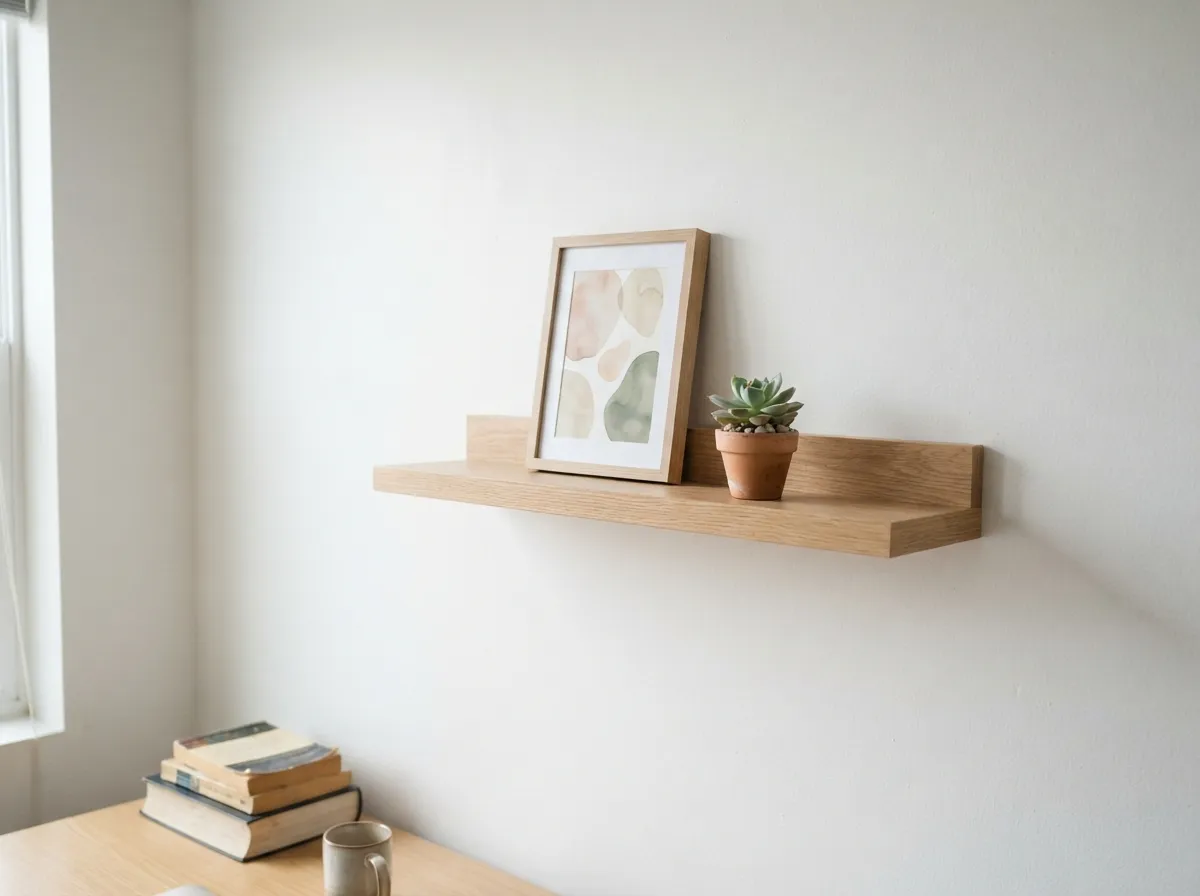
Minimalism doesn’t equate to a sterile environment; rather, it encourages intentionality when adding personal touches. Select only a few cherished items that truly reflect your personality and bring you joy.
Consider a single, small framed abstract art print on a shelf or a carefully chosen potted succulent plant on your desk. These elements, like the ones shown, inject warmth and character without creating visual clutter.
The key is to prioritize quality and meaning over quantity. Each piece should serve a purpose, whether it’s aesthetic pleasure or a sentimental connection, enhancing the space without overwhelming it.
By being selective, your apartment will feel genuinely yours, a comforting space that is both functional and deeply personal. These sparing additions make the minimalist design truly shine.
21. Master the Art of Zone Living
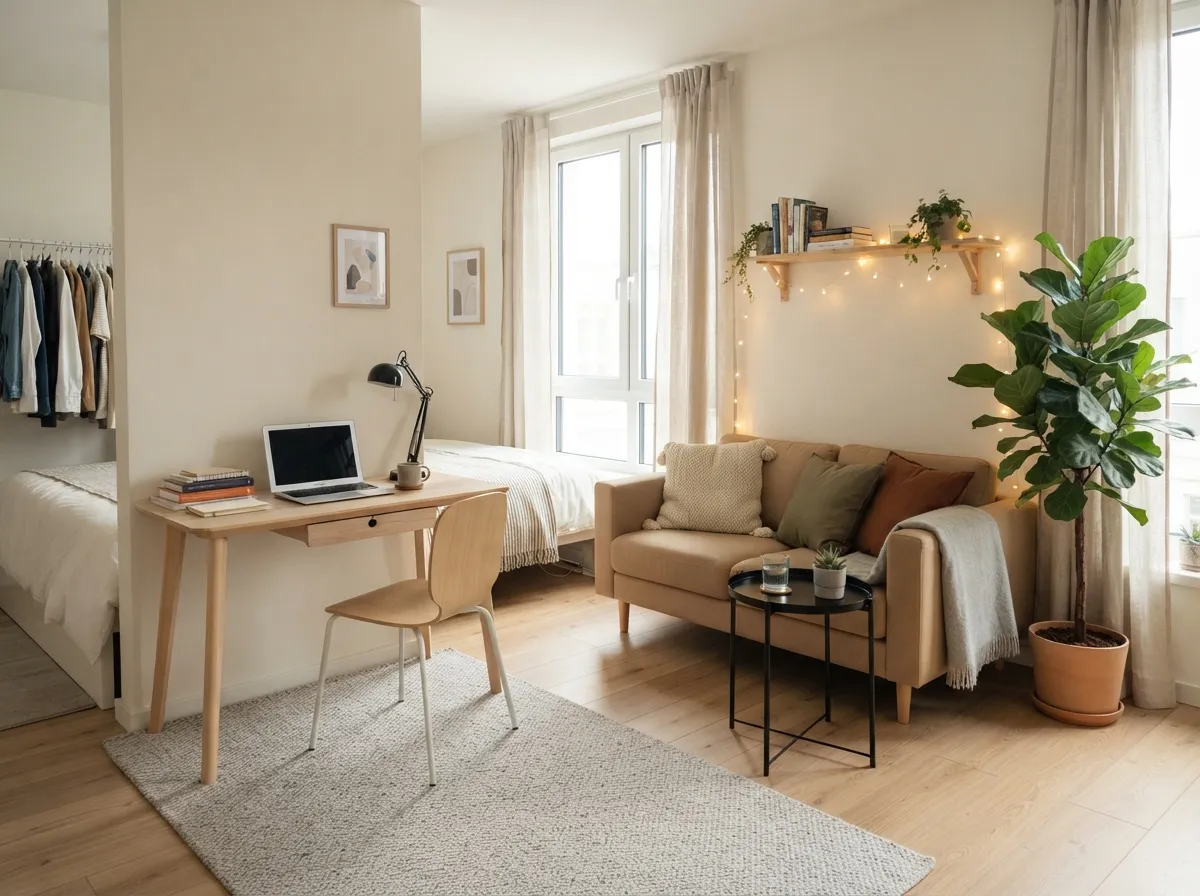
Mastering zone living is vital for student apartments. It smartly defines distinct activity areas without physical walls.
A light grey area rug clearly marks your study corner. This creates a focused spot for your sleek wooden desk.
Adjacent, a compact, warm beige sofa with textured pillows forms a cozy relaxation zone. A minimalist round side table completes it.
Warm white string lights on a shelf add inviting ambiance. This maximizes functionality and comfort beautifully.
Creating a minimalist haven on a student budget is achievable with thoughtful choices. By prioritizing functionality, smart storage, and personal touches, you can design a space that feels both stylish and serene, perfect for focus and relaxation.