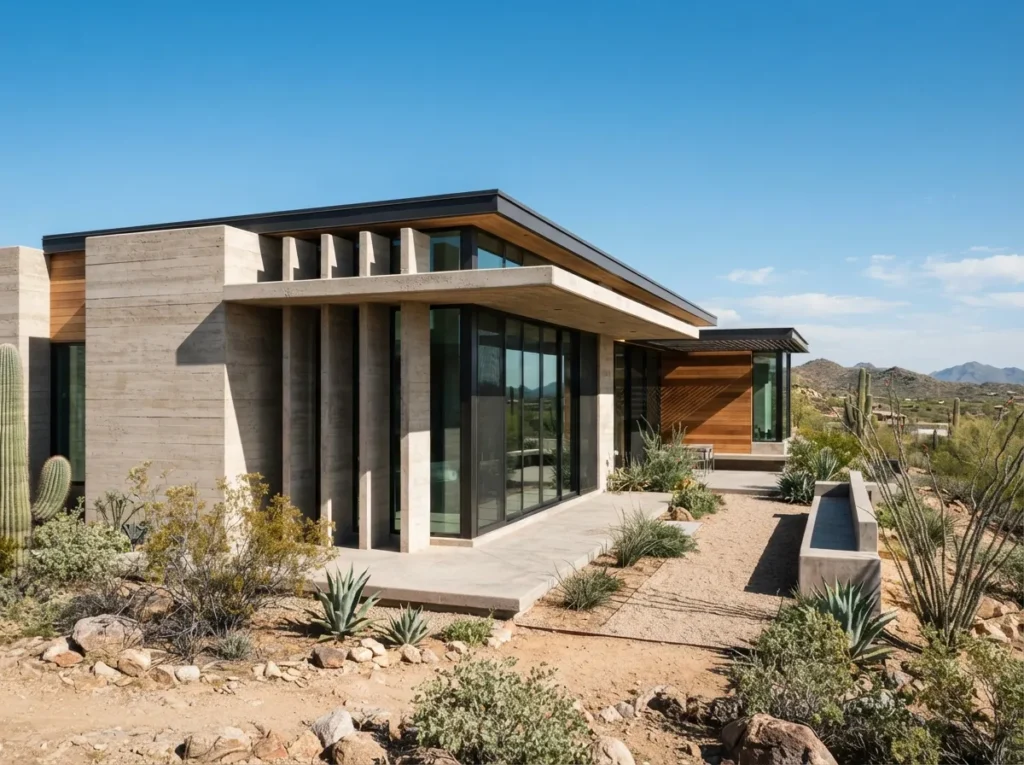
Designing a minimalist desert home requires smart heat and light management. Discover twenty practical interior design strategies to keep your space naturally cool, comfortable, and beautifully sunlit using grounded aesthetic principles.
1. Install Deep Exterior Window Overhangs
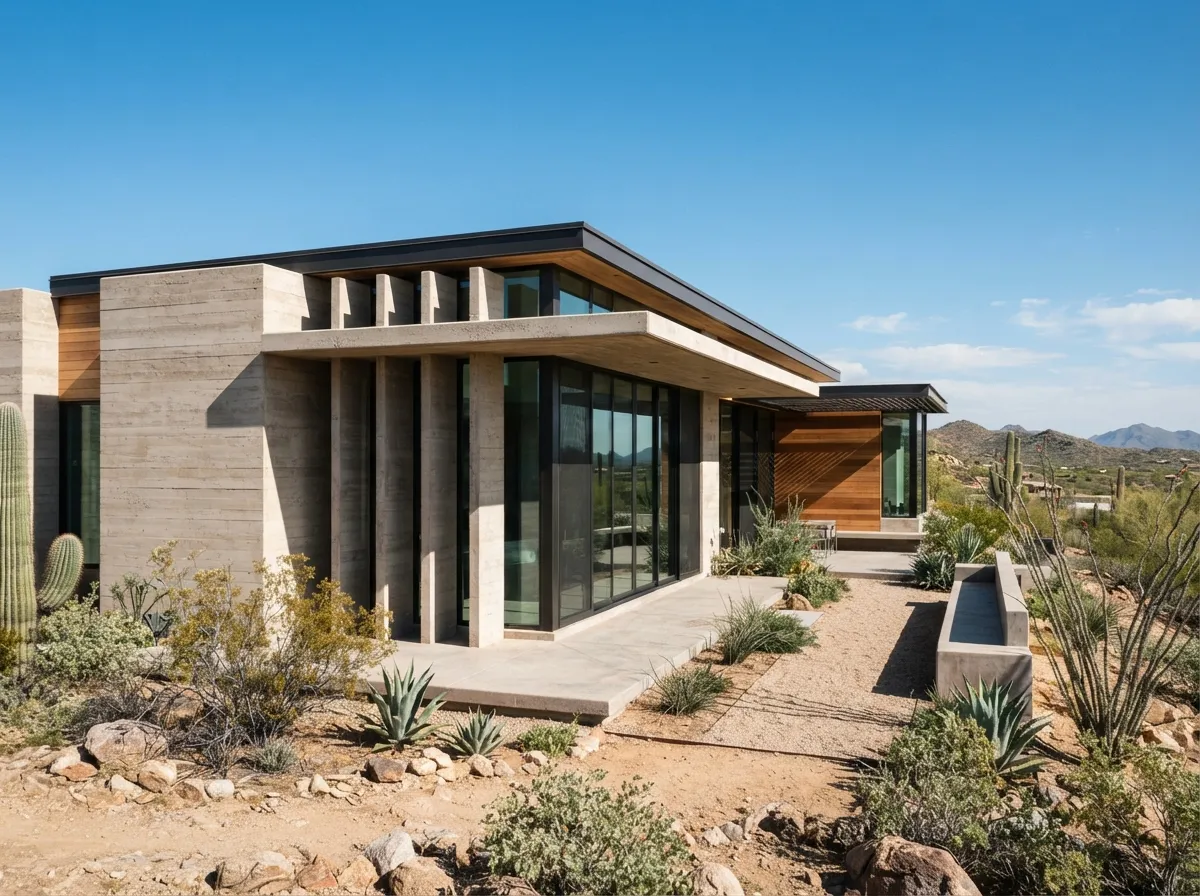
Controlling intense solar glare is essential in arid climates. Deep exterior window overhangs block harsh midday sun rays completely.
This clever architectural feature keeps interior spaces naturally cool. Your home will maintain a comfortable temperature throughout the hottest summer afternoons without heavy air conditioning use.
2. Choose Breathable Linen and Cotton Fabrics
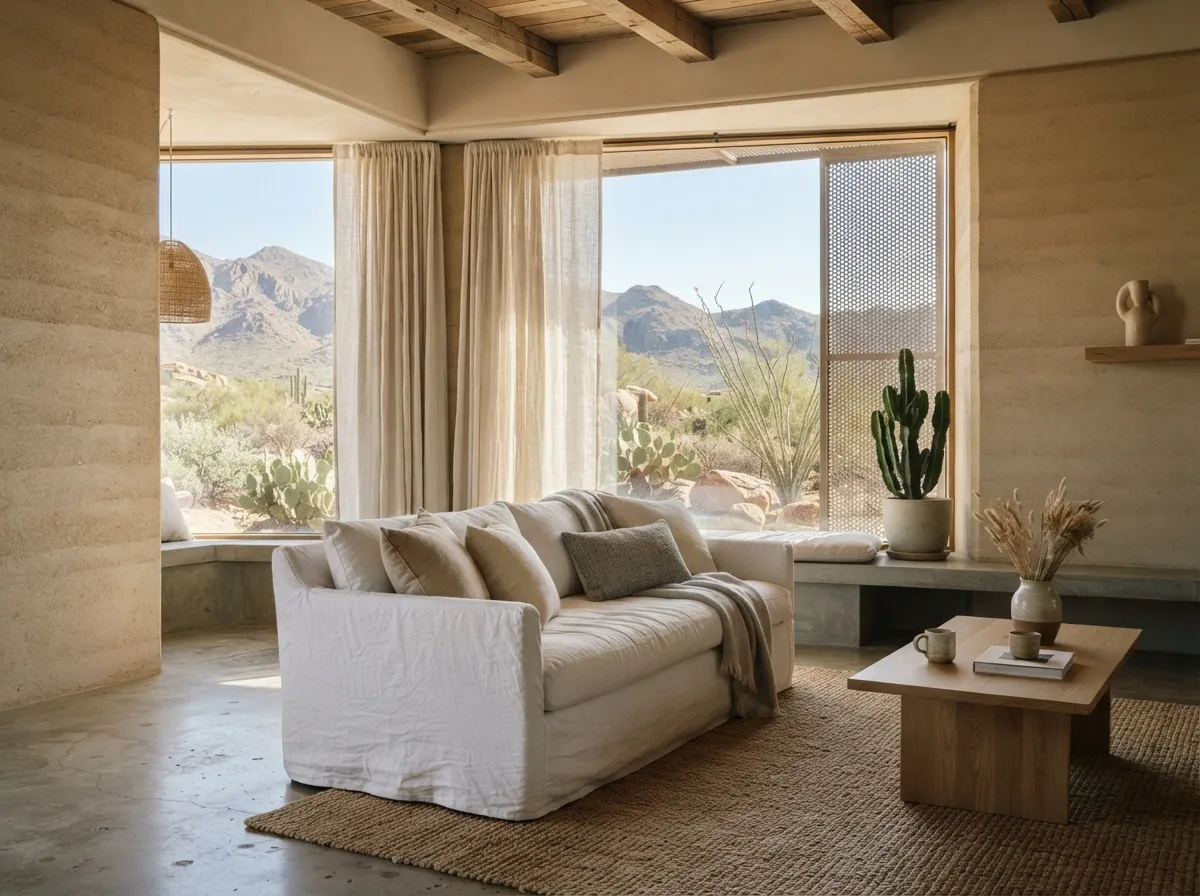
Fabric choices drastically affect indoor thermal comfort during peak heat waves. Pure linen and lightweight cotton allow optimal air circulation in every room.
These natural materials prevent heat trapping on sofas and beds. Selecting neutral earth tones for your textiles enhances the serene minimalist aesthetic effortlessly.
3. Apply Light Reflective Lime Wash Wall Finishes
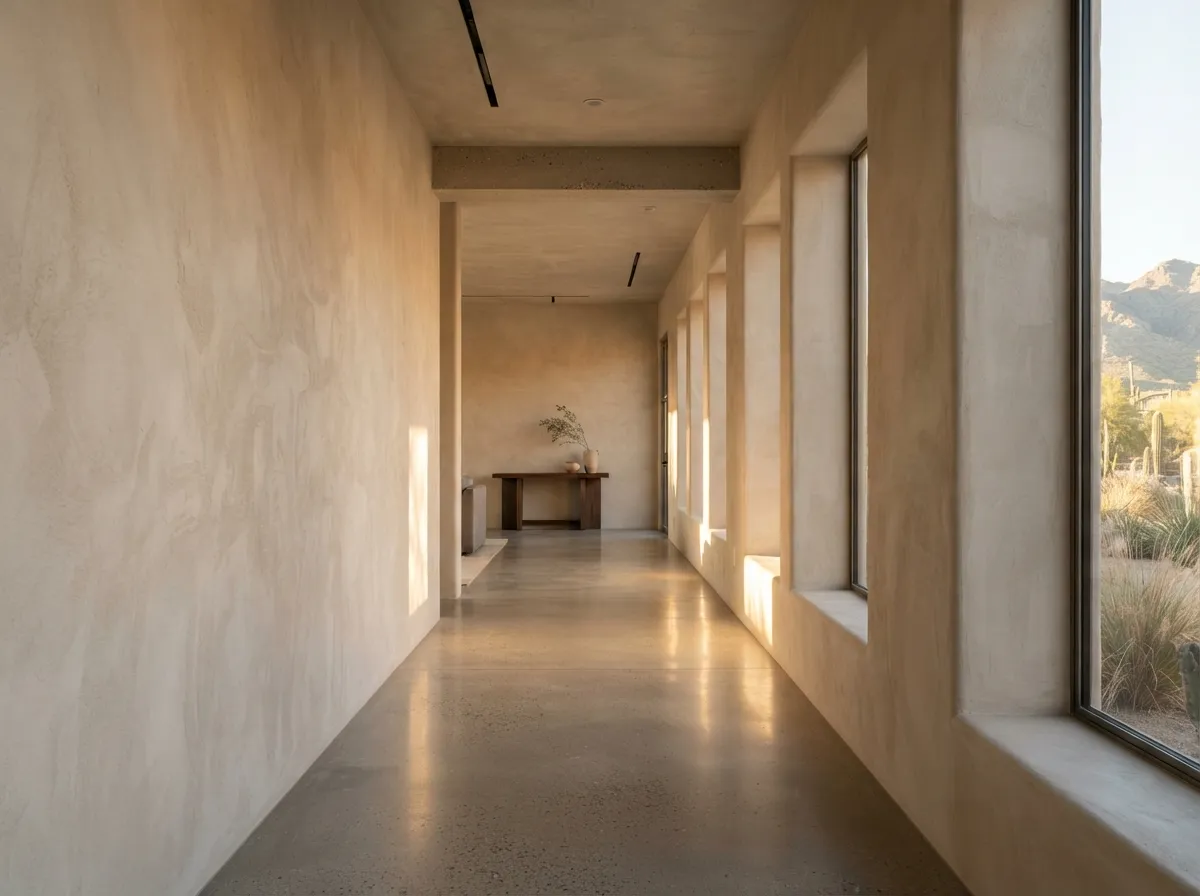
Traditional paint often absorbs too much thermal energy from intense sunlight. Mineral lime wash finishes reflect incoming light across interior surfaces.
The textured matte appearance diffuses harsh rays into a soft ambient glow. This ancient wall treatment provides lasting durability and natural cooling properties for desert properties.
4. Hang Natural Jute and Bamboo Roller Blinds
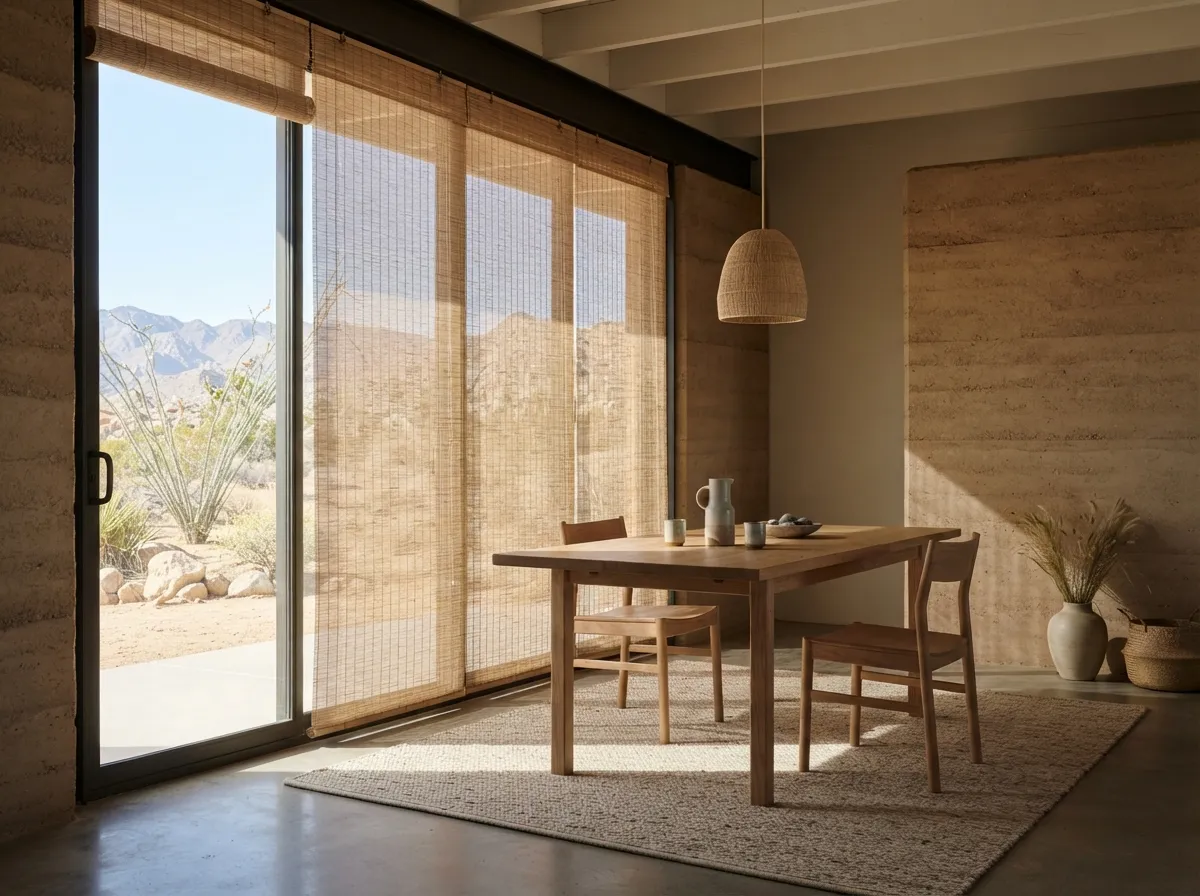
Filtering bright sunlight requires window coverings made from organic materials. Woven jute and bamboo roller blinds offer wonderful texture and privacy.
They allow gentle breezes to pass while diffusing glaring rays. This sustainable solution adds earthy warmth while keeping your living spaces cool and comfortable.
5. Utilize Double Paned Low Emissivity Glass
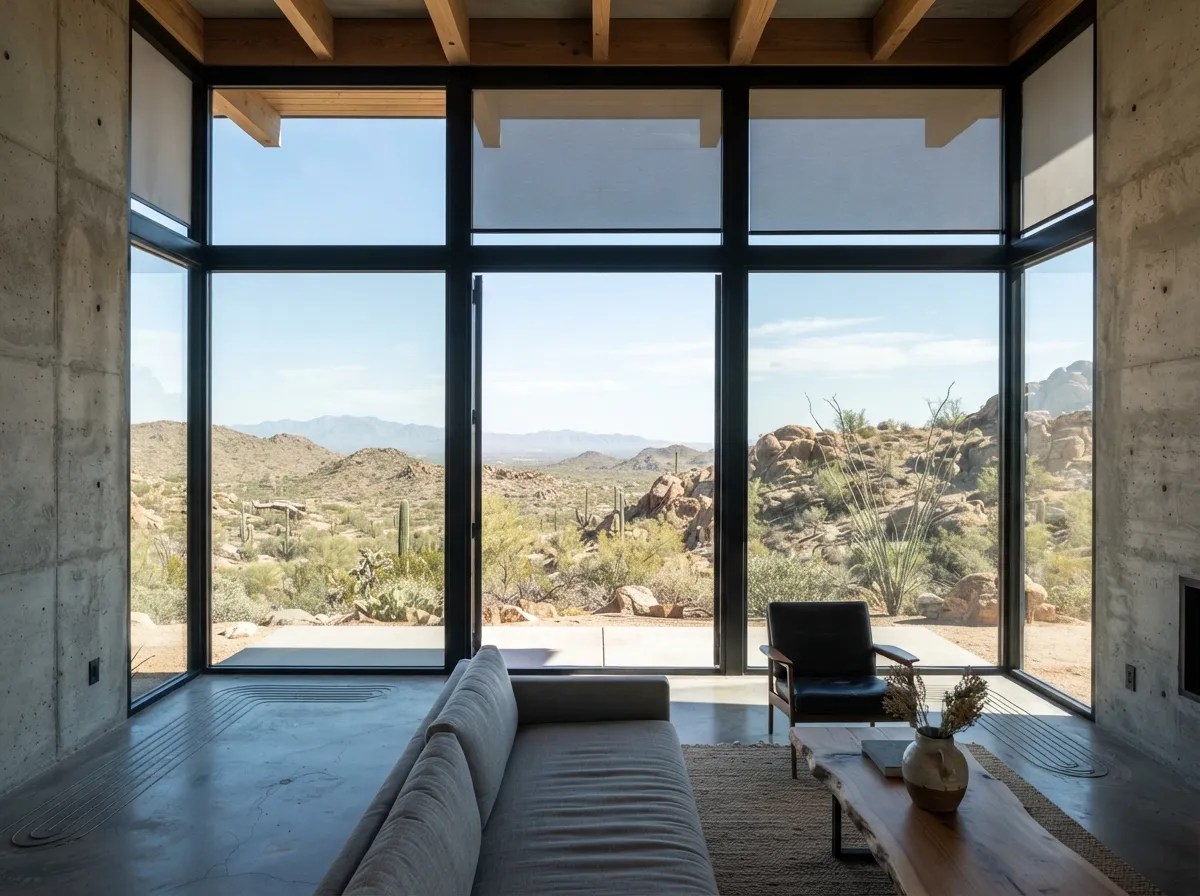
Modern glazing technology plays a major role in thermal regulation. Double paned low emissivity glass blocks harmful ultraviolet radiation effectively.
This specialized coating reflects unwanted heat back outside during scorching days. Your minimalist interior stays bright and airy without absorbing excessive outdoor warmth.
6. Incorporate Polished Concrete Flooring for Thermal Mass
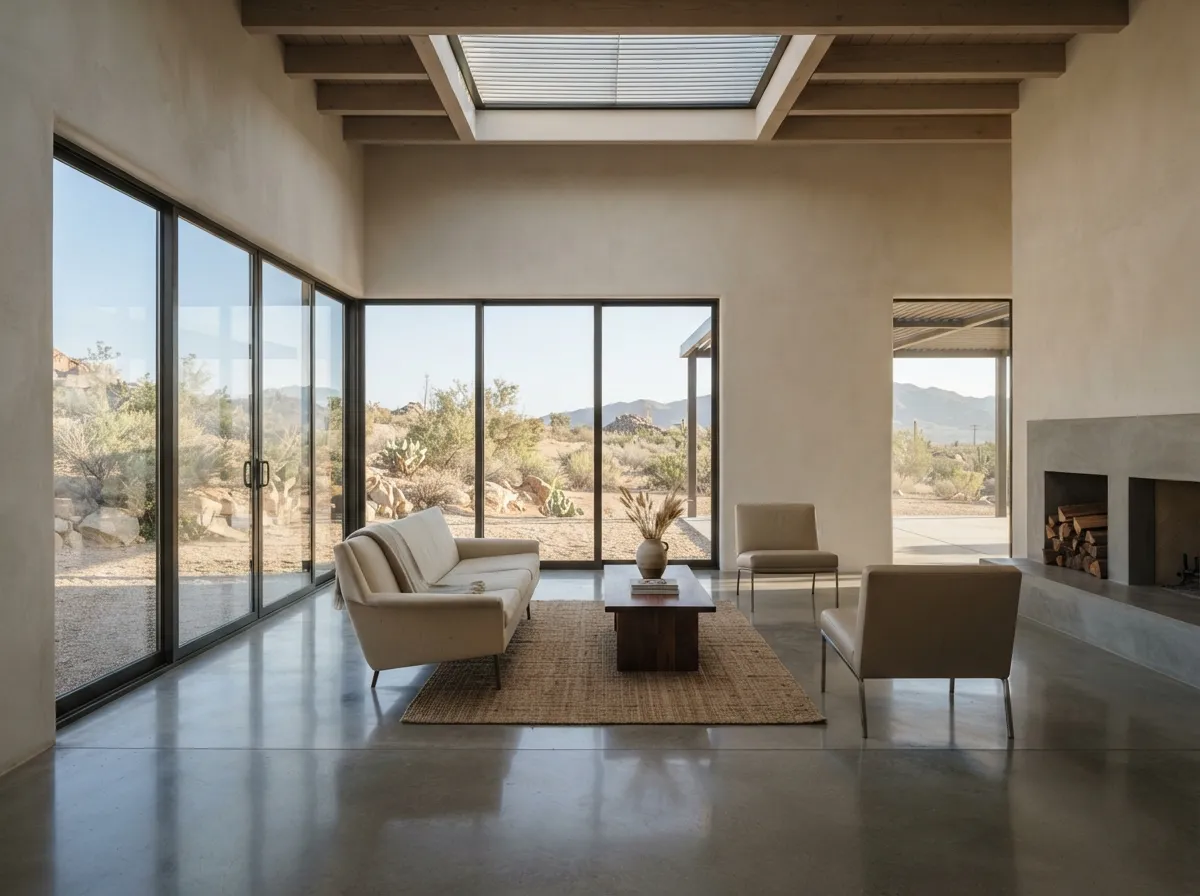
Polished concrete acts as a natural climate regulator. It absorbs daytime heat and releases it slowly at night.
This material keeps your main living spaces refreshingly cool when temperatures peak. The sleek finish also bounces natural sunlight around the room.
Pairing this flooring with neutral area rugs softens the modern look. You achieve a balanced climate and a clean aesthetic effortlessly.
7. Arrange Furniture Away From Direct Solar Gain
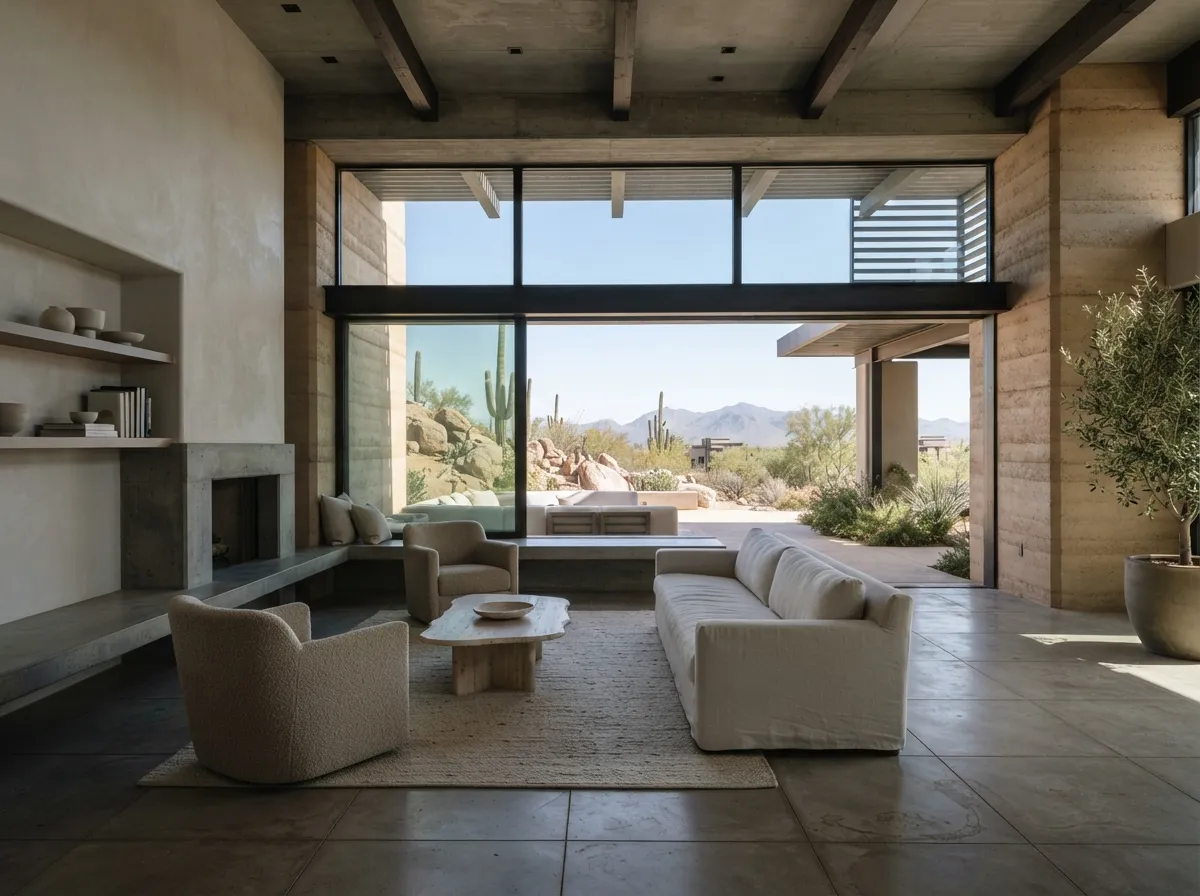
Smart furniture placement protects your favorite seating from intense afternoon rays. Keep sofas and armchairs outside the direct path of harsh window beams.
This strategy prevents upholstery from fading and keeps seating surfaces cool. Your living zones remain comfortable throughout the hottest parts of the day.
Designing low slung seating layouts maintains an open sightline across the room. You enhance airflow while protecting your interior investments.
8. Add Interior Plantation Shutters for Adjustable Shade
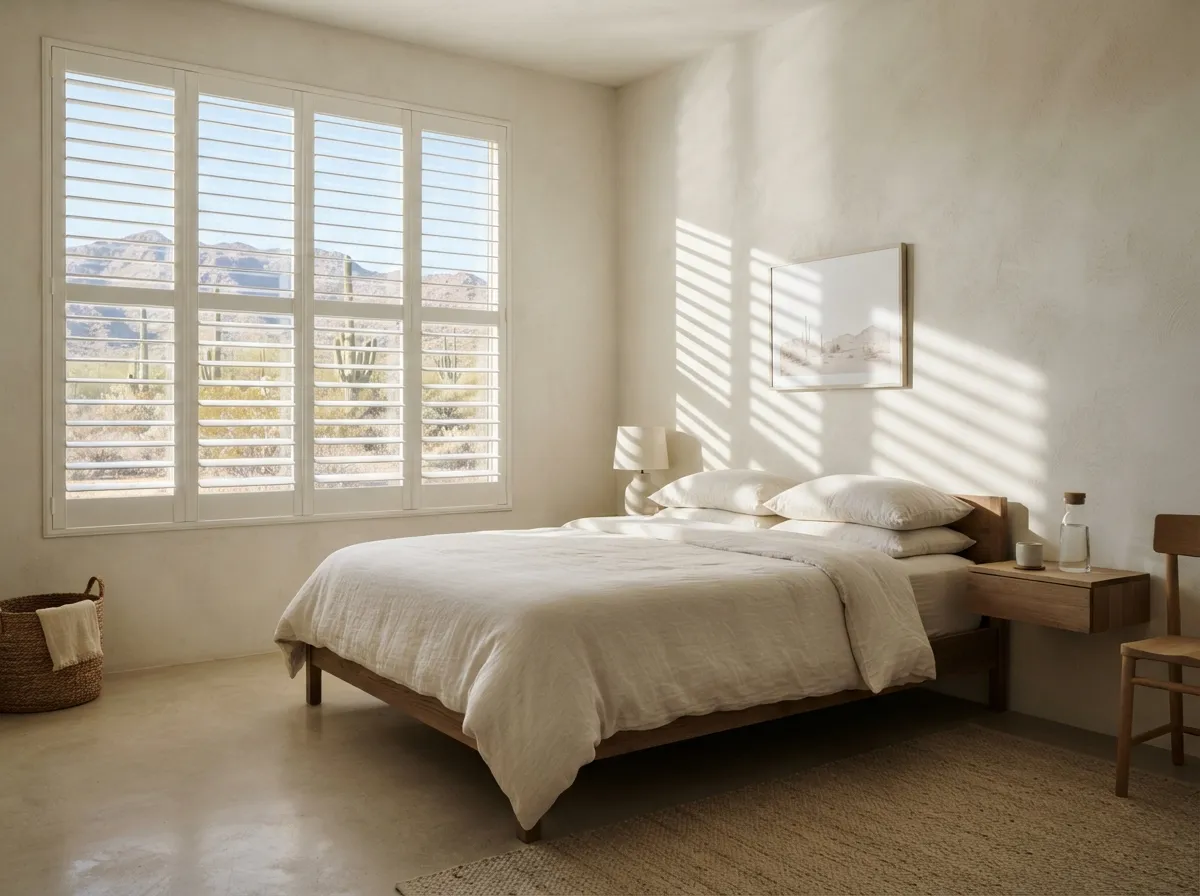
Interior shutters offer precise control over harsh desert sunlight. You can tilt the louvers to block glare while inviting gentle illumination inside.
This classic window treatment helps manage indoor temperatures naturally. Rooms stay shaded and comfortable without blocking every ounce of daylight.
White louvered panels complement the clean lines of minimalist interior themes. They provide a practical layer of insulation against thermal transfer.
9. Select Low Profile Indoor Ceiling Fans
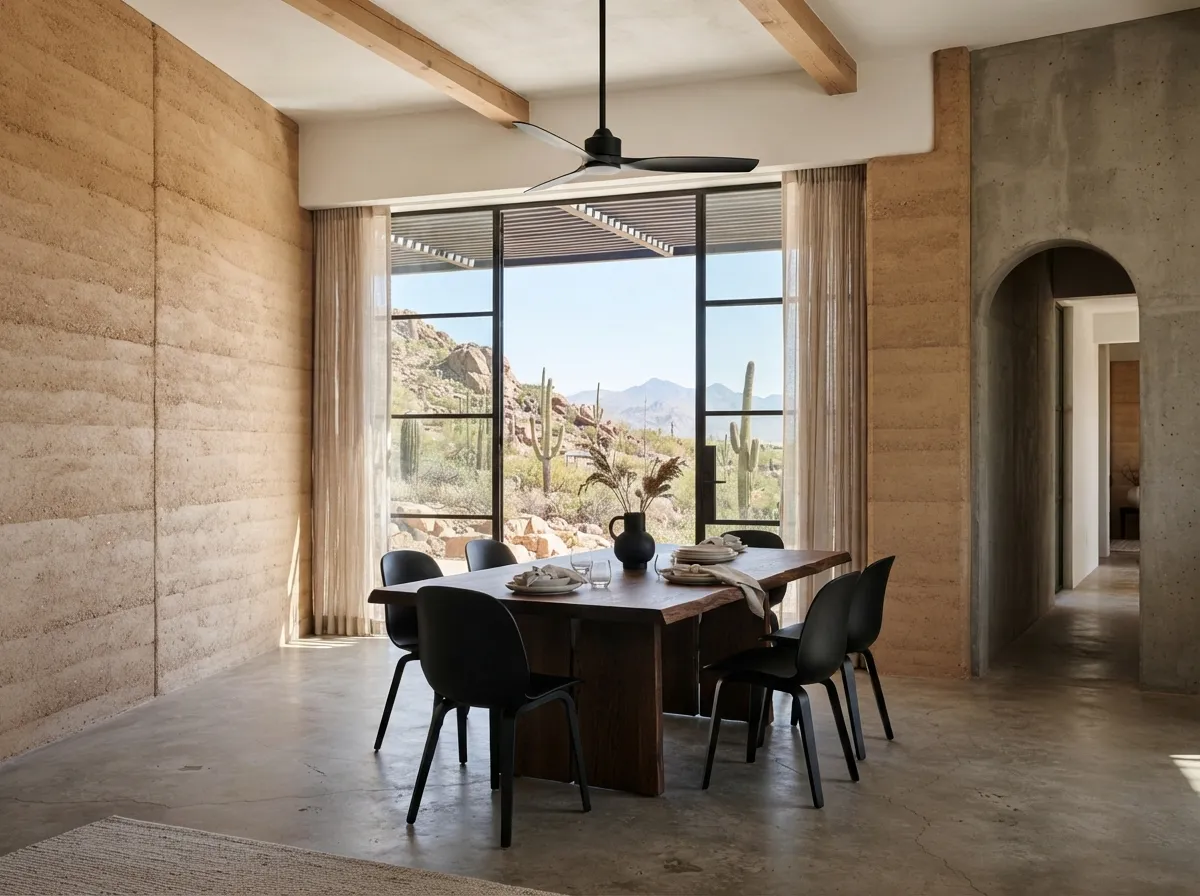
Ceiling fans are essential for maintaining steady airflow in hot climates. Choose sleek, low profile models that blend seamlessly into the ceiling.
Running these fixtures creates a pleasant wind chill effect in your daily zones. You can reduce your reliance on heavy air conditioning units.
Matte black or brushed nickel finishes match modern minimalist color palettes. Function meets quiet elegance overhead in every room.
10. Feature Breathable Terracotta Tile Accents
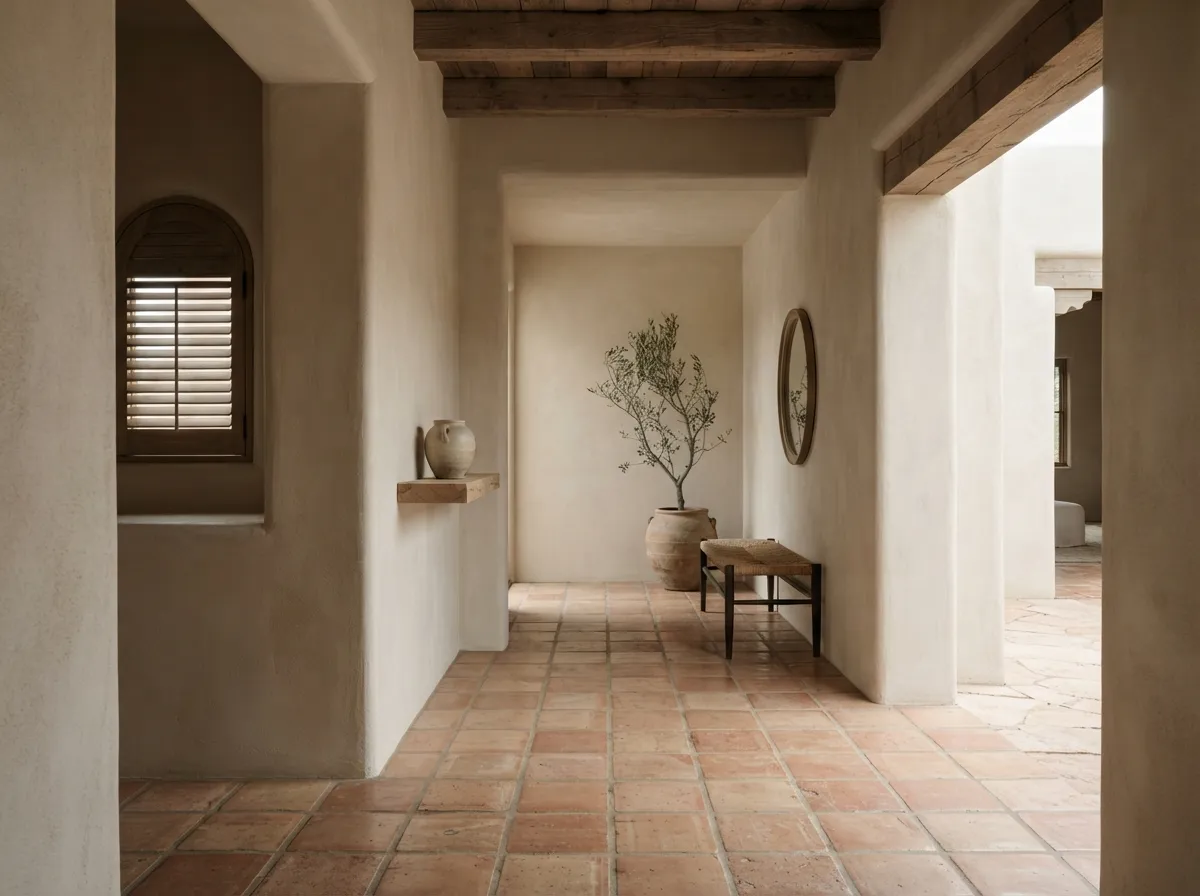
Terracotta brings earthy warmth and natural cooling properties indoors. These porous clay tiles add subtle texture to minimalist architectural schemes.
Use them as decorative accents or subtle borders in high traffic zones. They help regulate ambient humidity levels naturally.
The warm reddish hues complement sun bleached neutral walls beautifully. You introduce organic desert charm without cluttering the space.
11. Use Sheer White Curtains to Diffuse Glare
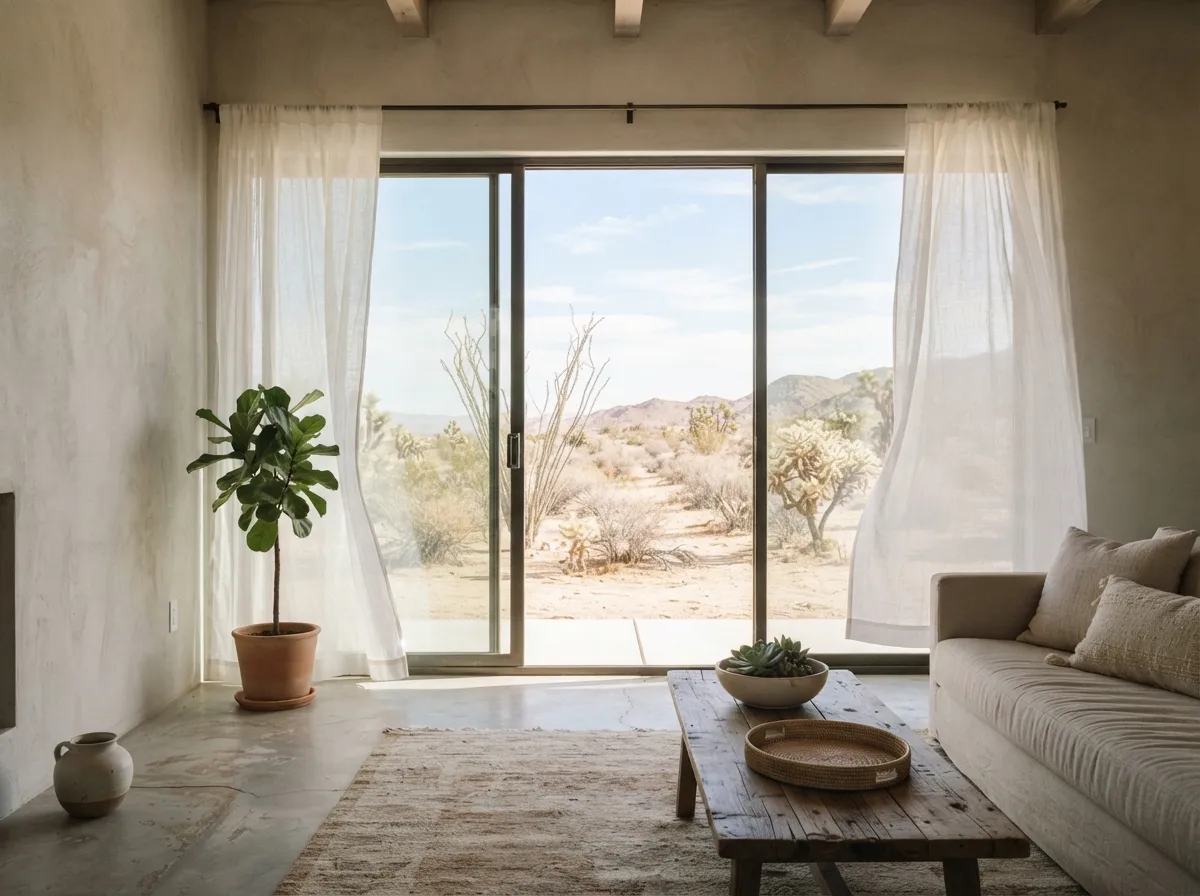
Harsh desert sunlight can quickly overheat your living space.
Sheer white curtains soften the incoming glare effectively.
This simple adjustment keeps interiors cool and bright.
12. Build Built in Concrete Bench Seating
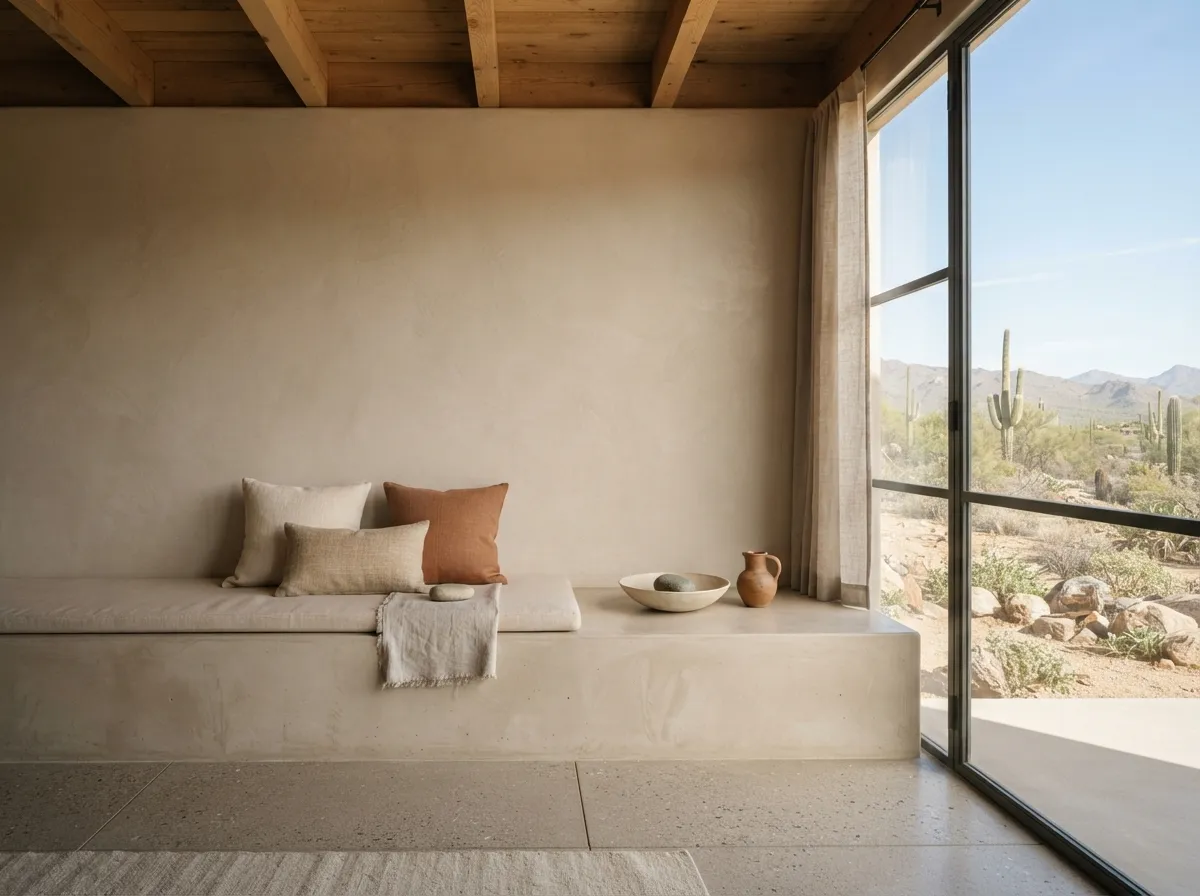
Concrete elements naturally absorb and dissipate thermal energy.
Built-in seating keeps floor plans open and airy.
Pair these cool surfaces with textured woven cushions for comfort.
13. Keep Decor Minimal to Encourage Airflow
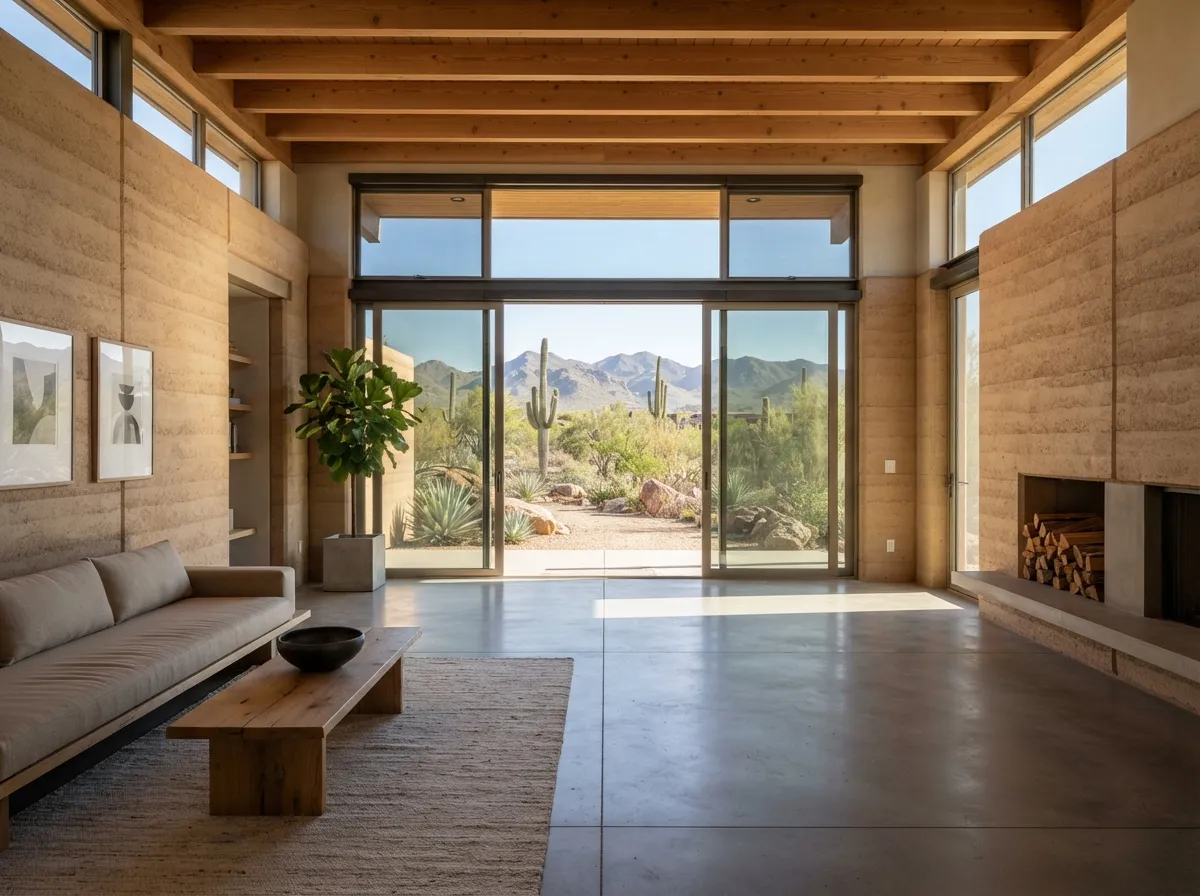
Clutter traps unwanted heat in modern living spaces.
Minimalist styling allows natural cooling breezes to circulate freely.
Embrace negative space to create an effortlessly breezy interior atmosphere.
14. Plant Heat Tolerant Indoor Succulents
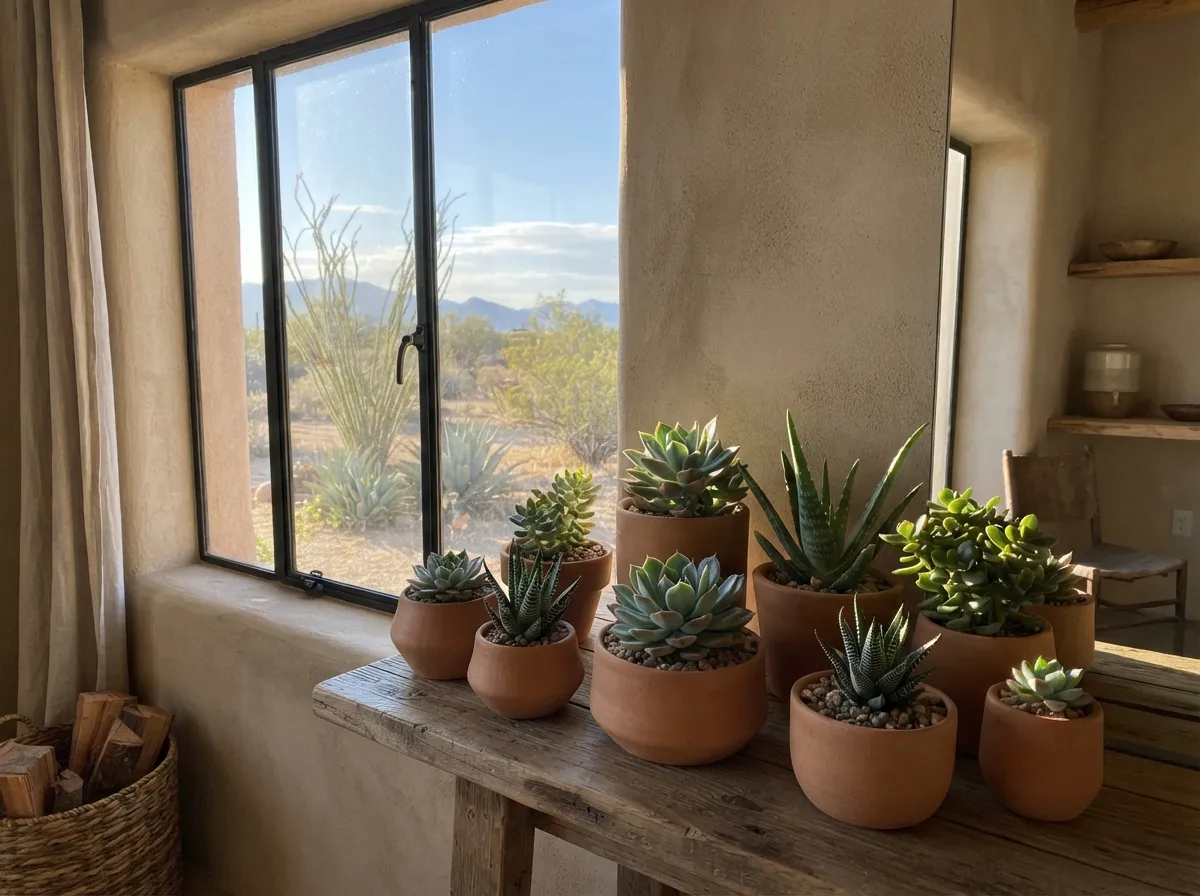
Indoor greenery brings a touch of organic desert life inside.
Succulents thrive in warm environments with minimal moisture needs.
Place hardy potted plants near windows to filter the bright light.
15. Install Operable Transom Windows for Cross Ventilation
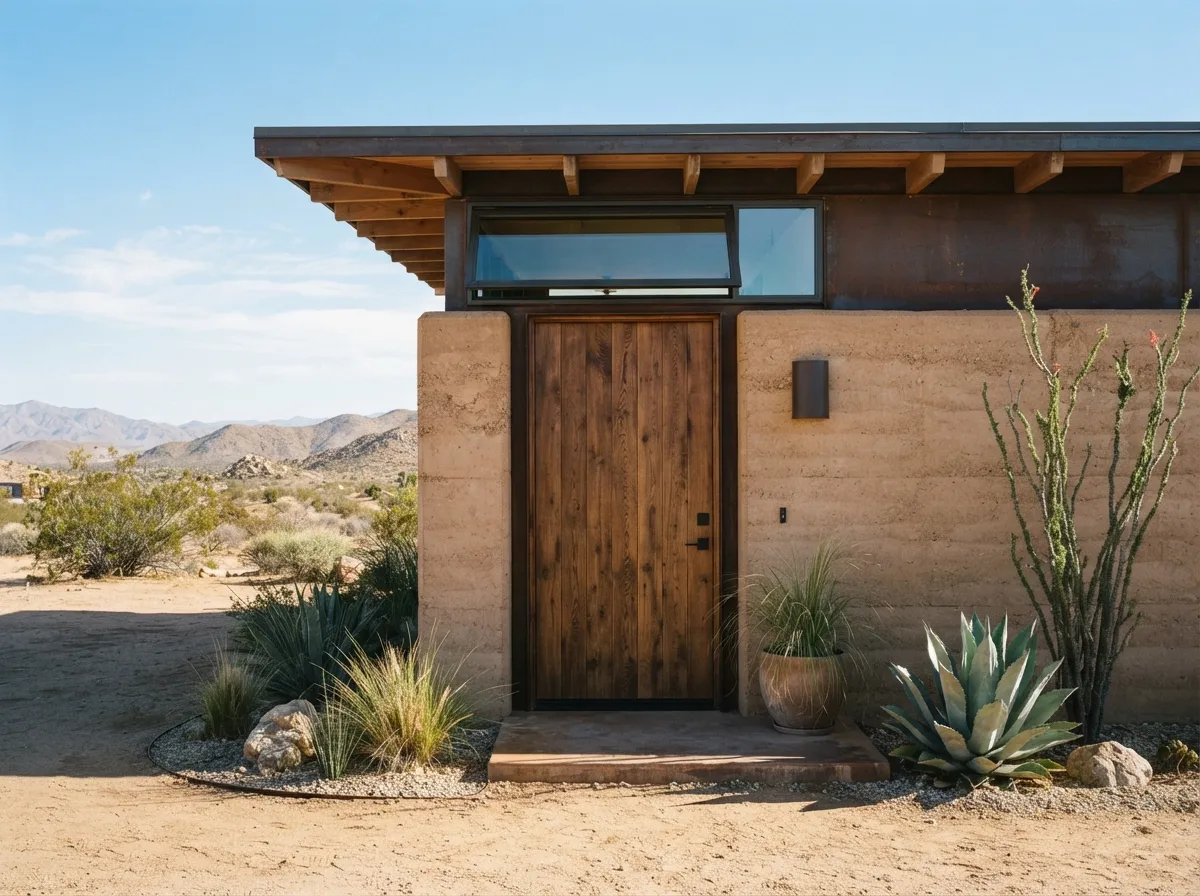
Warm air naturally rises toward the upper ceiling levels.
Operable transom windows let trapped heat escape quickly.
This classic architectural feature improves daily indoor climate control.
16. Choose Muted Earth Tones to Reduce Visual Heat
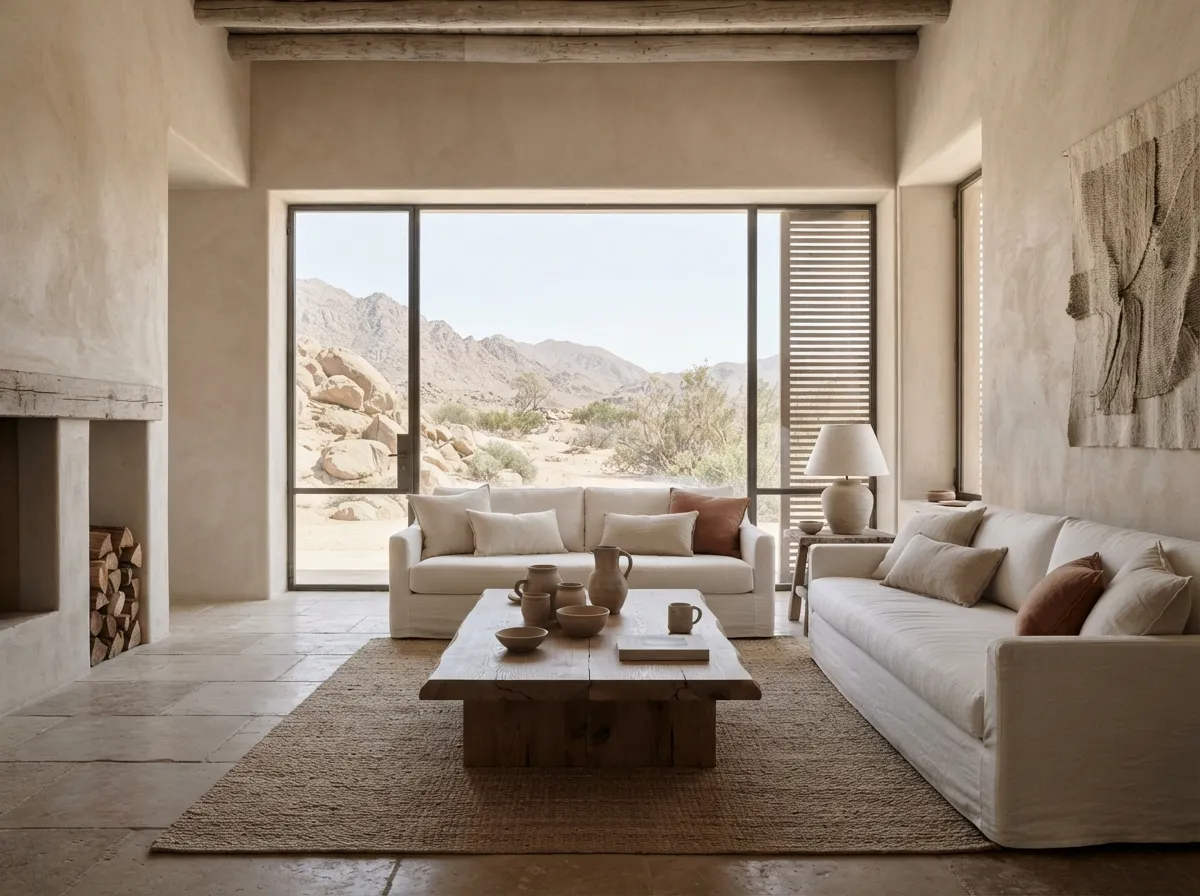
Color plays a powerful role in how our brains perceive temperature inside living spaces. Bright or saturated shades can make a desert room feel much hotter than it actually is.
Opting for muted earth tones instantly cools down the atmosphere. Soft clay, pale sand, and chalky white reflect sunlight rather than absorbing it.
This palette calms the eye and creates a peaceful, airy environment.
Integrating these gentle hues across your walls and large furnishings changes the entire mood of the interior. You will notice a distinct drop in visual glare throughout the bright afternoon hours.
Pairing these colors with raw linen fabrics enhances the breezy feeling.
Keep decor minimal to allow the calming shades to work their magic without clutter. Every piece you add should support a tranquil and breathable aesthetic.
Your desert home will naturally feel like a cool shade against the harsh sun.
17. Add Solid Wood Slatted Room Dividers
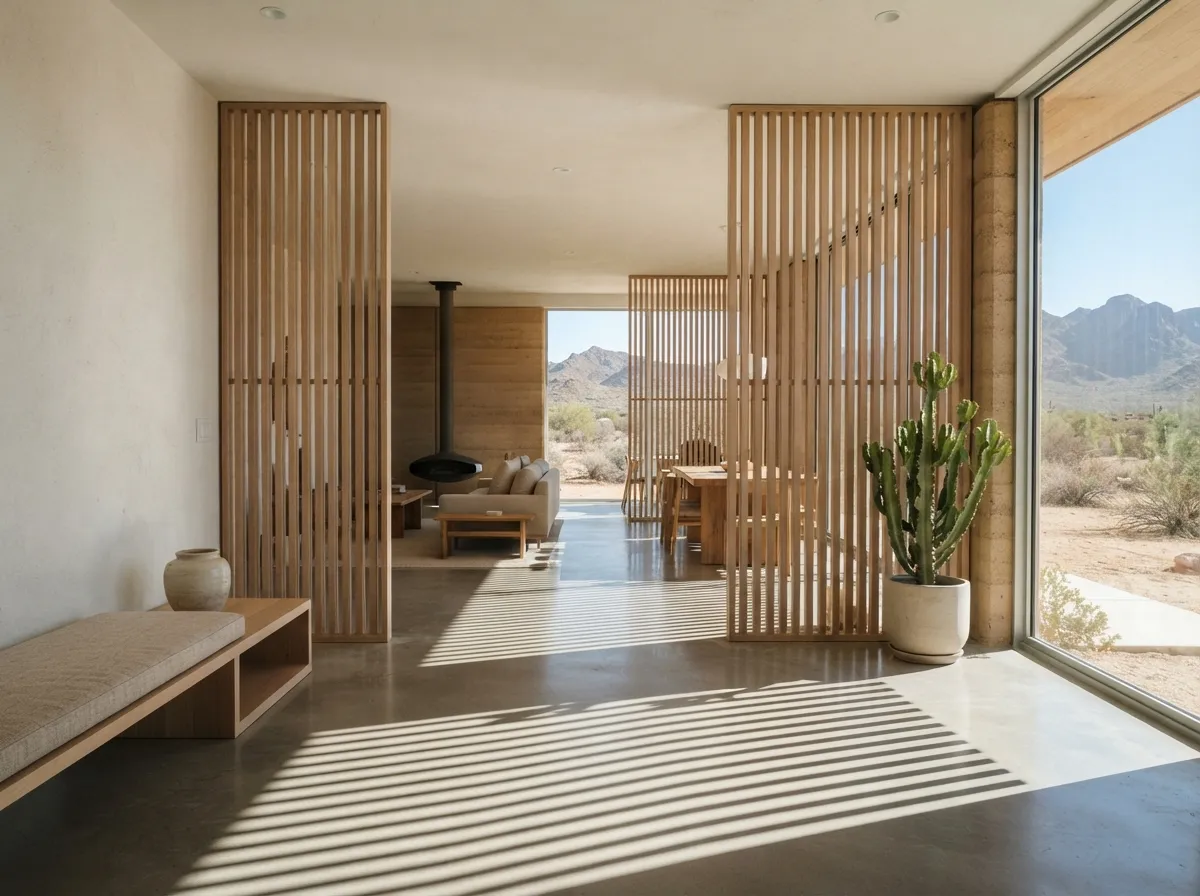
Open concept layouts are great for airflow, but they often struggle with harsh, glaring sunlight cutting across the room. Solid wood slatted dividers offer a brilliant solution to filter incoming light.
These architectural elements break up direct beams into soft, dappled patterns. They maintain the open feel while adding structural interest.
Positioning a slatted screen near a west-facing window manages afternoon heat effectively. The natural wood grain brings organic warmth back into the minimalist interior.
It acts as a physical barrier that cools down the sightlines of the space.
Choose durable, light-toned timber species like ash or white oak for the best results. These materials stand up well to arid conditions while keeping the color palette grounded.
The result is a balanced room that handles intense sunshine with absolute grace.
18. Design Covered Outdoor Porch Transitions
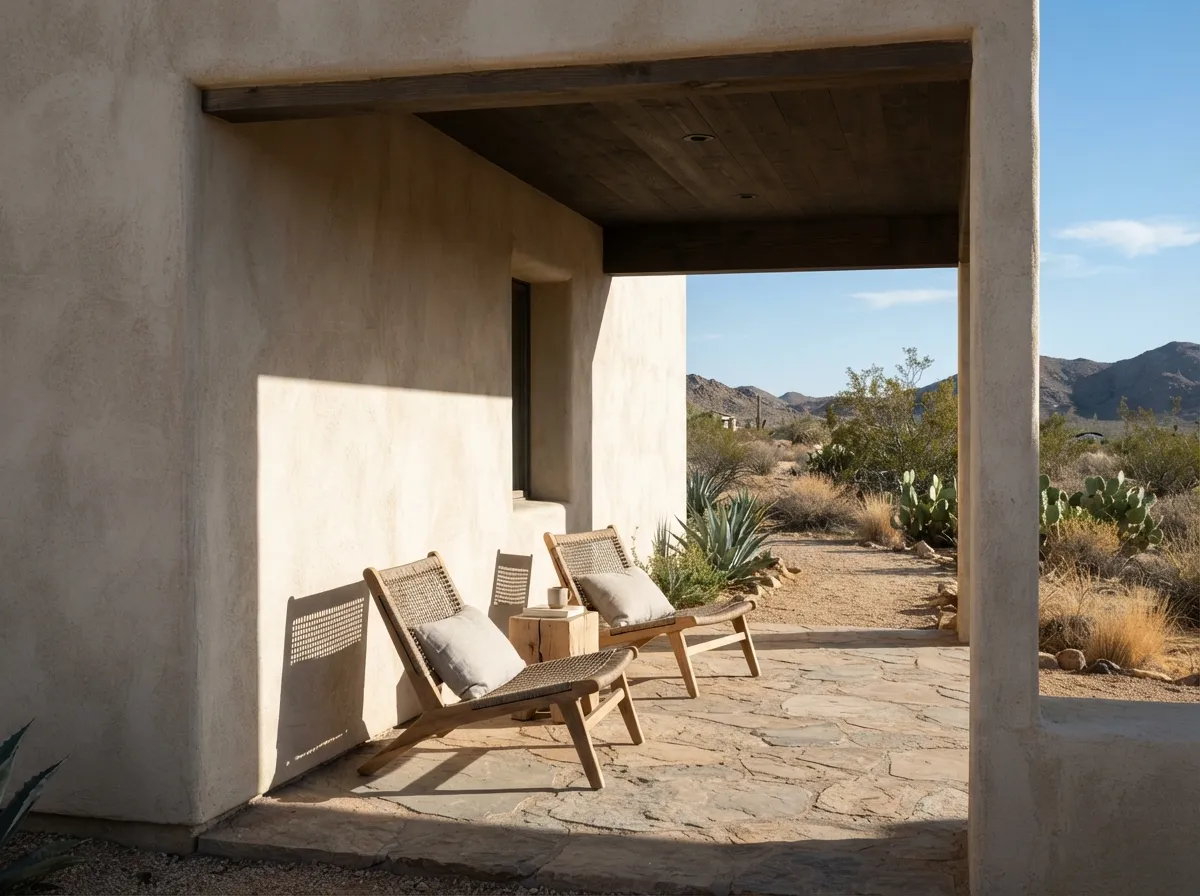
Managing extreme sun starts before light even reaches your interior glass windows. Deeply covered outdoor porches create an essential buffer zone against solar heat gain.
By casting a large shadow over the exterior walls, these overhangs drop indoor temperatures significantly. They extend your living space outward into comfortable shade.
Furnishing this transitional porch with low-profile wooden seating invites relaxed outdoor living. The shaded area prevents direct sunlight from beating down on entry doors and large windows.
It is a traditional architectural method that works wonders in arid climates.
Keep the porch area clean and free of unnecessary clutter to maintain airflow. The breeze passing through the shaded zone cools down before entering the main house.
This simple design choice lowers cooling costs and improves daily comfort.
19. Use Ceramic Vases and Stoneware for Natural Cooling Textures
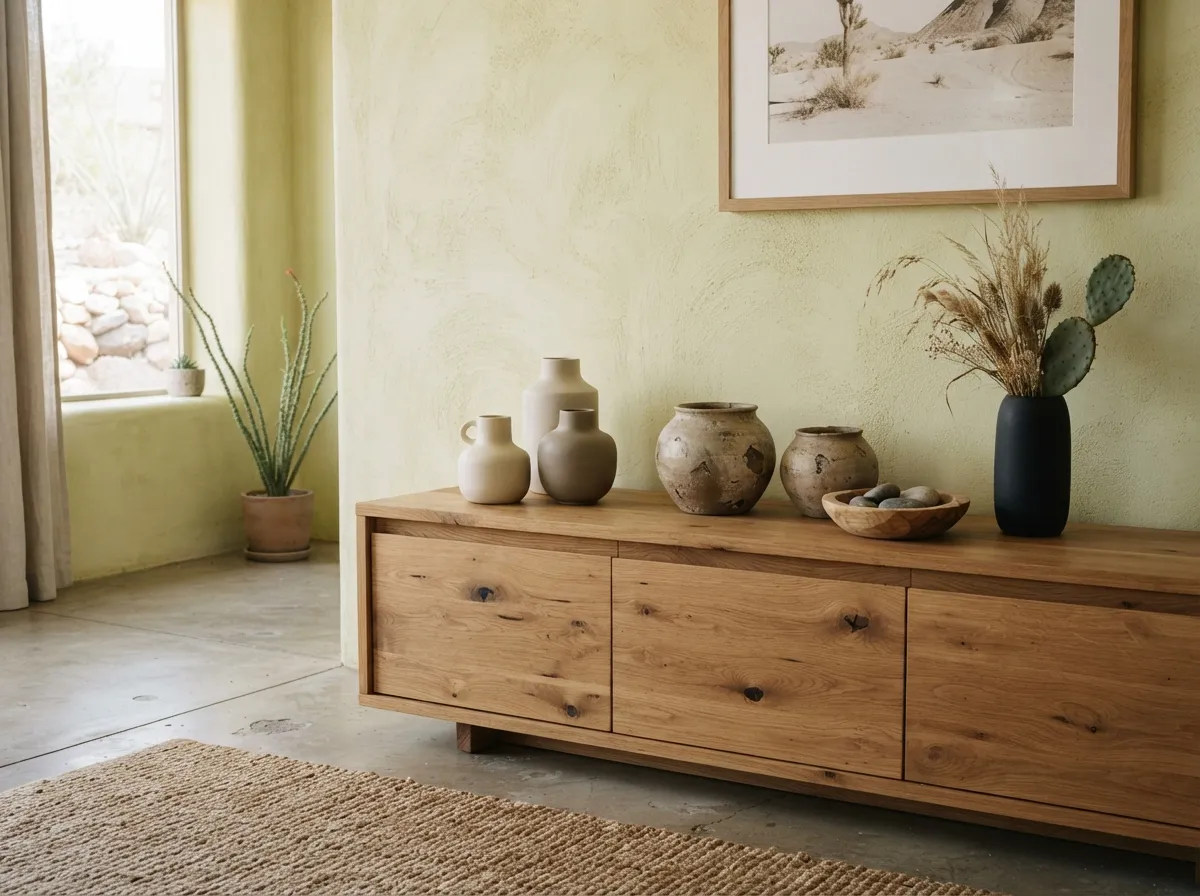
Materials matter immensely when you are trying to keep a desert dwelling feeling fresh and cool. Heavy plastics and synthetic decor trap heat and look out of place.
Instead, lean into the organic coolness of ceramic vases and raw stoneware. These earth-derived pieces always feel cool to the touch.
Placing unglazed pottery on low wooden shelves adds subtle texture without causing visual clutter. Stoneware absorbs very little heat, keeping the room atmosphere feeling grounded and stable.
Their tactile surfaces reflect the raw beauty of the surrounding desert landscape.
Group vases in simple arrangements to keep the minimalist ethos intact. Fill them with dried grasses that require no water and add subtle height.
Your home will gain an authentic, earthy charm that naturally combats the blazing climate outside.
20. Keep Lighting Warm and Low Intensity
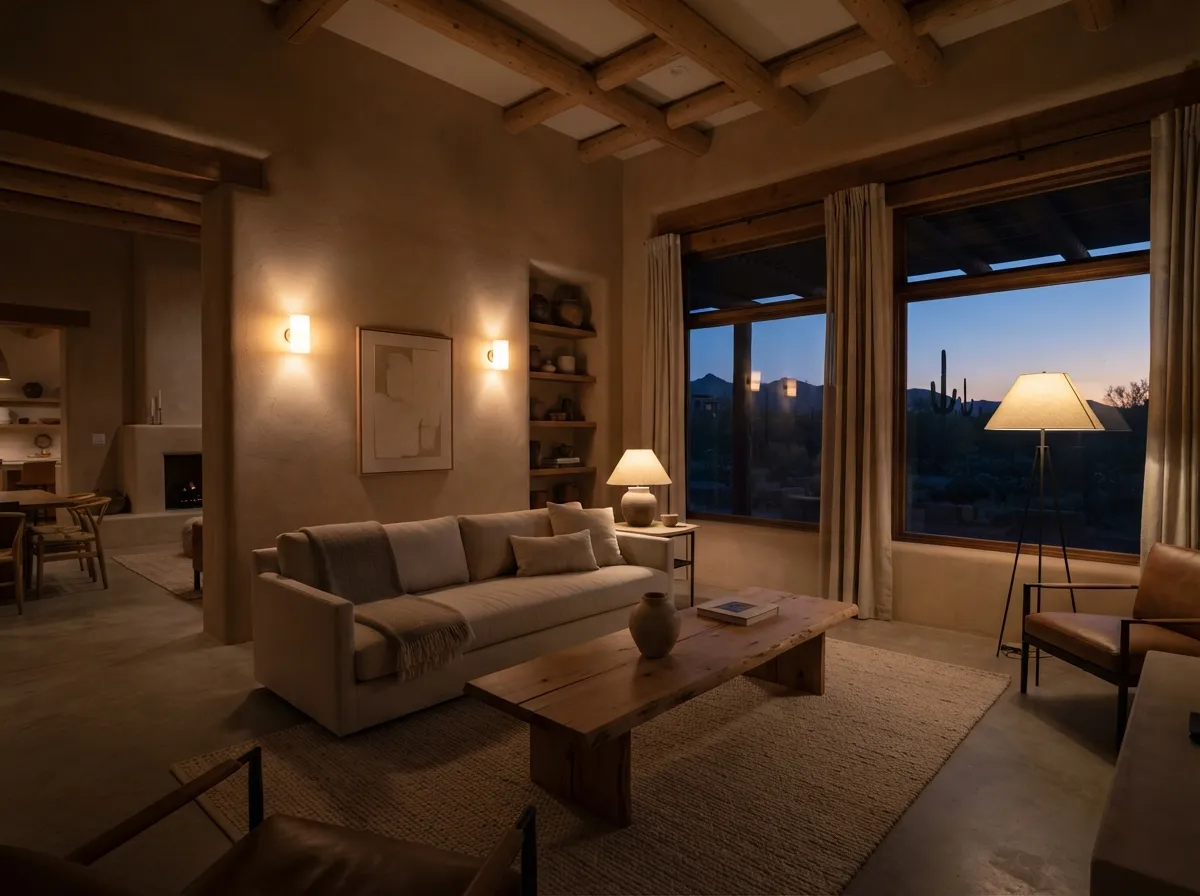
When the harsh sun finally sets, your indoor lighting should help the home unwind. High-intensity bulbs can make a warm climate interior feel uncomfortably hot and clinical.
Opting for warm, low-intensity lighting shifts the mood toward relaxation. It mimics the gentle glow of a desert sunset.
Use floor lamps and wall sconces with warm LED bulbs to cast soft pools of light. Avoiding bright overhead fixtures prevents eye strain after a day of intense natural glare.
This layered approach creates cozy corners throughout the open living areas.
Position light sources low to the ground to emphasize the horizontal lines of your minimalist architecture. The dim, warm illumination makes the entire space feel cooler and more welcoming.
It is the final touch for a comfortable, heat-managed desert home.
Implementing these thoughtful design strategies allows your desert home to remain cool and serene. By balancing natural light with effective heat management, you achieve a comfortable, minimalist living environment tailored to arid climates.