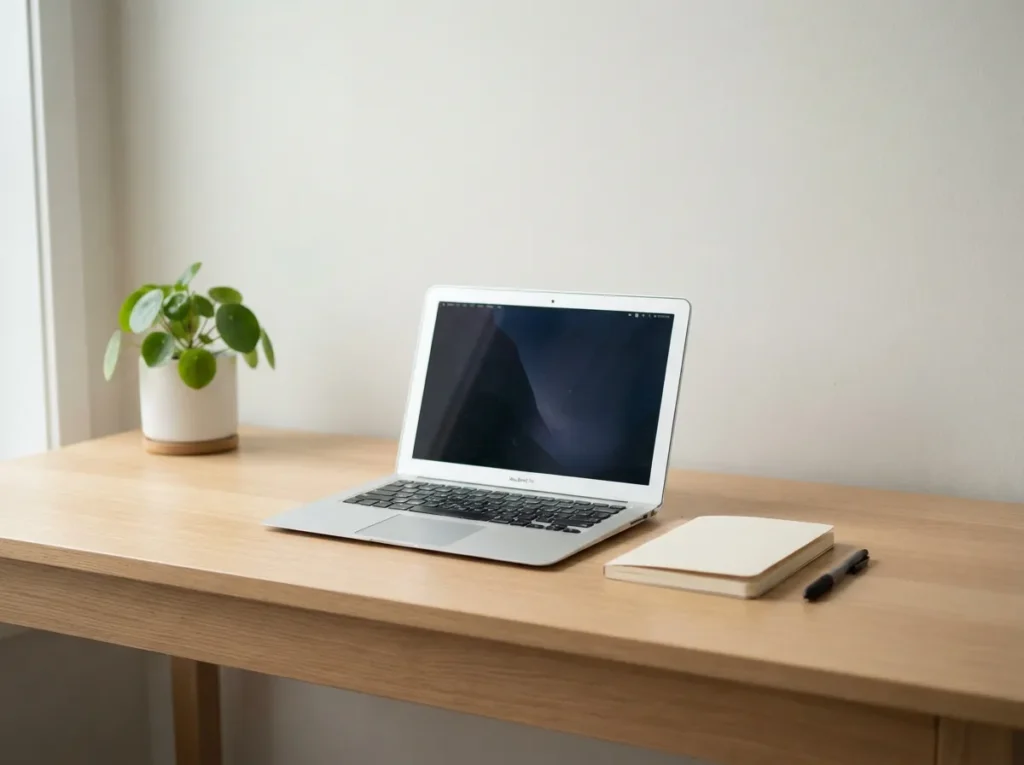
Creating a productive and serene home office doesn’t require a large budget or space. Discover how to design a minimalist workspace that fosters focus and creativity without breaking the bank. These practical and stylish ideas will help you achieve an organized and inspiring environment.
1. Declutter for Essential Focus
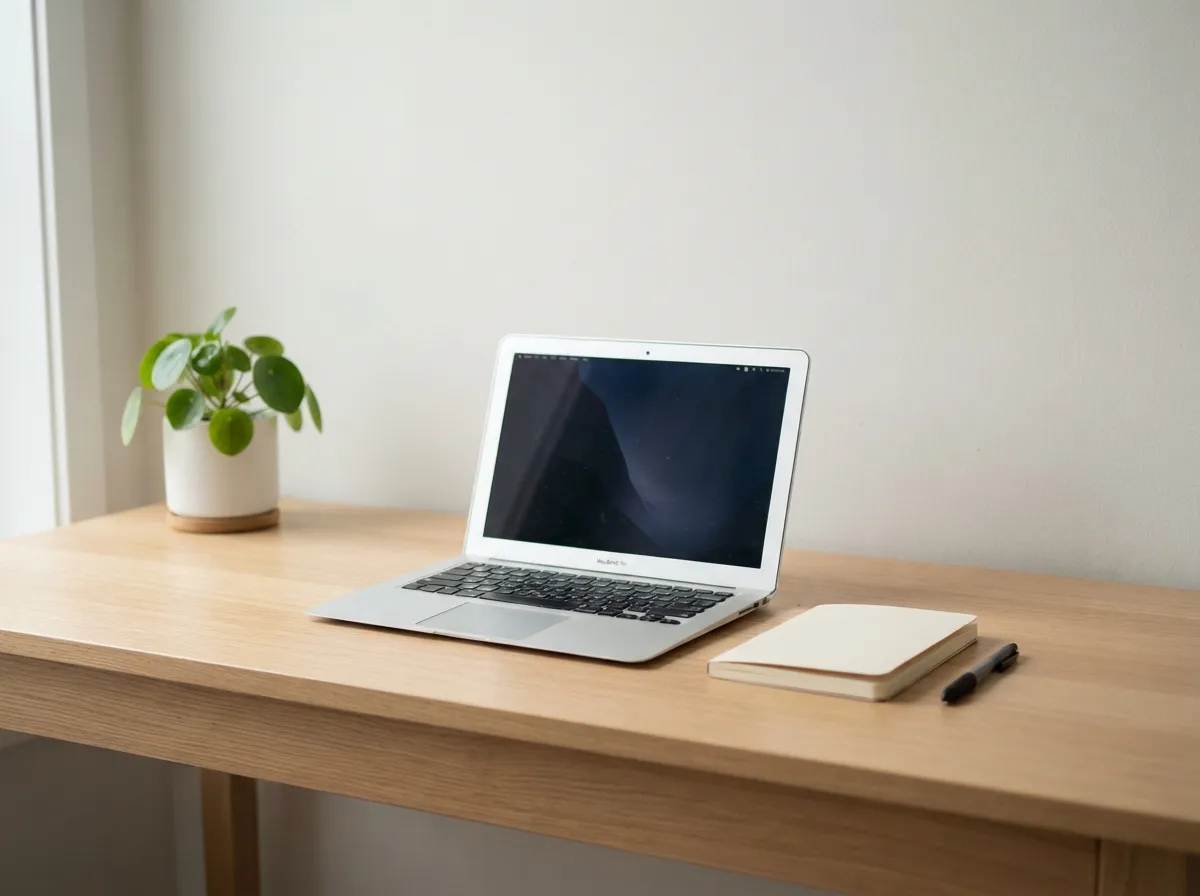
Creating an effective minimalist workspace begins with the most fundamental action: clearing away clutter. A clean and organized desk is the key to a focused mind and better productivity.
Imagine your light wood desktop adorned only with a laptop, a small notebook, and your favorite pen.
Minimizing unnecessary items helps reduce visual distractions. Every item remaining in your work area should have a clear purpose, whether functional or inspirational.
Store important documents in drawers or neat storage boxes under the desk. This ensures your main work area stays spacious, supporting full concentration without disruption from messy piles of paper.
2. Choose a Repurposed Desk
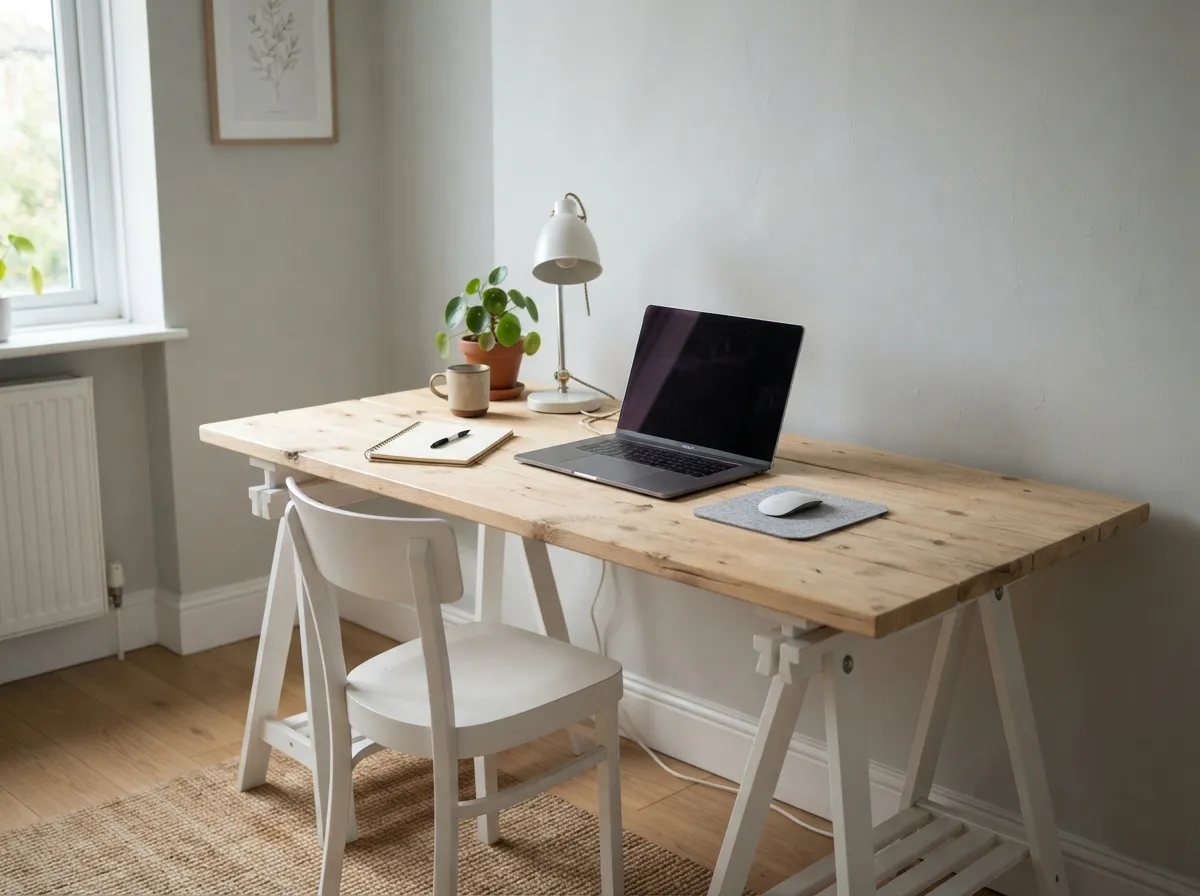
One of the smartest ways to save on your budget is to choose a desk made from repurposed items. This approach is not only wallet-friendly but also adds unique character to your minimalist workspace.
You can look for old tables at flea markets or reuse sturdy reclaimed wooden boards. Imagine a pine wood tabletop sanded smooth, supported by two simple trestle legs painted white.
Choose strong and stable materials to support your daily workload. This repurposed desk will become an attractive focal point, showcasing your creativity in designing a space at minimal cost.
3. Embrace Natural Light Sources
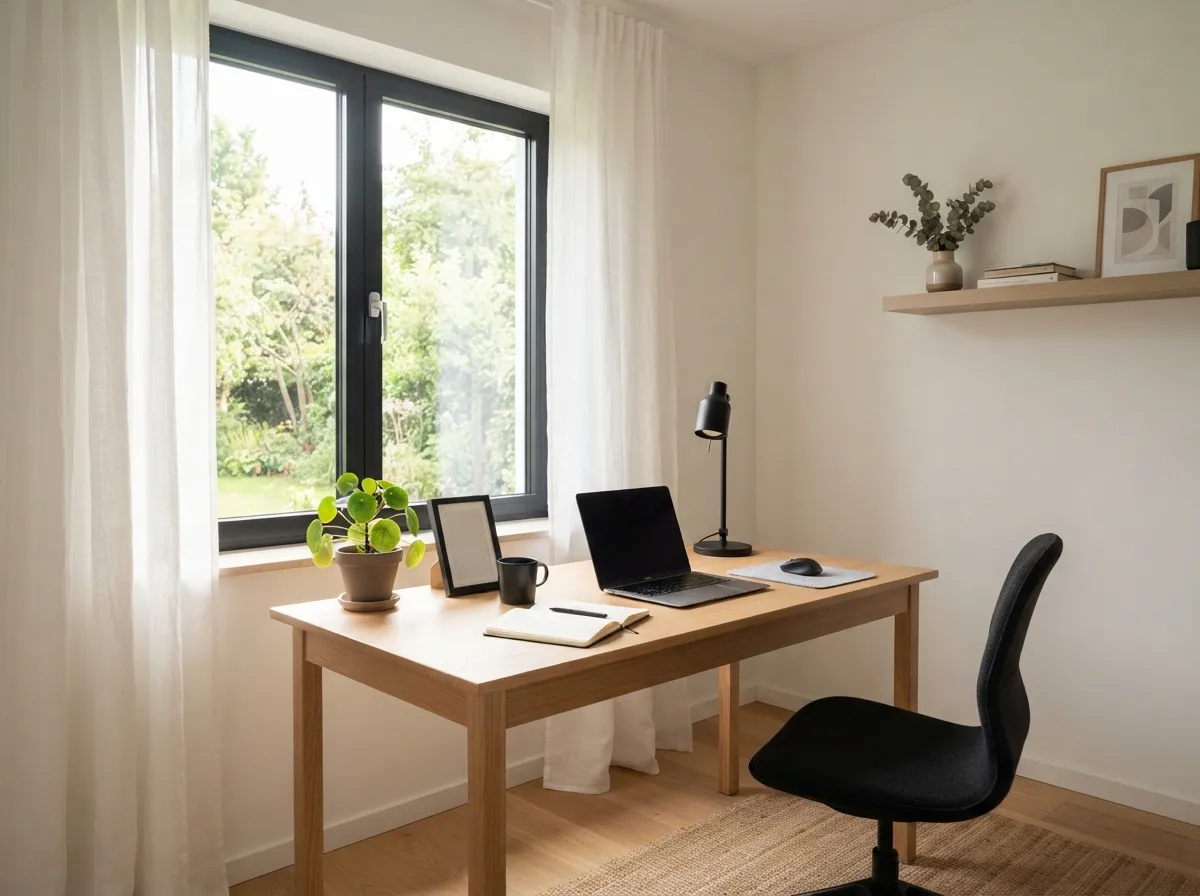
Maximizing natural light is a highly effective and cost-efficient design strategy for a minimalist home office. Incoming sunlight not only brightens the room but also boosts your mood and productivity.
Your desk position should face or be directly adjacent to a window. A large window with thin white curtains allows bright light to enter, creating an airy and fresh atmosphere.
By making full use of natural light, you can reduce reliance on artificial lighting during the day. This not only saves energy but also makes your workspace feel more alive and pleasant.
4. Install DIY Floating Shelves
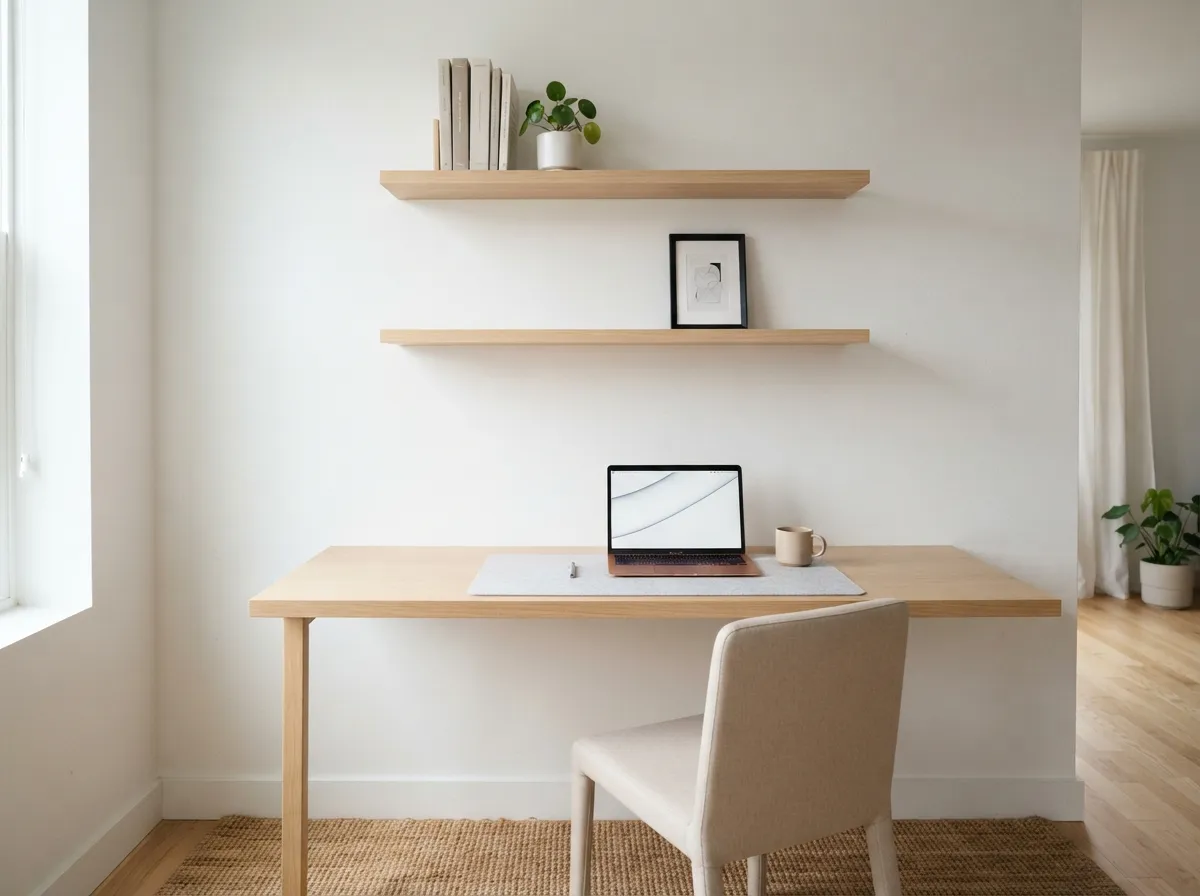
DIY floating shelves are a smart and aesthetic storage solution for your minimalist workspace. With just a few wooden boards and hidden brackets, you can create clean and functional vertical space.
Imagine two or three simple floating shelves of light wood neatly mounted on the white wall above your desk. These shelves don’t take up floor space, keeping the work area spacious.
You can arrange a few important books, a small plant in a ceramic pot, and a simple photo frame on the shelves. This adds a personal touch without sacrificing the minimalist aesthetic or making the room feel cramped.
5. Opt for a Neutral Color Palette
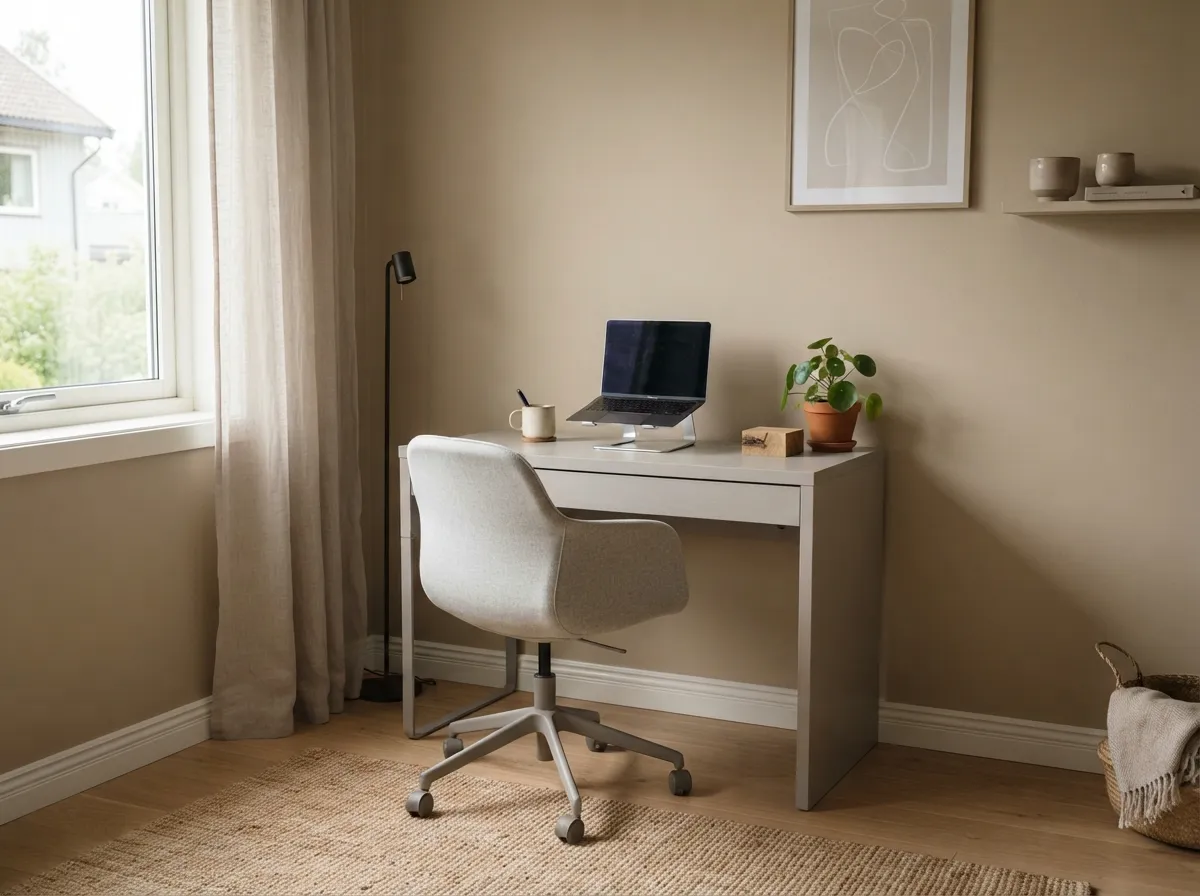
Choosing a neutral color palette is a budget-friendly foundation of minimalist design. Colors like pale white, cream, or light gray create a calm and spacious backdrop, ideal for focused work.
Imagine walls painted in a warm, soft cream color, paired with a light gray desk. This palette helps create a soothing atmosphere that doesn’t strain the eyes.
Small accent touches of natural materials like light wood or rattan can be added to provide texture and warmth. The result is a workspace that feels spacious, peaceful, and highly conducive to productivity.
6. Add Greenery with Potted Plants
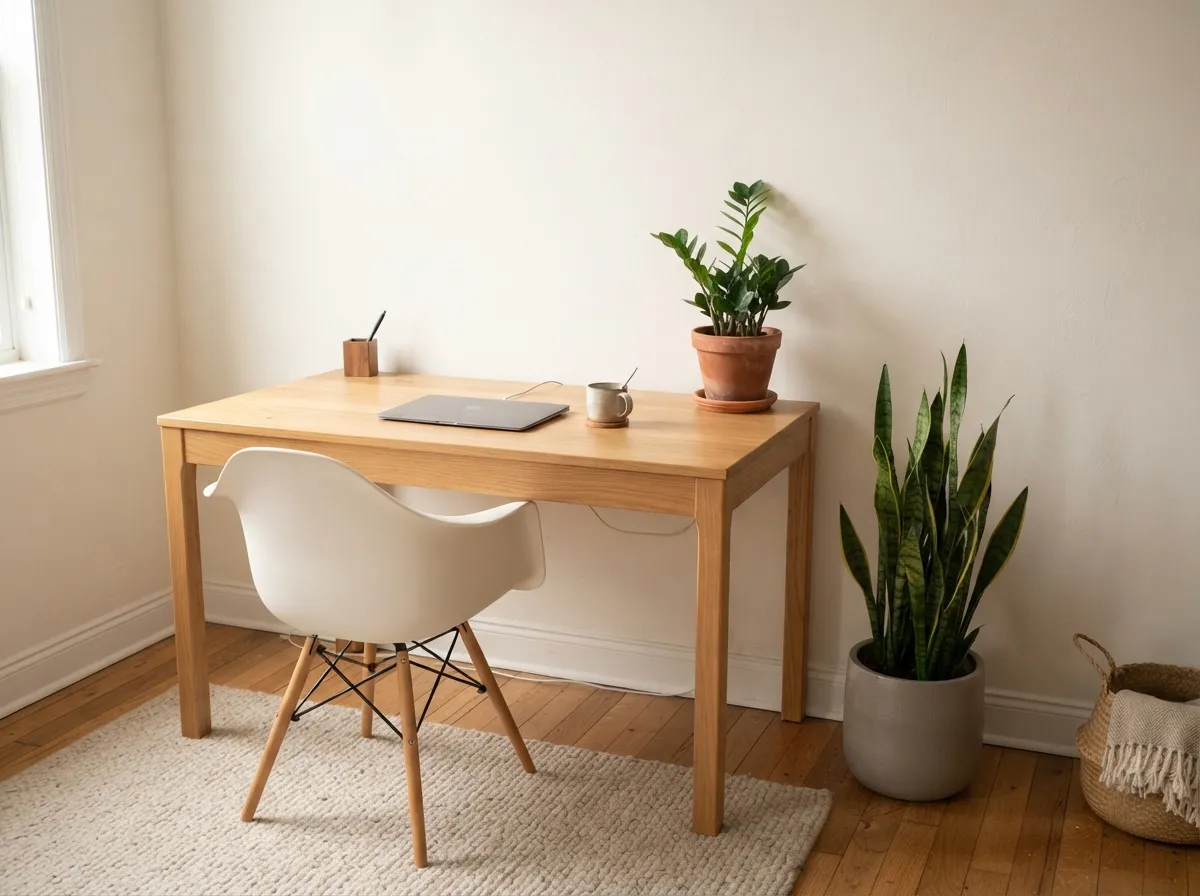
Bringing natural elements into your minimalist workspace is a wonderful way to add freshness. Green-leafed potted plants, such as Sansevieria or Zamioculcas, not only enhance the appearance but also help filter the air.
You can place them on a corner of the desk or on a simple wall shelf. Choose ceramic pots in neutral colors like terracotta or light gray to maintain a clean and calming aesthetic.
The presence of these plants creates a more lively and productive atmosphere without requiring complicated care. This natural touch of green is a small investment with a big visual impact.
7. Utilize Vertical Wall Space
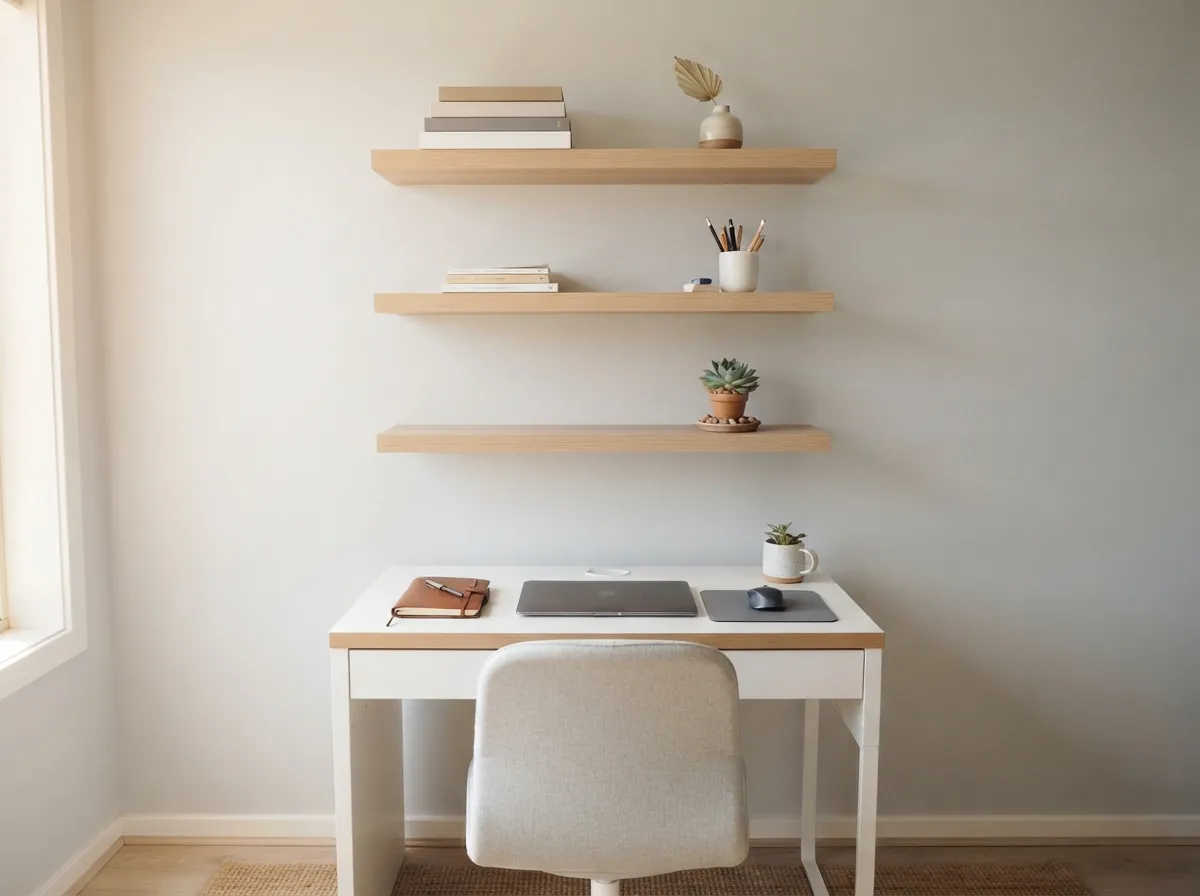
Utilizing walls as storage areas is a smart strategy for a minimalist home office. This helps keep the desk tidy and free of clutter, maximizing every inch of available space.
Install floating wall shelves of light wood or a pegboard above your desk. These shelves can be used to store important books or a few small decorative accessories.
For example, you can neatly arrange books, place a pencil holder, or display a simple photo frame. By doing so, you create a functional storage system while adding visual appeal to a previously empty wall.
8. Invest in Budget Task Lighting
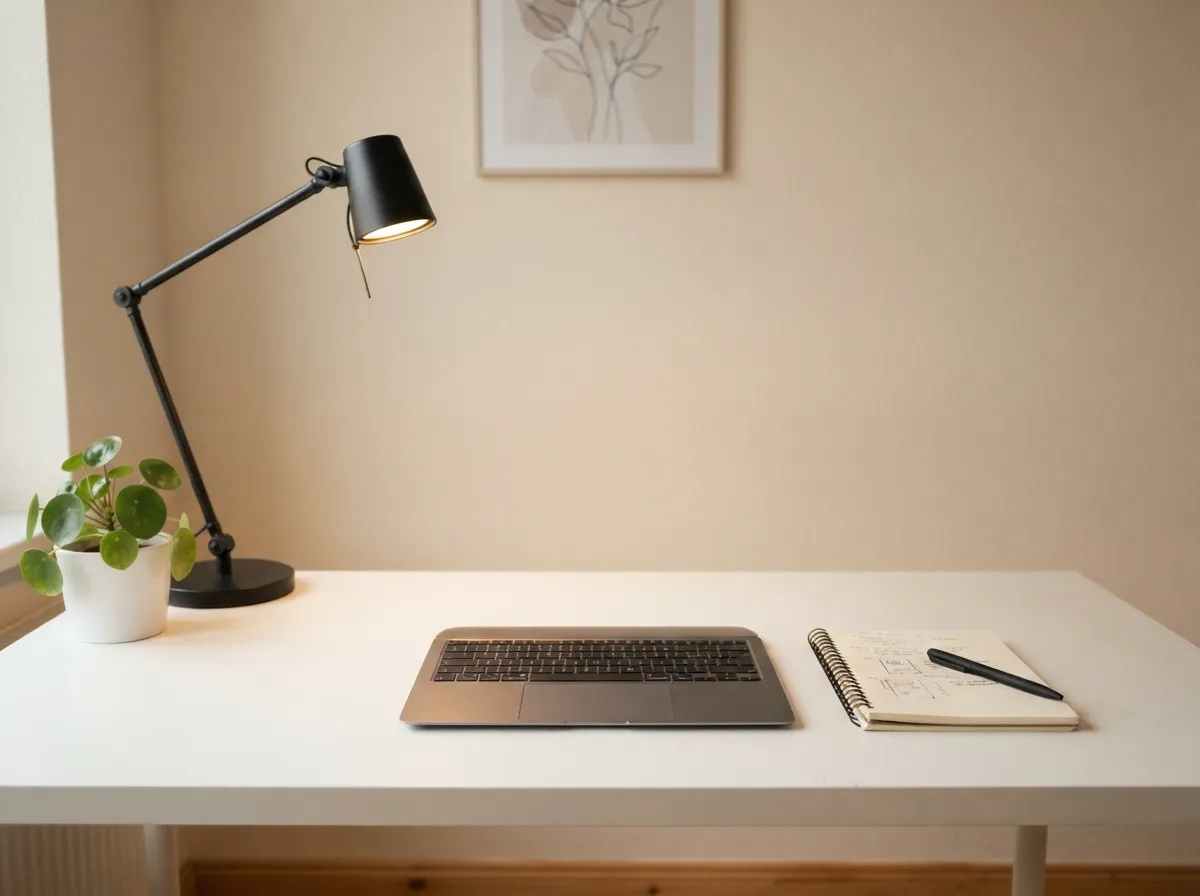
Adequate lighting is key to productivity and eye comfort in your workspace. The right desk lamp doesn’t have to be expensive; many affordable options still offer minimalist style.
Look for desk lamps with sleek designs and neutral colors like matte black or white. Lamps with flexible necks or swing arms are ideal because you can direct the light straight to your work area.
A metal desk lamp with a matte chrome finish on a white desk provides a functional modern touch. This ensures your work area is brightly lit, helping you stay focused without straining your budget.
9. Create a Simple Desk Zone
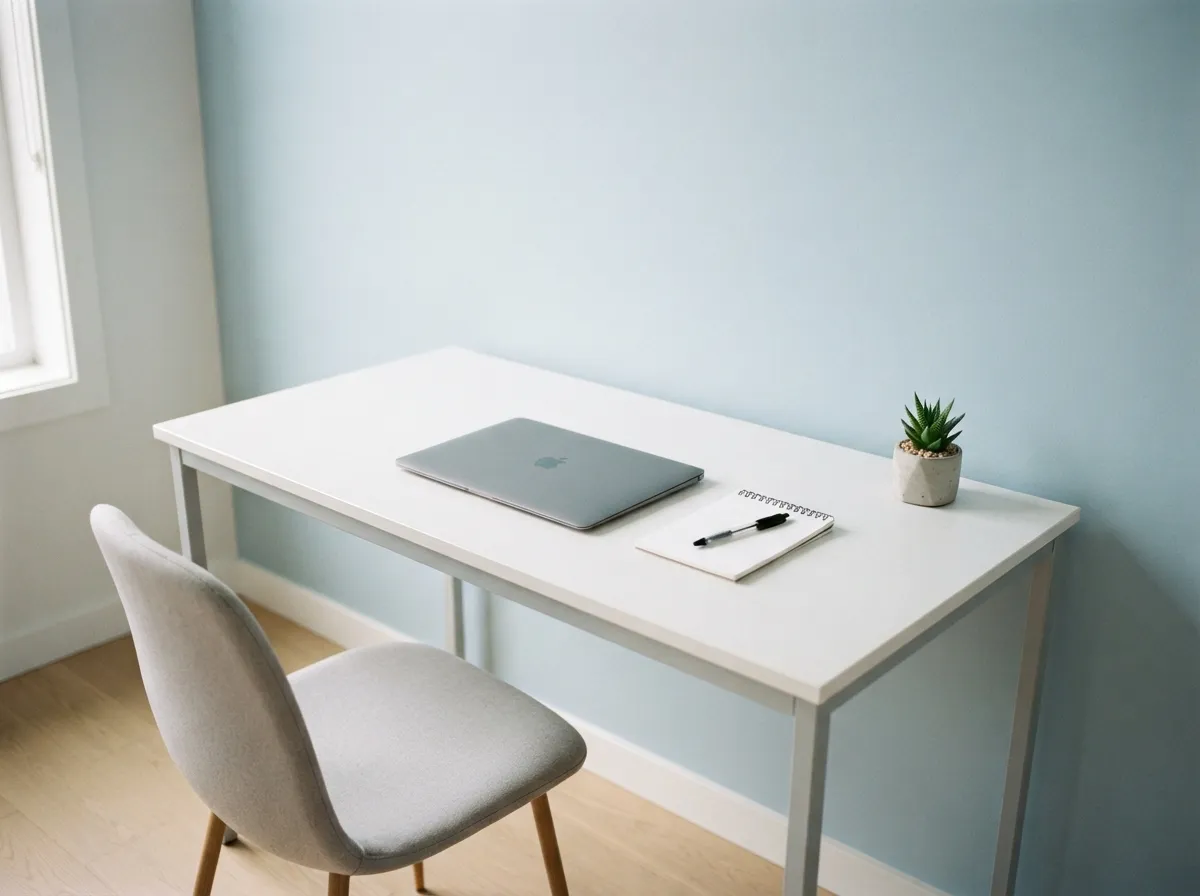
Creating a simple desk zone means keeping your work surface clean and free of unnecessary items. This is the core of minimalist aesthetics and greatly helps focus.
Choose a desk with a spacious surface and a neutral color, such as a white desk with thin metal legs. On top of it, place only the essentials you use every day.
A laptop, a mouse, a simple pencil holder, and perhaps a small plant are enough. This tidy desk invites the mind to work calmly and efficiently, keeping visual distractions away.
10. Smart Cable Management
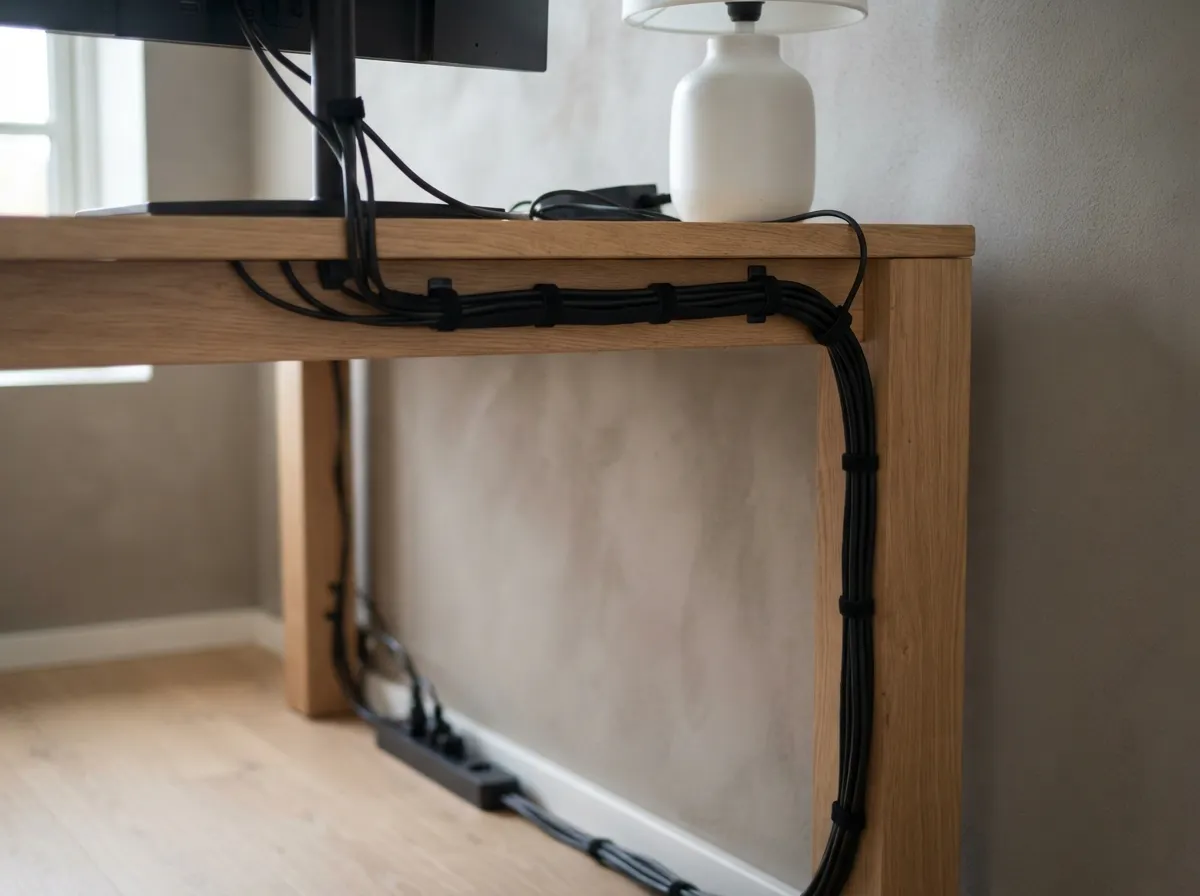
Scattered cables can ruin the minimalist look and create visual chaos. Smart cable management is an important step to maintain the tidiness of your workspace.
Utilize cable ties, adhesive clips, or a cable tray mounted under the desk. This will hide all cables from view, creating a much cleaner and more organized appearance.
Look at the back of your oak desk; all the cables from the monitor and laptop are neatly bundled with black ties. This small detail makes a big difference, ensuring your home office feels calm and distraction-free.
11. DIY Pegboard Storage Solution
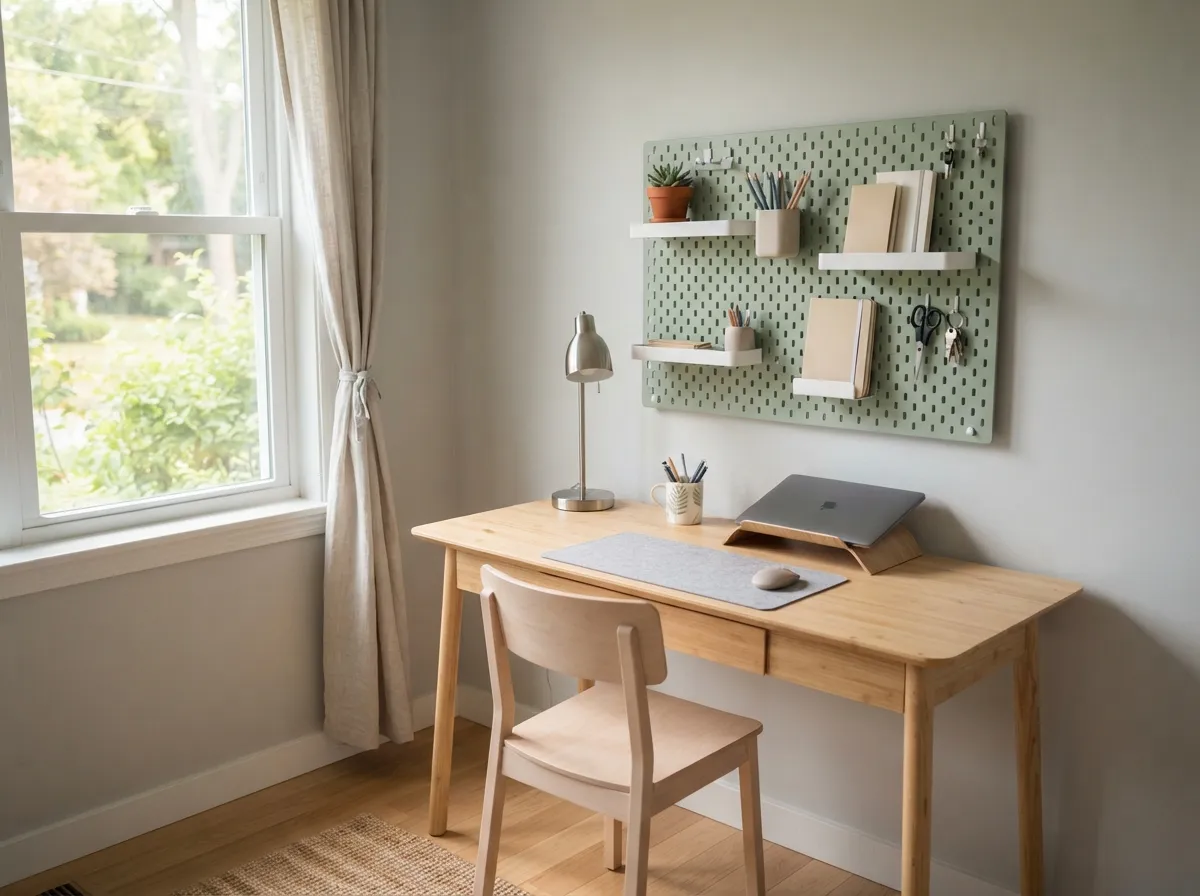
Pegboards offer an ingenious and cost-effective way to organize your workspace, keeping essentials within reach without cluttering your desk. Imagine a crisp white pegboard adorning the wall above your minimalist wooden desk, creating a clean backdrop.
This versatile solution allows you to customize shelf and hook placement for items like pens, notebooks, and even small potted plants. The natural wood elements on your desk would complement the practical yet aesthetic setup of the pegboard.
It is an excellent strategy for maximizing vertical space, which is often underutilized in smaller home offices. This thoughtful arrangement brings both functionality and a touch of personal flair to your budget-friendly environment.
By painting the pegboard a soft sage green, it can seamlessly blend with your decor, adding a subtle pop of color while maintaining a serene atmosphere. This DIY project truly elevates a simple office.
12. Find Thrifted Storage Solutions
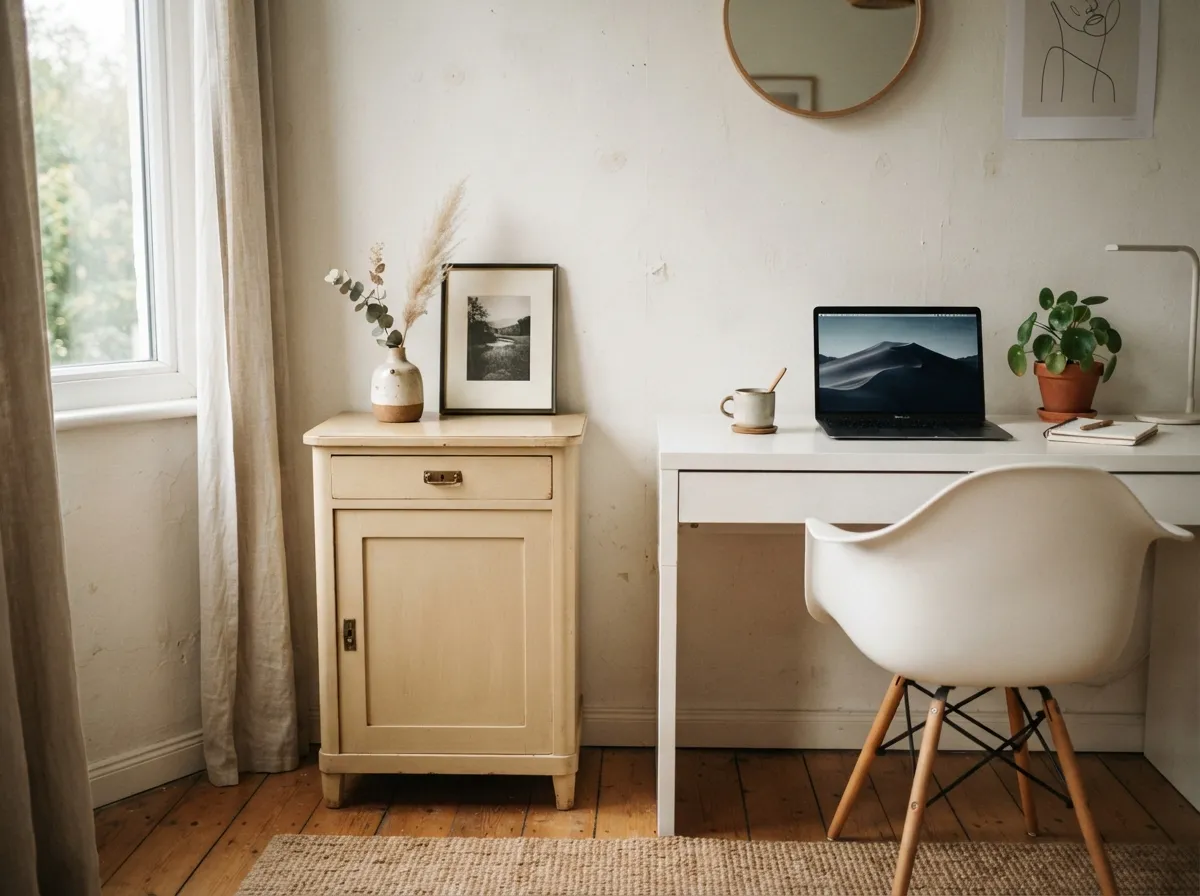
Discovering storage pieces at thrift stores can add immense character and save you significant money for your home office. Picture a beautifully repainted vintage wooden cabinet in a muted cream tone, nestled beside your desk.
This approach lets you give new life to pre-loved items, contributing to a sustainable and unique design. The cabinet’s classic lines would offer a charming contrast to the modern simplicity of your workspace.
It serves not just as storage for documents and supplies, but also as a surface for a small decorative item or a framed photo, enhancing the room’s personality. This thoughtful integration of old and new creates a truly inviting space.
Such a piece often comes with a story, making your office feel more personal and less generic. This specific thrifted item becomes a central, yet understated, feature in your budget-conscious design.
13. Select a Comfortable, Simple Chair
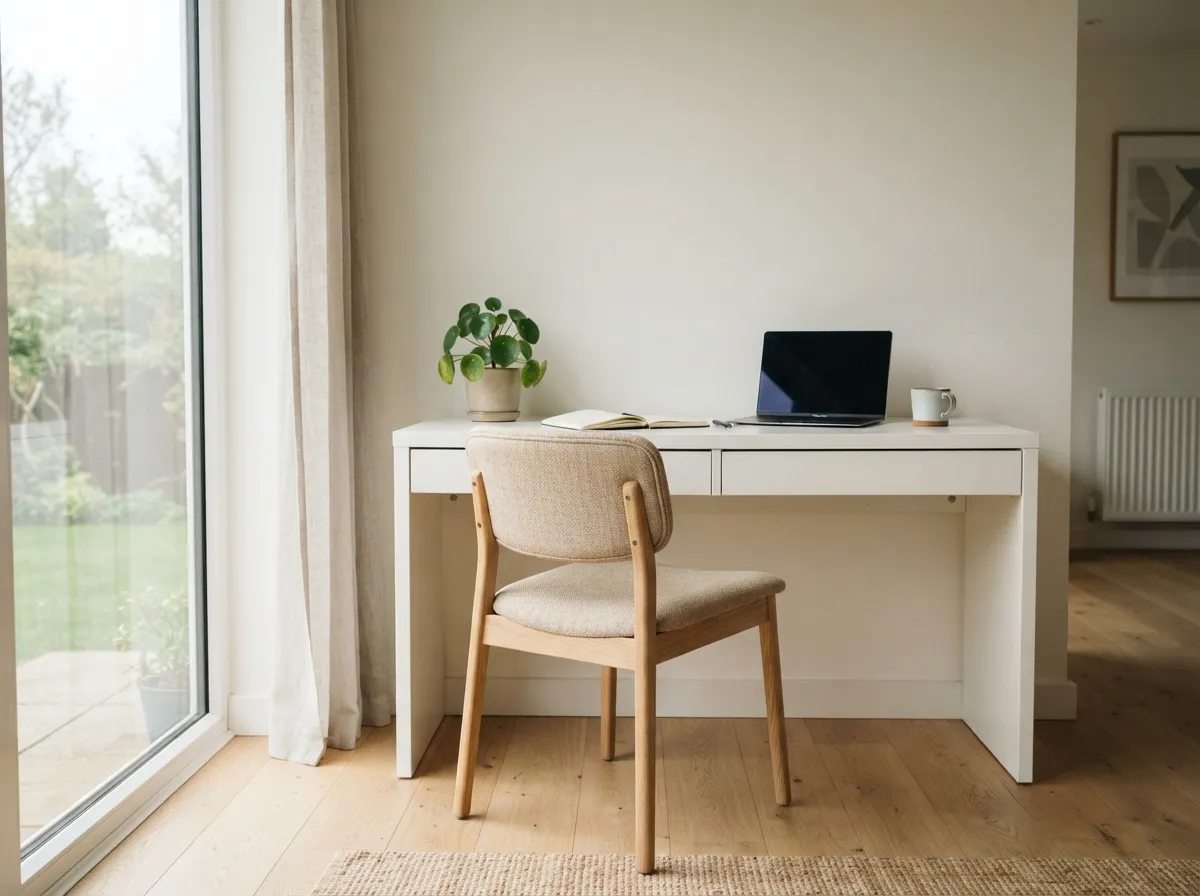
Investing in a comfortable yet simple office chair is paramount for productivity and well-being, even on a budget. Envision a chair with clean, ergonomic lines, featuring a light wood frame and a soft, woven beige fabric seat.
Its understated design seamlessly blends into a minimalist aesthetic, avoiding any visual bulk or distraction. The gentle curve of its backrest suggests support without being overly elaborate.
Look for chairs that prioritize good posture through their basic form rather than complex adjustments. This specific chair offers both visual lightness and essential comfort for long work sessions.
The warm tones of the wood and fabric add a tactile, inviting element to your otherwise streamlined workspace. Selecting such a piece ensures your office remains a calm and functional area.
14. Use Multifunctional Furniture
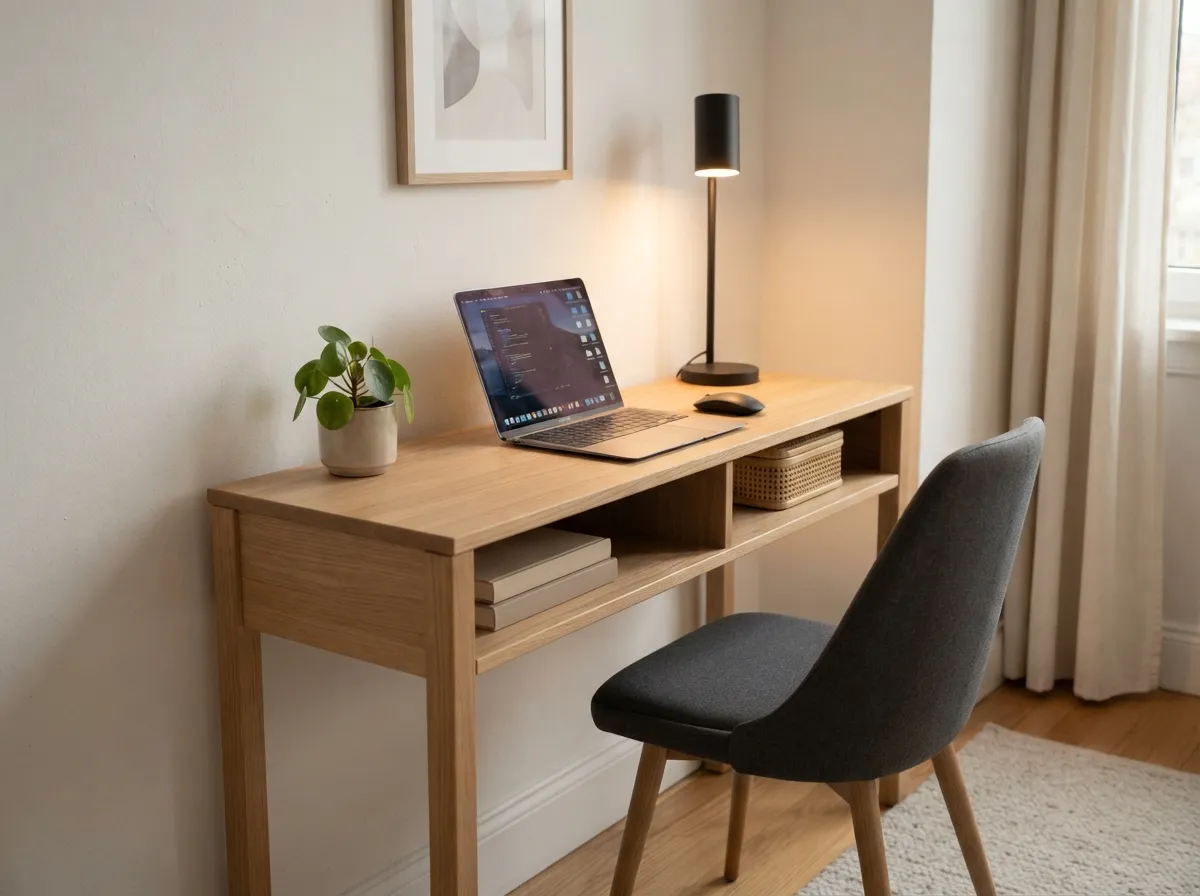
Maximizing every inch of your space with multifunctional furniture is a smart move for any budget-conscious minimalist office. Consider a sleek, narrow console table, expertly designed to function both as a workspace and as a display unit.
This piece features a smooth, light oak surface for your laptop, while its integrated lower shelf provides discreet storage. You can neatly tuck away books or office supplies, keeping the top clear.
Such versatility eliminates the need for additional bulky items, contributing to an uncluttered and expansive feel in a smaller room. Its clean lines and simple form embody true minimalist efficiency.
The warm oak finish adds a touch of organic elegance, ensuring the piece feels substantial yet light. This clever solution proves that functionality and style can coexist beautifully in your home office.
15. Minimalist Wall Art on a Budget
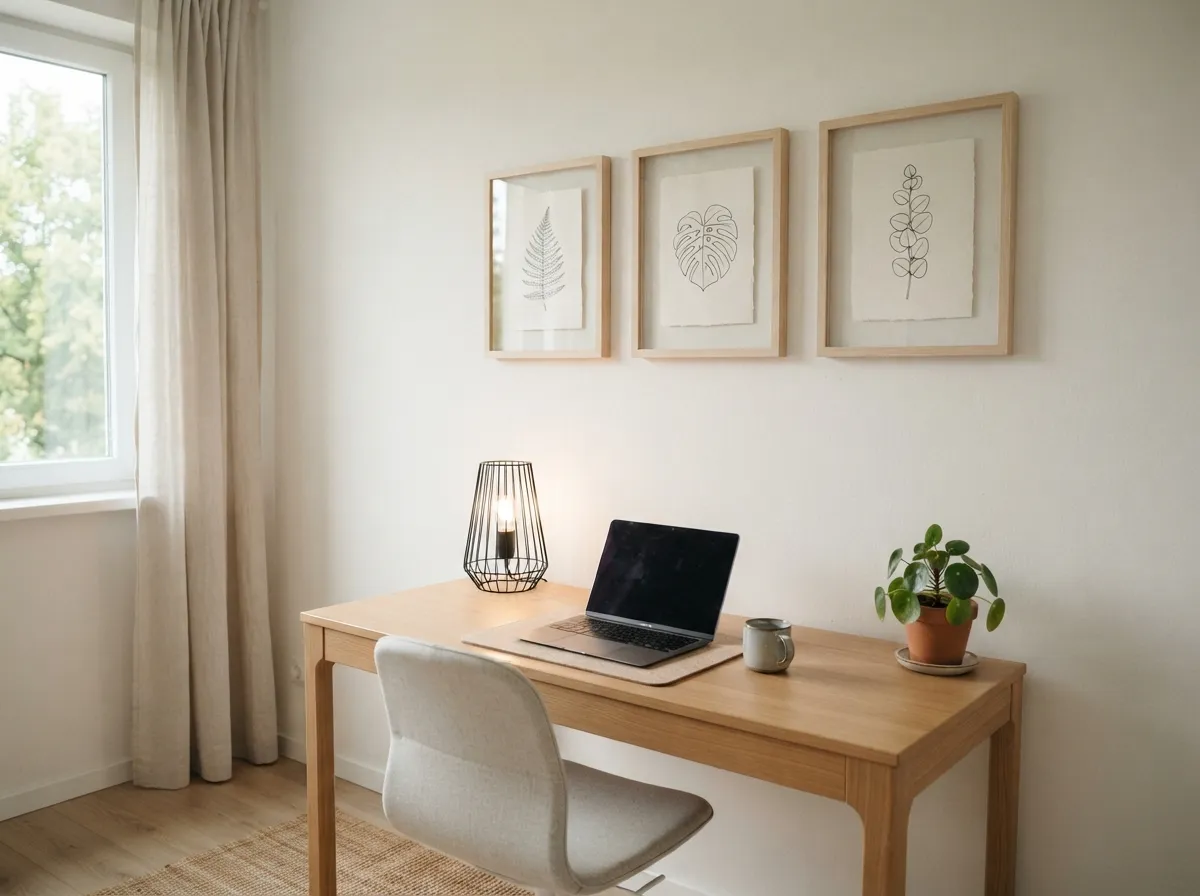
Elevate your minimalist office aesthetic without overspending by selecting thoughtful wall art. Imagine a clean, off-white wall adorned with a trio of simply framed botanical prints, featuring delicate line drawings of leaves.
These pieces introduce visual interest and a touch of nature, fostering a calm and inspiring atmosphere. The light wood frames complement the room’s natural elements and simple furnishings.
Opt for inexpensive prints, digital downloads you can print yourself, or even DIY abstract pieces. The muted tones of the botanical art ensure your space remains serene and uncluttered.
Such art serves as a subtle focal point, enhancing the room’s character without overwhelming it. This careful curation demonstrates that sophisticated design is achievable even on a tight budget.
16. Optimize Corner Spaces
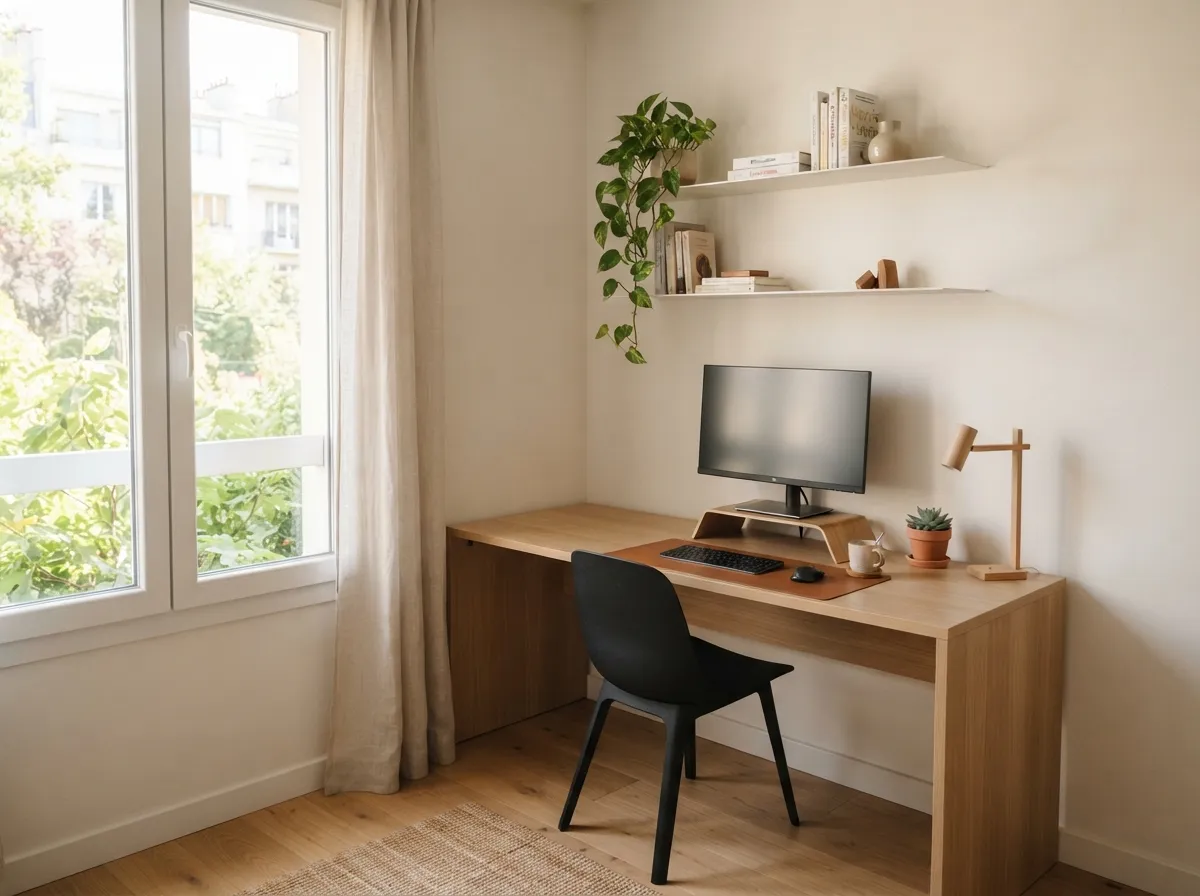
Optimizing room corners is a smart strategy for creating a functional work area without taking up much space. Too often, these corners are neglected or become spots where unorganized items pile up.
Consider using a corner desk with a sleek design, such as a light wood desk that blends with clean white walls. This effectively utilizes every square inch available.
Complete it with a few minimalist wall shelves above to store books or simple decorations. This approach ensures your workspace stays organized and bright, even in the smallest of areas.
17. Simple Window Treatments
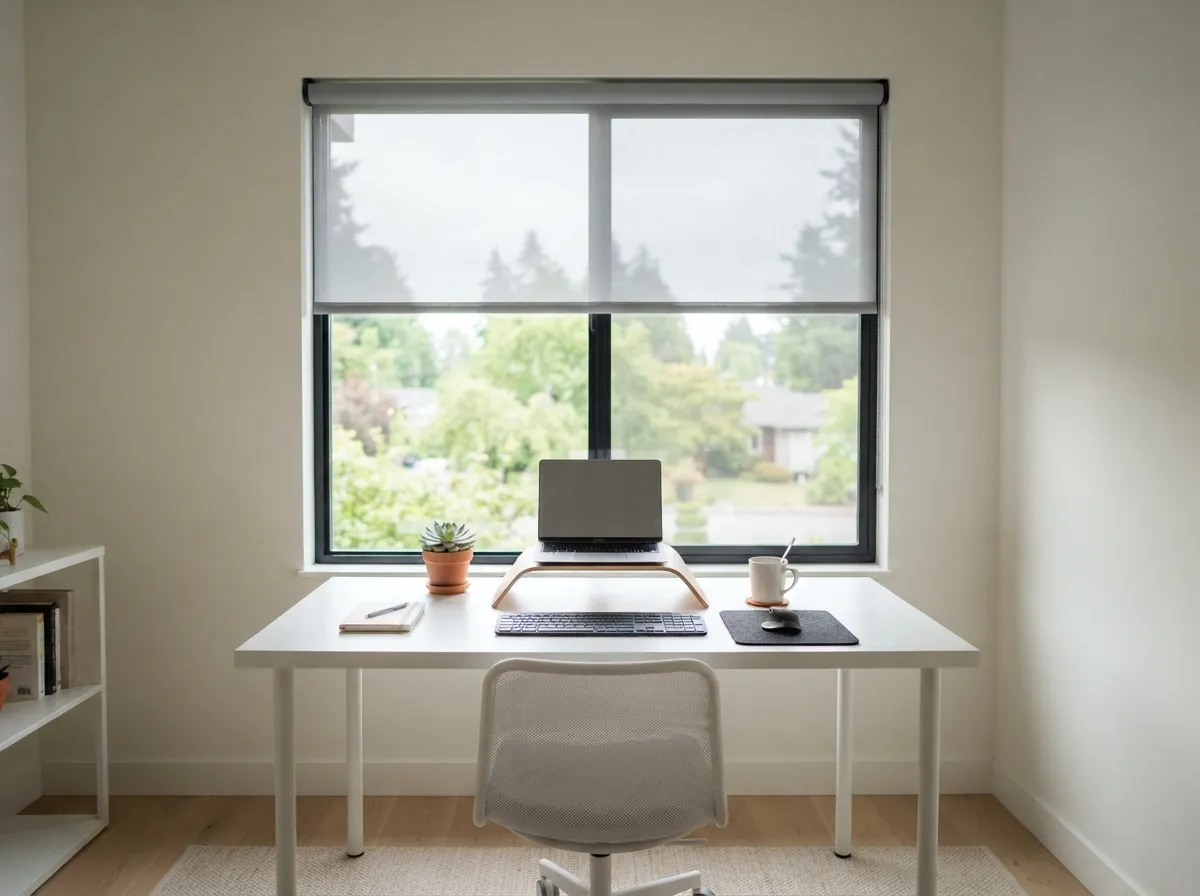
Simple window curtains or blinds play a big role in creating a comfortable and productive work atmosphere. Instead of choosing thick curtains that cost a great deal, consider lighter and more functional options.
Light gray roller blinds or thin fabric curtains are excellent choices. Both allow natural light to enter the room while still maintaining your privacy.
The soft, diffused light from the window, filtered by these curtains, helps reduce glare on your computer screen. This also creates a calm ambiance that supports focus and concentration throughout the day.
18. Add a Small Rug for Warmth
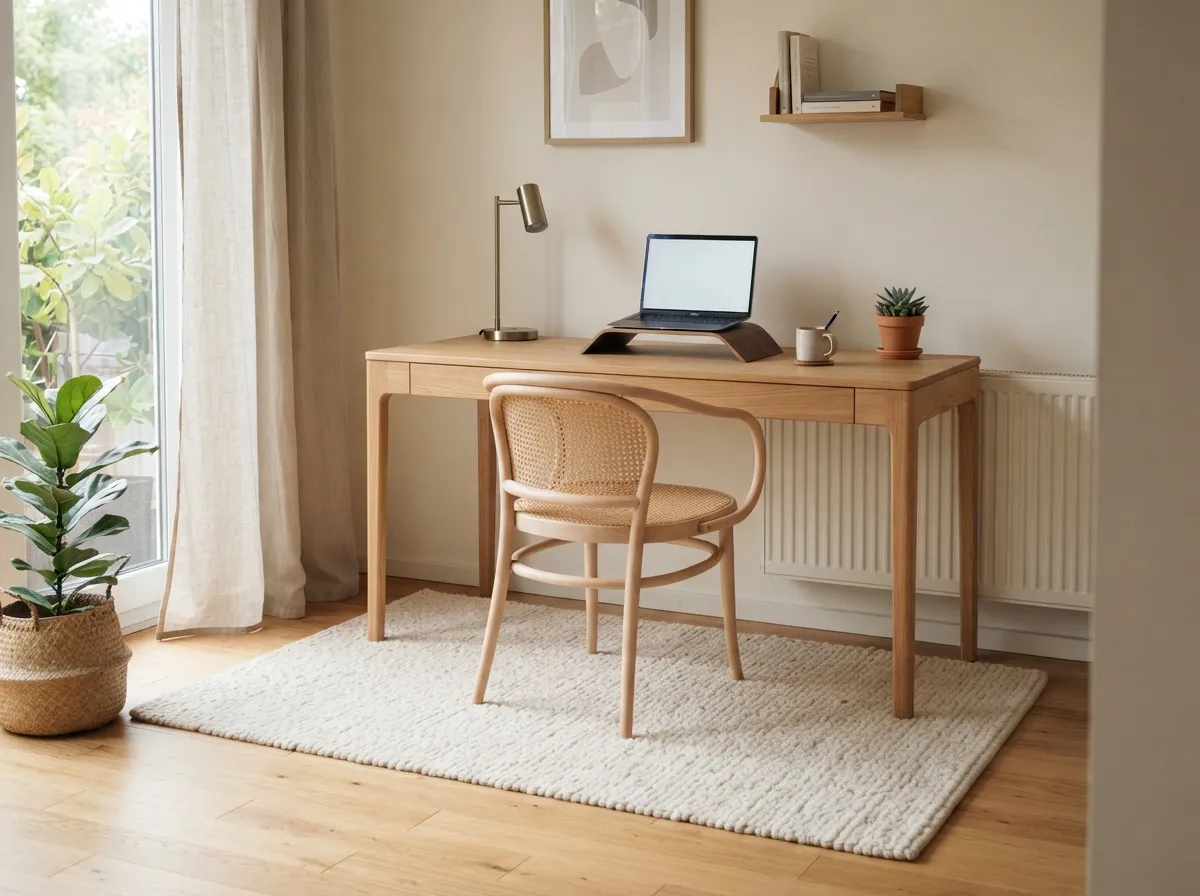
Although often overlooked, a small rug can make a big difference in the comfort and aesthetics of your minimalist workspace. This rug not only adds a touch of visual warmth but also functions as a boundary for the work area.
Choose a medium-sized rug in a neutral color, such as a cream wool rug or a jute weave. Place the rug under your desk to create a cozy area underfoot.
In addition to adding warmth, the soft texture of this rug also helps muffle sound, creating a calmer and more focused atmosphere. This is an economical way to enhance the overall comfort of your room.
19. Personalize with Purposeful Items
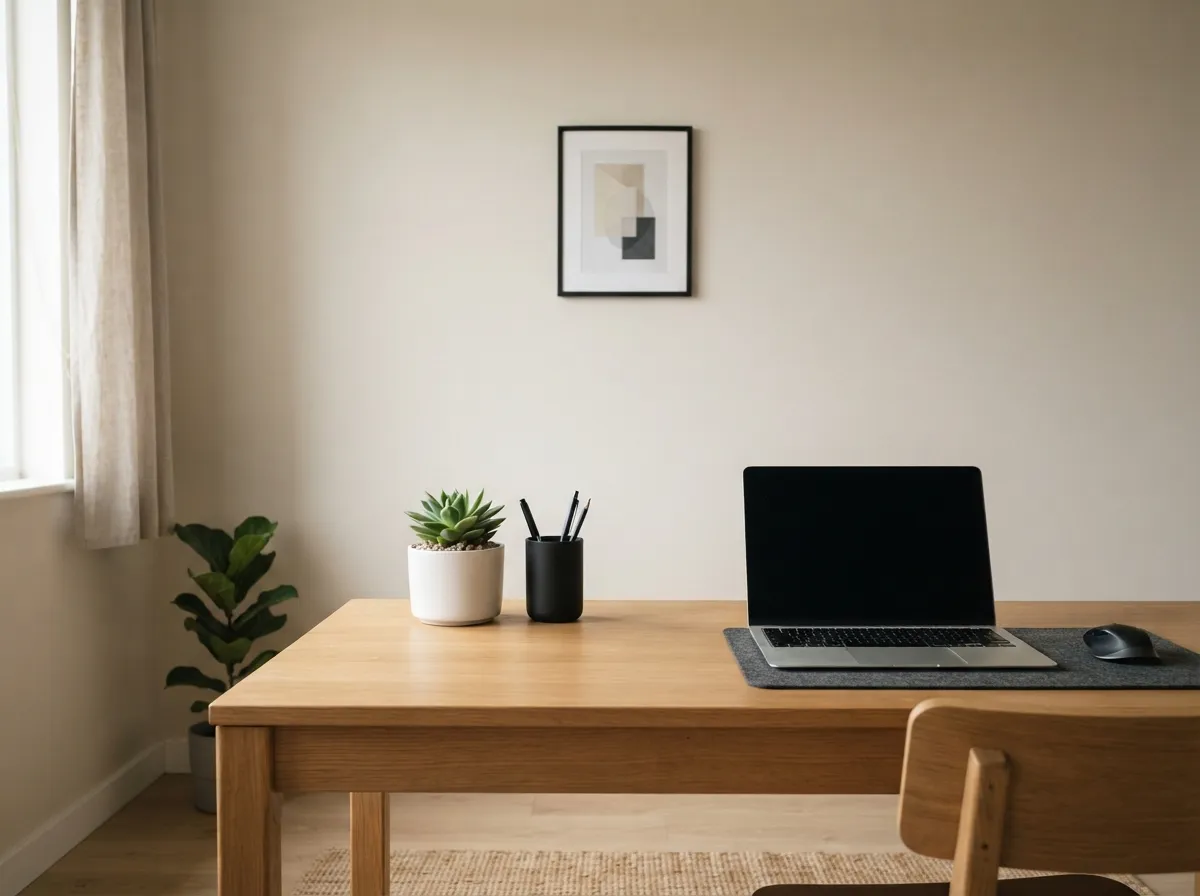
Personalization doesn’t mean sacrificing minimalist aesthetics; quite the opposite. Choose a few items that carry deep meaning or practical function to adorn your workspace.
For example, a small green plant like a cactus in a white ceramic pot can add a refreshing touch of life. You can also place a single simple photo frame containing an inspirational quote on the wall.
The key is to choose items that are meaningful and don’t create clutter. These elements will make your workspace more comfortable and motivating, without disturbing the simplicity of the design.
20. Implement File Box Organizers
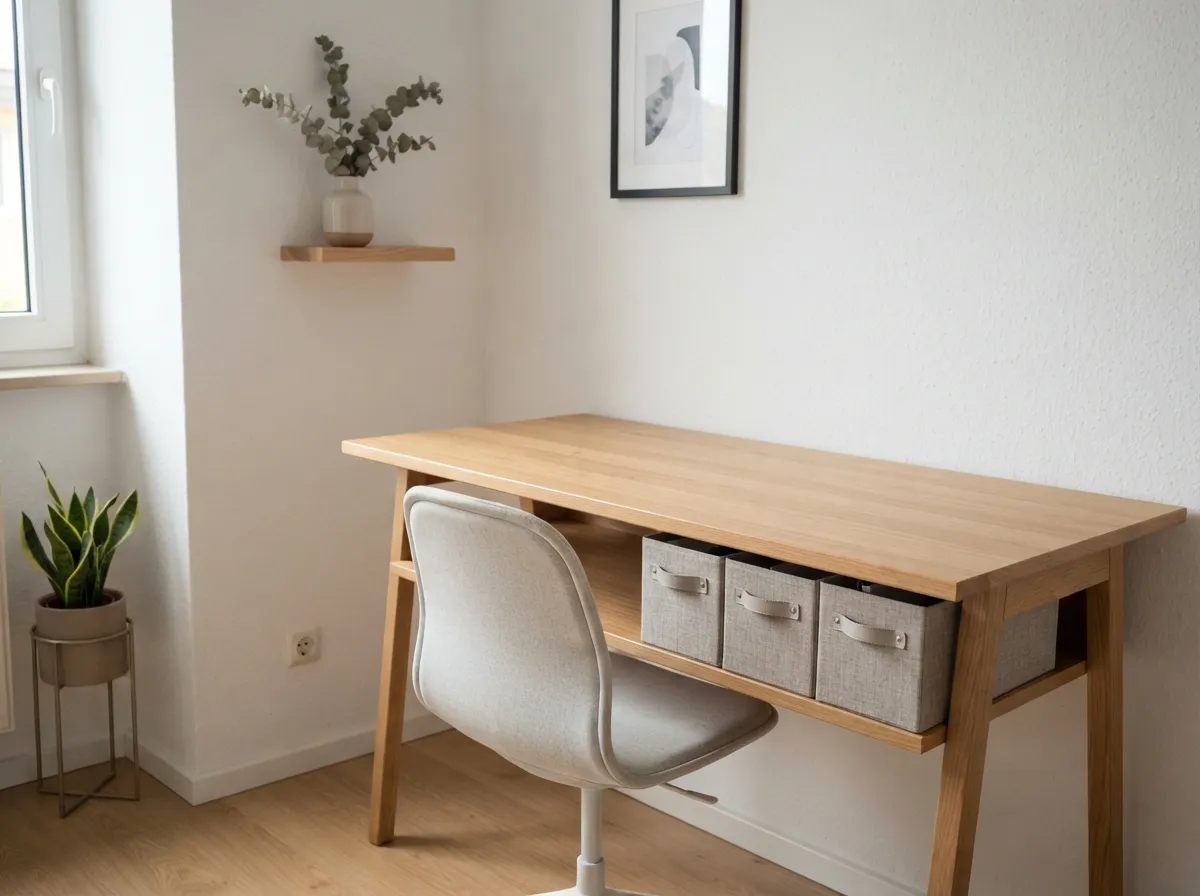
Keeping documents and mail tidy is a common challenge in many home offices, especially on a limited budget. File boxes are a highly effective and economical solution to this problem.
Choose file boxes with minimalist designs, such as those made from gray linen material or recycled cardboard in neutral colors. Place these boxes on open shelves or inside closed cabinets.
By using file boxes, you can keep desk surfaces clean and free of disturbing paper piles. This creates an organized and efficient workspace, supporting productivity.
21. Keep Surfaces Clear and Clean
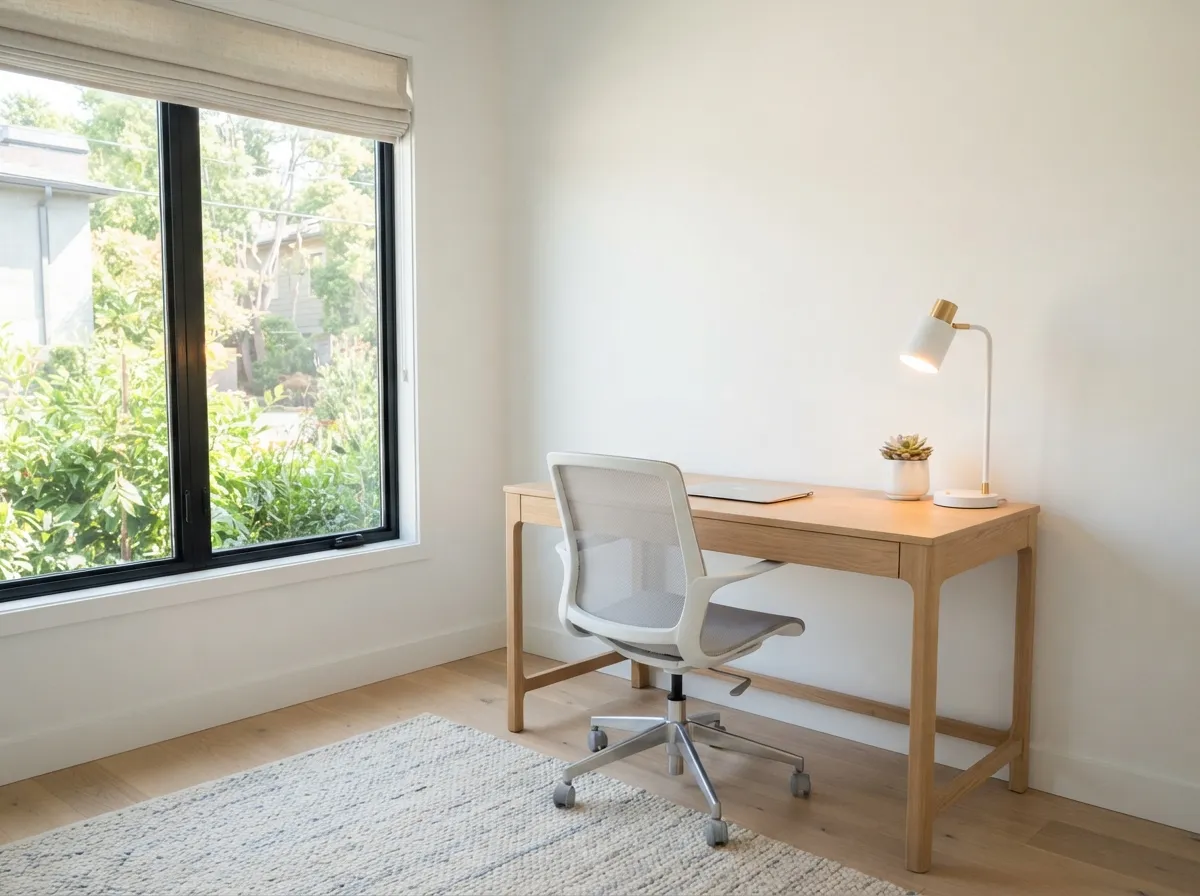
Creating a minimalist home office begins with keeping surfaces clean. This is crucial for a spacious aesthetic and a focused mind, especially on a limited budget.
Notice the light natural wood desk; its surface holds only a laptop, a small succulent, and a minimalist desk lamp. The bright white walls and abundant natural light from the window make the room feel spacious, reducing visual distractions for concentration.
Investing in essential furniture such as a sleek ergonomic chair and a simple desk helps greatly. A tidy layout encourages productivity without requiring large expenses.
With these practical and budget-friendly ideas, transforming your home office into a minimalist sanctuary is entirely achievable. Embrace simplicity, optimize your space, and enjoy a functional, inviting workspace that supports your productivity and well-being every day.