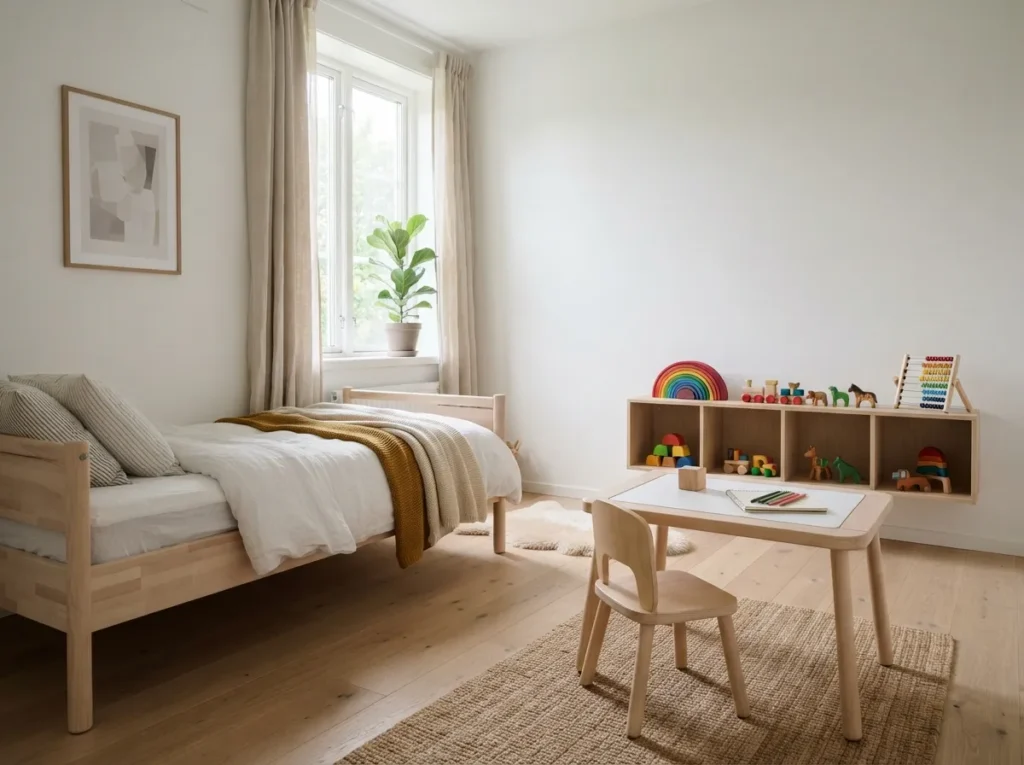
Designing a minimalist kids’ room that adapts as they grow is a smart investment. Discover how to create serene, functional spaces that foster creativity and independence, without constant overhauls. Embrace simplicity for a child’s sanctuary that evolves beautifully.
1. Understanding the Core Principles of Minimalist Design for Children
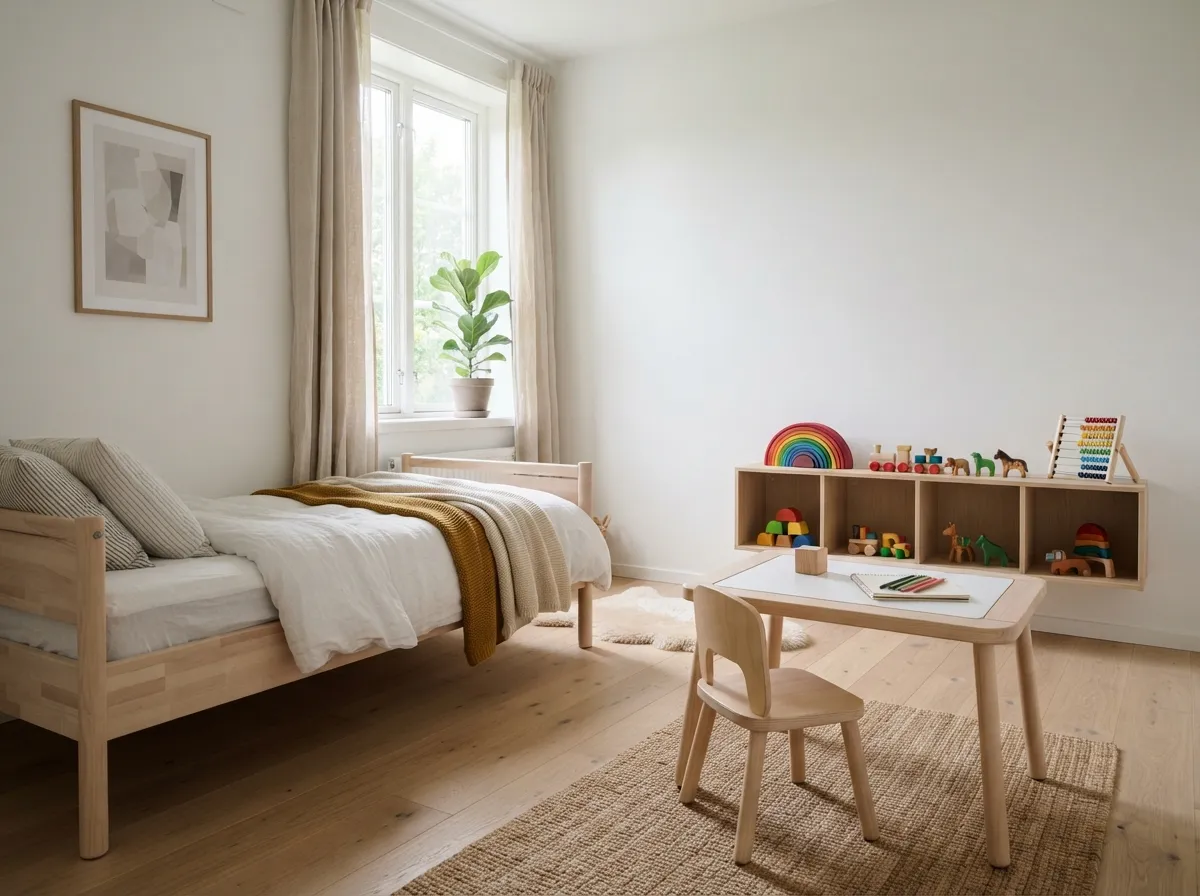
Minimalist design for children’s rooms centers on simplicity and purposeful living. It’s about creating an environment that fosters peace and focus, rather than overwhelming with clutter.
Think of clean lines and open spaces, allowing a child’s imagination room to grow.
This approach prioritizes functionality and durability. Each item in the room should serve a clear purpose, contributing to a calm and organized atmosphere.
Opting for furniture crafted from natural materials, such as light wood, helps maintain this serene aesthetic. The walls often feature a calming, neutral palette, providing a gentle backdrop.
This design philosophy ultimately supports a child’s development by encouraging independent play and reducing visual distractions.
2. Why Minimalist Rooms Benefit Growing Children
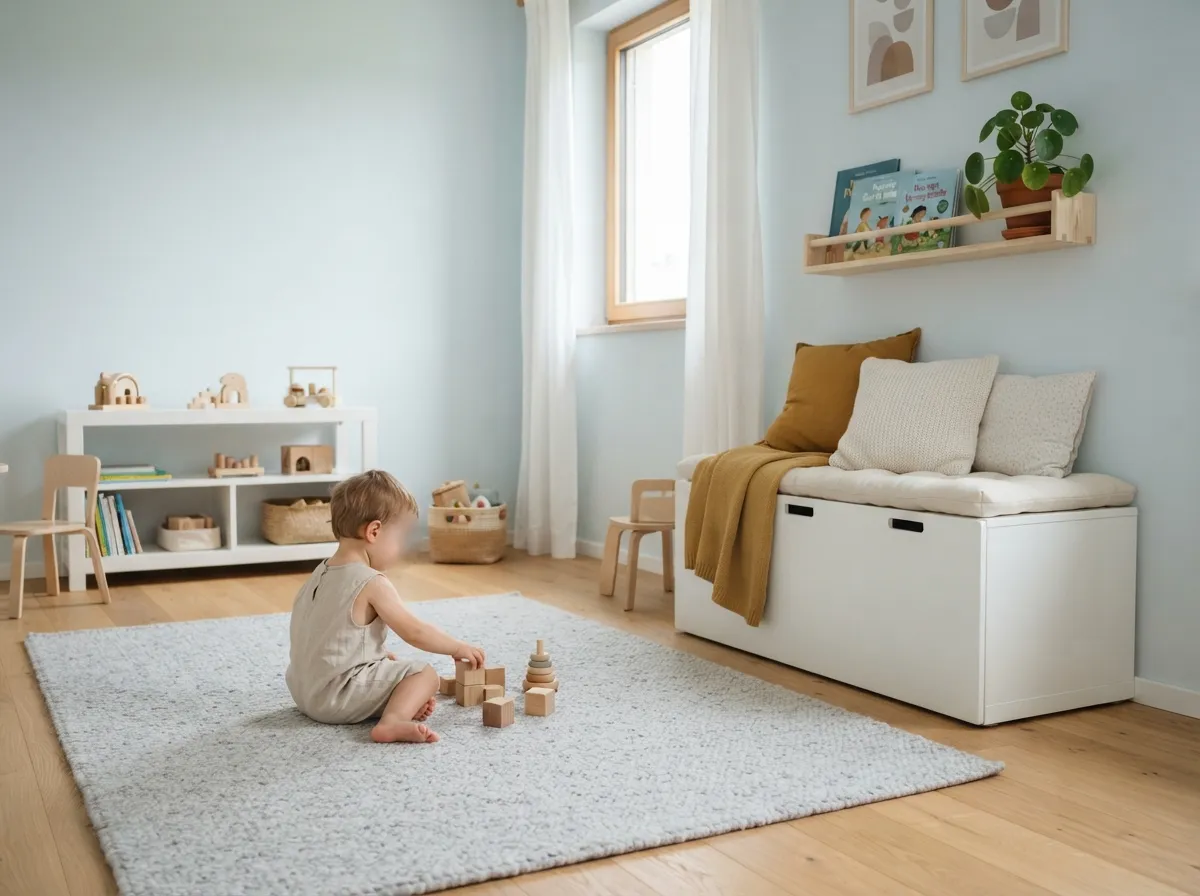
A minimalist room offers significant advantages for a child’s development. By reducing visual noise, it helps children concentrate better on their play and learning activities.
This absence of excessive items encourages creativity and resourcefulness. Children learn to make the most of what they have, developing deeper engagement with their toys and surroundings.
An uncluttered space also promotes a sense of independence and order. With fewer items, children can easily locate their belongings and participate in tidying up, fostering valuable life skills.
The simple layout, often featuring open floor space and thoughtfully placed furniture, adapts readily as your child’s needs evolve. This design supports various activities without constant rearrangement.
3. Decluttering Strategies for a Serene Space
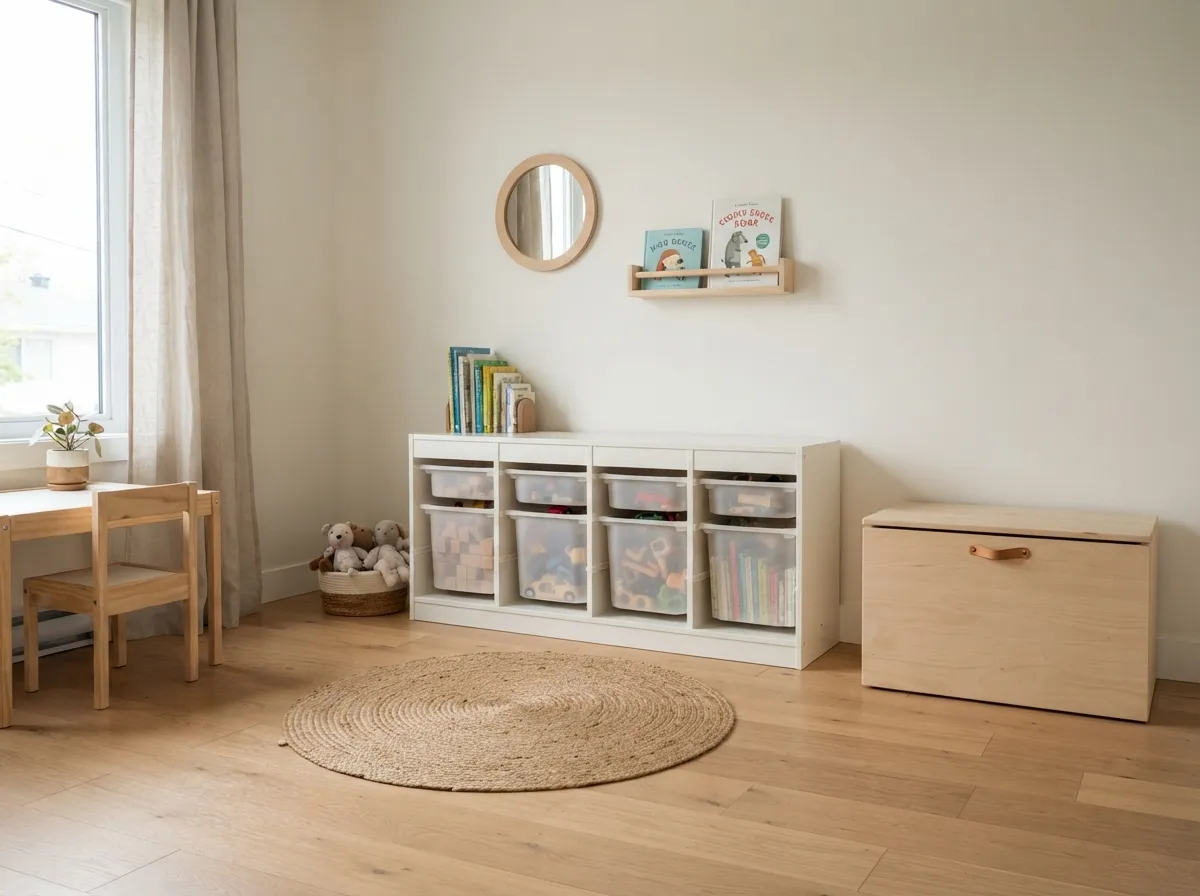
Achieving a serene minimalist room begins with effective decluttering. Start by categorizing items and regularly rotating toys to keep the selection fresh and manageable.
Designate a specific home for every item. Utilize simple, accessible storage solutions like open shelves and clear bins, making it easy for children to put things away independently.
Involve your child in the decluttering process. This teaches them about ownership and organization, making them active participants in maintaining their peaceful environment.
For instance, a low, accessible toy chest can be a great tool.
Embrace the ‘one in, one out’ rule to prevent new items from accumulating. This simple principle ensures that the room remains orderly and free from unnecessary clutter, fostering a sense of calm.
4. Choosing a Timeless Color Palette
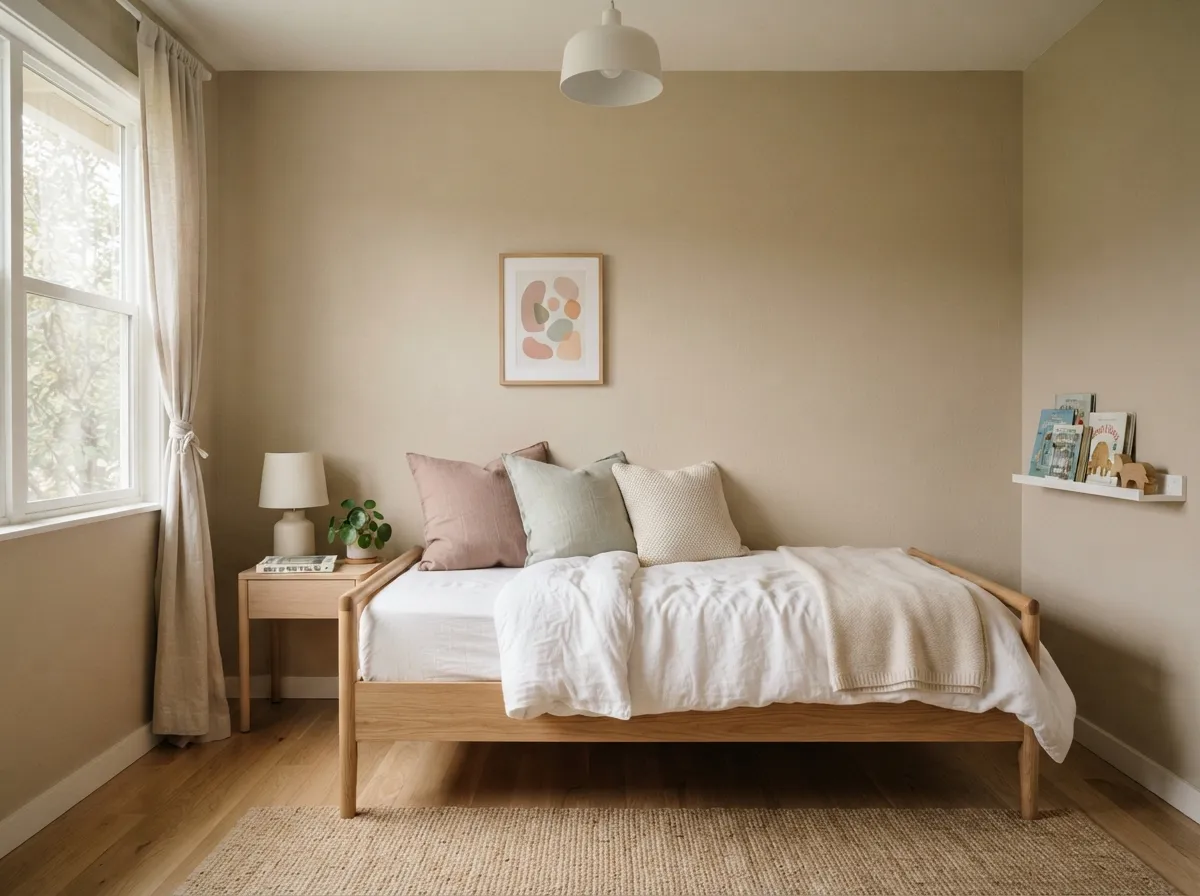
Selecting a timeless color palette is fundamental to a minimalist design that grows with your child. Begin with neutral base colors like soft whites, gentle grays, or warm beiges for walls and larger furniture pieces.
These calming tones create a versatile foundation. They provide a peaceful backdrop that can easily adapt to changing tastes and age-appropriate decor over the years.
Introduce subtle pops of color through accessories and textiles. Think muted pastels in bedding, a piece of artwork, or decorative pillows to add visual interest without overwhelming the space.
This approach ensures the room feels cohesive and age-appropriate from toddlerhood through the teenage years. The simple color scheme allows personal style to emerge through interchangeable elements.
5. Investing in Multi-Functional Furniture
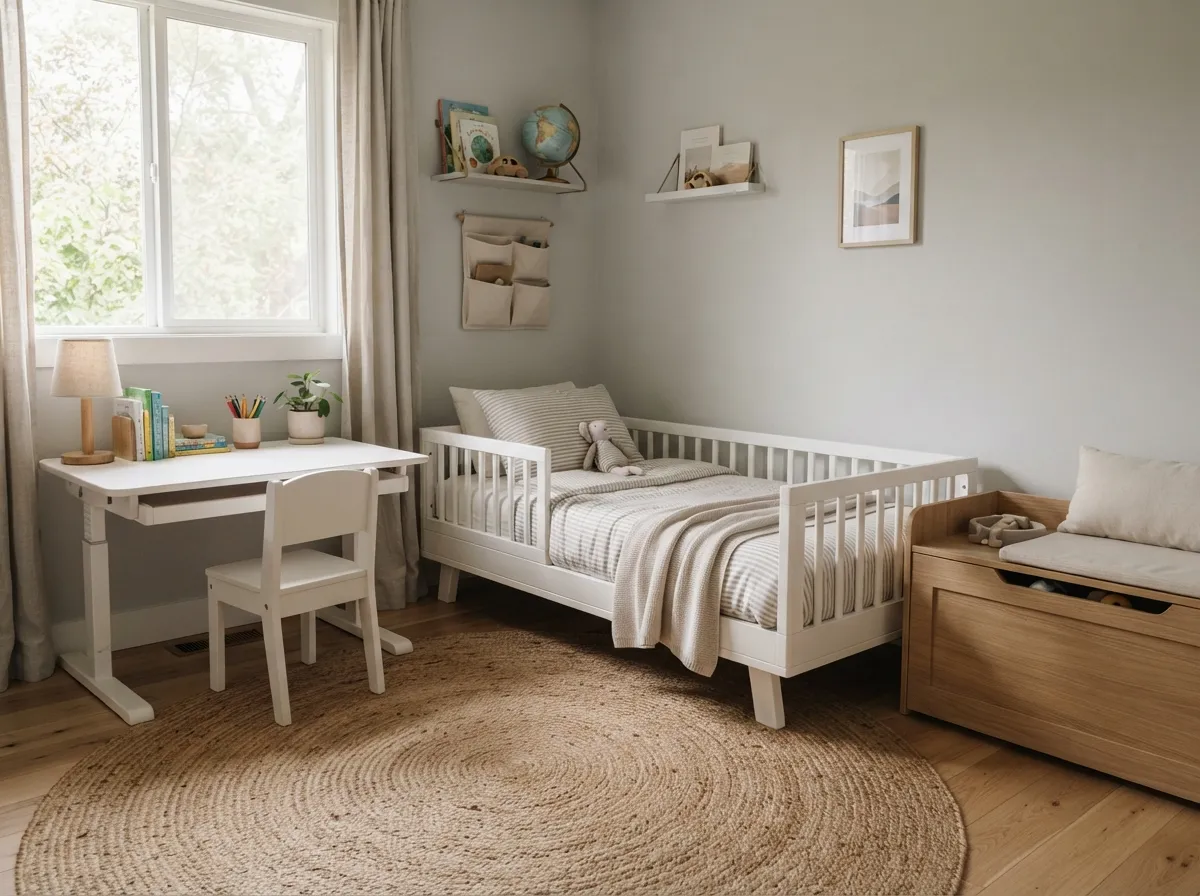
Multi-functional furniture is a cornerstone of minimalist design for a growing child’s room. Pieces that serve dual purposes offer incredible value and adaptability, saving space and resources.
Consider a convertible crib that transitions into a toddler bed and then a full-sized bed. A desk with adjustable height can accommodate a child from elementary school through high school.
Storage benches or ottomans provide extra seating while cleverly concealing toys or books. These adaptable items ensure the room remains functional and relevant through various developmental stages.
Look for durable construction and classic designs in natural wood or clean white finishes. Such investments ensure longevity, reducing the need for frequent furniture replacements as your child matures.
6. Creating Flexible Layouts for Different Ages
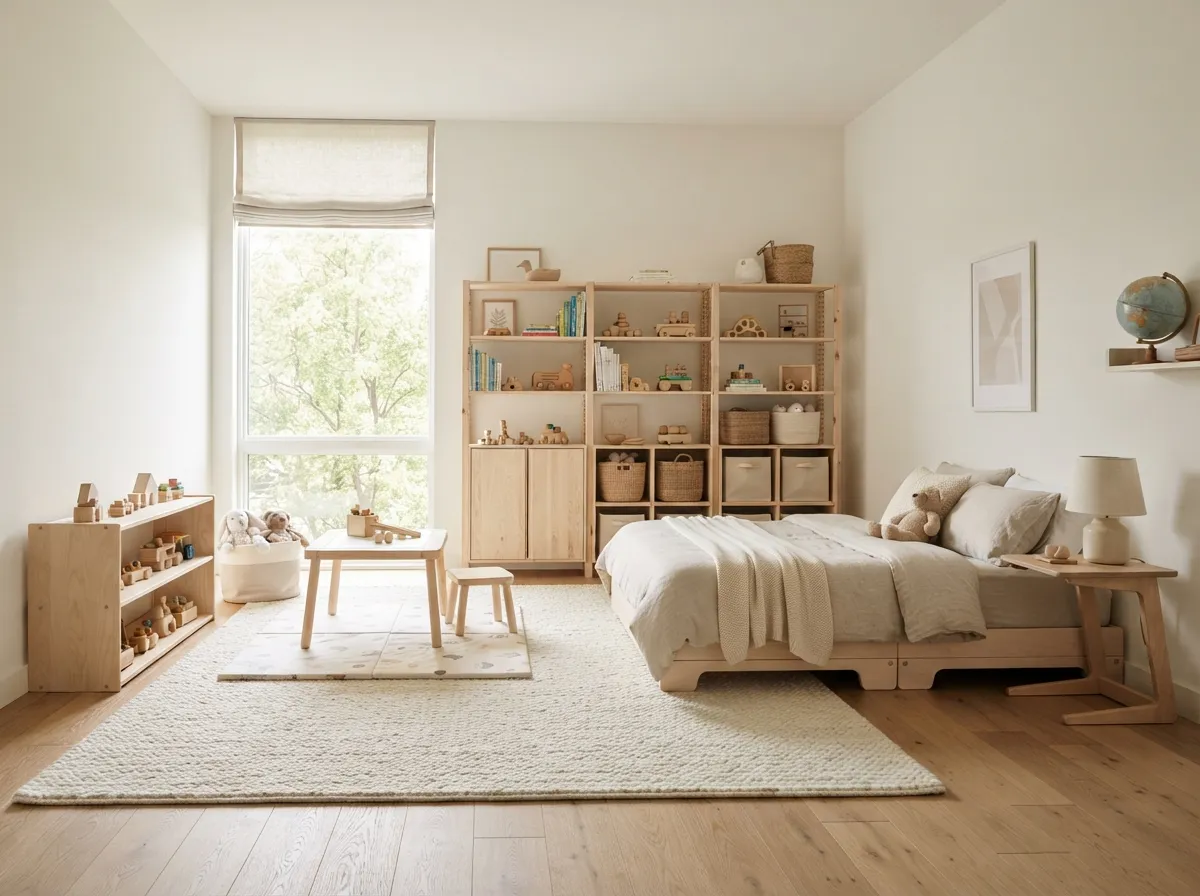
Designing a child’s room with flexibility in mind ensures it adapts seamlessly through various developmental stages. A minimalist approach naturally supports this, allowing spaces to evolve without constant overhauls.
Start with a foundational layout that can easily be reconfigured. This means choosing furniture that is lightweight and versatile, making rearrangement a simple task as your child’s needs change.
Consider a low bed that can serve a toddler and then transition into a comfortable floor mattress for an older child. Modular shelving units offer adjustability, allowing you to change shelf heights or reconfigure the setup entirely.
A large, neutral-toned rug can also effectively delineate a play zone, easily shifting its purpose or location within the room.
Embracing an open floor plan is key to this adaptability. It provides a blank canvas, ready for new activities or furniture arrangements.
This approach minimizes the need for frequent purchases, promoting sustainability and thoughtful design.
7. Incorporating Natural Materials and Textures
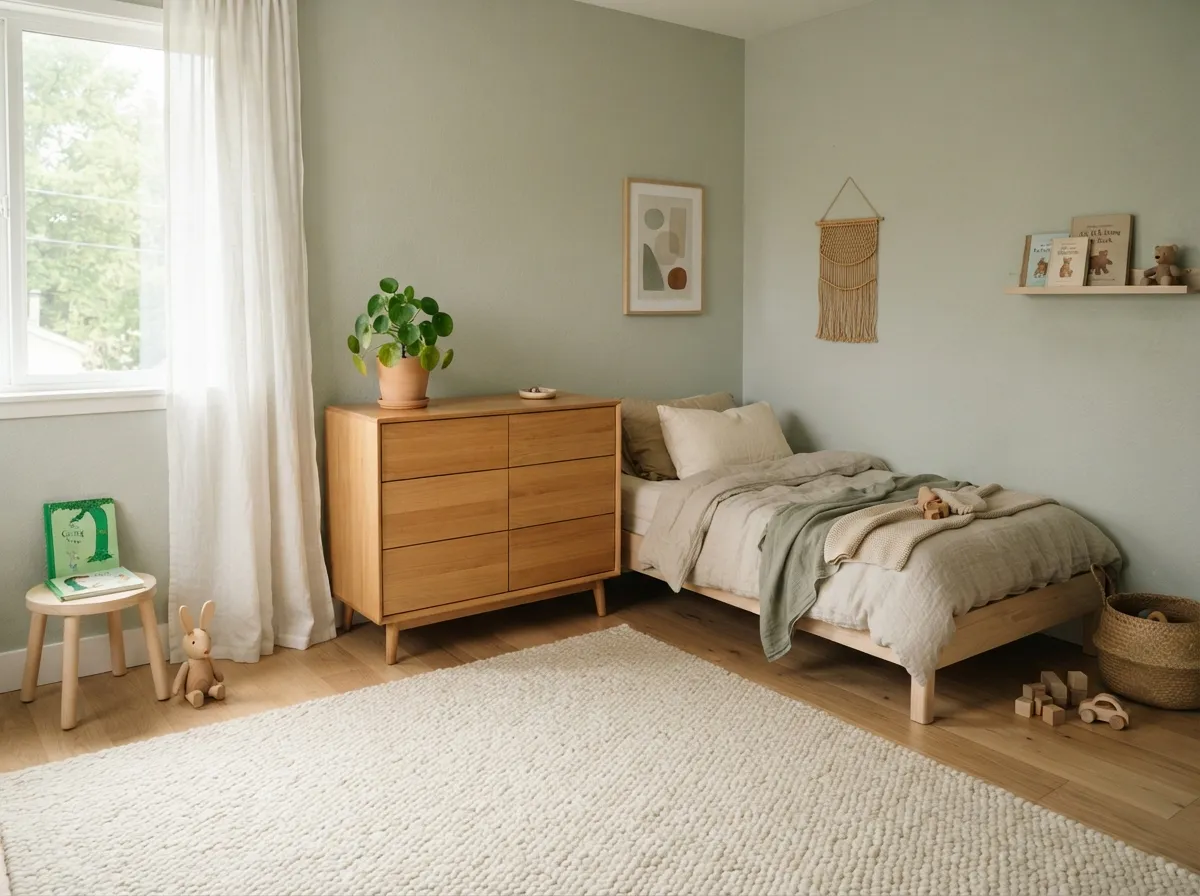
Introducing natural materials and varying textures into a child’s room fosters a sense of calm and sensory engagement. These elements add warmth and character without introducing visual clutter, aligning perfectly with minimalist principles.
Prioritize items made from wood, cotton, linen, and wool to create an inviting and grounding environment.
A light wood dresser, for instance, provides both functionality and a touch of organic beauty. Its simple lines blend effortlessly with a minimalist aesthetic, offering practical storage.
Pair this with soft linen bedding, which offers a breathable and gentle touch, contributing to a restful sleep space.
To enhance comfort and absorb sound, incorporate a plush wool rug underfoot. This adds a layer of tactile interest while grounding the room’s design.
A simple, living plant in a ceramic pot further connects the space to nature, bringing a vibrant, organic element into the muted palette.
8. Smart Storage Solutions That Hide the Clutter
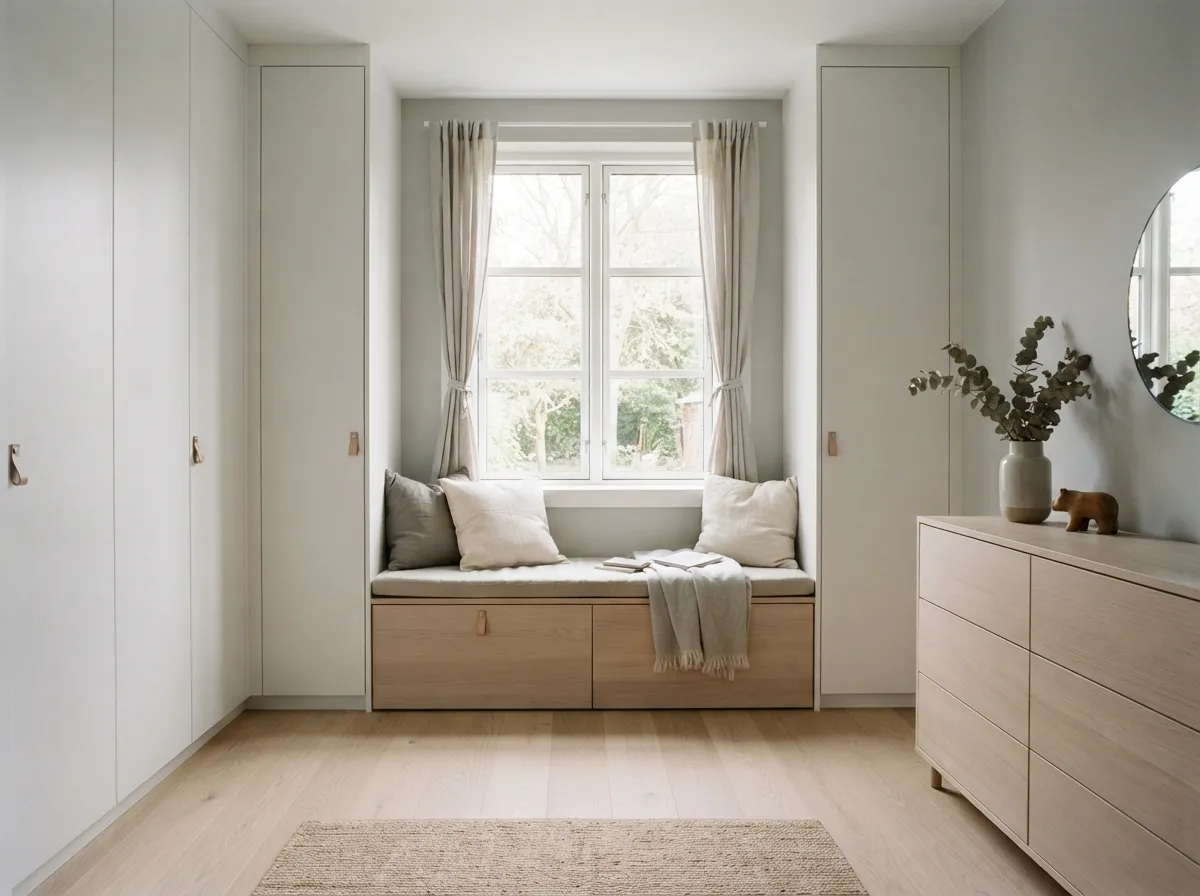
Maintaining a tidy and peaceful minimalist kids’ room relies heavily on intelligent storage solutions. The key is to keep toys and belongings out of sight when not in use, preventing visual overload and promoting a calm atmosphere.
Focus on integrated and discreet options that blend seamlessly into the room’s design.
Consider built-in features, such as a window seat with ample storage drawers underneath. This maximizes space and offers a cozy spot for reading or play.
Along one wall, sleek, closed white cabinets provide generous hidden storage for larger items, ensuring a clean, unbroken line.
A low, sleek dresser with integrated drawers offers additional, accessible storage for clothing and smaller items. By selecting furniture pieces that double as storage, you effectively minimize clutter while maintaining an open and airy feel.
This intentional approach ensures everything has its place, fostering a sense of order.
9. Designing a Play Zone That Evolves
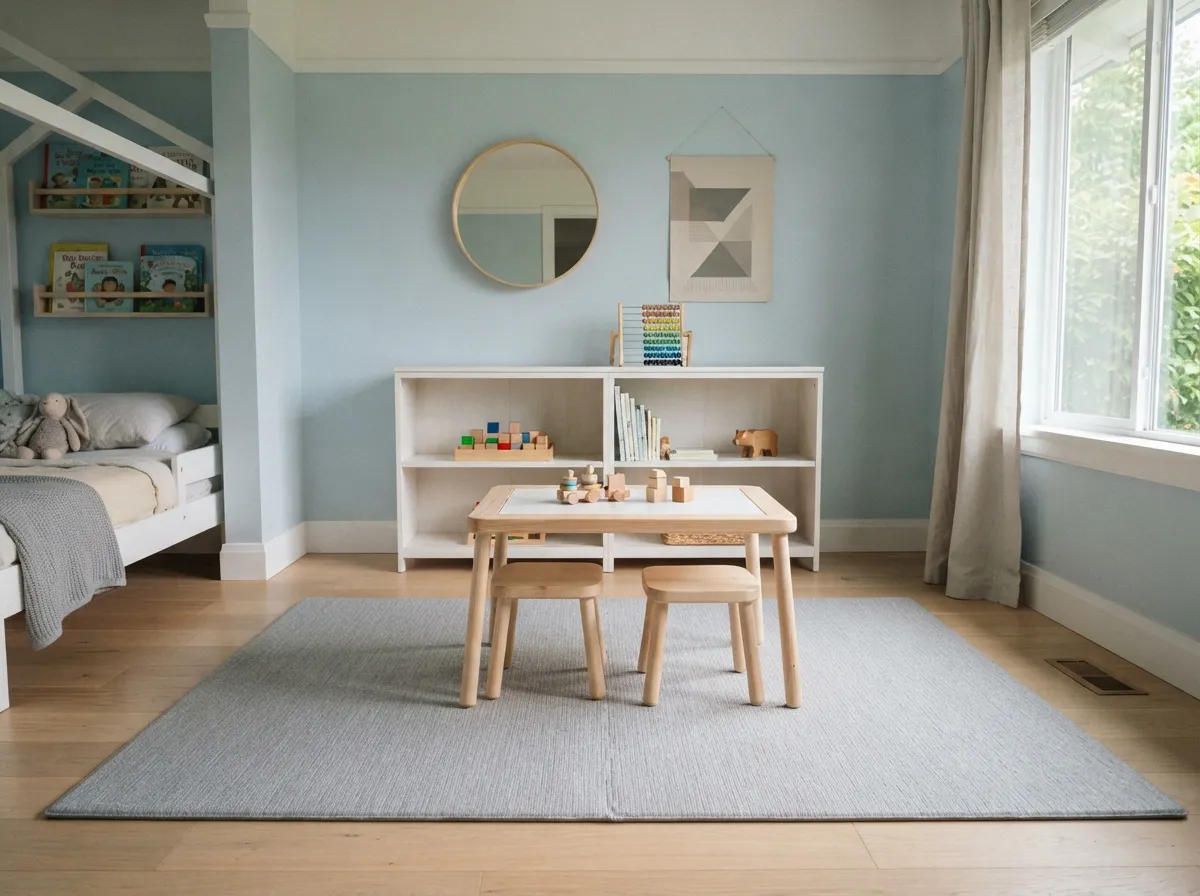
Creating a designated play zone within a minimalist kids’ room allows for focused activity while keeping the rest of the space uncluttered. The beauty of a minimalist play zone is its flexibility; it can easily adapt as your child’s interests and developmental stages change.
Emphasize open-ended toys and adaptable furniture that encourages imaginative engagement.
A large, soft grey play mat on the floor provides a comfortable and defined area for crawling, building, or imaginative games. Its neutral color ensures it complements the room’s aesthetic while offering a practical surface.
This mat can be easily rolled up or moved to open up the floor space when needed.
Introduce a small, simple wooden activity table paired with two low stools. This setup is perfect for drawing, puzzles, or small craft projects.
As your child grows, this table can transition into a quiet reading nook or a display area for cherished creations, ensuring its longevity in the room’s design.
10. The Importance of Open Floor Space
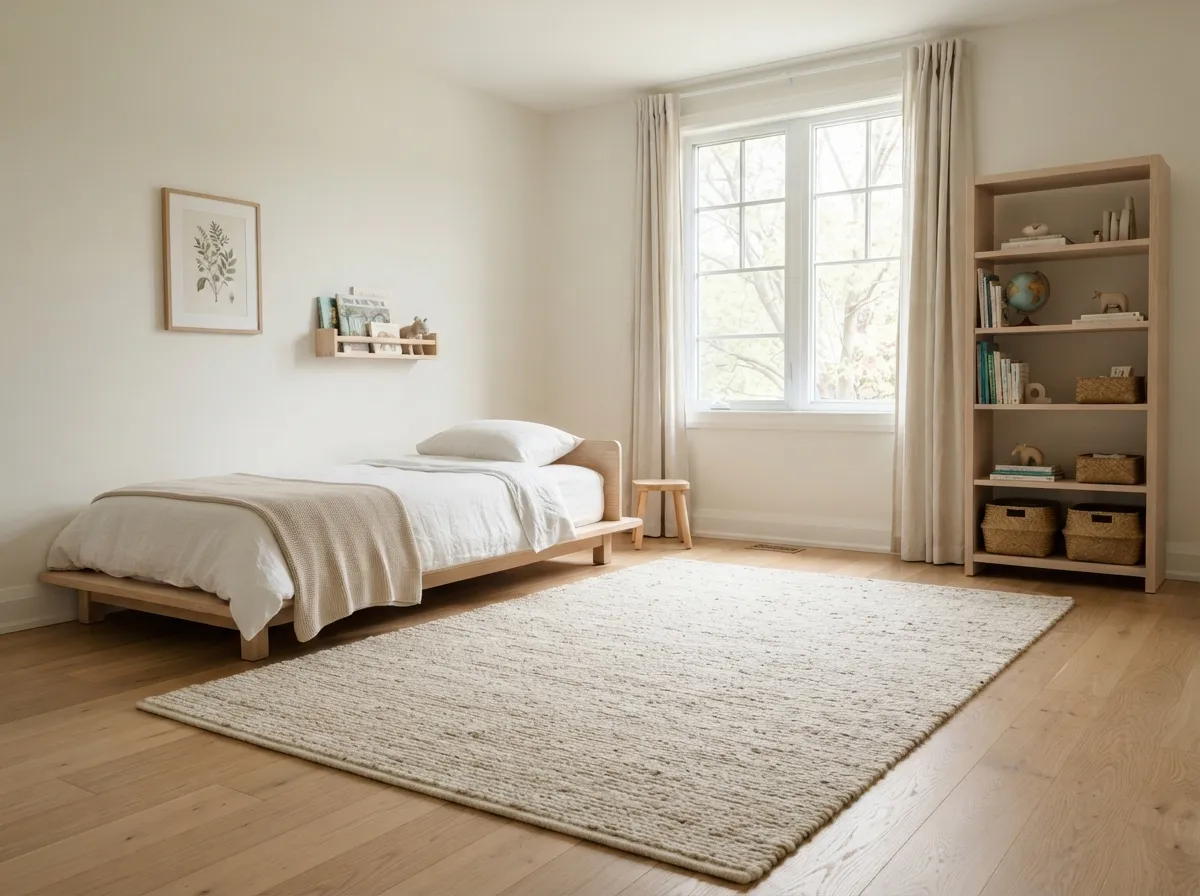
In a minimalist kids’ room, prioritizing open floor space is not merely an aesthetic choice; it is fundamental for a child’s development and well-being. Ample clear space encourages movement, imaginative play, and independent exploration, allowing children the freedom to create their own worlds.
This principle aligns perfectly with the ‘less is more’ philosophy.
A significant amount of open space in the center of the room provides an expansive area for activities without feeling restrictive. This allows children to spread out toys, build elaborate structures, or simply run around freely.
This freedom of movement is crucial for physical development and energy release.
To achieve this, consider essential furniture pieces that do not overwhelm the room. A low, platform bed against one wall and a simple wooden bookshelf against another are sufficient.
Light-colored walls and a large, neutral-toned area rug further enhance the feeling of spaciousness, defining the central zone without cluttering it. This thoughtful layout fosters a calm and inviting atmosphere.
11. Selecting Durable and Child-Safe Furnishings
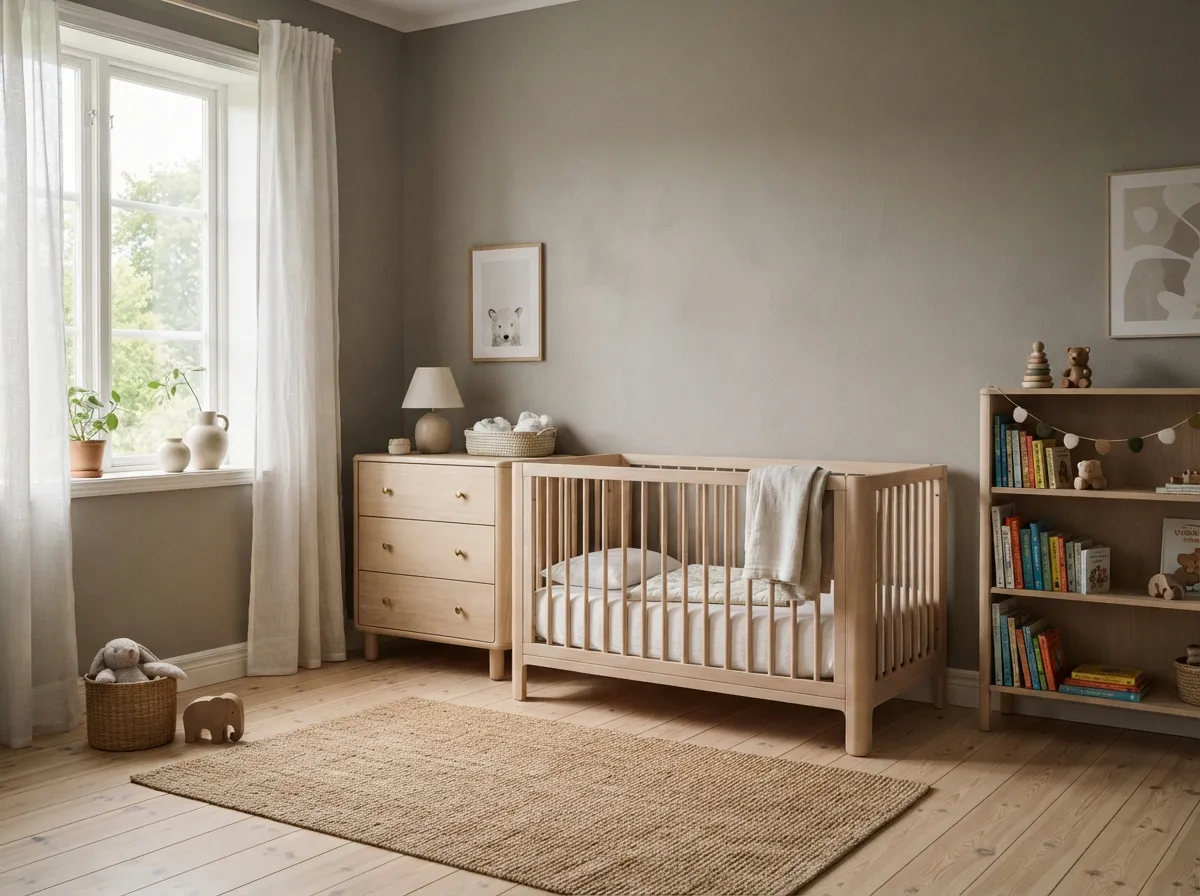
When creating a minimalist child’s room, the foundation lies in selecting furnishings that are both enduring and exceptionally safe. Invest in pieces crafted from robust materials like solid wood or high-quality metal, ensuring they can withstand years of active use and grow with your child’s needs.
12. Personalizing with Art and Decorative Accents (Easily Changed)
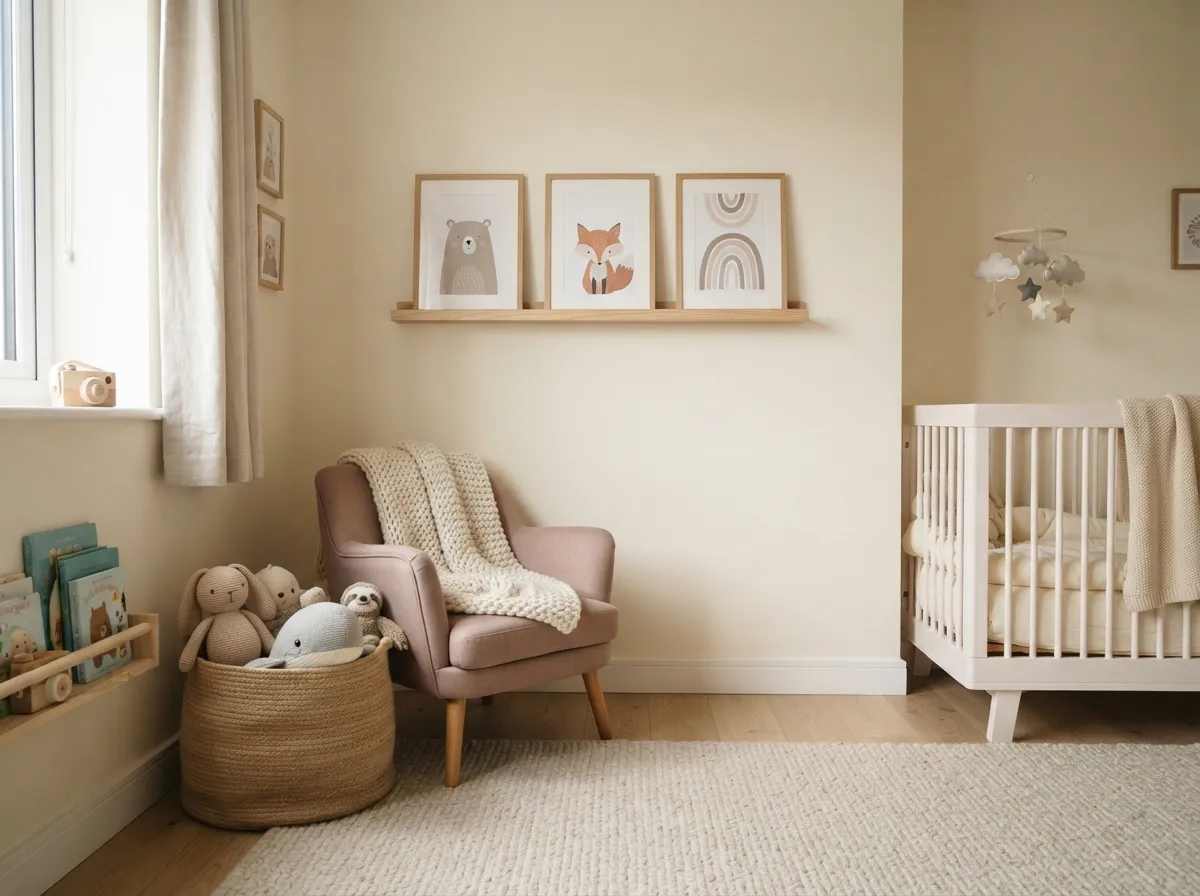
Personalizing a minimalist space means choosing accents that are easily updated as tastes evolve. Instead of permanent fixtures, opt for framed art, soft textiles, and small decorative items that can be swapped out without significant effort or expense.
13. Setting Up a Functional Study Nook (When Applicable)
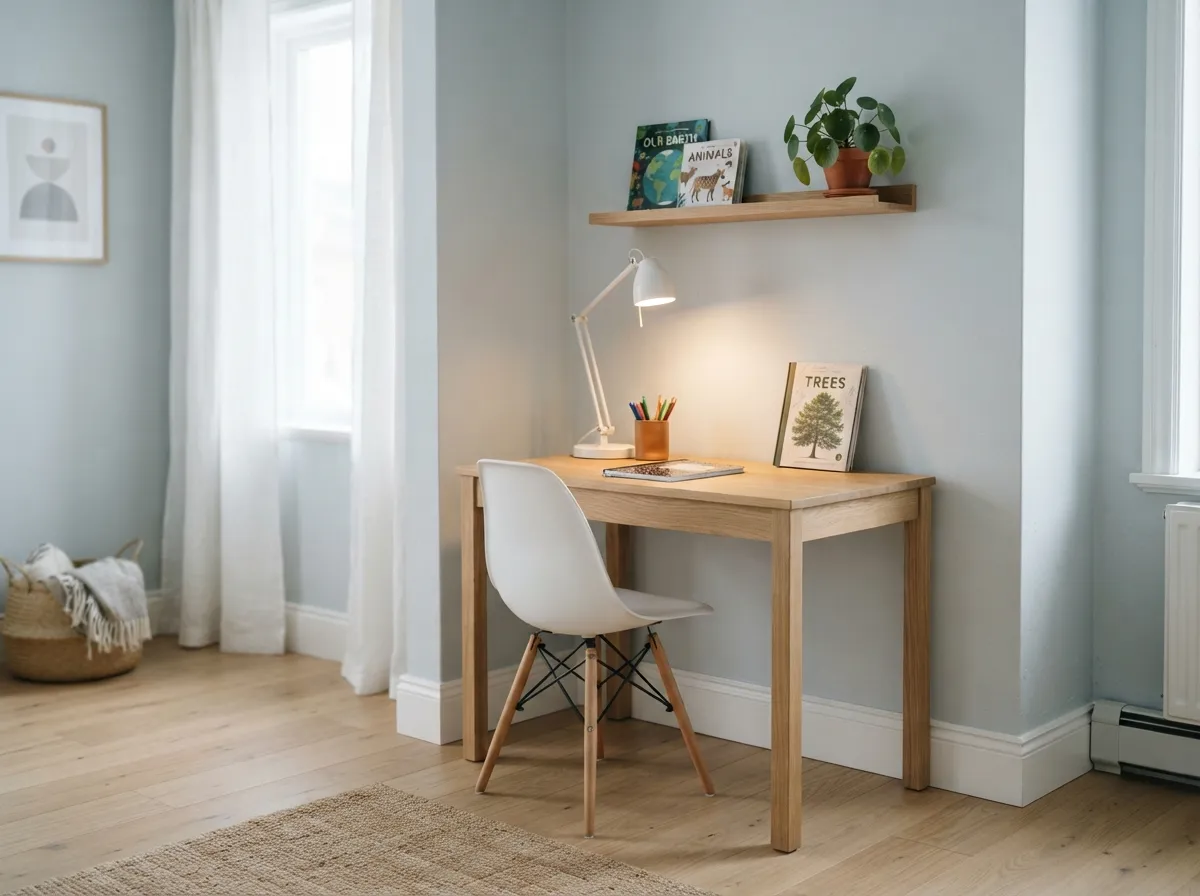
As children grow, a dedicated area for learning and creativity becomes essential. A functional study nook in a minimalist room integrates seamlessly, providing a quiet space without adding clutter.
14. Lighting for Mood and Task in a Child’s Room
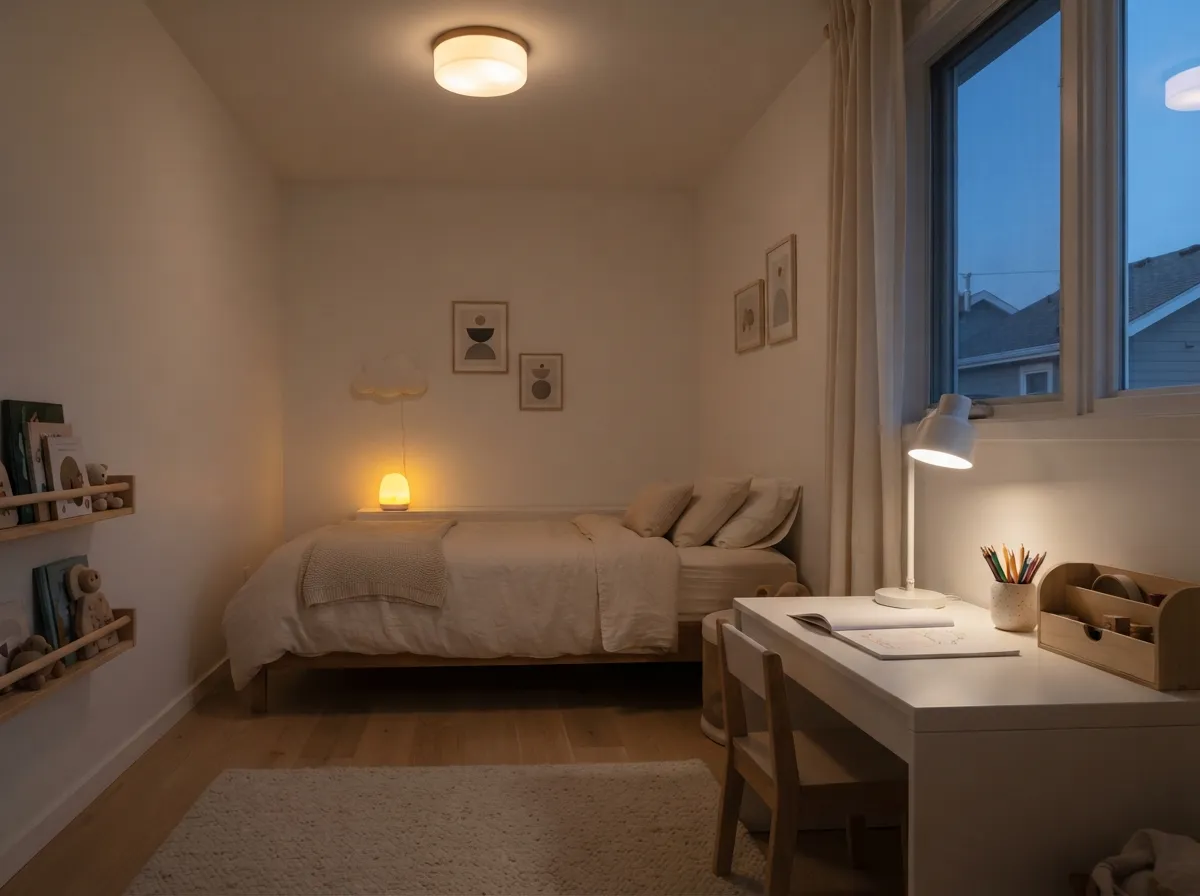
Effective lighting in a child’s room serves a dual purpose: setting a calming mood and providing bright illumination for specific tasks. A well-designed lighting scheme uses layers to achieve both functionality and comfort.
15. Maximizing Natural Light for a Brighter Space
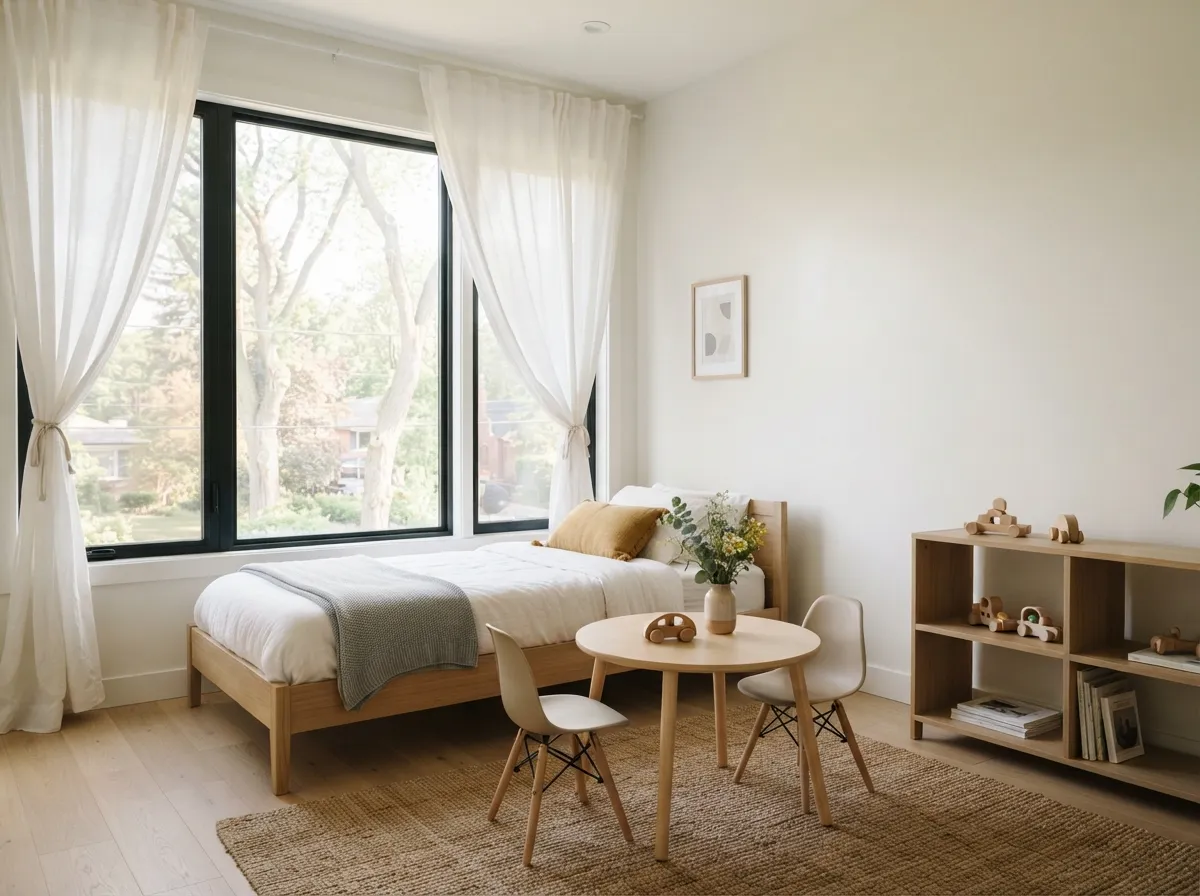
Embracing natural light is fundamental to creating a bright, airy, and inviting minimalist child’s room. Maximize its presence by choosing appropriate window treatments and carefully arranging furniture.
16. Walls as Canvas: Flexible Decor Options
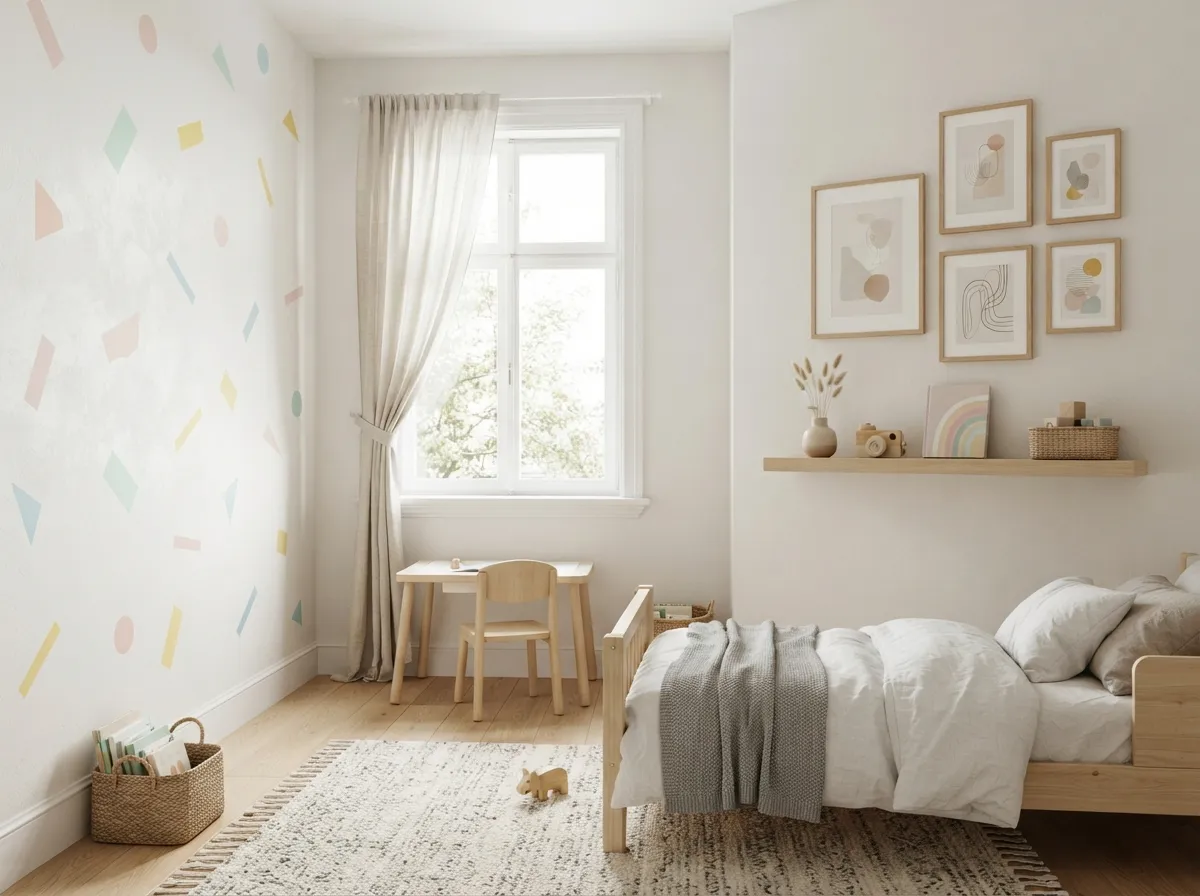
The walls of a minimalist child’s room offer prime real estate for creativity without clutter. Opt for a serene, neutral base like warm white, soft gray, or a light beige to create a calming backdrop.
These hues allow for endless possibilities as your child’s tastes evolve.
Consider using peel-and-stick wallpaper with subtle patterns or playful decals that can be easily removed or updated. This avoids the commitment of permanent paint and makes future changes a breeze.
Another excellent idea is to create a dynamic gallery wall using simple frames. Display your child’s artwork or rotating prints that reflect their current interests.
This approach keeps the room fresh and personal without overwhelming the space. Such flexible decor options mean the room can grow seamlessly.
17. The Role of Textiles: Rugs, Curtains, Bedding
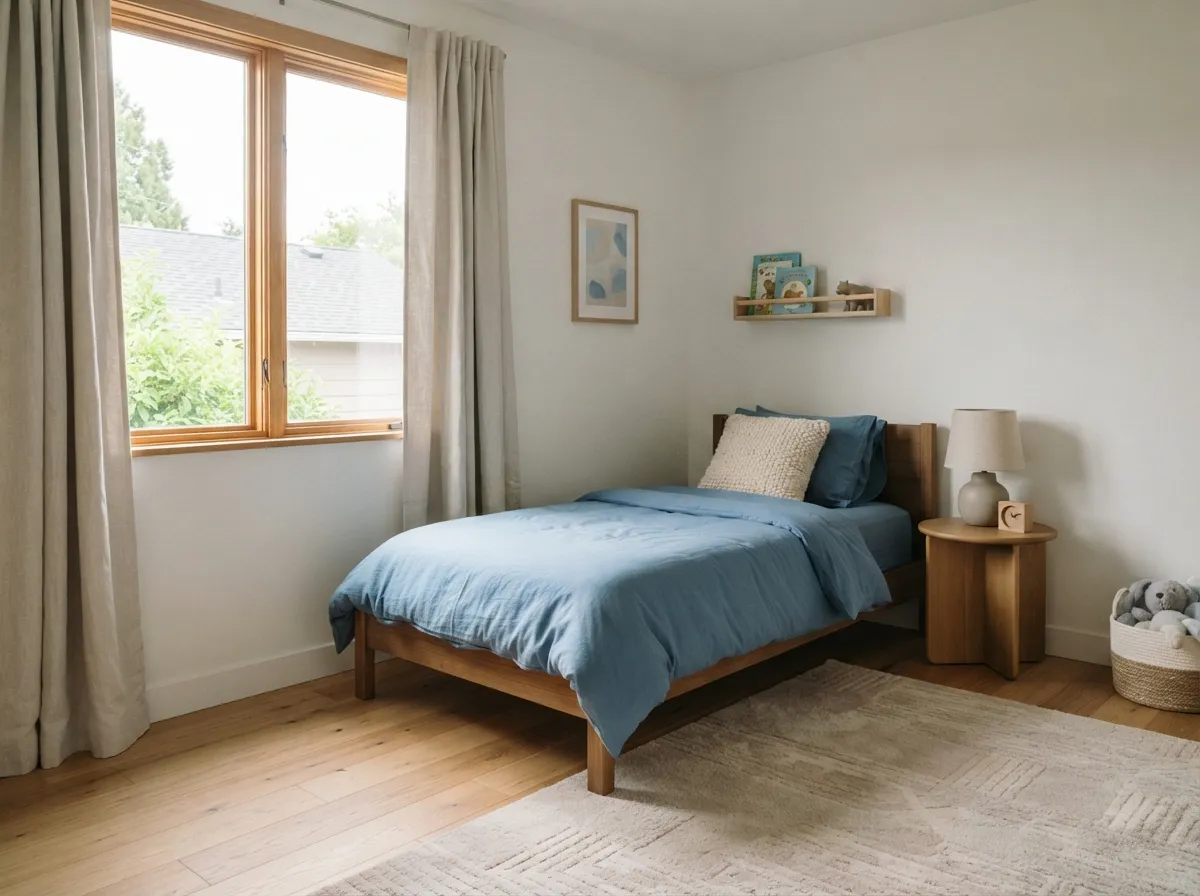
Textiles are essential for introducing warmth, texture, and character into a minimalist kids’ room. They provide comfort and define zones within the space without adding visual noise.
Choose items made from durable, natural fabrics that can withstand active play and frequent washing.
A soft, washable rug in a muted tone adds a cozy element underfoot and can delineate a play area. It provides a comfortable surface for floor activities and helps absorb sound, creating a calmer environment.
For windows, simple, floor-length linen curtains offer both aesthetic appeal and functionality. Blackout linings are particularly beneficial for ensuring restful sleep.
Bedding in crisp organic cotton, perhaps with one or two textured throw pillows, allows for easy style updates as children mature.
18. Displaying Toys and Books Thoughtfully
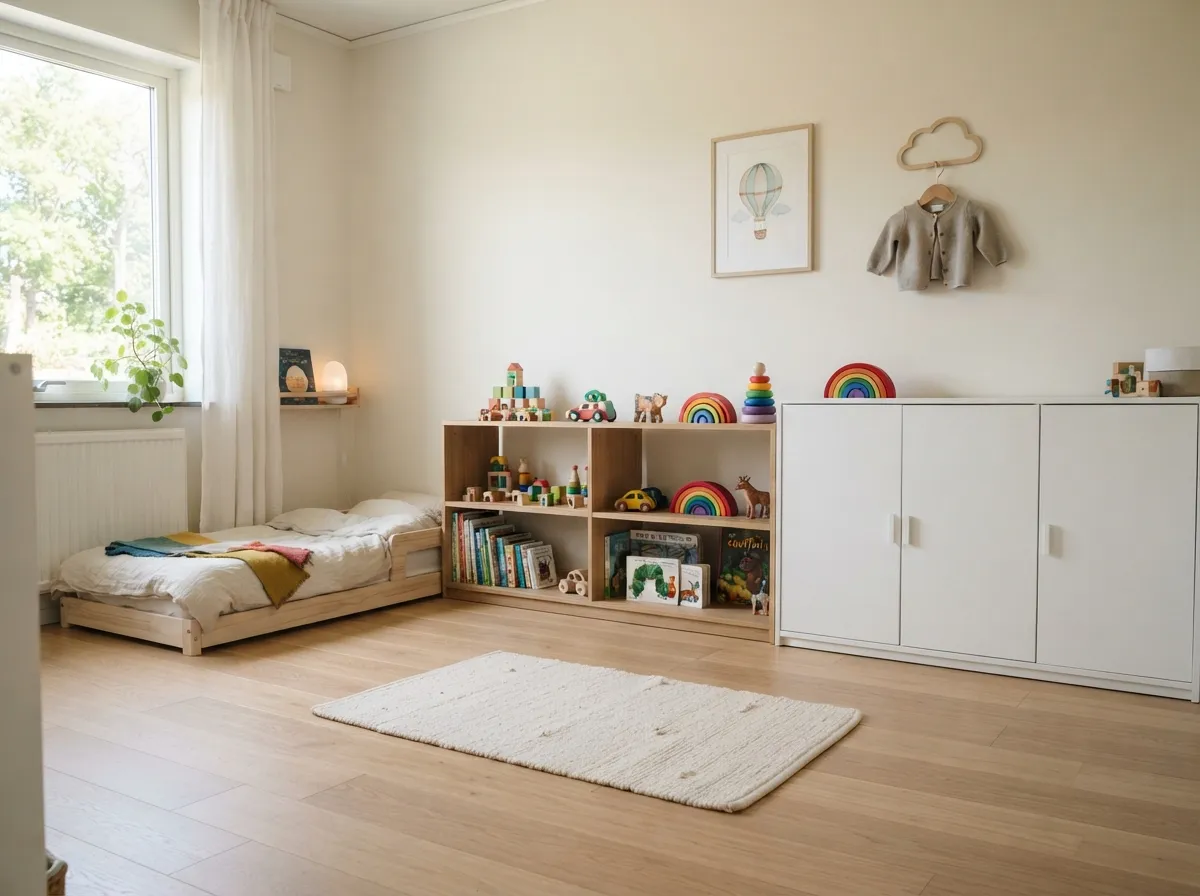
Managing toys and books in a minimalist kids’ room is about curation and smart storage. The goal is to keep the room feeling open and serene while ensuring everything has its designated place.
Open shelving can be used for a thoughtful display of a few favored items, encouraging appreciation for quality over quantity.
Closed storage solutions, such as simple cabinets or bins, are invaluable for tucking away clutter. This allows for a clean visual aesthetic while keeping a wide array of toys accessible when needed.
Consider rotating toys to maintain interest and prevent overwhelm.
Ensure that display and storage are at a child’s height, fostering independence in choosing and tidying up. This approach supports a functional, tidy, and inspiring environment.
19. Cultivating Independence Through Accessible Design
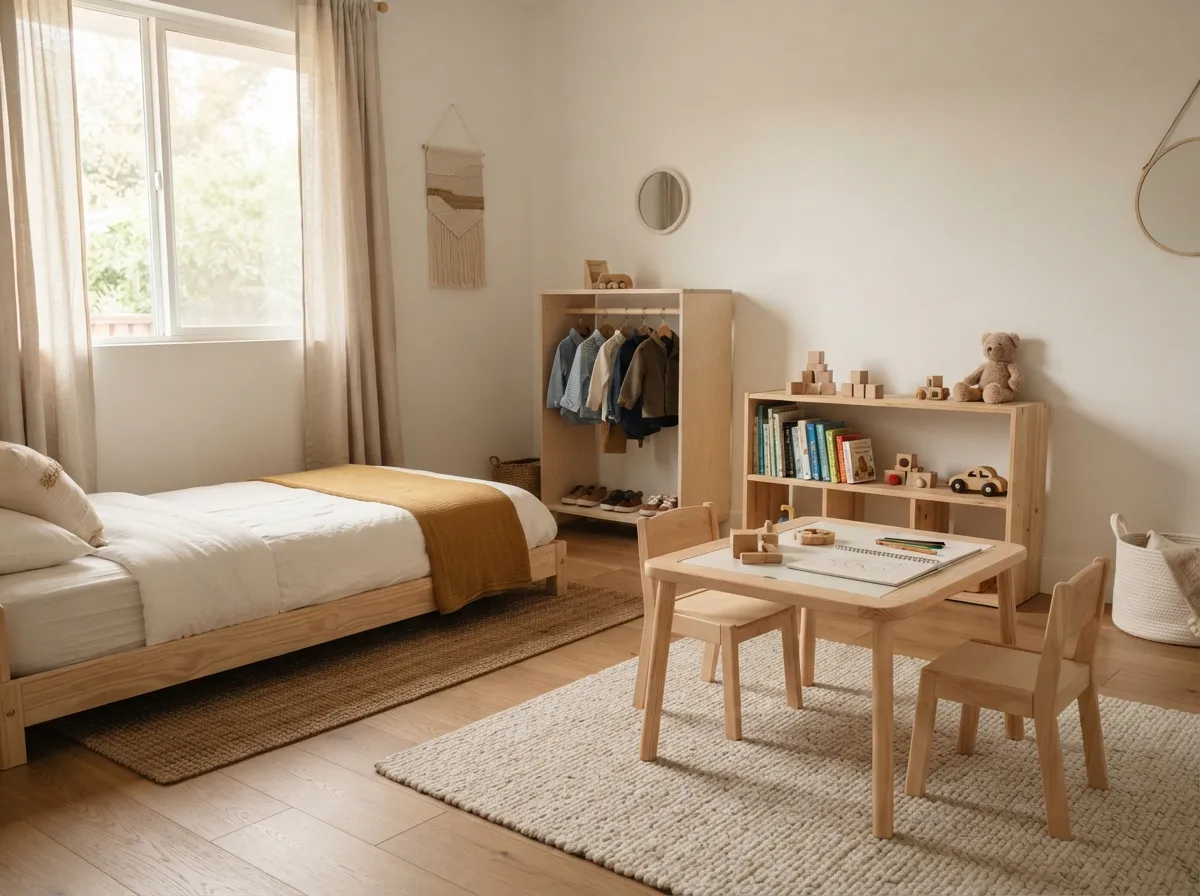
Designing a child’s room with accessibility in mind is key to fostering their independence and self-reliance. By placing items within easy reach, children are empowered to make choices and manage their own belongings.
This approach is fundamental to a truly supportive minimalist environment.
Opt for low-height furniture, such as a floor bed or a simple, child-sized wardrobe with clothes on low hangers. Shelving units should also be at a height where children can comfortably select and put away their own books and toys.
This thoughtful design encourages autonomy in daily routines.
Sturdy, child-safe furniture with rounded edges and simple construction ensures durability and safety. When children can access their environment independently, they gain confidence and develop valuable life skills, making the room truly their own.
20. Future-Proofing with Modular Elements
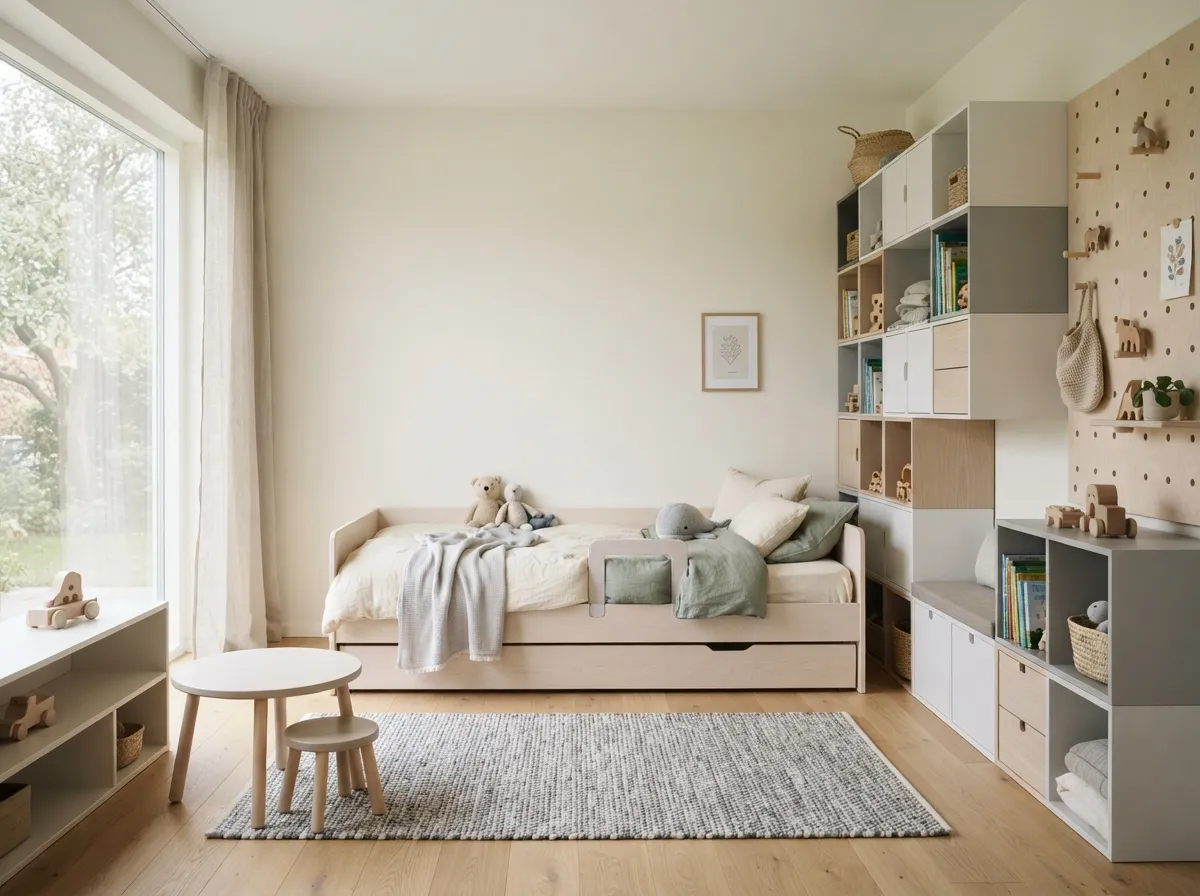
Investing in modular furniture is a smart strategy for future-proofing a minimalist child’s room. These adaptable pieces can be reconfigured or expanded as your child grows and their needs change.
This approach offers both longevity and significant cost-effectiveness over time.
Consider modular storage systems with interchangeable cubes or stackable units. These can be arranged in various configurations to suit different stages, from toy storage for a toddler to book shelving for a school-aged child.
Look for pieces made from durable, natural materials like wood or metal.
Beds that convert from a toddler size to a twin, or even a daybed, are also excellent examples of modularity. This flexibility ensures that the core elements of the room can evolve seamlessly, providing a consistent yet adaptable space for years to come.
21. Creating Zones: Sleep, Play, and Study
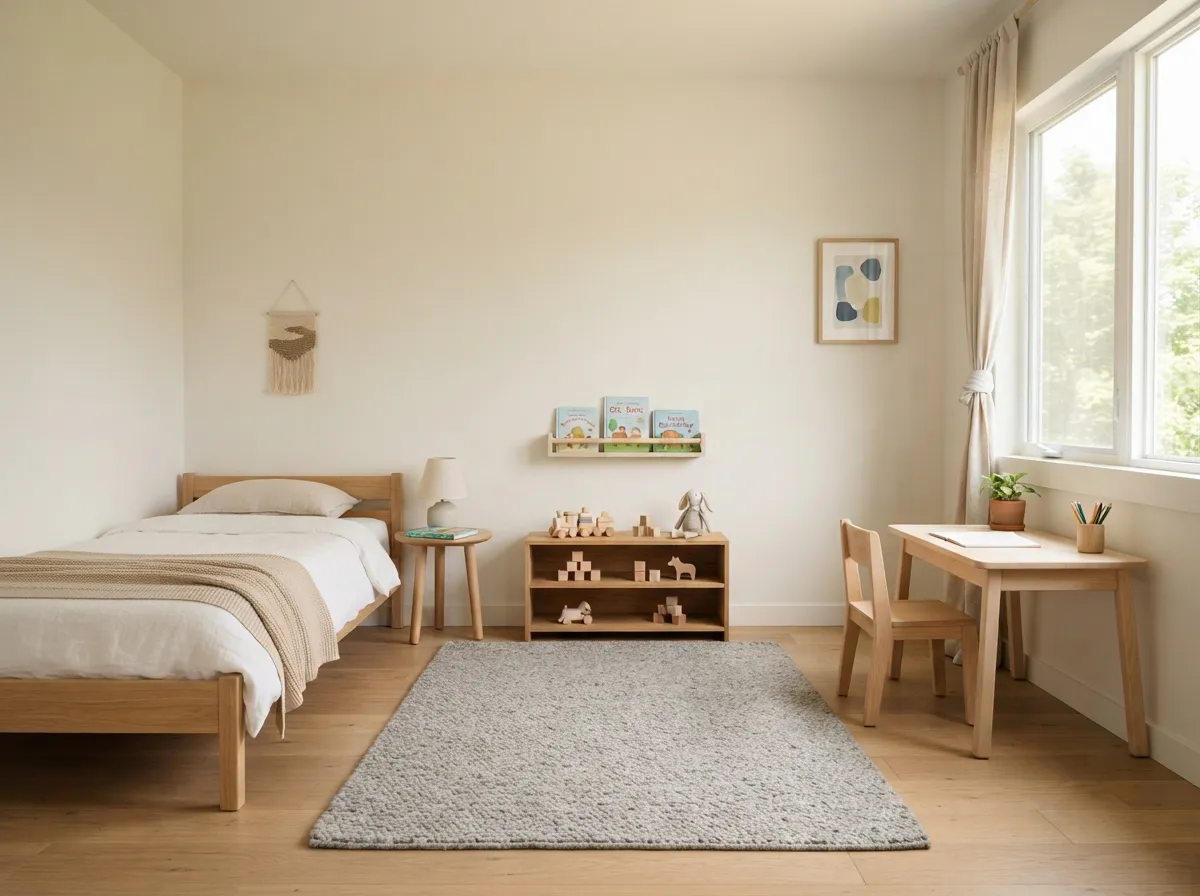
Establishing distinct zones within a child’s minimalist room is key to both organization and function. This thoughtful division helps children understand the purpose of each area, promoting focused activities.
Consider clear separations for sleep, play, and study. A cozy corner with a simple bed defines the sleeping area, encouraging calm and rest.
Adjacent to this, a designated play space can feature a soft rug and accessible storage for toys. This encourages imaginative play within a defined boundary.
Finally, a compact desk or a versatile surface can serve as a dedicated study nook. These zones, created often with multi-functional furniture or subtle visual cues, make the room highly adaptable.
22. Budget-Friendly Minimalist Transformations
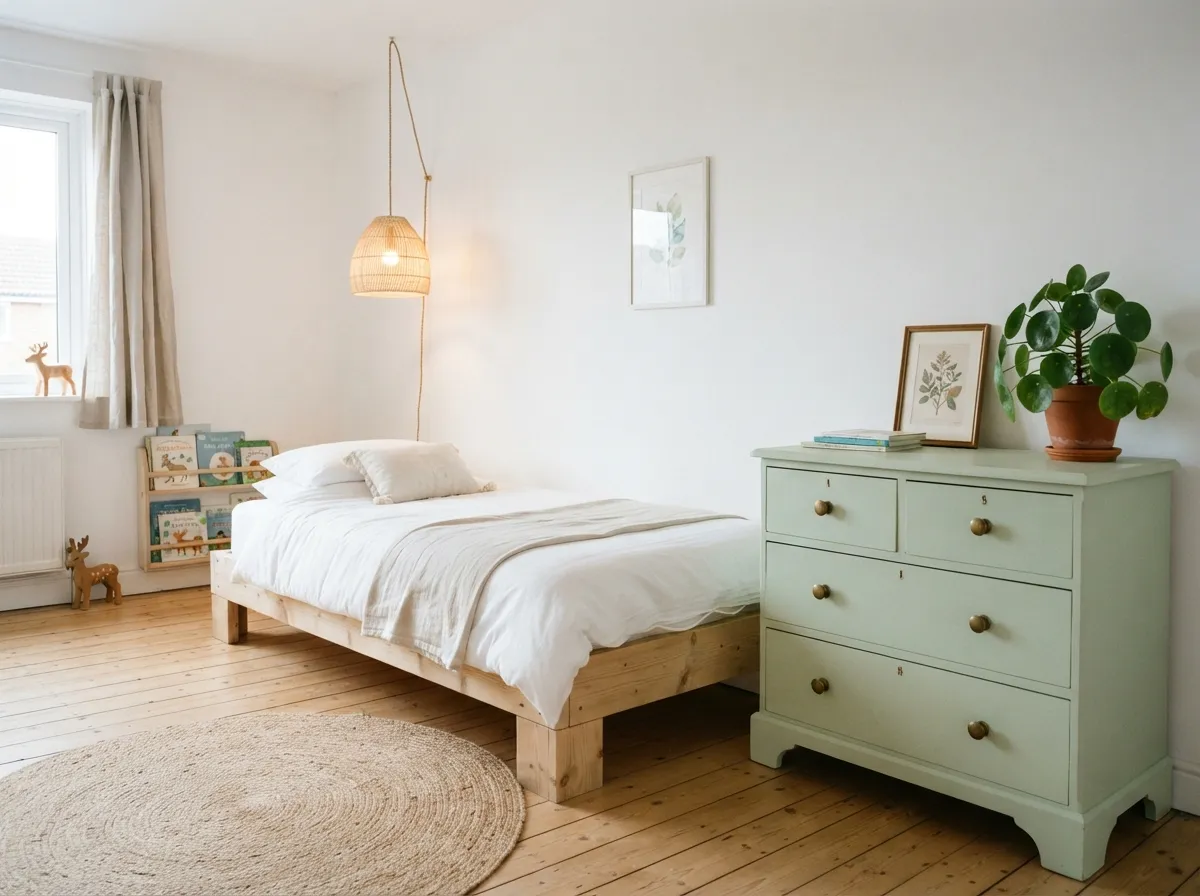
Achieving a minimalist aesthetic for a child’s room doesn’t require a large investment. Smart, budget-friendly choices can lead to equally appealing and functional spaces.
Embrace DIY projects and repurpose existing furniture. A fresh coat of paint can revitalize an old dresser, giving it new life as stylish storage that fits the minimalist theme.
Look for versatile pieces that serve multiple purposes, such as a bench with hidden storage or modular shelving. These adaptable items save money and adapt to changing needs.
Prioritize quality over quantity when purchasing new items. Choosing durable, timeless pieces ensures longevity, making them a wise investment that reduces future expenses.
23. Involving Your Child in the Design Process
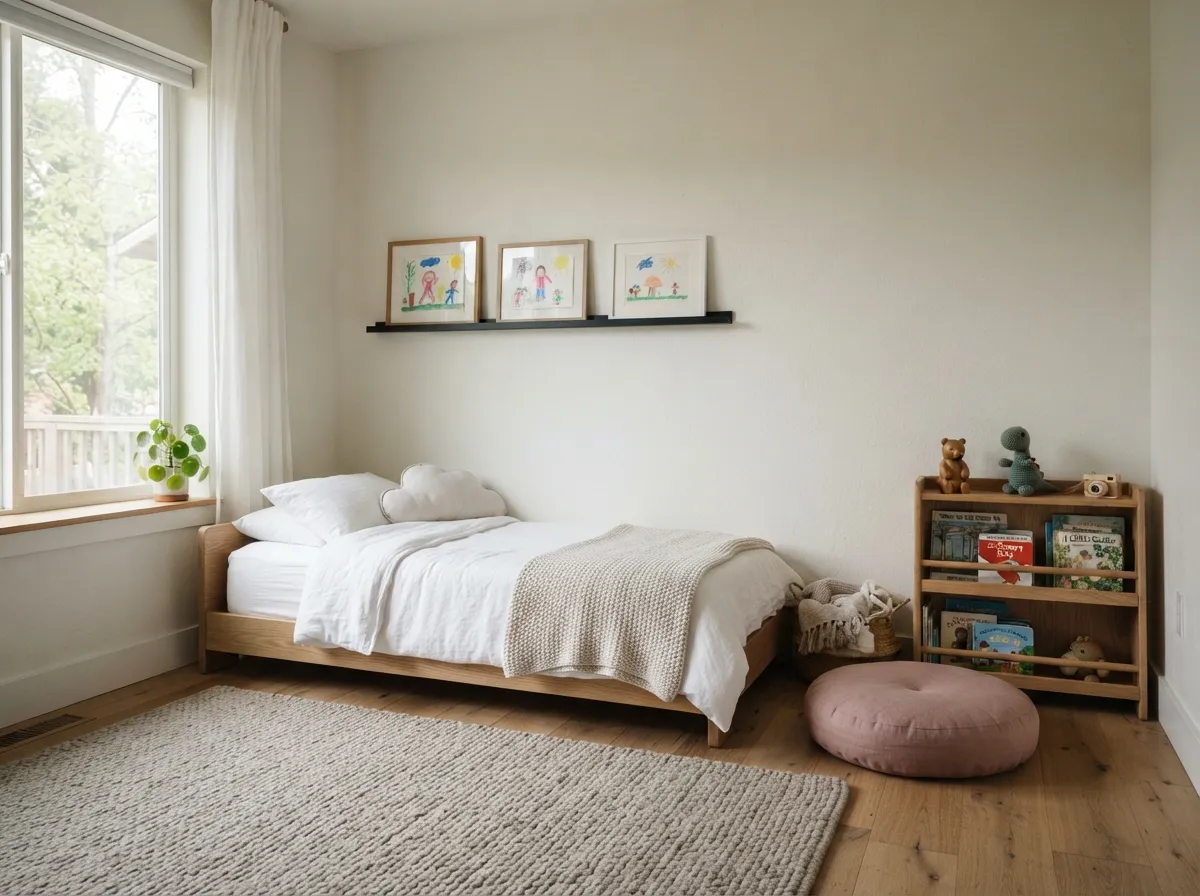
Inviting your child to participate in designing their minimalist room offers numerous benefits beyond just aesthetics. It fosters a sense of ownership and personal connection to their space.
Allowing them to make small, age-appropriate choices empowers them. This could be selecting a specific color for an accent cushion or choosing a few favorite books for a dedicated shelf.
When children contribute, they are more likely to respect and maintain their room. This collaboration turns the room into a reflection of their personality, within a simple framework.
The process encourages creativity and decision-making skills, making the room truly their own within the minimalist guidelines. Their input ensures the space is functional and cherished.
24. Transitioning from Nursery to Toddler Room
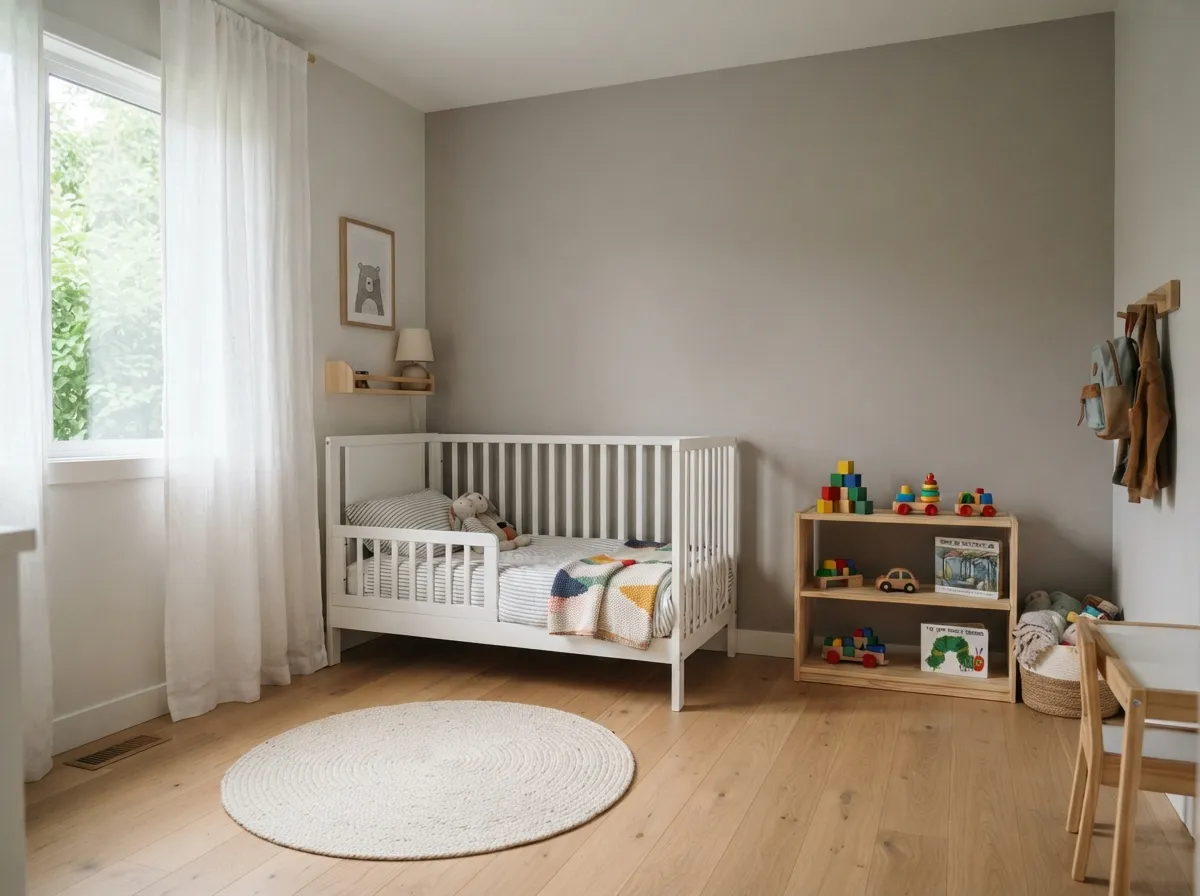
The transition from a baby’s nursery to a toddler’s room marks an exciting developmental milestone. This change requires thoughtful adjustments to ensure safety, accessibility, and continued minimalism.
Begin by adapting the sleeping arrangement; many cribs cleverly convert into toddler beds, extending their utility. Place the bed low to the ground for easy access and independence.
Introduce low, open shelving units that allow your toddler to reach their toys and books independently. This encourages self-sufficiency and tidiness.
Prioritize safety by securing furniture to walls and removing any potential hazards. The aim is to create a secure, inviting space that supports your growing child’s newfound autonomy.
25. Adapting the Room for Pre-Teens and Beyond
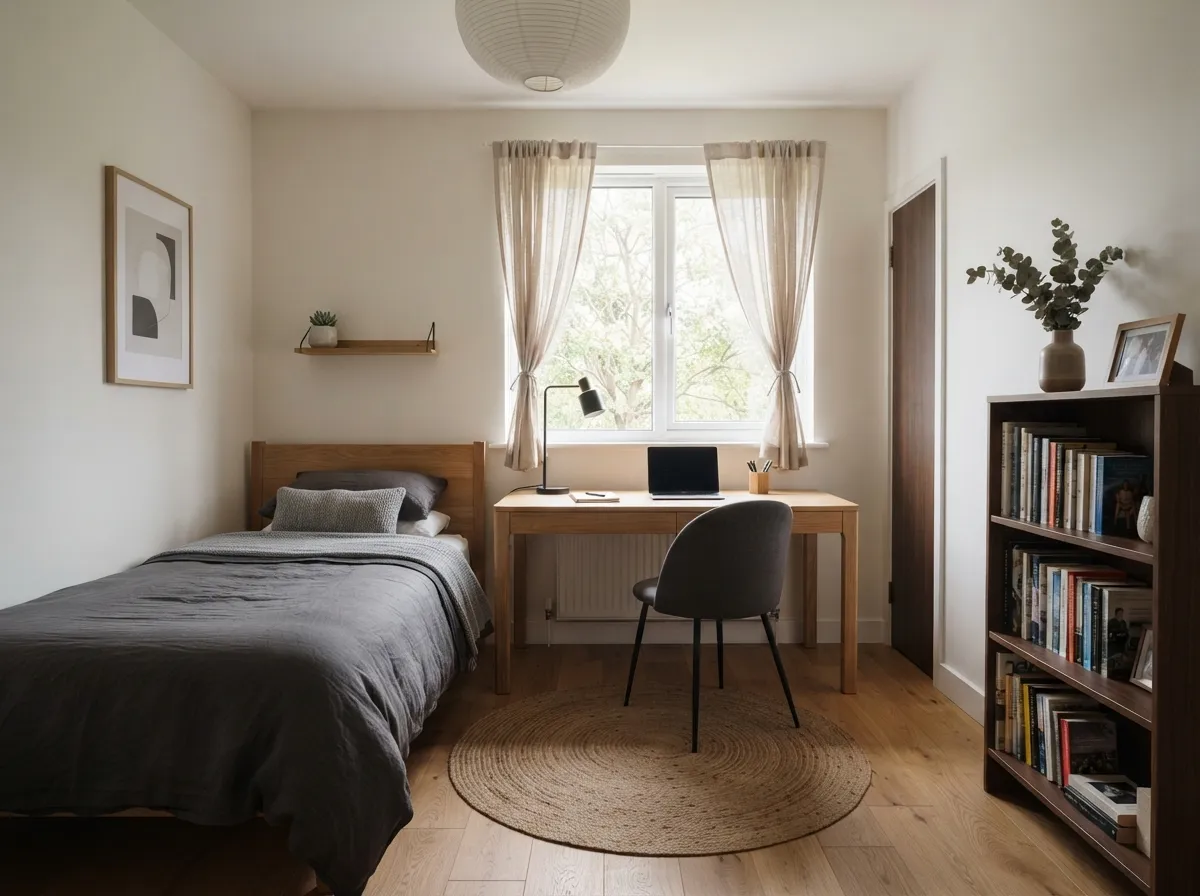
As children grow into pre-teens and beyond, their minimalist room can continue to evolve with their changing needs and interests. The adaptable nature of minimalist design truly shines here.
The focus shifts towards more sophisticated storage solutions for school supplies, hobbies, and personal items. Consider modular shelving systems or sturdy, closed cabinets.
A dedicated and functional study area becomes increasingly important. A larger desk with ample workspace and good lighting supports their academic pursuits.
Timeless, durable furniture pieces are essential during this stage. Choosing items like a solid wood bed frame or a classic desk ensures they will remain relevant and comfortable for years to come, accommodating evolving styles.
Embracing minimalist principles for a child’s room offers lasting benefits, from promoting organization to fostering imagination. By selecting versatile pieces and thoughtful layouts, you create a harmonious, adaptable space that supports every stage of your child’s development. A truly timeless design.